Showing posts with label Mark Kurlansky. Show all posts

Monday, January 20, 2025

Are Food Books Changing?

Complaint: I’m having difficulty finding recent food books that I want to read. Objectively, it’s hard to judge, but I have a feeling that the publishing industry has moved on from the type of book that I enjoyed very much 10 or 15 years ago or more. I’m not finding authors who write like M.F.K. Fisher, Elizabeth David, Mark Kurlansky (in his early books), Michael Pollan, Laura Shapiro, Édouard de Pomiane, Edda Servi Machlin, A.J. Leibling, Waverly Root, and  Calvin Trillin: to mention just a few. 

I’ve been searching New-Years lists of the 2024 best food books, and other lists of people’s favorites — but I’m just not finding what I’d like to read. Most of the books on these lists are cookbooks, which are not what I’m seeking — I want history books, food memoirs, and books about food and travel. (Note that what I really DON'T want is news of the world today, especially the world in Washington. Complaining about food books is a good diversion.)

I Found an Old Classic

As I searched, I did find a reference to an old classic from 1988, A Tuscan in the Kitchen by Pino Luongo. I read it this weekend, and it was pretty good, Although the book was mainly made up of recipes, the surprising thing was that it was fun to read them. That’s lucky because actually cooking from this book would be impossible: like most nostalgia books about living in small towns during an earlier and more innocent era, all the ingredients were procured from the cook’s own garden or from local hunters, small-scale farmers, fishermen, and so on. Everything was fresh except maybe home-canned tomatoes, which predictably were better than hothouse tomatoes out-of-season (I’ve heard this before). In other words, these recipes don’t exactly work in my world. I might be skeptical that the ideal world depicted in books like this ever did exist, but never mind that.

During 2024, I read a few older books, such as Vanilla: Travels in Search of the Ice Cream Orchid (from 2005) which I read last summer. A newly-published book that I read in September was Frostbite by Nicola Twilley; this book describes two centuries of development of refrigeration (review here). But there weren't many good finds.

In my search this week, I heard about a recent book called Slow Noodles: A Cambodian Memoir of Love, Loss and Family Recipes by Chantha Nguon, which I’ll be reading soon. I’m also aware of recently-published memoirs by Joan Nathan and Marion Nestle which I may read in the coming months. But in general, I’m not finding what I want — I guess maybe I need to go back and look for classics that I’ve missed. 

In the News

The obituary of food writer and editor Gillian Riley, who died in November, reminded me even more of how I can’t seem to find new food books that I would like to read. I reviewed her major work, The Oxford Companion to Italian Food, in 2009 (link). 

From the Guardian:

“In his review of The Oxford Companion to Italian Food for the Guardian in 2007, John Dickie advised that the author needed to be ‘brave, brilliant, learned and almost certainly a little unhinged.’ The food historian and typographer Gillian Riley, who has died aged 90, fulfilled all these requirements when composing that very book. That a single person was able to master the labyrinthine complexities of Italian food culture, embracing history, literature, the visual arts, politics and an infinite quantity of processes, ingredients and recipes is remarkable. That it was done with humour, humanity and lashings of erudition was the needful icing to make it digestible.” (Guardian Obituary)
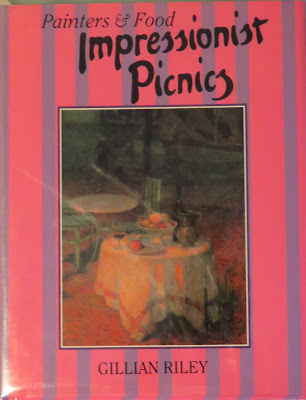
A book by Gillian Riley that I really enjoyed: Impressionist Picnics.
(Review Here)


The New Yorker still publishes a few food-themed cartoons.

Books I Love

A curiosity: the following list illustrates some of the books that I mentioned on my blog in 2008. These food books were on my shelves then, and they still are there.

  • Jennifer 8 Lee, The Fortune Cookie Chronicles
  • Tom Standage, A History of the World in Six Glasses
  • Gary Paul Nabhan, Why Some Like it Hot
  • Michael Pollan, In Defense of Food
  • Pollan, The Botany of Desire
  • Pollan, The Omnivore’s Dilemma
  • Jordan & Brady, eds, The World is a Kitchen
  • Julian Barnes, The Pedant in the Kitchen
  • Mary Taylor Simeti & Grammatico, Bitter Almonds
  • Elizabeth L. Ortiz, The Book of Latin American Cooking
  • Claudia Roden, A Book of Middle Eastern Food
  • Michelle Stacey, Consumed: Why Americans Love, Hate, and Fear Food
  • Henry Hobhouse, Seeds of Change
  • Julia Sahni, Moghul Microwave
  • Madhur Jaffrey, World Vegetarian
  • Harold McGee, On Food and Cooking
  • Ayla Algar, Classical Turkish Cooking
  • Gillian Riley, Painters & Food: Renaissance Recipes

Sunday, November 11, 2018

Tuna and Salt


"In the Old Testament it is mentioned that Jerusalem fish markets were supplied by Tyre [home of the Phoenicians], and the fish they sold was probably salted fish, since fresh fish would have spoiled before reaching Jerusalem." writes Mark Kurlansky in his book Salt: A World History, which I just reread.

Salt is a wonderful book! It covers many topics including history, cuisine, commerce, and exploitation of laborers. It presents facts about salt in many civilizations and political situations including the ancient Mediterranean world, China through the ages, American Indians, the colonial era in the Caribbean, the motives for building the Erie Canal, and lots of others.

One theme that recurs is about the interconnections between tuna fishing (and in fact all fishing) and the procurement of sea salt. Instead of a review of the book, I'm just going to think about what Kurlansky said about tuna, what I can learn about the current state of tuna, and what I've said in my many posts about tuna in the past.

Tuna in the Ancient World

"Ancient Phoenician coins with images of the tuna have been found near a number of Mediterranean ports. At the time, bluefin tuna, the swift, steel-blue-backed fish that is the largest member of the tuna family, might have attained sizes of over 1,500 pound each, but this is according to ancient writers who also believed the fish fed on acorns." (p. 45)

Phoenician coin showing a tuna. (source)
The Phoenicians, Kurlansky points out, were among the earliest merchants of both salt and tuna. He explains how tuna appear seasonally throughout the Mediterranean and have been fished there since ancient times.  Their life cycle involves adult fish swimming from their usual home in the Atlantic Ocean through the Strait of Gibraltar into the Mediterranean. These migratory fish pass between North Africa and Sicily, by Greece and the Bosporous, and they eventually make it to the Black Sea.

The Phoenicians had ports in all these locations, from which they fished tuna, and near which they often made the salt needed for preserving these fish. Later in history, the Roman physician Galen "said that the best salt fish he knew was called sarda, but he also praised the tuna salted in Sardinia or in Gades, Spain, and salted mullet from the Black Sea. Sarda may refer to the small tuna now called bonito.... " (p. 68)

Note: I wrote a post about Kurlansky's Salt in 2008: Salt: Demons, Guardians, Inventors.


Mediterranean Tuna

At the time Kurlansky wrote, the migration of bluefin tuna continued as it had for millenia, and they could still be caught in off Sicily in huge nets up to 4 miles long, following the ancient traditions. The tuna are driven into the nets and eventually slaughtered -- currently by a scuba diver. "Twenty-five hundred years ago, in The Persians, Aeschylus, describing the Greek destruction of the Persian Navy, said it was like slaughtering tuna. The large bluefin, even though tired out from the weeks of manipulation, thrash and struggle. The Mediterranean turns black with their blood, and the foam of the water turns scarlet as they are stabbed, gaffed, landed, and shipped to Japan." (p. 418)

Fishing boats that we saw in Sicily in 2007.
More recently, however, the fish have been coming close to extinction. The bluefin tuna catch in the Mediterranean was valued at £400 million, and the catch is probably too large for the population to be sustainable. Mediterranean tuna farming involves capturing smaller fish and raising them in ponds: this has resulted in even more pressure on the species.

"Some scientists estimate that up to 20,000 tonnes of tuna are illegally caught each year. As a consequence of this, the Mediterranean tuna industry is feared to be on the verge of collapse." (source)

Sicilian traditionally prepared tuna eggs called bottarga and a variety of salted tuna have been the traditional product of the area near the city of Trapani, Kurlansky writes. "Typical of Sicilian towns, Trapani has a Phoenician-Roman-Norman-Arab-Crusader history." A traditional dish is made with bottarga grated "over spaghetti with olive oil, garlic, and chopped parsley. The eggs come from the bluefin tuna that enter the Strait of Gibralter once a year and swim past westrn Sicily to their Mediterranean spawning grounds." (p. 416)

The Camargue, a vast salt marsh at the delta of the Rhone River in France, is famous also for fish and salt. In the village of Les Mejanes in the Camargue, we ate Salade Niçoise when we were birding there a couple of years ago. It included all the classic components: tuna, potatoes, green beans, anchovies, boiled egg quarters, olives, tomatoes, and in addition a decorative piece of toast and radish flower. I've written many posts about making Salade Niçoise because I love it.


Another location that's discussed in Kurlansky's book is the Mediterranean coast of Spain. We spent a month there in 1996, in an apartment overlooking the sea. I was fascinated by the market where fresh Mediterranean fish was sold along with a variety of fruit, vegetables, bakery goods, and many local specialties. Here's a somewhat unclear picture of my preparation of Salade Niçoise made with fresh tuna in my kitchen in Alicante:


Tuna in Japan

"These days Sicilians don't eat their bluefin tuna in any form; they sell it fresh for dazzlingly high prices. Ninety percent of the local catch is landed one hour after being killed and instantly sold and flown to Japan." (Salt, p. 417)

At a small sushi restaurant in Tokyo some years ago, we saw this large piece of tuna that had been purchased that morning at the Tsukiji Market. Tuna at Tsukiji come from fishing ports worldwide as Kurlansky mentions. It's consumed especially at sushi restaurants where the chefs demand the best quality fish. I have no way of knowing if this fish came from the Mediterranean or from some other tuna fishing site.

The next photo shows the action at Tsukiji market from the documentary "Jiro Dreams of Sushi." I loved the scenes set there, and the interviews with the vendors who sell to Jiro's son. Jiro himself stopped going to the market when he was 70 years old.

Kurlansky's book dates from 2002, so of course he didn't know of the recent closing of the famous fish market, which has moved to another location.

Tuna In My Kitchen

In the course of writing blog posts on my own cooking, I've posted dozens of photos of the tuna I use -- both canned and fresh -- and what I make from it. I enjoyed thinking about how eating tuna places me in a long history of appreciation of the often huge fish. But also about how sad it is that after all this time, humans have almost finished off the once-plentiful bounty of the ocean. Maybe I should be embarrassed to eat this delicacy --

Tuna and white bean salad. Using pantry ingredients, I can almost always make this.

Salade Niçoise at my table, with placemats from Provence.
Tuna on my pantry shelf: from Costco. 

Monday, May 14, 2018

Disappointed in Mark Kurlansky's Latest Book


Just published last week: Milk: A 10,000-Year Food Fracas by Mark Kurlansky. As a big fan of Kurlansky's earlier books -- including Cod and Salt as mentioned on the cover of Milk -- I'm very sad to say that he hasn't maintained his earlier standards. Milk is a poorly organized, disjointed, and badly thought-out book, in my opinion.

Maybe the topic is just too wide for a single book. After all, cows, goats, sheep, camels, yaks, water buffalo, mares, and other domestic and even a few wild animals have provided milk to many societies over the last 10 millennia. In several places, Kurlansky compares human milk and the milk of other species in terms of fat content and other nutritional values. He describes a large number of societies that use milk products. The early chapters are in more-or-less chronological order -- but not entirely consistently. Eventually the organization becomes even worse. For example, there are two separate discussions of the Icelandic dairy product skyr in widely separated chapters.

Many millennia is a lot of time for people to argue about whether it's healthy to consume dairy products, whether it's ok to feed babies animal milk rather than breastfeeding them, and a lot of time for humans to evolve away from lactose intolerance. These issues are also presented at great length -- somewhat beyond my tolerance. The same issues keep coming up again and again, but the narrative seems to jump around in a disconcerting way.

Humans have consumed a lot of milk as well as a lot of cheese, butter, ghee, yogurt, creamy soups and sauces, milky alcoholic drinks, and baby formula! In 10,000 years we humans have had vast experience with contaminated dairy products. We've put in a lot of effort to learning how to make dairy products safer. Disasters have afflicted the dairy industry -- up to and including Strontium-90 in the mid-20th century. Kurlansky covers these and many ongoing issues: GMOs. antibiotics, organic farming, "mad cow" disease, what it costs to run a dairy in America now, and more. But it doesn't add up to a coherent story, at least not in this book.

Recipes appear throughout the earlier chapters. They are often quite amusing, for example:
"TO MAKE A FINE SYLLABUB FROM THE COW"
"Sweeten a quart of Cyder with double refined sugar, grate nutmeg into it, then milk your cow into your liquour, when you have thus added what quantity of milk you think proper, pour half a pint or more, in proportion to the quantity of Syllabub you make, of the sweetest cream you can get all over it." (pp. 109-110).
Some recipes, like this one, really illustrate the ways that milk has been used in the past, though few of them would be any use in a twenty-first century kitchen. Eventually, the large number of recipes and some of the other details and repetitions make quite a few of the chapters seem padded, as if the author didn't really have enough to say about a particular time, place, or issue.

In conclusion: I'm disappointed!

Saturday, April 28, 2018

Grocery Stores

Recent reading: Grocery: The Buying and Selling of Food in America by Michael Ruhlman. Much in it is familiar to habitual readers of food books (like me):
  • Ruhlman's analysis of processed food and what's in it that shouldn't be.
  • His tales of conflict between the profit-driven aspirations of big agriculture and the popular dreams of smaller, more sustainably grown meat and produce.
  • And his discussions of the constantly changing advice and research about what food is good for you. I like his observation on this: "There’s little disagreement that Americans have a hopelessly neurotic relationship with what they consume." (p. 80). 
Familiar authors are his frequent sources: Michael Pollan, Marian Nestle, Mark Kurlansky, Eric Schlosser, Calvin Trillin, Richard Wrangham, John McPhee, Michael Moss, Dan Barber, and others -- authors whose books and articles I've read. He has predictable chapters with titles like "No Food is Healthy," "A Few of the Twenty Thousand New Products for Your Consideration," and "The Cooking Animal."

Besides the familiar, however, a lot of the material in the book is different from these previous writers' stories. Refreshingly, the center of his book is Cleveland, Ohio. I'm always annoyed at the New-York-centeredness of so many food books. This is midwestern!

One interesting point: in a medium-size midwestern city -- like Cleveland -- typical American transportation has had a big effect on how people shop:
"One of the under-recognized facts of American real estate development is how our modes of transportation are the fundamental determiners of the way we create our residential and commercial spaces. The advent of the streetcar... brought about the creation of America’s first suburbs— with sidewalks and shopping districts within walking distance.... Spaces that were developed after the automobile became a predominant feature of American life are far from city centers and spread out. It was the automobile, and highways, that led to suburban sprawl. .... 
"'From 1948 to 1963 large chains increased their share of the nation’s grocery business from 35 percent to almost half,' writes Harvey Levenstein in Paradox of Plenty. 'As early as 1956, the independent corner grocery store, while still visible, was a relic of the past.'" (pp. 51-52). 
Ruhlman presents his analysis of the grocery business through the experience of one family-owned grocery chain in Cleveland, along with his own memories of how his family shopped for food. Its current owners, the Heinen brothers are his main subject. Grocery also sketches the family background of the buisness -- the Heinens' grandfather and father expanded from a small butcher shop to a small market to a chain of supermarkets. A more general outline of the American retail food business supports the history of the Heinens' stores beginning with A&P and a few other 19th century institutions, and continuing up to recent changes in supply and demand for organic produce, natural meat, and similar goods.

While describing the grocery business from the inside, Ruhlman traveled with the Heinen brothers and some of their employees as they evaluated new trends and products at grocery trade shows. He accompanies them on visits to farms and ranches where owners are trying to return to traditional agricultural practices, and learns about the challenges of non-standard meat ranching. Also, Ruhlman discussed alternative health products with a doctor who advises the Heinens on the pills and supplements that they sell.

A happy memory!
In particular, I enjoyed the description of touring the small-scale cheese makers of Marin County, California, especially one that I remember visiting years ago: "Marin French Cheese, which bills itself as the oldest continuously operating cheese maker in the country, dating to 1865." (p. 270). When I can find it, I love their Camembert, called "Rouge et Noir"!

Ruhlman gives a summary the economic challenges of the food industry in America in the context of this one local business. He describes the details of how they make money on each section of the store. I enjoyed learning about the issues that particularly concern the local, family-run business. Unfortunately I can't enjoy the results of such efforts: the family chain where I used to shop was sold to Kroger's several years ago, leaving my town, Ann Arbor, with only national chains.

Personal memories of Ruhlman's lifelong experiences grocery shopping -- much of it done at the Heinen family stores create a vivid background to his descriptions. His own grocery-shopping habits contrast with those of his father in the 1960s through the 1980s. His father loved grocery stores and did much of the shopping for his own family during this time. Among many big changes since then: many people now purchase food for their homes at many stores, and don't stay loyal to one main store as was his father's habit. As a result, owners must constantly find new products and presentations to keep customers coming back.

Like Ruhlman's father, my father did almost all of our family grocery shopping.
Here's a photo of him in 1963, taking bags of groceries out of our Rambler
station wagon. At that time, he was probably shopping at A&P.
In reading Grocery, I noticed a few annoying errors of fact, a few slips of editing -- like in the passage above, Ruhlman says the streetcars became important "in the first and second decades of the nineteenth century" (p. 51) when he clearly means a time much later when electric power had become available. Or he says "granola doesn’t need much (if any) fat"  (p. 81) which doesn't correspond to average granola nutrition facts: its fat calories go up to 50% of the total. Or he says inaccurately: "Whole Foods and the like had a wide range of organic foods (but you couldn’t find Cheerios there)" (p. 17) -- Whole Foods definitely sells Cheerios, which were made non-GMO in 2014 probably just so that Whole Foods would keep selling them.

But on the whole, I liked Ruhlman's book. Some of my favorite passages deal with the remarkably rapid changes in what shoppers want to get from their shopping and their willingness to shop around, as I mentioned. Constant reaction to change is required by his successful example, Heinen's, and other similar stores. Clearly, flexibility and innovation are required if a market is going to stay competitive in their very low-profit business. The Heinen brothers are aware of factors affecting the producers, not just the consumers -- presentation of these factors keeps Ruhlman's narrative interesting. For example when it comes to organic or naturally raised meat, one of their rancher-suppliers says of them:
"Heinen’s gets it. ...They take the majority of the animal, so we can do what we do and raise beef, and we’re not just pulling tenderloins out. They utilize different beef cuts and that helps make us sustainable. So when people talk about sustainability, it’s the chefs and the retail buyer just as much as it’s us on the ranch utilizing the compost." (pp. 190-191). 
Same point made by Dan Barber in The Third Plate, but more convincingly!

So many changes! For example, the implications of hydroponic growing of fruit and vegetables that can be hydroponically grown. Ruhlman lists:
"blueberries, strawberries, raspberries, cranberries, huckleberries, green beans, tomatoes, coffee, grapes; vine vegetables such as squash, pumpkins, okra, cantaloupe, and watermelons; peanuts, beets, carrots, onions, potatoes; critical grain crops such as barley, corn, wheat, and rice; and of course dozens of leaf lettuces and even more herbs." (pp. 227-228).
Another big change: demand for ready-to-serve food. The grocery counters where people can buy food that requires no kitchen prep whatsoever are taking up more and more space in markets. From rotisserie chickens to pizza ovens to hot food that's equivalent to take-out from a restaurant, his example family chain and most other grocery stores keep developing recipes and specialties to keep their customers coming back. I was fascinated by the economic implications of selling prepared, ready-to-serve foods: according to the Heinlen brothers, it's impossible to actually make a profit on this department of the store, but it's absolutely necessary to have it!

Ruhlman's book also made me think about how fast the grocery business has been changing even since he published the book last year. Grocery appeared before amazon.com merged with Whole Foods, so he obviously didn't discuss the implications of this merger, which more recent commentators have speculated about quite a lot, and before the meal kit fad which is now going into stores (see my recent post). Who knows what's next?

In a couple of days, I'll be posting a follow-up to this post with observations about food in my kitchen, and how the many issues Ruhlman mentions affect me directly.

Update, July 16, 2018: the follow-up post is Reading "Grocery" in My Kitchen. The Culinary History Reading Group chose Grocery as the July selection.

Friday, March 31, 2017

Myths, History, Science: "The Story of Corn"


The Story of Corn by Betty Fussell was first published in 1992 in a beautifully designed edition with many illustrations. Books about a single food topic have become very popular more recently: this was one of the first of its type. Mark Kurlansky's book Cod: A Biography of the Fish That Changed the World, which was published in 1997, is often credited with "inventing" this genre, but it was far from the earliest such book, and though I enjoyed Cod, I don't know why he gets the credit.

The Story of Corn is reasonably well-organized, extremely detailed to the point of being encyclopedic, and not at all badly written. It describes and illustrates everything you could think of from the Maya corn gods to modern advertisements and agricultural issues.

Images come from a wide variety of times, places, and sources.
This 19th C. drawing shows a woman in Eastern Europe stirring a pot of mush,
also called mamaliga, pulszka, or polenta. 
Each chapter begins with a very beautiful page, often incorporating drawings from pre-Columbian Indian art.
The Story of Corn remains in print, reissued by the University of New Mexico press. The description from amazon.com: calls the book "a unique compendium, drawing upon history and mythology, science and art, anecdote and image, personal narrative and epic to tell the extraordinary story of the grain that built the New World."

The wide-format pages allow for lots of white space and illustrations.
I find only one thing wrong with this book: it's boring. At least that's my gut feeling. I read half of it, put it down, and I just can't seem to pick it up again. Classics can be like that.

Saturday, May 28, 2016

Paper: Uses and Technology in Kurlansky's Book

A Japanese paper screen from the Freer Gallery in Washington, DC
Nori sheets (from Wikipedia).
Nori, the wrapping for sushi, is a type of paper made from seaweed -- it's considered to be paper because of the way it's made from an organic substance where the fibers are chopped or otherwise cut up, put in water, and formed into sheets. I wonder if there's any other type of paper that's actually a food. The Japanese also use special paper is used for wrapping traditional foods such as mochi and for many more applications, and they preserve traditional methods of hand-made paper.

In Japanese houses, free-standing paper screens and sliding paper doors are key features. Japanese and Chinese fans are another special use of paper.

Wallpaper, roofing paper, decorations made of papier-mâché, and even some structural items made of paper have been part of traditional Western houses. Paper towels; paper plates; lunch, dinner and cocktail napkins, kleenex, and toilet paper are essentials of our lives. Also, writing paper, note paper, scrap paper, business cards.
Paper Amazon boxes (source)

More and more paper shipping boxes and packaging material come into our lives as collectively we buy more products on the Internet instead of in stores. And in shops we get paper bags, gift wrap, takeout or fast-food boxes and wraps, and other paper wrapping as well. On public transportation we see paper advertising posters. School children and students still use tablets, notebooks, and test books despite the incursion of computers. With computers one also needs reams of printer paper.

Artists' paper includes hand-made paper and machine made drawing paper used for watercolors, etchings, lithographs, sketches in pencil or chalk, and more. Each artist and each technique has its own requirements for appropriate paper choices. Some of the techniques are ancient, some surprisingly recent.

All types of paper were in chronically short supply until the invention of wood-pulp paper to replace rag paper. There were never enough rags to make paper in the past. Now we think there are enough forests to make all the paper we use, but maybe we're making a big mistake.

Mark Kurlansky's book Paper: Paging Through History mentions all of these intriguing paper facts and more. To quote the New York Times review:
"More than 2,000 years ago, the Chinese realized that plant fibers, now known as cellulose, could be beaten, mixed with water and then left on a screen to drain until a sheet — a sheet of paper — remains. This modest, practical insight changed the world. Millenniums before anyone knew what cellulose was, paper makers separated it strand by strand from wood and silk, cotton and seaweed, and devised a writing material that is still cheaper and more adaptable than any other. The history of paper is a history of cultural transmission, and Kurlansky tells it vividly in this compact, well-illustrated book." -- ‘Paper,’ by Mark Kurlansky, Anthony Grafton, May 17, 2016.
Despite all the interesting facts about the wide variety of uses for paper, Kurlansky's book is mainly concerned with the history and technology of printing, especially of newspapers, political tracts, religious tracts, and books. He covers several milestones in the technological progress of paper, as well as in the progress of printing. Sometimes I felt that he was wandering rather far from the real topic of the book. And he might not always be on target, says the NYT reviewer: "Kurlansky’s historical judgments are often trite and not seldom wrong."

Kurlansky's key point, which he repeats at intervals, is that technology is not the driver of social change -- it's the other way around. He shows how the drivers of the Reformation essentially harnessed print technology for its advancement. Revolutionaries, including the leaders of the American and French revolutions, also made use of printing and thus paper to make their ideas take hold. This is one of the points that's evidently controversial.

A fascinating book but I constantly wished he had covered printing and its larger issues less and spent more time on his announced subject!

Tuesday, May 17, 2016

Mark Kurlansky's "Paper"

Mark Kurlansky is best known for his single-topic food books such as Salt: A World History, Cod: A Biography of the Fish That Changed the World, and Birdseye: The Adventures of a Curious Man. He's credited with popularizing and partially inventing a style of histories centered on a single food. I've enjoyed these books, and have now turned to his just-published book Paper: Paging through History.

Paper starts by exploring the origins of writing and the various media used for recording -- clay and stone tablets, wax tablets, animal skins/parchment, papyrus, and paper. Although I have only read part of the book, I'm finding it very enjoyable.

One passage about early writing and paper use especially struck me: a discussion of food books, cookbooks, and food writing in the ancient and medieval eras:
"Food was a favorite topic in the Arab world. Literary anthologies often contained a few pieces on culinary topics. Many poems, often commissioned by aristocrats, were written about the subject, and certain poets became celebrated food poets. Prose writing on food was also common. In fact, some intellectuals complained that there was too much of it. The eighth-century Abd al-Quddus... once complained, 'If you write about fish and vegetables, you garner much merit in [the public's] eyes, but if you expound truly scientific subjects, they find it irksome and boring.'" (p. 62-63)
It's always fun to see that new ideas are really old!

Friday, April 22, 2016

Oysters: A Challenge!

The Oysters of Locmariaquer by Eleanor Clark, published over 50 years ago, is a highly detailed combination of natural history, informal anthropology, personal experience, worldwide history, and maybe a few other things. The rambling narrative revolves around the life cycle of oysters and the people of one small town in Brittany who cultivate them, dipping in and out of many oyster-centered observations from prehistoric times, Roman times, modern times, and (sometimes it seems) on and on.

The attendees at my Culinary History Reading Group last Wednesday who had read or tried to read Clark's book agreed that it was a very difficult book to read. A couple of us had read it many years ago: we felt that our memories were better than we found the book this time, perhaps because so many following publications have combined the natural history and observations of people so much more effectively. Two such better and more recent books that the reading group has read are Trevor Corson's The Secret Life of Lobsters and Mark Kurlansky's Cod.

Every one of us was delighted with a review from a couple of years ago, titled "The oyster climbs the Great Chain of Being: Eleanor Clark’s Locmariaquer." This passage from the review seemed to summarize our reactions:
"...while The Oysters of Locmariaquer is a book one would certainly be glad to have read, it is not always a book one will enjoy in the midst of the reading. Clark’s style is discursive in the extreme, and at times she seems hellbent on making sure that the reader works hard to follow her meandering sentences. Then, too, there is the matter of how well she integrates the science of oyster biology within the story of a small area of Brittany where they used to be cultivated .... The honest answer is that ... Clark sometimes seems to get slightly lost in her detailed explanations of Belon biology – and as a result, so may her readers."
We were glad we tried, but found it very hard!

Saturday, May 23, 2015

More about peanut butter than you want to know: "Creamy & Crunchy"


When I was around ten years old, I ate a Peter Pan peanut butter sandwich, no jelly, for lunch every day -- on Wonder Bread. Peanut butter came in a reusable drinking glass with a lid that had to be pried up, and that summer every lid had a different image of a character from Walt Disney's movie Peter Pan. I collected something like 13 of 14 lids -- my favorite was Tinker Bell. Of course I don't have the lids any more, but I found one picture (above) of a few of my least-favored lids that were once sold on E-Bay.

When I started reading Creamy & Crunchy: An Informal History of Peanut Butter, the All-American Food by Jon Krampner, I expected to learn more about this and other popular jingles and advertising campaigns for various brands of the incredibly popular spread. But instead of a review of what I think of as popular culture, I found a pretty plodding history of the agricultural and industrial processes used to make peanut butter. Krampner never mentions the Disney promotions at all -- just a bit about advertising Skippy and Jif. He documents various salmonella contamination scandals and regulatory issues at length, which is reasonable, but doesn't really convey what makes peanut butter so popular that people keep eating it anyway.

The plodding wouldn't be so bad, but the book is incredibly repetitive. For example, the author must have mentioned 10 times that the boll weevil's destruction of the cotton industry around the turn of the 20th century was a cause of the increase in peanut farming in the South. The explanations of the various chemical processes that have been devised to make peanut butter taste creamier are repeated again and again -- maybe there are a few details different, but only a food chemist could care. He constantly re-hashes the history of the early families whose plants made peanut butter. Sometimes I had the feeling I was reading the same sentence over and over again.

I got through the whole book, always hoping it would be more like three books Krampner mentioned as his models: Mark Kurlansky's Cod, John McPhee's Oranges, and Steve Almond's CandyfreakThose are really good books. I wish this one had come up to the standard they set.

Wednesday, January 07, 2015

American Indian Cookbooks

New Mexico and Arizona have several local cuisines of note, including traditional Native American cuisines, the cooking of early Spanish settlers and ranchers, local versions of Mexican foods, and the cooking of famous restaurants in well-known tourist towns like Albuquerque and Santa Fe. I have several cookbooks and food books reflecting these cuisines. In this post, I will talk about some books and articles that relate to Native American foods and cooking.

Two books from my cookbook collection.
Native American cooking in the Southwest today combines several traditions. The book Native Harvests describes how to cook with little-known herbs, vegetables, and game that were familiar to early native peoples, as well as recipes that are popular now with Indians throughout the country.

Navajo frybread may be the best-known Indian food preparation. The Manataka Indian Council website gives at least 10 recipes for frybread from a number of tribes, using either baking powder or yeast. The use of flour, sugar, and lard or other cooking fat (all unknown before European arrival in the Americas) suggests that the inventors of this dish were making use of the rather poor cooking materials that were provided to reservation Indians as they were deprived of many of their native food traditions.

An article in Smithsonian Magazine (2008) summarized the history of frybread thus:
"Navajo frybread originated 144 years ago, when the United States forced Indians living in Arizona to make the 300-mile journey known as the 'Long Walk' and relocate to New Mexico, onto land that couldn't easily support their traditional staples of vegetables and beans. To prevent the indigenous populations from starving, the government gave them canned goods as well as white flour, processed sugar and lard—the makings of frybread."
The Smithsonian article continues with a discussion of the very complex views that Indian people have about frybread. Controversies abound: "frybread links generation with generation and also connects the present to the painful narrative of Native American history."

Many Southwest Indians, Navajos and others, simply enjoy eating frybread. Some view frybread as a delicious element of their mothers' heritage cooking. Some see frybread as a dangerous and highly caloric contributor to diabetes, obesity, and other health problems among their people. Some activists revere frybread "as a symbol of Native pride and unity."

Here are two pages from my cookbooks with the recipes for frybread:

From Indian Recipes, compiled by United Tribes
Educational Technical Center, Bismarck, ND, 1079
From Native Harvests by Barrie Kavasch, 1979.
Two books that have much more information about Indian and Southwest foods.
Why Some Like it Hot by Gary Paul Nabhan describes the co-evolution of native people and the plants in their environment. He documents the harm that's been done by depriving deeply-rooted agricultural people or hunter-gatherers of the foods that their ancestors were accustomed to. This is a much more nuanced analysis than the discussions of frybread. 

Food of a Younger Land by Mark Kurlansky offers descriptions of foods from the Southwest and many other regions based on a WPA oral history project in the 1930s. Both of these books provide interesting insight into the history of foods of the Southwest.

Cookbook Wednesday is inspired by
Louise at Months of Edible Celebrations.
Next week: more Southwest cookbooks from my cookbook collection.

Friday, September 21, 2012

Sunkist Oranges and Birds Eye Peas

Wednesday night I attended the regular meeting of the Culinary Book Club that I belong to. We read Birdseye by Mark Kurlansky, a biography of Clarence Birdseye. The subject of the bio developed processes for frozen food technology: how to freeze it quickly with a variety of huge devices, package it with new materials that survived freezing, and keep it frozen -- besides industrial freezing machines, he also developed less expensive refrigeration units for shipping and storing it in markets. Birdseye began with his own business, and then sold his idea to a company that could invest more in the project than he could raise. 

That company became General Foods, and Birdseye, whose name became synonymous with frozen food (especially peas) ran a food lab for them for a number of years. I found him interesting both for having changed American food, including ideas for distribution to grocers and inventing freezers where they could store the foods he froze, and for his amazingly adventurous attitude towards eating and trying exotic foods and small game animals that most of his peers would not have accepted.

Birdseye also invented a variety of other very practical things such as a reflector lightbulb. He traveled to a number of spots in the New World, like Labrador -- where he got the idea for frozen food, which in its time was a big improvement over canning. The discussion was fun; some of us talked about our memories of refrigerators, ice men, ice boxes, and home freezers. One woman described how she received an upright freezer for a wedding present when she had almost no money, but her family considered it essential. 

This week also, I read another book, Orange Empire: California and the Fruits of Eden by Douglas Cazaux Sackman. It's a more academic study but very well-written. It details the history of the orange industry in California -- and it was really an industry, allied with the Southern Pacific Railroad. Beginning around the turn of the 20th century, orange-grove owners figured out  how to mass-produce uniform fruits, which became a commodity. The growers' association united the rich owners of large groves, who marketed collectively under the still-well-known name Sunkist.

The industry pioneered ways of advertising to create demand, including medical studies commissioned to show how important oranges were to health. Sound familiar? It was done again, perhaps more dishonestly, this decade by pomegranate producers in California, though the author doesn't mention that.

The book answers one question I had wondered about in the past: when did oranges become common rather than a special treat to be eaten only at Christmas. I loved the description of a Sunkist ad where a woman asks a small grocer for oranges, and he says he stocks them only at Christmas -- but the point of the ad is that the bigger supermarkets, which were cooperating with the orange growers and railroads, were beginning to stock them all year. I believe this was in the 1920s, by which time piles of perfect oranges were on display in markets throughout the land, and people were becoming convinced to drink OJ for breakfast daily and feed it to babies.

Further, the book documents how mass orange-growing was an industry with political implications for labor and unions, use of pesticides and other poisons, immigration, racism, exploitation of land and workers by rich growers, water rights, and a number of other issues that started 100 years ago and haven't been resolved in America. One radical critic of the terrible labor practices and union-busting efforts referred to the oranges as Gunkist! The conflicts involved a number of very famous Americans and famous books like Grapes of Wrath of course, as well as a fascinating governor's race in which the author Upton Sinclair almost won on a very radical platform. (The growers and railroads used a negative campaign to defeat him in the last 6 weeks: makes me shudder!)

Most of the California groves have now been replaced by housing developments and urbanization; for example, Disneyland replaced orange groves. Both books are very very American stories that reveal interesting developments in American foodways.

Saturday, December 17, 2011

The Belly of Paris


I just read Zola's The Belly of Paris in a new translation by Mark Kurlansky. It's the topic for the next meeting of the culinary history book club I belong to.

What a masterpiece! The perceived conflict between thin people (who crave social justice) and fat people (mainly the small shopkeepers of the area) is presented vividly. The descriptions of the sights and smells of the market combine perfectly with the pettiness of the characters and their escalating quarrels. The market itself is the central image, along with the streets all around. The map above (from here) shows all the little streets that he mentions.

Sunday, December 19, 2010

St. Lucia

We're in St.Lucia -- check maetravels.blogspot.com for more information and ongoing reports.

As for food: last night after a long day of travel, we ate in the Continental dining room, one of 4 restaurants at our hotel. I'm sure we'll also try the others: a vegetarian cafe, a West-Indian dinint room, and a grill.

The restaurant offers a different selection each night: I ordered fish with potatoes mashed with "salt fish" -- which I recall from reading Cod by Mark Kurlansky is a bit of irony. Salt cod, once was the cheapest type of food; fishing boats in the North Atlantic scooped up huge shoals of cod and dried and salted them for distribution to all parts Europe and European colonies. The lowest quality salt cod was imported to the Caribbean plantations for the slaves (who were sometimes also allowed to grow a few vegetables for their own use after their unthinkable work in sugar cultivation and other tasks, a long sad story). Salt cod and other salt fish have always been among the staples in post-colonial Caribbean cuisine, for many reasons. Now cod have almost been fished out of existence. And one finds salt fish as an ingredient at an elegant tourist restaurant here at Anse Chastanet on a beautiful hillside with a stunning beach. St. Lucia of course is a land of free men and women, slavery a distant memory; but I remember something.

Monday, November 02, 2009

The Fish Market

Today I stopped at the fish market in Kerrytown, where I had eaten lunch at the notorious (?) Community High hang-out, the Kosmo Deli. Since I've been reading Kurlansky's Cod, I was interested to see that the market offers salt cod -- also called Bacalao. This item that was once the cheapest and least desireable seafood now costs more than most high-quality fresh fish -- $19.95 per pound. To think that they once fed it to the most maltreated people I have ever read about: the slaves on the Caribbean sugar plantations. I have never tried any of the various dishes that can be made from salt cod.

At the market, I bought two flounders, which I believe came from the waters off Maine. (I think the flounder filets, nearby in the fish case, were from the Georgian Banks, once source of seemingly inexhaustible cod schools. Now the cod are nearly extinct, according to the book.) For dinner I baked them in a white-sauce based on white wine, flavored with fines herbs and lemon, and garnished with a bit of cheese on top. Very delicate.

Saturday, May 16, 2009

From "The Food of a Younger Land"

"Los Angeles! Where religion turns into thousands of obscure cults, where by street dress men and women merge into a common sex; and where the fine art of eating becomes a pseudo scientific search for a lost vitality hidden in the juice of a raw carrot." (From "Food a la Concentrate in Los Angeles" by Don Dolan, p. 330) "In Webster is found, beside the Delmonico steak, Waldorf Salad, Delmonico Potatoes, Chicken a la King, and Lobster a la Newburg. Like such creations of hotels outside New York as Parkerhouse rolls and Saraoga chips, the New York dishes have become household words. But often they suffer changes which transform them radically from the original hotel creation." (From "Dishes New York City's Hotels Gave America" by Allan Ross MacDougall, p. 36) "The insalata is a light, aromatic salad of lettuce, endive, tomatoes, green peppers, onion -- all tossed in chilled vinegar (usually a wine vinegar) and olive oil, and served from a bowl the sides of which have been rubbed to delicate fragrance with garlic. Contrary to common belief, the cook who prepares a true Italian feed uses that pungent bulb, garlic, with no lavish hand, but with light epicurean artistry...." (From "Italian Feed in Vermont" by Mari Tomasi, p. 54)
I'm really enjoying this book! What strikes me is that however much America's foodways have changed, we seem to have a deep and stable set of beloved tastes that have lasted generations. Kurlansky has made a choice of brief essays about American regional food from the WPA files. These source materials have been untouched in the Library of Congress since the end of 1941, when war stopped the ongoing project and derailed plans for its final edit and publication. In other words, he found a time capsule of fascinating food observations, and made it accessible.

Saturday, May 09, 2009

"The Food of a Younger Land"


I just heard of this book which is about to be published. I have enjoyed many of Kurlansky's previous books, and so I ordered it. I'm really looking forward to it.

Monday, November 10, 2008

M.F.K. Fisher

The Art of Eating collects 5 of M.F.K. Fisher's famous books in one volume. I have just finished reading the first of these: Serve it Forth.

Except for a few details (like using the name Cochin China for Vietnam) I would scarcely realize, while reading, that this book had first been published in 1937. The author's point of view on food and food history still seems fresh to me. The beauty and skill of Fisher's writing -- especially the use of quoted conversations to create character sketches -- presents quite a contrast to the books I recently read by Symons and Rossant!

Here are some quotations I enjoyed:
"I do not agree with the Greeks and Romans, that women should be reserved for the end of a meal and served with the final wines and music, nor do I think that Frenchman was right who stated that there are no blue eyes, no curls and dimpled shoulders, which can replace for a true gourmet the charms of a black truffle.
"It is, though, very dull to be at a table with dull people, no matter what their sex."
(p. 44)

"We said we were going to live in France.
"She [an acquaintance] said, 'Where?'
"We said, 'Here, there -- maybe Dijon --'
"Suddenly her face was blasted. 'Oh, Dijon!'
"She put her hands up to her eyes and wept and then cried fiercely: 'The smell of it! The smell of Dijon gingerbread! When you go there smell it for me!'
"So we did.
"We smelled Dijon mustard, especially at the corner where Grey-Poupon flaunts little pots of it. We smelled Dijon cassis in the autumn... But all year and everywhere we smelled the Dijon gingerbread, that pain d'epice which came perhaps from Asia with a tired Crusader." (p. 80)

To continue: this afternoon I read the second of Fisher's works: Consider the Oyster, first published 1941. Although it has a few more points where one feels its age, it's also still fresh and fun to read. The fact that she could write so much just about the life of oysters, a few bits of history, and her experiences dining on oysters is in itself amazing. Other books about oysters (such as those by Eleanor Clark and Mark Kurlansky) deviate into tales of oyster cultivation, detailed history, and sociology. Fisher sticks to her subject: basically, eating oysters. I read this book quickly because, unlike the first volume, it contains a number of recipes, which do not take much time to look over.

Here's a passage I liked:
"There are, oddly enough, almost as many ways to eat such a simple dish as there are men to eat it.
"First, several millennia ago, men cracked the shells and sucked out the tender gray bodies with their attendant juices and their inevitable sharp splinters. Then, when knives came, they pried open the two shells and cupped the lower one in their hands, careful not to spill its colorless elixir. And always, even from the beginning, there have been variations on these two simple processes; there has been invented a series of behavior-rules as complex as the recipes to prevent sea-sickeness or how to arrange three tulips in a low jade-green bowl for the local garden show.
"If a man cared, and knew all the rules, he would be really frightened to go into a decent oyster-bar and submit his knowledge to the cold eyes of the counter-man and all the local addicts." (p. 156)

I have on my bookshelf Fisher's With Bold Knife and Fork, and I may have read other books of hers, but I think the works contained in this volume are new to me, and I look forward to continuing my reading project.

Wednesday, May 28, 2008

Oyster Lit

I recommend today's NY Times article: "Oyster Farmers Find a Boutique in the Bay" about oyster cultivation and the growing recognition that "If something that grows in the sea could have a terroir, it would be oysters." The specific oyster beds of this article are owned by the Shinnecock Indian reservation on Long Island, but the article's discussion ranges around the East Coast and the vast number of oyster varieties there. Every little cove practically has its own variety, to the point that some, they say, may be confused. The spring oyster season is coming to an end as the oysters fatten up and prepare to breed. In summer, as the old traditions say, oysters just aren't as good to eat, and may even be unsafe.

The Times article in some ways duplicates some of the material more fully covered in Mark Kurlansky's The Big Oyster: History on the Half Shell, which goes over a vast amount of New York history from the oyster-eater's and oyster-grower's points of view.

This article really brought to mind The Oysters of Locmariaquer by Eleanor Clark, first published in 1959. Locmariaqueur is in Brittany, on the rough Atlantic coast, and the author paints a picture of a challenging and sometimes very dangerous environment. Like today's Times article, her book has a great deal of information on the difficulties faced by those who wish to cultivate oysters, as opposed to just gathering them. I've been meaning to reread this classic of food writing.

Wednesday, April 23, 2008

Salt Demons, Guardians, and Inventors

Roguszys is the guardian spirit of pickling in Lithuania. The Onondaga tribe in New York avoided a particular salt spring because its fetid quality was caused by a demon. Many North American tribes had female salt deities; for them, salt-gathering was a religious ritual, and salt gatherers first became members of a cult. In the Bible, Lot's wife's punishment was to become a pillar of salt near the saltiest location on earth: the Dead Sea.

In Mexico, Vixtociatl, sister of the Aztec rain gods, discovered salt and invented salt-making. She had "ears of gold, yellow clothes, an iridescent green plumage, and a fishnet skirt." At ritual celebrations "she carried a shield trimmed with eagle, parrot, and quetzal feathers, and she beat time with a cane topped by incense-filled paper flowers." The Chibecha in the highlands near modern Bogota respected the "salt lords" who honored the gods twice a year "abstaining from sex and salt."

In rereading Mark Kurlansky's Salt: A World History, I was amazed to learn about the wide variety of religious belief and ritual associated with salt and salt-making. In 1930, Gandhi channeled the Indian resentment against British salt restrictions by his famous march to the sea, where he broke the law by merely picking up a handful of salt crust. His method and his moral basis were founded in his fundamental spiritual view that humans have a right to use salt.

While salt is a naturally occurring mineral, I also was surprised to learn how much expertise has been applied to its manufacture and use. In Germany in the Middle Ages, a salt maker was in charge of boiling brine, removing impurities, and overseeing the process of crystallization of salt. This master salter had two assistants. Their salt processing worked 24 hours a day to produce the valued product. Expertise was also needed in using salt to make salt pork, bacon, salt beef, and pickled vegetables.

Salt fish -- especially cod -- was a critical foodstuff in early modern times. Basque, Portuguese, English, and French users and fishing fleets were involved. Large-scale explorations located new fishing locations, and hundreds of fishing vessels filled with salt went out to catch cod and return with valuable salt cod. A "master salter" on each ship figured out how the fish they caught were to be salted and dried: "Both under- and oversalting could ruin a catch."

In Alsace, sauerkraut was an important preserved food. A surkrutschneider -- literally "sauerkraut tailor" -- was the expert who chopped the cabbage and preserved according to his own secret recipes. This sauerkraut was made in barrels with salt, "anise seeds, bay leaves, elderberries, fennel, horseradish, savory, cloves, cumin, and other herbs and spices." It was a dish for special occasions, later to become a staple of specialized restaurants throughout France.

Kurlansky's book is a trove of information on the minutiae of salt production and use throughout history on every continent. Its importance in war is another fact I've never thought about: before modern techniques of food preservation, armies required large amounts of salted meat as provisions. Thus, a critical war strategy in the Civil War was for the Union armies to destroy Southern salt production facilities and access to imported salt. In response: smuggling and cottage industries. Very interesting!

Information on salt spirits and gods: Kurlansky pp. 175, 202-3, 240. Experts: p. 120, 150, 167.