Sunday, October 23, 2022

Thoughts on the War and the Election

Victims of the war in Ukraine, October, 2022. (The Guardian)


"The operator of Kyiv’s energy grid has announced a series of 'stabilisation' power cuts following Russian strikes on key infrastructure on Saturday. More than a million households were left without electricity after strikes on energy facilities across Ukraine." (From The Guardian, this morning

Here I am in America. My life is fine and happy. Perhaps I allow myself to be protected by a bubble of American privilege and obliviousness to other people's problems, locally and globally. The suffering of the war victims in Ukraine increases every day as they are subjected to more and more attacks on civilian infrastructure and lives, but many other people around the globe are also experiencing worsening quality of life.

Although my life is ok, I have a continuing dread of current events and coming problems. Like many people, I often avoid thinking about the disasters that are looming before my country and the entire planet, some caused by climate change, some by human cruelty, greed, or carelessness. Droughts and floods and hurricanes have damaged or destroyed homes, farms, irrigation sources, and more. Crops have failed in some places, supply chain issues from a few years ago have not entirely been resolved, and the war in Ukraine has driven prices of wheat, fuel, and energy to new highs. Around the world, people are affected, with many populations facing severe hardships. 

Mostly in my blog, I don't mention these things, but today is different.

The War Continues: Brutality Never Stops

Reading about the brutal and intentional destruction of Ukrainian homes, schools, playgrounds, power stations, general infrastructure, and above all destruction of human lives has become too painful. I think many Americans and Europeans have become totally weary of learning of the evils being inflicted on innocent children and parents and civilians by Russian aggression and depravity. Unfortunately this weariness isn’t helpful to anyone and the savage attacks and threats of worse warfare methods, including nuclear weapons, is now unbearable. It’s tempting to just look away. The Europeans, perhaps more than Americans here, are showing signs of impatience and loss of sympathy for the Ukrainian victims because the war makes them fear for their own well-being.

Consider this prediction of suffering that looms in the lives of Ukrainians, even those far from the current battlegrounds:

“While Ukrainians have endured cuts to water and all manner of other services, fears about heat are now primary. The World Health Organization has warned of the potential for a spiraling humanitarian crisis in Ukraine, where lack of access to fuel or electricity ‘could become a matter of life or death.’” (NYT October 21)

Here are two murals from recent news sources, which illustrate the Russian aggressive spirit, and the Ukrainian determination to take back their country. Murals can be a window into how people are viewing their situation. First here: a Russian military mural. Then: two recent Ukrainian murals.


In Russia, they glorify their transgressions against humanity. This mural in Moscow honors soldiers.
But I think of those soldiers looting, raping, brutalizing children, and breaking international law. (source)

"A fresh painting photographed on October 18 on a battle-scarred wall in Kupyansk, a town in the northeast of Ukraine recently recaptured
by Ukrainian forces. The text reads 'We will multiply the love in the world, and for this we will win!'"
From "Paintings And Propaganda: The Art Motivated By War In Ukraine"

"The entrance to a coffee shop is decorated with posters depicting female Ukrainian warriors in Velyka Kostromka,
a village in eastern Ukraine on October 13." (Same source)


American Democracy May Fail

Like the war, the US November election is becoming too depressing to talk about, write about, read about, or even think about. Democracy is under threat, and the main issue people focus on is the price of gas — over which the elected officials have virtually no control. In Michigan, the issues are the same as everywhere: do we want to lose the power of the vote to candidates who have vowed to nullify any future election, keeping their party in power no matter what the people vote for. The Michigan ballot also contains a proposition to protect human rights — that is, to prevent legislation prohibiting abortion.

Ann Arbor’s iconic Rock, a kind of living mural, has multiple messages painted on it. It urges
a yes vote on Michigan Proposition 3 to protect women’s choices of their own medical care.

Well, that's my depressing set of thoughts for the day. Tomorrow will be better -- at least on the blog!
 
Blog post © 2022 mae sander


Saturday, October 22, 2022

The Lives of Amish Women


In Plain View: The Daily Lives of Amish Women by Judy Stavisky is a very informative and enjoyable book. For a decade, the author volunteered as a driver for a number of Amish women in Lancaster County, PA. She accompanied them on their errands, and thus she came to know them and discover how they lived, raised their children, planned family meals, cultivated their gardens, preserved the produce for winter, cleaned their houses, purchased fabric and sewed their family’s clothing, hosted church services in their homes, and many other tasks. 

The author saw how they shopped at diverse stores, including stores that catered to Amish customers as well as mainstream stores that had what they needed. For example, Costco is a perfect place for Amish women to buy bulk foods and other goods for their large families — and occasionally a rotisserie chicken, the only ready-prepared food the author saw an Amish family use. In thrift stores like the Salvation Army, they look for household goods and some articles of clothing, such as men’s shirts. Amish general stores and sewing stores offer a variety of specialized items, including the school books for Amish children, who use very outdated texts that feel more relevant to their way of life.

While most of my previous reading about the Amish features the things that are absent from their lives, especially modern conveniences, this book tells what they do have, and how they have adapted their use of  modern technology on their own terms. For example, putting food away for winter involves canning but also freezing the produce from gardens and meat from economic purchases. Amish homes are not wired for electricity, so they often have propane-powered freezers. Also, larger families rent lockers in a the freezers of commercial establishment. Many families have one or two electric lamps that are powered by a battery pack so that they can light rooms at night. A small shed on their property allows many families to control the use of a telephone and answering machine. Members of the family can get messages, but do not generally have phone conversations. As the author learned at the beginning of her contact with them, Amish people do not drive or own cars, but they do accept rides or hire non-Amish people to drive them to places that are too far to go by horse and buggy.

Above all, the book documents a people who combine individual family life in single-family homes with a very communal attitude towards helping friends, family, and neighbors. Here’s an example of the way their values are expressed: any sort of competitiveness is discouraged. In school, children’s drawings posted on the classroom bulletin board have the signatures on the back to avoid comparing the work of one with another. At weddings, to avoid comparisons between hosts, the main meal served is always the same — stuffed chicken, mashed potatoes, creamed celery, and coleslaw (p. 181). Women sew their own clothing from a very restricted range of fabrics and colors, and essentially all use the same dress pattern. If women want to express solidarity or friendship, two or more of them often arrange to wear matching colors when they get together. 

The book includes a wealth of detail that I have never seen before in articles about the Amish, nor have I been able to make any observations at this level of detail when visiting Lancaster where my brother and sister-in-law live. I’m grateful that they sent me this book, which is really wonderful to read!

Review © 2022 mae sander


Friday, October 21, 2022

History and how to disrespect it

The Four Winds by Kristin Hannah describes a noble cause: fair pay and working conditions for farm workers. The story embodies this noble cause in the lives of a few characters who learn from experience why humane treatment of workers is a cause worth living for. Specifically, this historical novel describes the hardships of the dust bowl era in the Texas Panhandle and the effort of one small family to find a better life in the cotton fields of California — where they instead discover how badly the migrants like themselves are treated, and how the cause of organizing for workers’ rights is crucial.

If a noble cause was all it took to make a great book, this would be a great book. Unfortunately, a few other things are lacking here. First, it’s a historical novel full of small details that the author didn’t bother to check. Second, the characters are presented as romantic and tragic and heroic but the actual portrayal is not very convincing, original, or well-written: there’s a lot of pathos, not much depth; further, there’s an overwhelming amount of repetition in the descriptions of features like the symptoms of starvation shown by the migrants. And third, the narrative is far too dependent on cliches and over-used language, especially in the dialog and the portrayal of the Italian family of the main character’s husband. I marked some specific examples, but they are really on almost every page, so I’m not going to quote them here.

However, I want to give a few examples of small but to me indicative points to illustrate the flawed historicity of the novel. These are clues about the author’s careless attitude, and maybe not important in themselves, except as indications of generally sloppy research.
  • During the family’s time in the Central Valley of California, a flood destroys the migrant workers’ campground, and the residents lose their scant and pathetic possessions. The Red Cross comes to the assistance of these victims. Sweet, isn’t it? Just what we expect to happen. But in reality, prejudice against the migrants was so severe that the local chapter of the Red Cross (at least, a chapter in the general area of the novel’s fictitious town) prohibited aid to migrants! My bullshit detector was triggered by the mention of the Red Cross, which doesn’t have a great reputation for this type of aid, so I looked it up. No help for Okies here! (source)
  • The novel is full of food descriptions, which I found very suspicious — too stereotyped, too much variety, too similar to American foods and Italian foods now. I won’t bother you with details, except to point to the fatal flaw in so many historic novels (often good, well-researched ones). Authors believe that tiramisu is an old traditional Italian dessert, but in fact the recipe was invented and NAMED in the 1970s. It doesn’t belong on an immigrant’s table in the 1930s! I have complained about anachronistic tiramisu in other historical novels, too (see this: https://maefood.blogspot.com/2021/11/tiramisu.html) Errors in food history, in my opinion, point to a sloppy attitude on the part of the author, who doesn’t care because she thinks her readers don’t care.
  • Throughout the novel, a lucky US penny is a key item in the life of the main character and her immigrant in-laws. It came into their possession as they were leaving Sicily: they found it on the street. The wheat sheaves on the obverse of the penny to them meant prosperity and promise from the new country they were heading for. What bothered me is that the design of the so-described penny came into circulation in 1909, and the details of the parents’ immigration would set their departure several years earlier. Not important, maybe, but it tells me that the author thought attention to historic detail was unimportant. 
  • Elsa, the main character, and later her daughter are great readers, and loved libraries. I was a bit suspicious of the breadth of Elsa’s reading — she lived in such a small town, but owned many books. Her daughter later asks a librarian for a recommendation for reading, and the librarian offers her the Nancy Drew mysteries. This really seems questionable, because at that time, librarians thought the very popular kids’ series books like Nancy Drew were not literary enough and they had higher goals for what they wanted kids to read. I verified this by finding an article on the topic: it wasn’t until the 1960s that librarians would have offered such books. This is in fact my own recollection from my own childhood in libraries! (The article, “Scorned Literature,” is fun to read for its own sake.)
The author vaguely addresses her inconsistencies in the end notes: “Primarily where I diverged from the historical record was in the timeline of events. There are instances in which I chose to manipulate dates to better fit my fictional narrative.” (p. 354)

This doesn’t really explain her lack of attention to detail, which I feel is important in a historical novel.

Frankly, it you want to read or hear about the dust bowl, the Okies, the migrant workers in California during the Depression, and the related political issues, I would recommend that you read Steinbeck’s Grapes of Wrath or watch the Ken Burns history series titled “The Dust Bowl.” You could even read some actual historical research, though most likely, it wouldn’t have seamy (though trite) sex scenes like the novel.

Looking Up Some Facts

You can see that I did have fun looking up some of the background about the Dust Bowl and the details of the lives of the characters in The Four Winds. I really wish the book had been better! 

I found a few sources that indicated that the book sometimes was a pretty good reflection of history. Dallhart, Texas, a town in Dallam County, was the birthplace of Elsa, the main character. For one thing, Elsa loves the library (though its founding date was one of the facts that the author shifted to make a better story).  I found some interesting material in the website of the Texas State Historical Association:

The Dallam County Public Library, the first county library in Texas, opened for circulation in January 1921. …

During the drought years of the 1930s Dalhart was notorious for its "black dusters" (see DUST BOWL). R. S. (Uncle Dick) Coon, a wealthy businessman who owned the DeSoto Hotel, became legendary for his generosity to depression-stricken farmers and cowboys. In August 1934 Dalhart became the site of one of the first three erosion-control demonstration projects in Texas, sponsored by the federal land bank, and the first to be devoted specifically to wind erosion.

What Reviewers Said

Some of the reviews of this best-seller seemed to have a reaction pretty much like mine. For example, the Washington Post review was titled "‘The Four Winds’ is Kristin Hannah’s next inevitable bestseller. Don’t forget the tissues." Its conclusion:


In fact, despite the strong echoes to “The Grapes of Wrath,” Hannah may be working closer to 19th-century melodrama. The heroines of “The Four Winds” are purely heroic; its villains wholly evil. Hannah never risks ambiguity; her pages are 100 percent irony-free. And she moves with a relentless pace. Her prose, so ordinary line by line, nevertheless accumulates into scenes that rush from one emergency to the next — starving! beating! flooding! — pausing only for respites of sentimentality. (There’s a little boy in these pages so sweet he could be ground up to flavor 8 million cupcakes.)


Despite Hannah’s extraordinary commercial success, the snob in me wonders what this indefatigable author could produce if she endured a little tougher editorial criticism and gave herself a little more time. (She’s published 24 novels in 30 years.) But that would mean fiddling with the well-oiled machine that reliably produces such marketable passion. I confess, I spent too long rolling my eyes at the flat style, the shiny characters and the clunky polemics of “The Four Winds” before finally giving in and snuffling, “I’m not crying — you’re crying!”

While she never overcomes her low self-esteem about her looks, Elsa displays an iron core of character and courage as she faces dust storms, floods, hunger riots, homelessness, poverty, the misery of migrant labor, bigotry, union busting, violent goons, and more. The pedantic aims of the novel are hard to ignore as Hannah embodies her history lesson in what feels like a series of sepia-toned postcards depicting melodramatic scenes and clichéd emotions. For devoted Hannah fans in search of a good cry.

As I’ve said, I wish this had been a better-written and better-researched novel, but at least it caused me to look up some interesting history articles!

Review by mae sander for mae food dot blogspot dot com. © 2022. 


Wednesday, October 19, 2022

Good to Eat


Pumpkin ravioli from Trader Joe’s and my 20th spatula.


Monday, October 17, 2022

Halloween is Coming, Let's Drink to That!


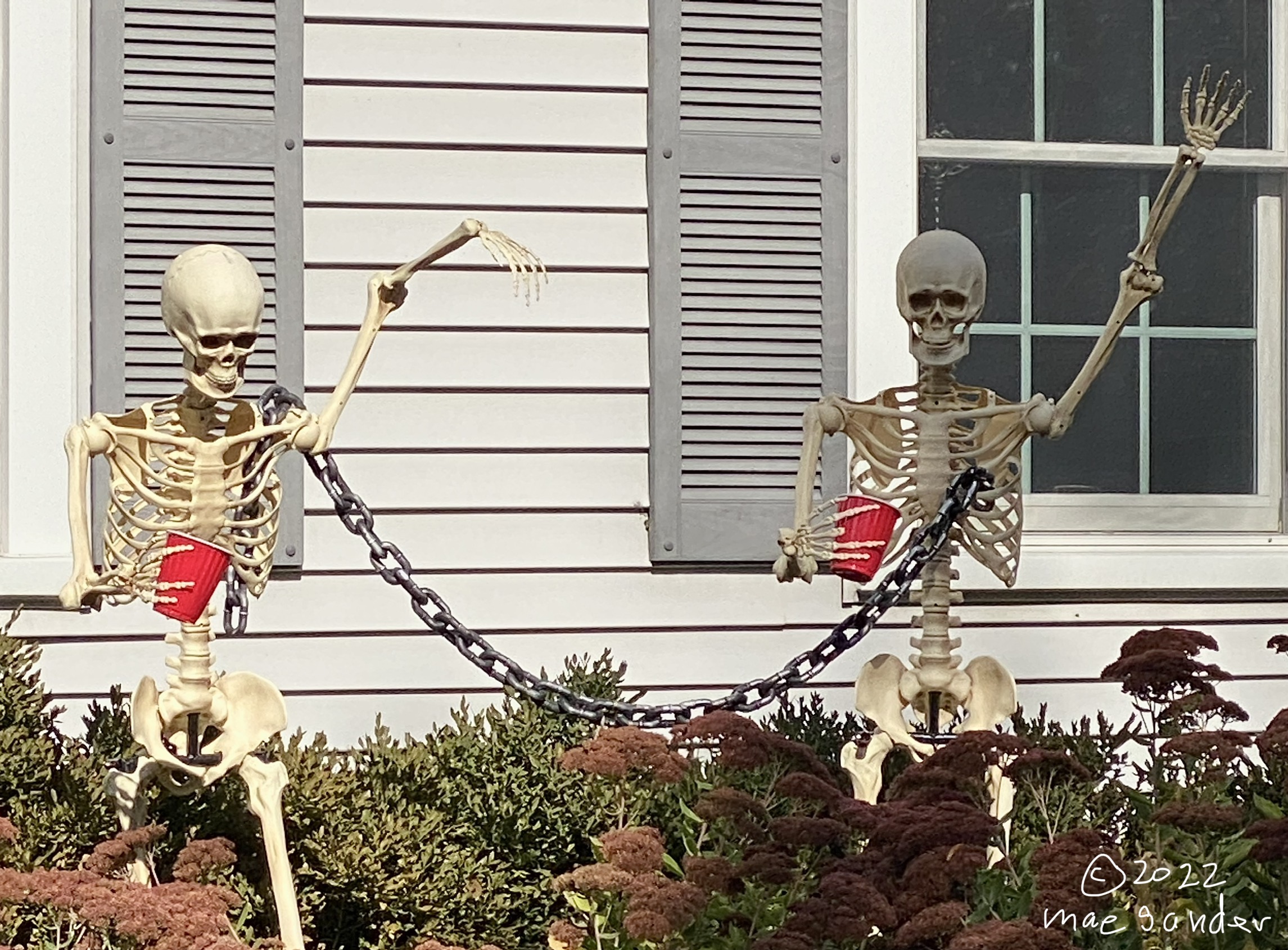
New photo update: these skeletons had real cups!


I think there's a drink in his pumpkin.


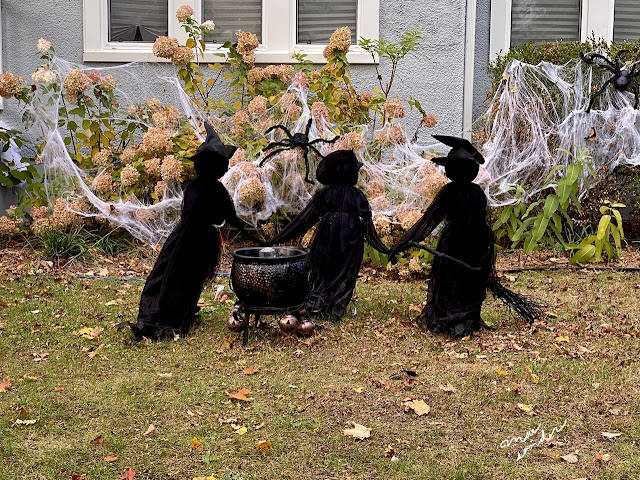
What was brewing in the cauldron last October? Mulled witch’s cider?

Don’t Drink and Fly…


Early comments make me think I should confess that I drew the drinks on the skeleton and witch photos, using my Apple pencil. My neighbors have wonderful decorations, but I enhanced them just a little!

Blog post and photos © 2021, 2022, mae sander


Sunday, October 16, 2022

Ultra Processed

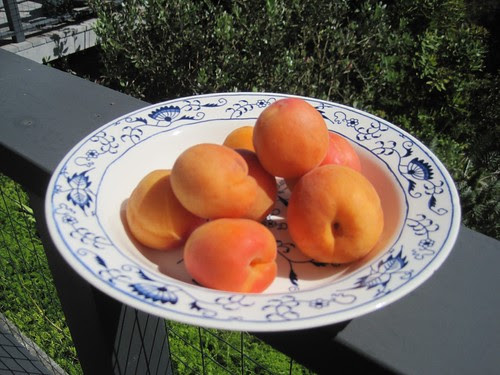
The best ripe apricots in the world from the Santa Barbara Farmers' Market, 2012.
How I wish it was always easy to get unprocessed food! 

“There is very clear observational data showing that people who have higher intakes of ultra-processed foods have higher levels of ill-health, whether it be cancer, cardiovascular disease, high blood pressure, obesity or type 2 diabetes.” (Statement from Dr Sarah Berry, a nutrition expert in the area of cardio-metabolic health at King's College in England.)

The Guardian today has an article titled "Fast food fever: how ultra-processed meals are unhealthier than you think." Understanding ultra processed food (UPF) and its consequences interests me quite a bit. This is a challenging subject: research on the effects of UPF has disclosed its association with obesity, cardiovascular disease, diabetes, dementia, and colon cancer. The article summarizes research on the role of inflammation in these and other health problems, and describes the mechanisms by which UPFs may trigger inflammation. It also discusses some political efforts in the UK to overcome some of the damage that they cause, including improving the foods and educating the consumers. This is a complex and active area of research, which I will not try to duplicate here -- you can read the article if you want details.

The ongoing research has created some understanding of a mechanism by which the food becomes such a risk to one's health. Obviously, humans since prehistoric times have been processing foods by chopping them up, cooking them, fermenting them, and other techniques, but UPF is something new. An expert epidemiologist quoted in the article summarizes: 

“The ultra-processed nature of modern food generally means that the complex structure of the plant and animal cells is destroyed, turning it into a nutritionally empty mush that our body can process abnormally rapidly.”

Defining UPF is a scientific issue in itself. Four categories have been defined, but like all continuums, there are issues with classifying some foods. This doesn't mean it's not useful, just a challenge! There are various ways to classify and define processing; the article divides foods into the following groups: 

  1.  "unprocessed or minimally processed foods (fruit, vegetables, meat, eggs, milk)"
  2.  "processed culinary ingredients such as sugars, oils and butter"
  3.  "processed foods (canned vegetables and fish, bread, jam)"
  4.   foods which "have undergone industrial interventions such as extrusion, moulding and milling" and which are "mostly low in protein and fibre, and high in salt, sugar and fat."
One problem I have with this simple classification is that I don't know how it would describe some traditionally processed foods, especially those that use fermentation to change the chemistry of the food. Traditional fermented dairy products like cheese and yogurt; traditional fermented vegetables like sauerkraut, tofu, and kim chee; and the production of bread using yeast fermentation -- all have a very long, pre-industrial history, which is not covered in this article. Not to even mention beer and wine!

Do Calories Count?

Another Guardian article, "Number crunching: why ultra-processed foods have a calorie problem" was published a few months ago, dealing with a different aspect of the general problem of UPF and how to choose a healthful diet. This article explains the limitations of calorie information, and how different foods and different processing methods can result in calorie counts that are quite misleading. Particularly, the calories in UPF are much more readily digested, with a variety of consequences, mostly not very good. 

A specific example about readily available food choices in England makes this point clearly:

"There are, for example, 678 calories in a Pret a Manger hummus salad, 684 in three Mars bars, and 708 in a portion of a Sainsbury’s fish and chips ready meal. These very similar numbers don’t tell us that the salad provides a third of our recommended daily fibre and half our daily fat; that the fish and chips contain almost half our daily salt but also half our daily protein; or that the chocolate bars would bust our sugar allowance. By only looking at calories – as on restaurant menus – we lose other, much more helpful information."

There's so much to learn and understand in the world of nutrition!


Review of articles by mae sander, © 2022.


Saturday, October 15, 2022

Reading Less

A snapshot from my Kindle.

I reviewed the first of these two novels by Andrew Sean Greer when it was new, in 2018 (here). I wrote: "I think that this novel is so funny because, obviously, the humor is self-deprecating, the novelist is making fun of himself and how he's too darn serious about living, aging, having aging friends, wanting to be famous..."

Well, before I read Less is Lost, the new sequel, I reread the first volume -- and I'm afraid I didn't find it as funny or enjoyable the second time. And the sequel was ok, but not fabulous. I don't know what's wrong with me, I know it was funny but it seemed like he tried to hard. It was just  TOO MUCH; should have been LESS. And it's now the books are being presented as if there is to be a whole series of sequels -- the publisher refers to "The Arthur Less Books." I think I'm going to stop at two.

The central character Arthur Less is still a bit hapless, worried about his identity, and so on, even when he flies:
"Peanuts! At thirty thousand feet! To Arthur Less, anything at high altitude feels miraculous; he simply cannot believe it’s happening. Perhaps it correlates in his system with quasi-forbidden boyhood delights such as flashlight-reading under the covers and smuggling chocolate into a treehouse. An offer of wine and Less shivers at the impossibility. How did they get wine up here? To him, it is as delicious as a cup of lemonade bought from a five-year-old’s stand, which is to say, always delicious. The same goes for the food; when he unwraps the foil to expose microwaved chicken or curdled lasagna, you would think he had found a golden ticket to a chocolate factory. His joy seems endless." (p. 51). 

The flying scene in the first book was funnier! A lot of ideas are better the first time.

Well, that's all I have to say. I should keep to my usual habit of never rereading most books.

Review © 2022 mae sander

Friday, October 14, 2022

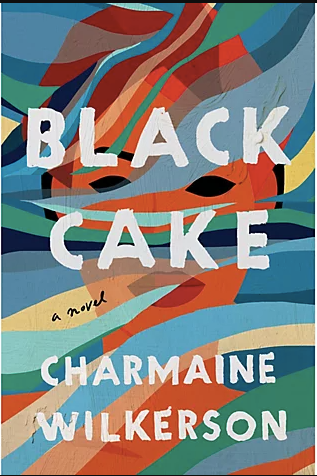
Black Cake

"The sugar began to darken and smoke as Pearl stirred. When it was almost black, she took a small pot of boiling water and poured its contents onto the sugar, turning her face away as the mixture sizzled and splattered. She would add the blacking to the batter to darken it, but only after she had whipped the butter, added the eggs, flour, spices, and, finally, the mixture of fruits that had been soaking for weeks in dark rum and port. This cake would be a work of art." (Black Cake, p. 117)

The novel Black Cake has the most complicated plot that I could imagine. Somehow it also tells a beautifully simple and direct story. Charmaine Wilkerson has written a most wonderful book. 

The novel begins as two characters, a brother and sister named Byron and Benny, get together for the first time in seven years after the death of their mother. The mother’s last wishes were to reveal the secrets of her life, and that's the entire plot: to tell her secrets. If I said more about their discoveries, it would spoil this remarkable tale of a woman who created herself, from her beginnings on an unnamed Caribbean island through her immigration to England, and finally, her death in California 50 years later.

Central to the mother's identity: the food of her native land, above all making Black Cake, a specialty of Jamaica, Belize, Barbados, Guyana, Trinidad, and several other islands. Without giving away the plot, here are the highlights of what is said about Black Cake.

Black Cake is a traditional Caribbean version of fruit cake, with spices and booze-soaked fruit. The batter is colored black by the use of dangerously hot burning sugar along with the dark-colored fruits. Lovers of Black Cake find it delicious. In the novel, it's also symbolic. The mother kept a jar of fruit soaking in her kitchen at all times, and used it frequently for making Black Cake. She had remembered the same practice in her childhood home. The Black Cake was served at wedding anniversary celebrations, and a new cake was always baked when the old one was eaten: Black Cake keeps almost indefinitely thanks to being soaked in the large quantities of rum or other alcoholic beverage.

Byron’s thoughts on Black Cake:
 
“His mother used to say she would make a black cake for Byron and Benny when each of them got married, but neither of them had. Ma’s cake was a work of art, Byron had to admit. That moist, loamy mouthful, the tang of spirits behind the nose. But Byron had never shared his parents’ emotional attachment to the recipe. Tradition, his ma used to say. But whose tradition, exactly? Black cake was essentially a plum pudding handed down to the Caribbeans by colonizers from a cold country. Why claim the recipes of the exploiters as your own?

“Tradition? How about coconut gizzada? How about mango ice cream? How about jerk pork, rice and peas, Scotch bonnet peppers, coconut milk, yellow plantains, and all those flavors that Byron had come to enjoy, thanks to his mother’s cooking? Now, that was what he called island food. But no, these had never been enough for his ma. More than any other recipe, it was the black cake that brought that creamy tone to his mother’s voice. That shine to her eye.” (p. 95)

Another character, Marble, is a TV food guru with a belief that many traditional foods have multi-cultural origins. During one of her broadcasts, she says this:

“What about the classic Christmastime fruit cake? In Britain, it’s often made with cane sugar from the tropics. In the Caribbean, it’s made with raisins and currants imported from colder countries. My grandmother, who was English but spent years living in Trinidad with her missionary parents, makes a divine rum cake, Caribbean style. She calls it black cake. But is it really Caribbean? Cane sugar didn’t even originate in that part of the world. It arrived from Africa, which in turn got it from Asia. So, you tell me, whose cake is it?” (Black Cake, p. 250)

Eventually, when going through their late mother’s kitchen, Benny and Byron find the jar of booze-soaked fruit that she kept behind the canned goods. Then Benny finds her mother’s recipe:

“There it is, where it has always been, a piece of folded, lined notepaper where her mother had scribbled down the recipe for her black cake. Benny unfolds the paper and runs her finger down the list of ingredients. Rum, sugar, vanilla. And the occasional verb. Cream, rub, mix. It is only now that Benny realizes that the recipe has no numbers, no quantities at all. Wait, was it always this way? It’s the same one from her childhood, she’s sure of it. Benny sees, now, that her mother’s recipe was never so much a list of firm quantities and instructions as a series of hints for how to proceed. What Benny learned from her mother had been handed down through demonstration, conversation, and proximity. What Benny learned from her mother was to rely on her own instincts and go on from there.” (p. 296)

There’s much more than cake in this fascinating novel! I definitely recommend it — and thank Evelyn, as it was another of her suggestions. And if you should want to try baking this exotic cake, there are many traditional recipes on the web, including one from the Washington Post here


Review copyright © 2022 mae sander


More Neighborhood Creatures


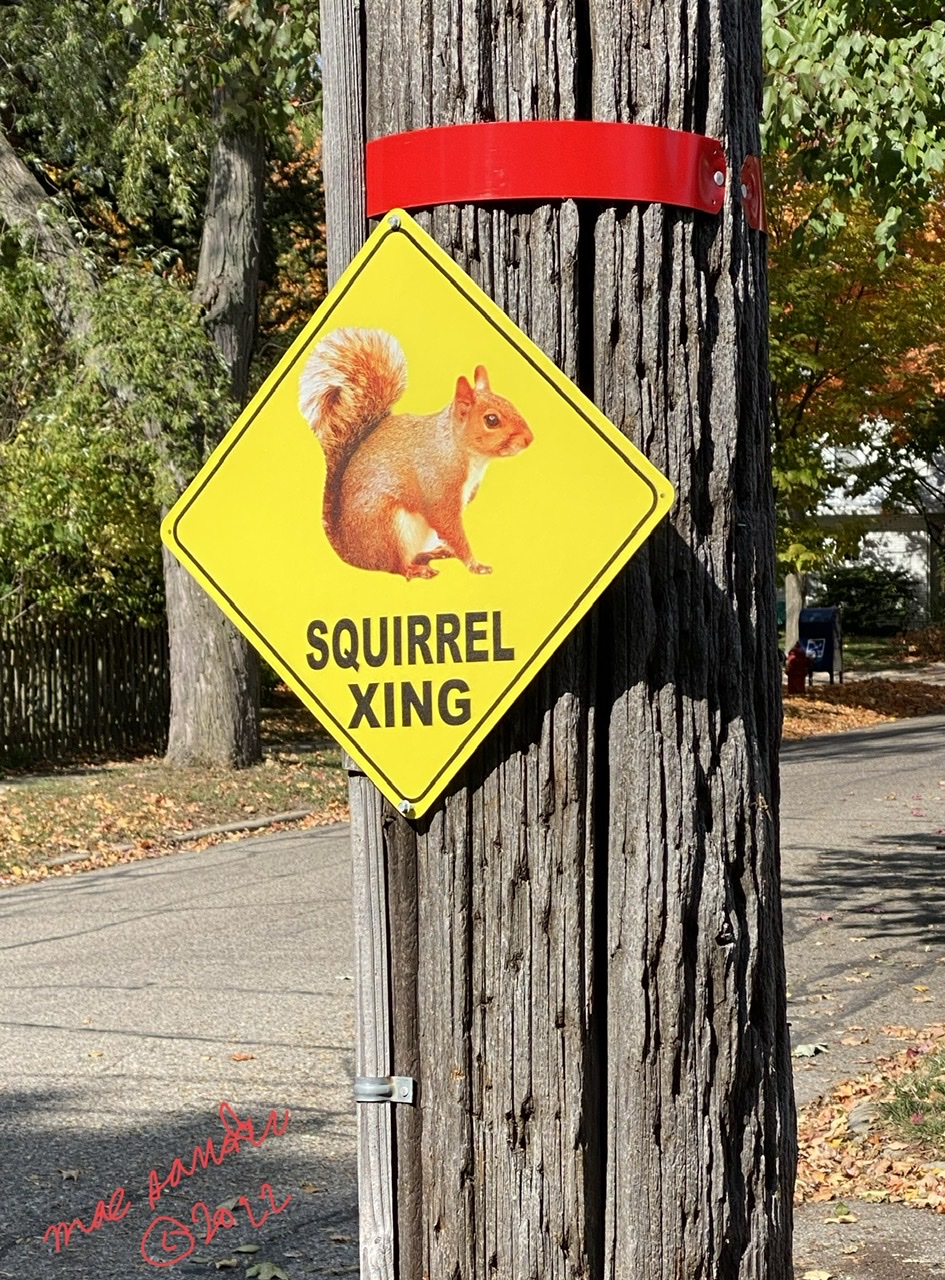
Squirrel food


Ready for more Michigan games!


Blog post © 2022 mae sander for mae food dot blogspot.com
Thursday, October 13, 2022

A Tree Grows in Brooklyn

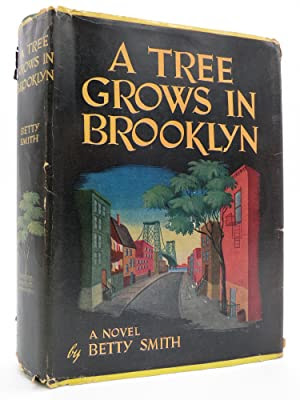
A Tree Grows in Brooklyn:
Original 1943 Dust Jacket
A Tree Grows in Brooklyn was a huge best seller in 1943 -- before my time, obviously. This novel portrayed a family in Brooklyn from around 1905 until the First World War. I've been hearing about it all my life, but somehow I just read it for the first time, thanks to some encouragement from Evelyn. It's an amazingly good read! Still! 

Most of the time while reading, I felt as though I was reviewing the early life my mother and her two older sisters. At pretty much the same time as in the novel, they were children of a widow, living in an immigrant neighborhood in pretty extreme poverty -- though they grew up in St.Louis, not Brooklyn. I'm pretty sure they felt a lot of kinship with the character of Francie Nolan, Betty Smith's now-enduring creation. They occasionally mentioned the book, in fact, though I don't remember any details of what they said. And they remembered the same changes happening in their world as in the novel: from gaslight to electric, from mostly horse-drawn vehicles to automobiles, from live performances to moving pictures, from wearing long hair to a stylish bob, and so on.

It seems kind of silly to review a book that's been popular for so long, so I'll say only this: the writing still seems fresh, the characters still seem alive, and the pain of being a poor and unfavored child remains with us. To me, Francie is just wonderful! Betty Smith offers her readers vivid descriptions of teachers who were cruel to because the children they taught were poor and mainly immigrants, of the way Francie's mother was raising her children on virtually no money, of the agony of an addicted father who eventually died of alcoholism, and of many other issues that speak as loudly today as they did in 1943.

One example of Francie's mother's resourcefulness: she could make a whole week of meals from a few loaves of unsold bread bought from the bakery when the food shops returned them -- 

"She’d take a loaf of stale bread, pour boiling water over it, work it up into a paste, flavor it with salt, pepper, thyme, minced onion and an egg (if eggs were cheap), and bake it in the oven. When it was good and brown, she made a sauce from half a cup of ketchup, two cups of boiling water, seasoning, a dash of strong coffee, thickened it with flour and poured it over the baked stuff. It was good, hot, tasty and staying. What was left over, was sliced thin the next day and fried in hot bacon fat. Mama made a very fine bread pudding from slices of stale bread, sugar, cinnamon and a penny apple sliced thin. When this was baked brown, sugar was melted and poured over the top. Sometimes she made what she had named Weg Geschnissen, which laboriously translated meant something made with bread bits that usually would be thrown away. Bits of bread were dipped into a batter made from flour, water, salt and an egg and then fried in deep hot fat." (pp. 41-42).

In fact, there's even more that Francie's mama made from stale bread. And these meals were good and provided almost enough to eat. Later, things got even more difficult. Mama had to invent a game, pretending that they were explorers at the North Pole, trapped with almost no food -- because they had no money even for stale bread and a few scraps. And thus they had to make do with whatever was in the house: near starvation. Francie quickly sees a catch: 

“When explorers get hungry and suffer like that, it’s for a reason. Something big comes out of it. They discover the North Pole. But what big thing comes out of us being hungry like that?" (p. 215). 

In short, it's a book full of wonderful observations about life in another time, but with so much that still resonates, I think. Francie's father could exist right now -- painfully, the huge issue in his life (beyond his alcoholism), was obtaining fair wages for his work as a waiter. This hasn't gotten any better in well over 100 years. He put it this way:

“Before I joined the Union the bosses paid me what they felt like. Sometimes they paid me nothing. The tips, they said, would take care of me. Some places even charged me for the privilege of working. The tips were so big, they said, that they could sell the waiting concession. Then I joined the Union. Your mother shouldn’t begrudge the dues. The Union gets me jobs where the boss has to pay me certain wages, regardless of tips. All trades should be unionized.” (A Tree Grows in Brooklyn, p. 30). 

Finally, I love the optimism the ending: Francie's hopeful departure for the college experience she always craved -- especially because she heads for Ann Arbor and the University of Michigan! 

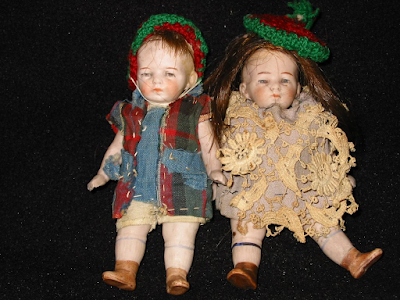
"And Francie had never had a doll except a two-inch one that cost a nickel." (p. 197)
In this photo you can see my mother’s nickel dolls from around 1914.
They were dressed by her sisters, and are around 3 inches tall.


Review © 2022 mae sander.

Wednesday, October 12, 2022

Monday, October 10, 2022

Halloween Classics

From the Food Network: A Black Light Cocktail (source)

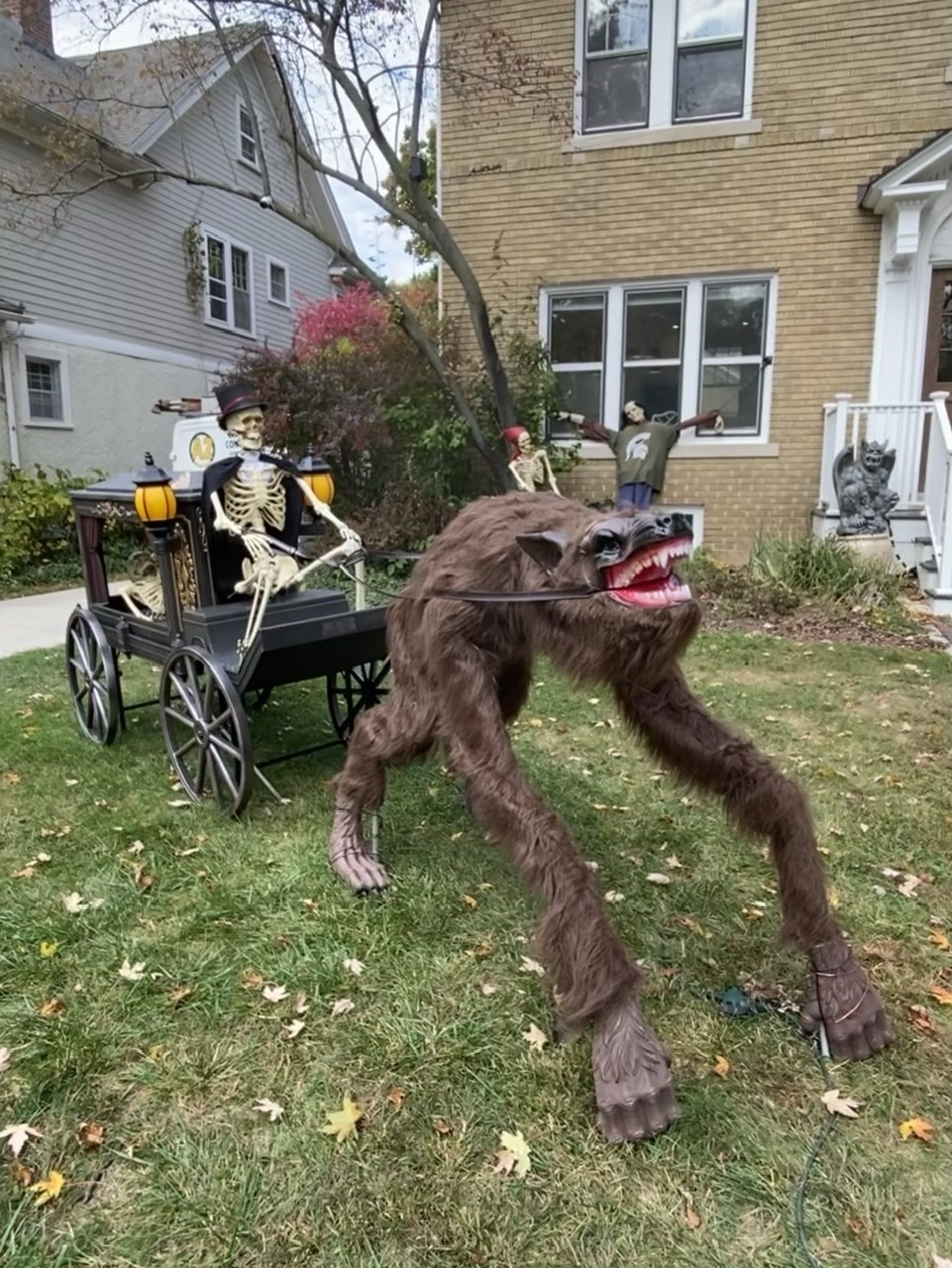
My neighbors have started decorating their houses and lawns for Halloween, and everywhere I shop has Halloween candy. It’s time to think about the holiday, so I’ve been trying to make a list of classic literature for Halloween reading. Here are my favorites. I’ve read them all, mostly more than once, and enjoyed them, though some of them frightened me!

  • Dracula — Bram Stoker, 1897
  • The Legend of Sleepy Hollow— Washington Irving, 1820
  • “The Raven” — Edgar Allan Poe, 1845
  • Frankenstein; or The Modern Prometheus — Mary Shelley, 1818
  • Macbeth— Shakespeare, 1606
  • All the Harry Potter books —- J.K.Rowling, 1997 - 2011
  • Halloween Party — Agatha Christie, 1969
  • The Graveyard Book — Neil Gaiman, 2008
  • Mexican Gothic — Silvia Moreno-Garcia, 2020 (reviewed here: Cthulhu Comes to Mexico)
  • Anything by H.P.Lovecraft (lived 1890-1937) — If his creepy characters don’t scare you, his racism will.
I’m concentrating here on literary works. I know there are many others that I am less familiar with, notably Stephen King. Of course, tons of movies and TV specials also have Halloween or otherwise supernatural and spooky themes! And most of the classics that I named have been made into films, sometimes over and over again. Like there seem to be at least 60 versions of Dracula.


Blog post © 2022 mae sander. Images as credited.


Saturday, October 08, 2022

In Our Town

IMG_5276
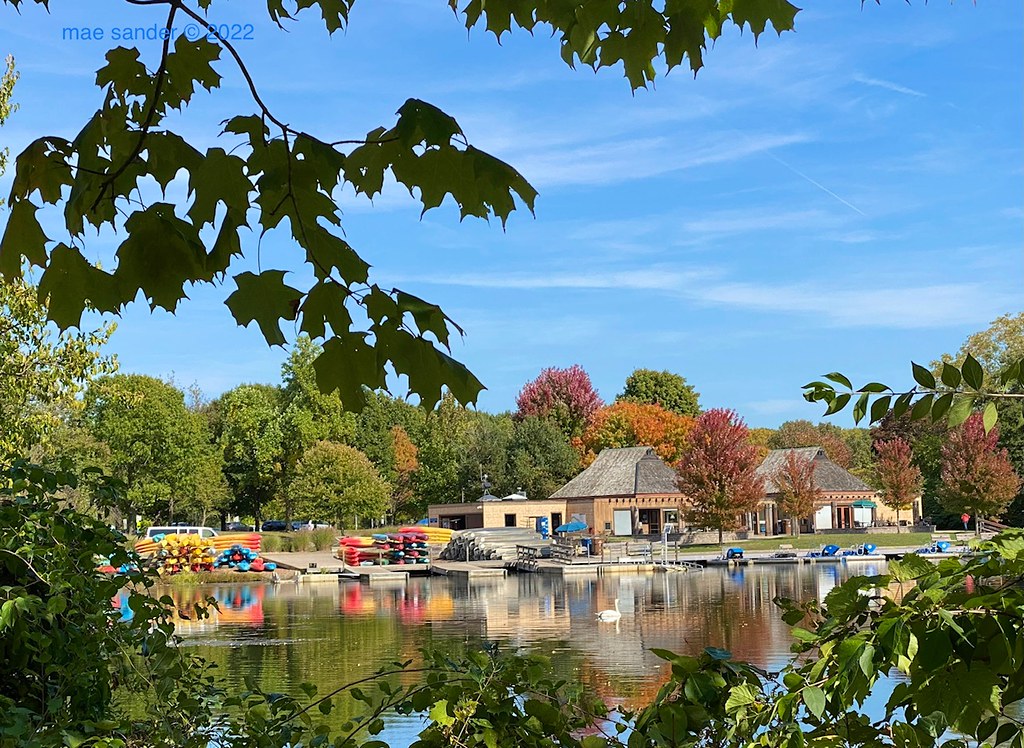
Gallup Park Boathouse


IMG_5214
My house last week, just before the leaves began to turn.


IMG_5270
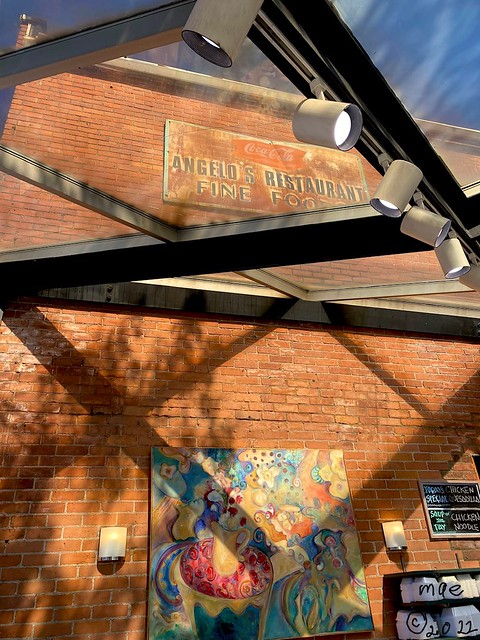
Angelo's Diner: The sign seen from the back dining room.


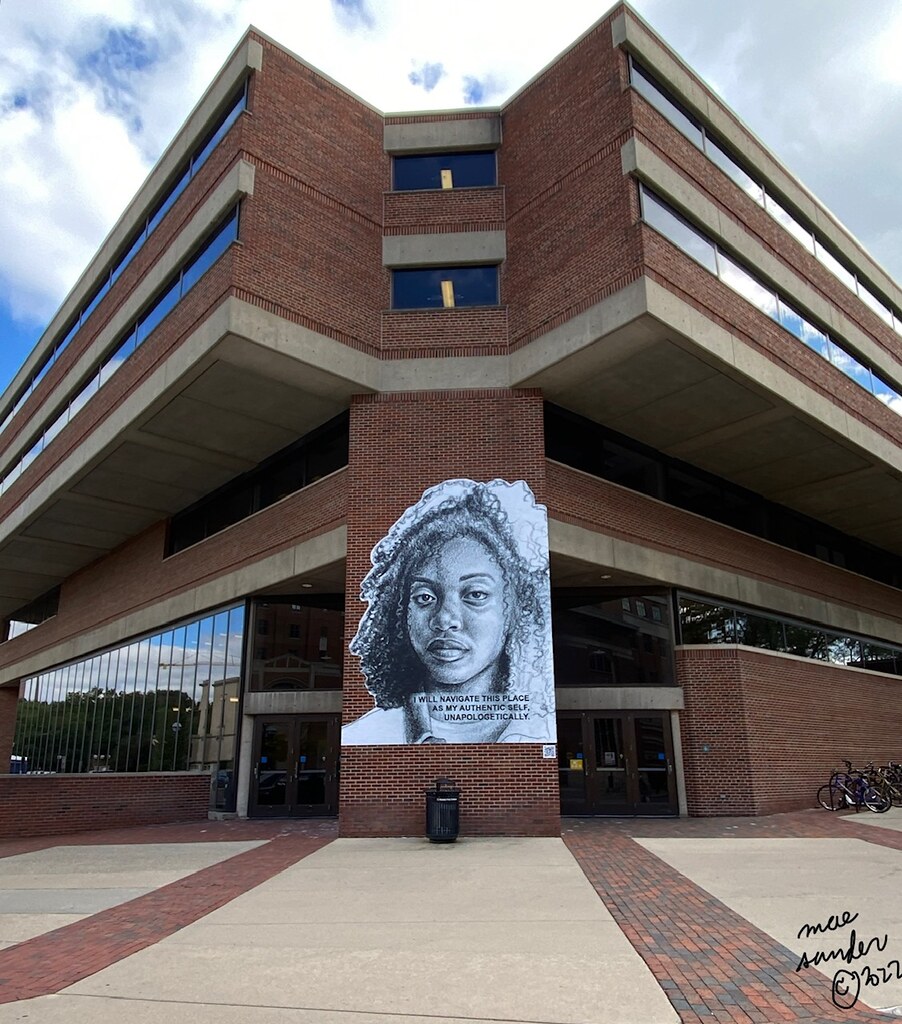
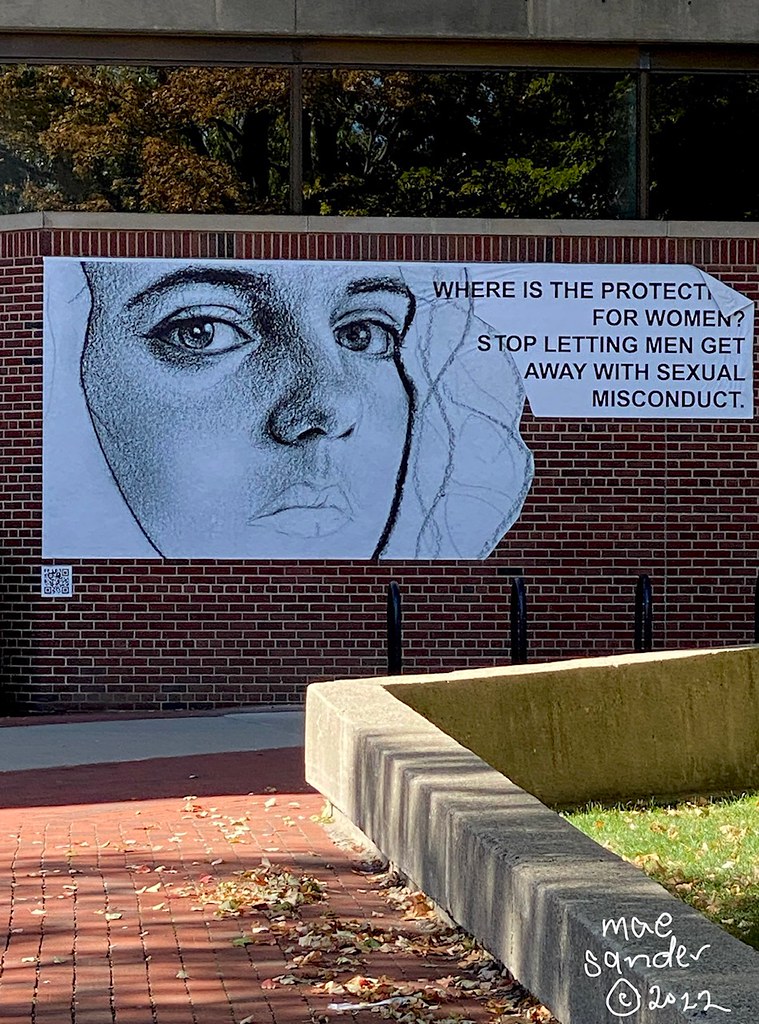
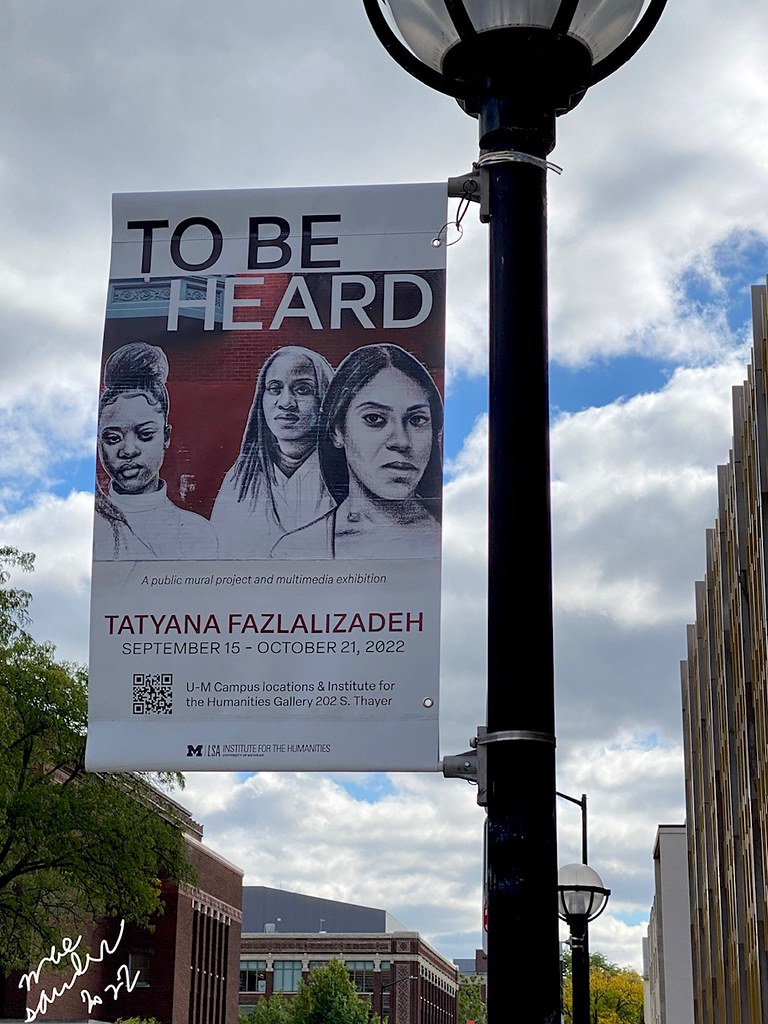
Outdoor Art on Campus

 IMG_5229 

  IMG_5227 

IMG_5220

  IMG_5268

About the Artist:

"Tatyana Fazlalizadeh is a Brooklyn-based street artist and painter. She is from Oklahoma City, born to a Black mother and Iranian father. Her work is rooted in community engagement and the public sphere. She makes site specific work that considers how people, particularly women, queer folks, and Black and brown people, experience race and gender within their surrounding environments—from the sidewalk, to retail stores, to the church, to the workplace. Fazlalizadeh is the creator of Stop Telling Women to Smile, an international street art series that tackles gender-based street harassment" (source)
Shared with the Sunday Salon at Readerbuzz and with Sami's weekly murals.

All photos  © 2022 mae sander.

Friday, October 07, 2022
Our Neighborhood from the Air
Drone photo of the Ann Arbor Skyline


Burns Park kids and tennis courts.


Our guests last weekend with us in the park.

Our neighborhood school.

A local dragonfly for Eileen's Critters.

Drone photos by Len and Evelyn. © 2022 for maefood dot blog spot dot com.