Showing posts with label bagels. Show all posts

Friday, May 16, 2025

Graduation Weekend Begins

Thursday: Fairfax, VA


School spirit: University of Virginia, Hopkins, University of Michigan.

From the Swiss Bakery: favorite rolls. Plus cheese.

Miriam working on her research papers.

Characters and creatures from the Augsburg Puppet Theater.

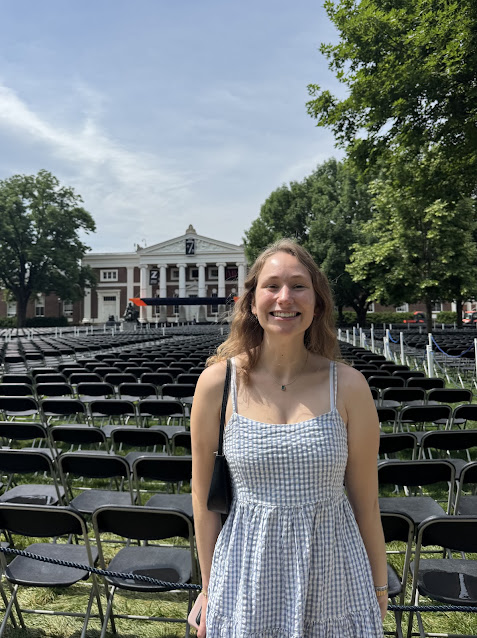
Friday: First Graduation Party in Charlottesville

Alice’s Graduation Ceremony is Tomorrow.


Graduating Feet (mostly)

The Graduate

Alice in front of the chairs ready for tomorrow’s ceremony. Photo by Miriam.


Earlier in the day: Lunch and Coffee


Bodo’s Bagels.

One of many Charlottesville murals.

Photos © 2025 mae sander


Sunday, December 10, 2017

Bagels, Lox, Corned Beef, Challah, Rye Bread: What is Jewish food?

"English... has been using [the word] schmaltz for at least eighty years in a sense undreamed of in Yiddish. The earliest metaphorical use given by the OED is from a 1935 article in Vanity Fair that describes schmaltz as 'a derogatory term used to describe straight jazz.' ... Schmaltz was the rendered essence of square, and soon came to be applied to any artistic production, musical or not, that was overly sentimental, excessively sweet, and never, ever subtle. If the emotion in sentimentality is unearned, that in schmaltz is indigestible."--(Michael Wex, Rhapsody in Schmaltz, pp 87-88)

Schmaltzy in English today has become a synonym for corny, often applied to bad jokes. Excessively shmaltzy comedy routines and self-conscious, too ethnic, Jewish comedians aren't as popular as they used to be 50 or 60 years ago. The word schmaltz makes me think of cheap jokes that bring up Jewish stereotypes -- old stereotypes that don't even particularly apply to the current generation.

Michael Wex's book Rhapsody in Schmaltz is full of this unfortunate type of humor, often very out of date, so I don't know what younger readers would make of it. I find it hard to believe that the book was just published last year (2016)!  Here's a sample corny sentence: "Goose fat is generally thought of as the tastier, more full-bodied schmaltz, the Jayne Mansfield of kosher cooking, as compared with the Audrey Hepburn that is chicken schmaltz." (p. 79).

Wex also includes quite a few colorful Yiddish sayings that incorporate specific foods into insults, character judgements, or generic folk wisdom. For example, "to fall into a schmaltz mine" in Yiddish means either "to strike it rich" or or "to stumble into an unexpected stroke of good luck: 'I was looking for Archie comics at the swap meet and found a Gutenberg Bible for fifty cents— bin ikh arayngefaln in shmalts-gribl, I fell into the mother lode of chicken fat.' Ironically, someone who does so is often described as having treyfene mazl, unkosher luck, the Yiddish version of 'the luck of the Irish.'" (p. 87). Or this: "'kugel with lard'— kugl mit khazer-shmalts— is used in Yiddish to describe un-Jewish ideas that have been given a superficial coat of Jewishness. ... if Jewish liberals still spoke Yiddish, they’d be using it on Jewish Republicans who use their religious background to justify their social and political ideas." (p. 137).

Rhapsody in Schmaltz also includes some reasonably decent historic discussions about Jewish food in Eastern Europe -- my reason for reading the book was that I expected some real history. Along with the schmaltzy jokes, the history is there; though the long digressions about the Biblical basis of some food customs are a bit tedious, as are explanations of the blessings that religious Jews said over various types of food, and how that affected their attitudes towards the food. Wex says that Sabbath foods are the mainstay of Jewish cuisine, so he spends a large amount of time describing them and how they came to be eaten on this weekly Jewish special day.

My favorite element of the book is the way it explains how some seemingly Jewish foods of great historic longevity are of very recent adoption. Potatoes -- the food my father most remembered from his childhood in the shtetl -- came into Jewish life around 1800 or 1850 when they became staples in Eastern Europe. "Czar Nicholas I, more mindful of the potato’s superior yield and short growing season than of the recent disaster in Ireland, introduced its mass cultivation to his empire and transformed the East European diet." (p. 116). Other foods, like corned beef, unknown in Europe, were bound up with the history of delicatessens in American cities like New York and Montreal.

Wex also covers foods that have been in Jewish life for centuries. For example, "Noodles— specifically egg noodles— are among the oldest Ashkenazi dishes and have occupied a prominent place in Ashkenazi cookery since at least the eleventh century, when they were mentioned under the name frimsls in the High Holiday prayer book of Simcha ben Shmuel of Vitry, who died in 1105." (p. 127).

Rhaposdy in Schmaltz explains the role in Jewish life of a huge number of foods. A few of the most entertaining or instructional topics:
  • Bagels, lox, and cream cheese, now completely incorporated into American food ways, used to be a breakfast treat only for Jews and maybe other patrons of Jewish food establishments. Bagels originated in the Yiddish-speaking areas of Eastern Europe. Christian inhabitants of this area also baked and enjoyed bagels, but didn't come to America and start bakeries and delis. Cream cheese, on the other hand, is "a purely American product, invented in upstate New York in 1872." (p. 229).  And lox is somewhere in between, having become associated with bagels late in its history and mainly in New York and other Jewish cities.
  • Corned beef, pastrami, and rye bread, which also started as Jewish deli menu items, are now widely popular in the US. I was most interested to learn from Wex that pastrami and corned beef were strictly American developments in Jewish gastronomy, not at all from Yiddish cuisine. Rye bread in Eastern Europe, he explains, was far different from the product of American Jewish bakeries. "Delicatessen as we know it," he writes in his corny way,  is "the food that kills those who love it best." And an "American variation on a few themes with roots in Europe." (p. 251). 
  • Chicken soup and gefilte fish became stereotyped Jewish foods in the US, though not without a reason. While chicken soup is cooked and enjoyed anywhere that there are chickens (which means everywhere), gefilte fish, Wex explained, was truly a Jewish invention for complicated reasons involving requirements and restrictions on foods eaten for the Sabbath. He also rants and rages because he hates gefilte fish from a jar, which is the only kind most ordinary Jews now less than 85 years old have ever really eaten. I think he missed some of the details of gefilte fish history, which I wrote about in a blog post some time ago here.
  • Cholent and goose were also Sabbath and holiday foods in the shtetls and cities of Eastern Europe. Goose, obviously, was the bird Jews ate (and used as a source of schmaltz) before they switched to mainly chicken and sometimes turkey. Cholent, the slow-cooked Sabbath stew, is explained in great detail, for the benefit of his readers who may never have seen it. "Second only to matzoh in antiquity, cholent is the only other Jewish food that might have originated with the Jews themselves," writes Wex (p. 108). The discussion of cholent and its close relatives kugel, kishka, "the stuffed neck of poultry known as a heldzl," calf’s-foot jelly, and the fruit or vegetable stew known as tsimmes all, according to Wex, were close associates of cholent. 
  • Kugel is a noodle pudding or potato casserole with traditional ingredients. "Even non-Jews considered kugel the Jewish food par excellence," Wex writes. "In 1728, Jesuits in Vilna threatened to excommunicate Catholics who ate 'Jewish kugel and other Jewish dishes.'"(p. 132). Like cholent, kugel could also be slow-cooked to allow a hot meal to be served on fire-prohibited holidays and Sabbath. Unlike cholent, kugel has taken on a life of its own in modern America. In my opinion, Wex missed some details about kugel and its Americanization.  I wrote about it a couple of years ago in this blog post. 
  • Challah is the Sabbath bread which seems to be a permanent forever fixture of Jewish Sabbath celebration. In fact, bread was part of the Sabbath ritual from early times, but the specific braided bread made with egg and oil came into Jewish life only around 500 years ago, "adapted from German breads baked for special occasions, especially Sundays." (p. 154).
  • Matzohs and matzoh balls, says Wex, owe a lot to the American entrepreneurs who developed mass-market packaged versions of these and many other Passover foods. He writes of "the matzoh ball, which began as the food of dreams ... only to end in the depressing ubiquity that has made it the main ingredient of too many lousy jokes." (p. 97). 
  • Carrots -- "Whether anchoring a tsimmes, floating in chicken soup, or crowning a piece of gefilte fish, the carrot is among the preeminent Yiddish vegetables, in part because its Yiddish plural form, mern, is identical to the Yiddish verb that means 'to increase.' Along with apples and honey and various other foods, it is eaten on the night of Rosh Hashana as part of a tasting ritual that presents our hopes for the new year in edible forms. ... Carrots are eaten to go along with a supplication that our merits might increase." (pp. 143-144). 
My overall impression is that Wex's book is flawed in its style, but contains lots of good information. I was familiar with quite a bit of the historical material, as I'm really very interested in Jewish food history. There are better sources for some of the specific materials, but he put it together in an effective way. Here to end is Wex's description of some of the best-known Jewish foods in America, illustrating again how he can be both corny and informative at the same time:
"If rugelach and chala have become moderately well known outside of the Jewish community, the bagel has managed the near unimaginable feat of actually becoming American, despite the fact that unless it’s come hot from the oven, this 'unsweetened doughnut with rigor mortis,' as it has too often been called, has half the shelf life of a fruit fly, a best-before-date of fifteen minutes prior to purchase. More than any other food discussed in this book, the bagel has been the focus of a great deal of talk about authenticity: Can bagels be frozen without losing their character? Are blueberry or cinnamon-raisin swirl acceptable bagel flavors? Are flavors acceptable at all, and if so, why stop with onion and garlic? Are sesame seeds better than poppy seeds, or should a proper bagel be seedless?" (p. 223)

Friday, December 04, 2015

Life is Like a Bagel in "Mr. Penumbra's 24-Hour Bookstore"

Clay Jannon is the narrator of the novel Mr. Penumbra's 24-Hour Bookstore by Robin Sloan. Clay begins his story with his regrets over the ideal job that he no longer had:
"The job I lost was at the corporate headquarters of NewBagel, which was based not in New York or anywhere else with a tradition of bagel-making but instead here in San Francisco. The company was very small and very new. It was founded by a pair of ex-Googlers who wrote software to design and bake the platonic bagel: smooth crunchy skin, soft doughy interior, all in a perfect circle. ...
"But then the economy took a dip, and it turns out that in a recession, people want good old-fashioned bubbly oblong bagels, not smooth alien-spaceship bagels, not even if they’re sprinkled with precision-milled rock salt." (p. 2-3)
Platonic bagels or ordinary bagels: the book starts out with the divide between the ideal and the achievable. This divide informs much of the thought in the book, although the actual subject matter is quite different from bagels.

The real subject of the book is the narrator's next job in the strange and surreal bookstore run by a mysterious Mr. Penumbra, patronized by some very strange readers and a few ordinary customers, and owned by a still-more ungraspable corporation owned by a still stranger CEO. An ambitious woman who works at google, the ability of google to scan and analyze even very obscure books and data, a repository of rejected or lost museum items, and a number of fascinating and eccentric characters make this book totally fascinating.

The plot is very convoluted, as the narrator and his friends try to discover the secret of information that is encoded in the mysterious and unreadable books on the very high bookshelves of Mr. Penumbra's store. I was delighted when the key turned out to be the historical figure Aldus Manutius, who has fascinated me for a long time. In particular, I have always been amazed by the parallels between the humanist printer Aldus (who lived from around 1452-1515 and made a gigantic contribution to the new printed-book paradigm) and the Internet (with its gigantic shift in attitude towards those printed books).

Says Penumbra "Aldus Manutius gathered scribes and scholars at his printing house in Venice, and there he manufactured the first editions of the classics. Sophocles, Aristotle, and Plato. Virgil, Horace, and Ovid."

Clay responds: "Yeah, he printed them using a brand-new typeface, made by a designer named Griffo Gerritszoon. It was awesome. Nobody had ever seen anything like it, and it’s still basically the most famous typeface ever. Every Mac comes preinstalled with Gerritszoon." (p. 133).

In actual history, Aldus's type designer was named Francesco Griffo whose best-remembered invention was italic type. In Mr. Penumbra's 24-Hour Bookstore, parallels, both fictional and not, between Aldus's accomplishments and those of google seemed to me very thrilling -- way better than the ideas I thought up years ago, before google emerged. The fiction in the book goes much further than mere parallels, describing a search for the original moveable type that would have been used in Aldus's workshop in Venice. A lost and coded book by Aldus himself also plays a major role in the plot. Both Clay's quest for these fictional items and the underlying interest in matters of design and media throughout the novel are wonderfully inventive.

Old Technology-New Technology:
"With her standing right next to me, her elbow poking me just the tiniest bit, I basically feel drunk. I’m trying to formulate my next steps. I’ll recommend Edward Tufte, The Visual Display of Quantitative Information. Penumbra has a copy— I’ve seen it on the shelf. It’s huge." (p. 50). The book in the photo is my copy of an earlier edition of Tufte's book.
I don't intend to summarize the very complicated plot of the book, or its wonderful backdrops in San Francisco, New York, Google Headquarters, and several other locations. I enjoyed many details, particularly the food that Clay eats. Like his friends, co-workers, roommates and other people he meets, and like the technology he describes, his meals and snacks are always very typical of the twenty-first century. Examples:
"We are in the Gourmet Grotto, part of San Francisco’s gleaming six-floor shopping mall. It’s downtown, right next to the cable-car terminus, but I don’t think tourists realize it’s a mall; there’s no parking lot. The Gourmet Grotto is its food court, probably the best in the world: all locally grown spinach salads and pork belly tacos and sushi sans mercury."(p. 57)
Free lunch at the cafeteria at Google headquarters:
"The food is, as promised, fantastic. I get two scoops of lentil salad and a thick pink stripe of fish, seven sturdy green lines of asparagus, and a single chocolate-chip cookie that has been optimized for crispiness." (p. 83). 
And in New York City:
"Now we are sitting quietly on a bench in the skinny city. The sky is getting light, but we’re cloaked in shadows, breakfasting on perfectly imperfect bagels and black coffee, trying to look normal." (p. 124).  
For more about Aldus see this article commemorating the 500th anniversary of his death: "A Tribute to the Printer Aldus Manutius, and the Roots of the Paperback." From the article: "Most of Aldus’s contributions to the art of printing are more subtle, like that first italic typeface, which he created with the type cutter Francesco Griffo, a shadowy fellow who broke with Aldus acrimoniously and then slugged a man to death with an iron bar before reputedly meeting his own demise at the end of a hangman’s rope."

Thursday, December 03, 2015

Falafel in Recent Books


I just read a review of a book I'm really interested in reading when I have more time! Some excerpts from the very intriguing review of one essay in the book:
"Prof. Shaul Stampfer had set out to research what bagels and falafel mean to Jews. But what he discovered on the way surprised him – and goes to the heart of Israeli-Palestinian identity politics. ... Both bagels and falafel are relatively modern inventions, Stampfer discovered. This runs contrary to his initial assumption, as well as to claims that Israelis appropriated falafel from the Palestinians.
...
"Some argue that falafel was an Arab dish that was appropriated by Israeli Jews – an act of cultural appropriation said to mirror other forms of Israeli violence against Palestinians. This argument rests on the assumption that falafel has a long history in the Arab world, and that Jewish immigrants to the Middle East have attempted to disregard or erase its Arab or Palestinian roots by calling it an Israeli food. Until now, a common counter argument was that many Israeli Jews are originally from Arab nations, and their ancestors therefore made falafel, too. 
"But Stampfer says that these arguments rest on claims that are simply incorrect. Falafel is too recent a development to have been appropriated by anyone, he writes. Yet many Israelis have accepted the Palestinian claim 'that the Jews living in Israel illegitimately adopted a food of another population.'"
-- "Food Wars: Did Jews Invent Falafel After All," Ha'aretz, December 2, 2015.
Also very interesting: several other recent books deal with the same topic, some of which I have read. Three books:

  • Beyond Hummus and Falafel: Social and Political Aspects of Palestinian Food in Israel by Liora Gvion
  • Falafel Nation: Cuisine and the Making of National Identity in Israel by Yael Raviv
  • Jews and Their Foodways (Studies in Contemporary Jewry) edited by Anat Helman, which includes "Bagel and Falafel: Two Iconic Jewish Foods and One Modern Jewish Identity," the essay by Shaul Stamfer.

Monday, September 21, 2015

Bread and Wonder Bread

"Whole -grain bread has been enjoying something of a renaissance. Actually, that renaissance got a first, false start during the 1960s, when the counterculture, steeped in romantic ideas about 'natural food,' seized on white bread as a symbol of all that was wrong with modern civilization. Brown bread, being less processed than white, was clearly what nature intended us to eat. They probably should have stopped there, but did not, alas. Baking and eating brown bread also became a political act: a way to express one's solidarity with the world's brown peoples (seriously), and to protest the 'white bread' values of one's parents, who likely served Wonder Bread at home. These ideals resulted in the production of some uncompromising and notably bricklike loaves of dark, seedy bread, which probably set back the revival of whole-grain baking a generation." -- (Cooked, p. 263)
In Cooked Michael Pollan writes about his efforts to learn to bake delicious, crusty, naturally-leavened bread, as well as about barbecuing and braising meat, fermenting vegetables, and about cooking in general. He discusses the history of white bread in America, and mentions that Wonder Bread and its competitors dominated the diet of Americans in the 1950s, as well as this interesting observation about 1960's "hippie texture" bread, which I remember with no pleasure at all.

In our family, Wonder Bread was the children’s bread. My sister, brother, and I, as we grew up in the fifties, ate Wonder Bread toasted for breakfast, and our bag lunches always contained sandwiches: peanut butter, tuna, sliced meat, yellow cheese or maybe cream cheese with walnuts on Wonder Bread. At dinner we ate bread too – my parents felt that bread was an essential part of every meal. I sometimes ate the slightly rubbery brownish Wonder crusts first and then squeezed and rolled the soft white center into a solid ball, which had an interesting texture in my mouth.

Even the wrappers of Wonder Bread, which constantly boasted of higher numbers of ways it “built strong bodies,” were for children. When I was in kindergarten or first grade, my friend Judy took one of the brightly colored Wonder Bread wax-paper wrappings to the playground at school and slid down the sliding board with it under her bottom. The wax made the slide really slippery – surprising the other kids when they slid down. Or maybe she just told me she wanted to do this, and didn’t really do it. I don’t know.

For our parents, Wonder Bread was at best unappealing, and I seriously doubt that they believed all its claims to foster growth in their children. Once or twice a week my father went to a Jewish bakery called Pratzel’s, which was a few blocks from our home in University City, MO. He always bought rye bread, which was what he liked to eat. He had several slices of rye bread with breakfast and dinner. I have no memory at all of what he ate for lunch most days, though corned beef on rye with a half-sour pickle might have been his Saturday choice.

This bakery rye was the closest to the bread of his childhood when rye bread was the main food, or even the only food, for almost all meals. Even for Passover, my radical father bought several loaves and kept them in the freezer so he wouldn’t have to resort to Wonder Bread, or for that matter, to matzoh.

Pratzel's made a number of other baked goods, which we ate as occasional treats: pumpernickel, a white bread called “buttercrust,” jelly donuts, bagels, kaiser rolls with a crisp crust, challah, cylindrical cinnamon bread made from a challah-like dough, cheese or jelly-filled Danish, and coffee cake or stollen. But rye bread was most important among all these choices.

My father didn’t just prefer Pratzel’s bread to grocery-store bread. He vastly preferred their baked goods to those from other Jewish bakeries. Each loaf of Pratzel’s rye bread had a Union Label on the heel of the bread, which I remember in a sort of schematic way; it was red and blue. It wouldn’t surprise me if some kind of union politics, not only taste, played a role in my father’s bakery preference. He had a lot of politics in his background. 

As we grew a little older, our taste in bread moved much closer to our parents’ taste, and we began eating the same bread that they did. I think by the time we were teenagers, the flamboyant red, blue, and yellow bubbles on the Wonder Bread package no longer appeared in the white metal flower-decorated Bread Box in my mother’s pantry. Just the white paper bags – or later plastic bags – containing real Jewish rye and other real bread. As a result, I didn't experience the sixties bread folly in anything like the same way that a lot of people did!

In Pollan's long and very readable narrative about bread in Cooked, he visited a Wonder Bread factory and several small-scale artisan bakeries, but he never visited any old-style ethnic bakeries like Pratzel's, though it would have been possible for him to do so. As it happens, Pratzel's Bakery remained in business until the fall of 2012, closing after almost 100 years of baking. Wonder Bread, a brand founded in 1921, was owned by several baking companies in its long history. When the Hostess corporation went out of business, coincidentally also in the fall of 2012, Wonder Bread was one of the brands that disappeared from supermarket and convenience store shelves -- but it came back around a year later.

I've written about some of our family food choices, including bread, before. Other blog posts on Wonder Bread and bread history:


Sunday, May 24, 2015

Life under Stalin: "The Zelmenyaners" by Moyshe Kulbak

"You can be a Bolshevik, march with the flag, say what you’re expected to, and still help a fellow Jew here and there. ... You know, sometimes I look at a light bulb and I think: the only God left in this world is electricity. You tell me, though: can a light bulb be God?" 
So worries a Jew in Stalin's Russia in around 1930 -- a character in The Zelmenyaners, a comic novel by Moyshe Kulbak. The work -- which deals with the adjustments to Communism, modernity, and attendant dislocations of a Jewish family in Minsk -- was published in Yiddish in serial form from 1929 until 1935. It was recently translated into English, and I read it to my great amusement, as I've always wondered about how the Jews of the Shtetls and the cities of Eastern Europe managed to adapt to the major upheavals of the era.

The book is episodic, covering the lives of the descendants of one Reb Zelmele. In a kind of apartment building that Reb Zelmele built for his sons we meet a large number of his descendants, and their spouses or lovers, and a few others too, simple people: "a Zelmenyaner is no more complicated than a slice of bread." (p. 4)

Sometimes the author looks back to the history of family members, for example, how one of them had survived the Great War and the Revolution because he had a wooden spoon:
"Although he had more than once lost his rifle, he was never without the wooden spoon that he kept tucked into his boot leg, his most precious weapon of the war....By the time it was old and black and broken at the handle, no bigger or cleaner than the palm of his hand and hardly still a spoon at all, it had done more for him than any spoon in the world had ever done for anyone. He had raked potatoes from campfires with it. He had eaten snow with it. ... He had spooned castor oil, vodka, and plain water down his throat with it. He had dug trenches with it. Once he had even rented it out for a single meal in exchange for a thick slice of bread." (p. 128)
During the main narrative, in the early years of the Communist regime, Jews in the apartment building ate traditional foods: potato puddings, boiled potatoes, cold potatoes, bread, herring, hard-boiled eggs, bagels, jam. Jam, it seemed had miraculous properties for comforting the eater, curing the sick and other purposes. The Zelmanyaners loved to eat, especially children: "Given a slice of bread with a pickle, or a radish and a bowl of sorrel soup, they gulped it down and cried: 'More!'" (p. 31)

And times change as on this occasion towards the end:
"The food was served. Uncle Itshe had a sharp eye. He saw at once that it wasn’t the usual Zelmenyaner fare. It started with little tidbits served from tins, each barely enough for a lick and a bite. What else was to be seen on the table? Gorgeous yellow apples on a white platter. Round little tortes in cobbler dishes. Canned delicacies on white trays. A suckling pig, its lewd little head at one end of a trencher with its feet tucked beneath it and its tail curled like a cord at the other end. Tall, thin wineglasses with napkins folded inside them." (p. 213)
I'd love to also tell you about the huge and varied smells that the author describes like this one about the apartment building -- "A smell of fresh pine boards mingled with the odor of the long-gone geese that had once laid their eggs in the vestibule" --  but I'm out of time. (p. 23)

The Zelmanyaners are doomed by modern life and by the outlawing of their ways of making a living, as summarized in this passage:
"The last tailor is gone— the old Jewish tailor with the little beard, the thin, amused brows, and the dry-as-dust fingers. 
"Gone is the barefoot potato wolfer and fecund progenitor who reproduced like grass, doubling and redoubling himself.  
"Gone is the merry Jew who needed only a bowl of sorrel soup to make him sing the world’s wonders." (p. 173)
The end of the story is the end of the Zelmanyaners' apartment building:
"Reb Zelmele’s kingdom, which had endured for seventy years and several generations, had come to an end. Not only would it never see the fulfillment of its founder’s dream, the well from which it could drink its own water, it was doomed to be wiped from the earth with its little houses, fences, sheds, and even its brick building that had been the incomparable pride of so many Zelmenyaners." (p. 263)

Thursday, March 05, 2015

Crock Pots, Bagels, and Bundt Pans

Jewish food inventions, you would think, must have their source in New York. At least New York's promoters give themselves a lot of credit for the strength of their cultural influence. Some Jewish food contributions to mainstream American life, however, originated in the midwest: the slow cooker, the bundt pan, and the Americanized bagel.

I started thinking about these yesterday, when a question about my slow cooker post led me to look up a bit of history. The Rival brand Crock Pot, first of its type, became widely popular in the early 1970s, but its earlier history, I learned, links it to a very traditional Jewish Sabbath practice and a Chicago inventor. I had already read about the Bundt Pan, created for a Jewish women's group in Minneapolis. The bagel, once an obscure ethnic item, became a mainstream nosh in the Midwest.

As I thought about these innovations it hit me: New York isn't the only source of Jewish food trends!

The Invention of the Slow Cooker

Screen shot of google images of Rival Crock Pots
Chicago, 1936. Self-educated inventor Irving Naxon patented a slow-cooking, energy efficient appliance he called the "Naxon Beanery."

Naxon's daughter provided the background of the device:
"My Dad, Irving Naxon, invented the crock pot, then-called Naxon Beanery. He retired in 1971 and sold his business to Rival Manufacturing. They streamlined the design, renamed it the crock pot, and the rest is American culinary history. But what was his inspiration for its creation in the first place, you might ask?
"My grandmother Tamara Kaslovski Nachumsohn, grew up in a small 'shtetl' in Lithuania. She told my dad, when he was a young child, that when she was growing up back in the old country, each Friday afternoon her mother would send her to the local bakery with their pot of prepared but yet uncooked  'cholent.' There it would be put into the oven for a full day, while the family observed the Sabbath and the hot oven cooled to warm while not in use for that same period. At sundown she would go to the bakery and bring the family their delicious pot of steamy stew. 
"Dad remembered the story and was inspired to find a way to create a heating element that surrounded the pot in the same way that an oven would have. He wanted to find a low cost, low electricity use solution."

The Origin of the Bundt Pan 

Minneapolis, 1950. A chapter of Hadassah, a Jewish women's charitable organization, approached the head of a company, Nordic Ware, that manufactured metal cookware. They needed special fluted pans, which they called bund pans, to make traditional cakes for bake sales. The company owner, H. David Dalquist, developed a version of a ceramic cake pan that one of the members had inherited from her grandmother:
"Dalquist, whose motto was 'If you can sell it, you can usually make it,' produced the pan in cast aluminum for the Hadassah members. He also made some to sell in department stores and called this early model a bund pan, borrowing a German word that means an alliance or bond. Later, in order to trademark it and perhaps avoid association with the German-American Bund, a pro-Nazi organization active in the 1930s and 1940s, he added a T."  
In 1966, the Pillsbury Bake-Off Contest winner was a chocolate cake named "Tunnel of Fudge" which was baked in one of Dalquist's bundt pans. The immense popularity of the recipe led to very widespread use of these pans, especially for Pillsbury recipes. Bundt cakes became totally American mainstream. Over time, Dalquist donated pans to be sold by the chapter of Hadassah that had inspired him, allowing them to make money for the support of hospitals in Israel.

This information comes from Dalquist's obituary in the L.A.Times. Other sources have alternate explanations for the spelling of bundt.

The Americanization of Bagels

Troy, New York, 1983. Nord Brue and Mike Dressell founded Bruegger's Bagels, a specialty shop which baked fresh bagels for everyone -- not only for Jewish customers. Bruegger's, which soon became a nation-wide chain, and other bagel shops turned the formerly Jewish bagel into an all-American favorite, not just an ethnic curiosity that some people bought frozen in plastic bags. Yes, Lender's bagels came from New York, and they were moderately popular before the spread of bagel shops, but they were not really what you could call mainstream.

"Until the 1960s," said a New York Times article, "bagels were little known outside large Jewish communities in major cities. In 1951, The New York Times, in an article about a bagel bakers’ strike, thought it necessary to provide a pronunciation guide ('baygle') and define it as a 'glazed surfaced roll with the firm white dough.'"

During the 1980s, bagel shops spread to cities and towns all over America. By 1999, Americans ate more bagels than donuts -- though that may no longer be the case. As bagels became more popular, you could even buy them at Dunkin' Donuts. You could get green bagels for St.Patrick's day. Ham and cheese on a bagel lost its irony, even for Jews who had grown up eating bagels with lox and cream cheese for Sunday brunch. McDonald's Steak, Egg & Cheese Bagel Sandwich and other bagel items date from 1999 or earlier.  Over time, bagels became more user-friendly: softer and easier to bite, larger, slower to get stale, and easier to slice without losing a finger. (Some people bemoan the changes: I'll refrain from commenting on them.)

Most of my adult life I've lived in Ann Arbor, MI, home of Zingerman's Deli and Bakery, where bagels have been fetishized into a gourmet treat. However, I grew up in a predominantly Jewish suburb of St. Louis, MO, that just happens to be the home of Panera Bread, originally called the St. Louis Bread Company. Panera's now-mainstream bagels, though gigantic compared to the ones we ate when I was a kid, might just be related to the ones I ate back then. That was when ONLY Jewish people knew what they were and ONLY the few Jewish bakeries baked them. In fact, cookbook author Joan Nathan wrote that her father tested new neighbors to see if they were Jewish by offering them bagels and checking their reaction: puzzlement or recognition.

In sum, the general view of bagels has changed so much that buying bagels from a Panera at a rest-stop on the Ohio turnpike or from a Korean franchise owner in San Diego now seems natural to me.

Most bagel histories concentrate on the bagel's early existence in Poland in the Middle Ages, and on New York immigrant history, when the bagel bakers' union was powerful. I think the bagel's metamorphosis into a food that most Americans don't even recognize as ethnic is as interesting as the earlier history.

For more on bagel history, see Joan Nathan's article A Short History of the Bagel.

Friday, December 05, 2014

"The Family Mashber" by Der Nister

The Family Mashber by Der Nister was written after World War I, but describes the lives of the inhabitants of a town called N. in the Jewish Pale in the mid-to-late 19th century. The focus is Moshe Mashber and his family -- brothers, wife, daughters, sons-in-law, grandchildren, and associates and servants of the family.

I was amazed at the vividness of detail with which life in those days was described, and I enjoyed reading this quite long and rather obscure book. I was fascinated by the many hostilities among the Jewish inhabitants of the town, especially between the mainstream Jews and the members of the Bratslaver sect of Chassids. I've chosen some special quotations, especially about food and aromas, to illustrate the way the author uses detail to portray individuals and the atmosphere of the town.

Sholem the porter, a member of the Bratslaver sect, was characterized by what he could eat. Before becoming religious, he had been "quite capable of betting his fellow porters that he, Sholem, could eat up all the food prepared by Zakharye the tavern keeper for his customers. Everything down to the last morsel until the  table was empty: goose giblets and livers, goose crackling, knishes -- everything.... While the other porters stood around he  gobbled everything that was on Zakharye's display table. .... When he was asked what he wanted in the World to Come, [he] replied  that he wanted the green hill on the outskirts of town to turn into a loaf of bread, and the river that flowed nearby to turn into a stew so that he might dunk the bread into the stew." (p. 599)

On the eve of the New Year, Moshe Mashber went to the cemetery and then to the synagogue. The house was ready for the holiday: it "smelled of the holiday clothing the family had put on, and of the foods being readied for the table on which the candelabra would soon be set in preparation for the holiday candle-blessing that preceded the last meal of the year." (p. 281)

At a fair in the town where the Mashber family lived, peasants finished their business and went to taverns, and peasant women might buy a "brightly colored babushka, an apron, a dress, boots, and so on. ...in addition to those foods they brought with them from home -- bread and pork -- they eagerly sampled a variety of town goodies: loaves of partly white bread, for example; sometimes... a cluster of bagels hardened from being sun-warmed in the summer and by exposure to cold in the winter in those bakeries where they hung until they finally found their way to the fair.  Sometimes someone bought a bit of candy, or a herring, or a glass of kvass, or other town goodies. And they bought, too, the sorts of fruits that were not usually seen in their villages: especially watermelon, for example, whose sweet juices men, women and children sucked so avidly that their faces were damp and sticky up to the eyebrows." (p. 223)

And at the fair, "The air was laden with odors: the smell of coarse peasant clothing, hay, straw, grain, flax, honey and fruit. It sounded with the cries of those shouting their wares..." (p. 225)

Mikhalko the watchman's hut: "furnished only with a wooden cot, a chair and a table, was permeated with the smells of sweat, rye bread, dried herbs and coarse, cheap tobacco. ... A cheap lamp hung by wires from the ceiling illuminated a smoke-smudged icon in a corner of the room. On a shelf just under the light there were a couple of dried-out palm fronds left over from last year's Palm Sunday and a bottle of filthy gray water from a Twelfth Night celebration." (p. 154)

Inns and taverns have a particular aroma. One tavern, owned by a man named Sholem-Aron, was a gathering-place in the town of N. "The old building smelled of decay, of primordial darkness, smells that came from its old-fashioned apartments, from its three worn and half-buckling stories.... It smelled of antiquity. It had the sharp smell of soured old wine, of building and cellar damps and of air that had been enclosed for years." (p. 196) And beyond the town, where two characters wander at the end of the book: "The inn smelled of sourdough and stagnant well water, of chickens raised in the house who laid their eggs and hatched them under the stove." (p. 684)

The smells are so vividly described that I find the following quote, about a vicious man named Tsali, especially fascinating: "It made no difference [to Tsali] whose the money was, so long as it was obtainable. 'Because,' said Tsali, 'money has no smell.'" (p. 205)

Saturday, August 23, 2014

More Dutch Food

Lunch at the Rijksmuseum Cafe, Amsterdam
Yes, the one-euro hamburger seems less than 3 inches
in diameter, and the medium coke is around 4 oz.
(I came for the wireless, I stayed for the burger.) 
Hotel breakfast: there was much more than this!

Breakfast at "Bagels and Beans" a chain that's everywhere we went.
Coffee at a cafe in Delft. 
Rijstaffel: an Indonesian-style buffet meal that's been popular for a long time in Holland.
Ours was on the boat that took us around the canals for a beautiful evening cruise.

Joachim Beuchkelaer: detail from "Kitchen Scene with Christ at Emmaus," 1560-1565

Market in the church square, Delft.

Wednesday, May 14, 2014

New Toy

At right: my new Breville compact oven. At left and further forward so it looks bigger: my more-than-thirty-year-old Black and Decker Toast-R-Oven. Soon after I bought this now-antique appliance, Black and Decker sold their small appliance division to GE, so most people think of this model as a GE Toast-R-Oven. Amazon and Consumer Reports all love Breville ovens with all their features and complexity. However, in user reviews ordinary people often mention how much they would like to just replace their old GE. I would have done that too, but nobody makes a super-simple device with just an on-off switch and a dial for how dark you like your toast. So here we are.

My new oven at this moment is still in its preliminary heating cycle to remove noxious coatings from the heating elements, so I can't yet give any reaction. I must admit that the very fat user manual makes it sound like you need at least elementary programming skills to master the toast, bagel, pizza, cookie, broiling, and other settings within the Breville. Not to mention the "frozen" button and the "Farenheit-Celsius" button. I am brave and will soon be the master of all I survey, at least in my own kitchen.

BTW: the top heating element on the Toast-R-Oven stopped working or I would have kept it forever.

Monday, April 07, 2014

Road Trip: Best Western Breakfast

Images of breakfast at two Best Western motels where we stayed
All that driving! As we came from Michigan to California we spent three nights in Best Western motels. Two of them offered the standard Best Western breakfast including dry cereal with milk, make-it-yourself waffles, yogurt, juice, fruit, coffee, bagels, muffins, and some hot items. Our third Best Western had a full-service restaurant that looked very slow, so we went next door for coffee at a Starbucks and got on the road. (We also stayed with family for four nights and in the Grand Canyon lodge two nights.)

This is the kind of food that seems to be overlooked from the point of view of food writers or food bloggers. It's so ordinary, so predictable, so unworthy of description. We've eaten Best Western breakfasts (or equivalents in other chains) numerous times on other trips as well, and this is the first time I've ever thought of mentioning it.

The point of a motel breakfast buffet, I think, is to help travelers get on the road, to help business people get to their appointments, or to help tourists get to a museum or a mall, a beach or a hike, whatever they have planned. No formalities, no waiting, nothing to sign. Most of the guests seem to enjoy the selection, especially kids. Plentiful choices of very familiar food are just what people want -- and the fact that it's included in the price of the motel is a powerful attraction.

Sunday, September 08, 2013

"The Lunch Room" -- a Vegan Restaurant

Vegan hash and bagel with cashew spread
Today for lunch we tried The Lunch Room, a new vegan restaurant at Kerrytown near the Ann Arbor Farmers Market. Very convenient as the market today was host to the Kerrytown bookfest where we started our morning. We were quite hungry and appreciated the quick service. Once we put in the order at the counter, our food arrived at the table without much of a wait.

I admit, my culinary expectations for The Lunch Room were pretty low. Vegan food has never seemed too appealing to me, unless we are talking about a vegan side-dish to go with meat or eggs. However, my choice of hash, mostly vegetables with seitan sausage, a spicy soy product, was in fact delicious. The non-meat texture of the seitan wasn't important as the morsels were quite small. The potatoes were crunchy from being perfectly fried and the other vegetables weren't overcooked, so they had a little crunch too.

Len enjoyed his bagel with cashew spread and tomato; he drank his coffee black, preferring not to try the almond milk they offered as a whitener. Bagels of course are always vegan, and cashew spread is its own thing.

My main problem with vegan food -- that it tries to masquerade as meat and cheese -- wasn't an issue here. Some of the other things on the menu look as if they have this problem. I wish the restaurant would offer more variety of traditionally vegan dishes made just as they always are without any pretense. I'd like to go back and try some of their sweet pastries with afternoon coffee -- I always drink black coffee so I won't even miss real milk or cream.

Our friend Pam's interesting sepia-toned photos of New Zealand decorate one of the walls of the restaurant, a very pleasant, newly decorated space. We ate at the restaurant's tables in the quiet courtyard between the various Kerrytown buildings.

Update: I checked the Lunch Room website -- Sundays they serve only breakfast, so there are a variety of sandwiches and main courses on the regular menu that I didn't know about. I would like to try some of them, like the Pad Thai and Thai slaw at some point.

Thursday, August 22, 2013

Eating Alaska Salmon

Breakfast one day on the Sea Bird: locally cured lox with bagels, cream cheese, etc.
Serving himself: Justin the ship's fabulous diver, who narrated his dives as we watched videos
or (once) narrated live from underwater.
A dinner appetizer on the Sea Bird: smoked salmon from Petersburg, Alaska
White-fleshed King Salmon: a local Alaska delicacy served as our main course the last night of our cruise.
We also enjoyed dinners of pink salmon, whole steamed crab, crabcakes, halibut, rockfish, and true Alaska cod.
(If you count, that's all 7 dinners in our week on the boat!)
Pacific Northwest salmon for sale at Pike Place Market in Seattle
At Whole Foods in Ann Arbor today: Alaska salmon in cans -- as available in various brands for many years!
My mother made salmon croquettes from such salmon, including chopped onion and celery, egg, & cracker crumbs.
I think everybody's mother made something like that.
Whole Foods: fresh and previously frozen fish from Alaska.
Whole Foods observes the recommendations of the Blue Ocean Institute.
I'll say more about sustainable seafood in a later post.

Monday, July 08, 2013

Paris: A cup of coffee is a wonderful thing

A set of hand-made coffee cups displayed at an outdoor ceramics fair near Saint Sulpice.
In French homes where we have been, after-dinner coffee is always served in demi-tasse cups the size of these.
Breakfast coffe on our first morning in Paris
A cup of coffee in a cup marked with the brand "Cafes Richard" --
another breakfast at one of the many cafes near our  hotel
Long before coffee: medieval cups, flask, and pitchers at Musee de Cluny
Coffee and breakfast pastry on signature china at the very famous restaurant Le Dome, also near our hotel.
(Hemmingway ate here)

Outdoor lunch dessert: my indulgent sorbet dwarfs Len's little cup of coffee 
Another cup of coffee for breakfast near our hotel
Coffee with a crepe at the famous Josselin Creperie.
After a fabulous lunch: demi-tasse cups of coffee at Michelle's house with
friends Anne-Marie and Dominique
Different drink: a cup of tea at a table on the sidewalk at another creperie.
Breakfast at the airport yesterday: one choice of coffee -- Starbucks. No photo, as it's exactly like a Starbucks in the US, including glazed donuts, bagels, muffins and characteristic names for drink sizes. Who would want to see a photo of that?