Showing posts with label Chile. Show all posts

Tuesday, January 03, 2023

Reading, Watching, Cooking

 Obviously, it’s winter and we are spending a lot of time indoors trying to amuse ourselves. Here are a few of the choices from the last several weeks, some good, some not-so-good.

Alejandro Zambra may be a famous Chilean author. I don’t know.
I hated this book and I can’t imagine why I read the whole boring thing.

I loved “Knives Out” and I loved “Glass Onion.” Both fabulous.
So clever to have a sequel that is totally different from the first film.

Midsomer Murders is back for the 1,000,000-th season. The plots are implausible,
the characters are cartoonish, and I can’t stop watching. It’s cute.
Example: Detective Winter dives into a swiftly-moving millrace and rescues a near-victim.
He comes out, puts a towel around his shoulders, and doesn’t take off his tie.

Inspector Gamache is back. I watched one or two episodes.

New season: "Death In Paradise" -- Len's favorite. I watch inattentively.

Seeking new recipes: Fuchsia Dunlop’s classic cookbook.


Sunday, June 20, 2021

"A Most Remarkable Creature"

"Indeed, nearly all the animals we regard as intelligent—baboons, crows, raccoons, caracaras, humans—are big-brained social generalists that thrive in unpredictable environments." -- A Most Remarkable Creature (p. 108). 


Books on natural history and evolution sometimes seem to me to be incredibly wonderful. Jonathan Meiburg's A Most Remarkable Creature: The Hidden Life and Epic Journey of the World's Smartest Birds of Prey is one of the most enjoyable that I've read. I loved the way the author combined his personal experiences exploring many areas in South America with descriptions of the behavior and evolution of the various caracaras that he saw; the question of what makes a bird intelligent; portrayals of people he traveled with; and biographical details of earlier observers of South American wildlife. The unifying theme of this book is the character and intelligence of caracaras (Polyborinae), which are a subfamily of the falcons (order Falconiformes). 

Rather than write a review of this great book, I would like to share my memories of seeing the birds and landscapes that Meiburg described. I found it really delightful to read about birds that I've seen on several trips to South America and elsewhere. On these trips, I have seen a number of caracaras of several different species -- as well as many other birds and animals, which made the book all the more interesting. I loved all the new things I learned from his book as well as the recollection of what I learned from the guides on these trips. Here are some of our photos of several types of caracaras, which we have enjoyed seeing in a number of places.

A striated caracara with a sea lion. October, 2017, Staten Island, Argentina.

Three Striated Caracaras, Staten Island, Argentina, October, 2017.
This species is one of the author's favorites. We couldn't tell
what they were doing, and it might have been simply playing!

Southern Crested Caracara, Torres del Paine Park, Chile, October, 2017.

lifers_peru 55
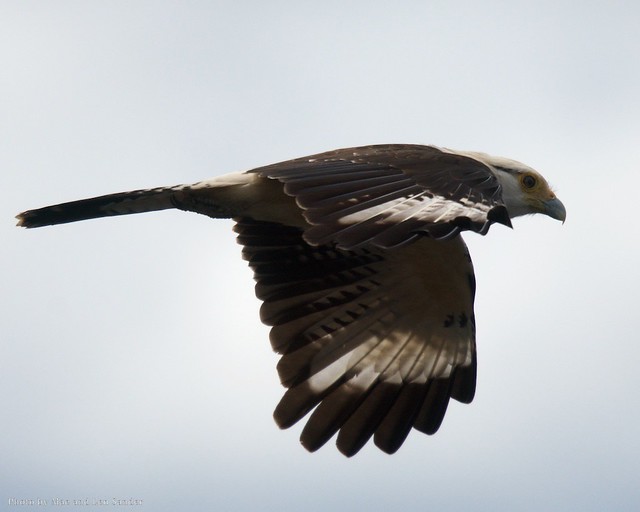
Yellow-Headed Caracara, Maranon River, Peru, February, 2017.

lifers_peru 59
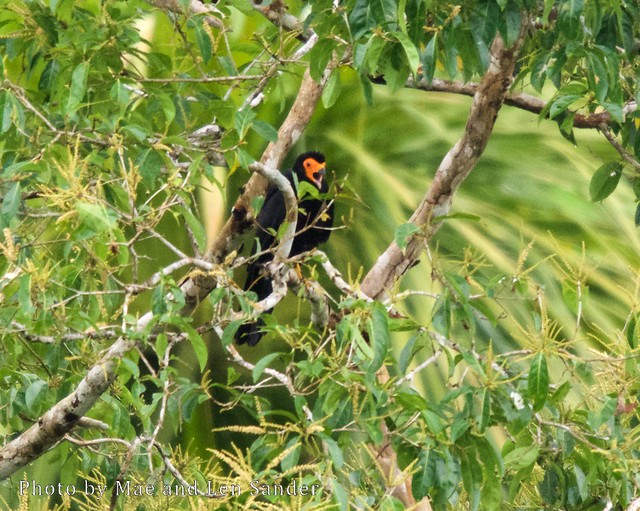
Black Caracara, Maranon River, Peru, February, 2017.


texaslifers 8
Crested Caracaras, Aransas Bay, Texas, October, 2016.

Crested Caracara, Costa Rica, December, 2019.

Striated Caracara, Staten Island, Argentina, October, 2017.

Tuesday, July 21, 2020

"A Long Petal of the Sea," Review Part 2

During the Spanish Civil War in 1938, the fascists, illegitimately trying to overthrow the recently-elected government, made sure that everyone suffered from shortages of food and other goods. They especially punished everyone in the Republican strongholds that were defending the legitimate government. These hardships are described through the lives of characters in A Long Petal of the Sea by Isabel Allende, which I reviewed in detail in my previous blog post here.

In this post I want to explore the way that Allende uses food descriptions to highlight the experiences of her characters. In addition, I am including a few photos I found that were taken during the war and its aftermath; these are not illustrations from the book, but ones that interested me.

The elderly, women and children evacuating Barcelona
under heavy bombardment by fascist planes. (source)
As the novel begins, the character Roser, and her adoptive parents the Dalmaus, were struggling to find food at their home in Barcelona while Victor Dalmau and his brother were serving in the Republican army at different locations in Catalonia. The first chapters in the book depict the deteriorating conditions in the city and on the battlefields. At this time, Roser worked in a bakery near the family home in Barcelona where she was paid in bread. The family also managed to stand in line or struggle for a few additional provisions:
"Rations of lentils had been reduced to half a cup per person per day; there were no cats or pigeons left for stews. Roser’s bread was a dark, heavy block that smelled of sawdust; oil had become a luxury item, and was mixed with engine oil to make it go further. Many people grew vegetables in their bathtubs or on their balconies. Family heirlooms and jewels were traded for potatoes and rice." (A Long Petal of the Sea, p. 42). 
As Roser and the family dealt with these shortages, Allende changes the scene to the luxury ship where a family from the Chilean upper class were traveling to Europe. They planned a long vacation combined with business -- the author presents their indulgent life on the voyage in contrast to life during the Spanish Civil War. Here's a daily vignette of life on shipboard, as experienced by Laura, the spoiled wife, whose only worry is that she's getting to fat to wear her evening gowns:
"Although the Reina del Pacifico could not compete in terms of luxury with the Normandie, it was more than adequate. Laura took breakfast in bed, then dressed around ten for Mass in the chapel, after which she went to get some fresh air on the top deck in the chaise longue reserved for her, where a waiter brought her oxtail broth and bread rolls. From there she went in for lunch, which consisted of at least four courses, and soon it was time for high tea, with sandwiches and cakes. She barely had time to take a nap and play a few rounds of canasta before she had to dress for cocktails and dinner ...While the orchestra took a break, the passengers were served a midnight snack of foie gras, caviar, champagne, and desserts. She abstained from the first three, but couldn’t resist the sweets. The previous night the chef, a gargantuan Frenchman, had served up an orgy of chocolate in different shapes, crowned with an ingenious fountain that spouted melted chocolate from the mouth of a crystal fish." (pp. 90-91).  
Back in Spain, as Franco defeated more and more Republican forces, deprivation was the lot of his victims, sent to prisoner of war camps. The former soldiers tried to maintain discipline despite the appalling conditions:
"They divided the camp into streets with poetic names, outlined absurd squares and ramblas like those in Barcelona in the sand and mud, created the illusion of an orchestra without instruments to perform classical and popular music, and restaurants with invisible food that the cooks described in great detail while the others savored the tastes with their eyes closed." (p. 122).  
Victor Dalmau, imprisoned in this camp, remained dedicated to helping those in need of medical attention; he "was as skinny and weak as the rest of the men in the camp, but didn’t feel hungry, and more than once gave his ration of dried cod to someone else. His comrades said he must have been eating sand." (pp. 123-124).

After the final victory of Franco and his forces, the persecution of Republicans and their sympathizers was ruthless. Allende's narrative poignantly describes the terrible plight of these victims as they were driven from their homes in Madrid and Catalonia, deprived of all their possessions, and desperately seeking a place to go. Many ended up crossing the border into France where they were forced into concentration camps unless someone would take them in.

Refugees fleeing from Spain to France, 1939. (source
Women and children fleeing from Madrid. (source)
Some of the Spanish refugees, including Victor and Roser, were eventually allowed to board a special ship bound for Chile, where they were to be given a place to live and work. On board this ship, life contrasts to the opulent life on the luxury vessel, as well as being a complete change from the utterly deprived life in the camps:
"Coming, as most of the passengers did, from wretched conditions and near starvation, they thought this was paradise: they had not had a hot meal in months. On the boat the food was very simple but tasty, and they could have second helpings of as many vegetables as they liked." (p. 138).
At the end of the voyage, Victor and Roser settled in Santiago, Chile. Needing a means to make a living, and they decided to start a tavern where Spanish refugees could feel at home, and where they would introduce local people to the customs of Catalonia:
"They found a cook capable of preparing Catalan sausages with diced eggplant, anchovies and squid with garlic, tuna with tomato, and other delicacies from the old country, and soon had a faithful clientele of Spanish immigrants." (p. 172).
Again the details of food contribute to the well-rounded descriptions that Allende supplies throughout the novel. I want to share one final food scene: the way that Victor celebrated his birthdays at the end of his life with Roser, after they had returned from exile in Venezuela and resumed life in Chile:
"In honor of this sentimental legacy, the day before his birthday he would go down to the Mercado Central in search of the ingredients for the fumet, and fresh squid for the rice. Catalan through and through, Roser used to say. She herself never collaborated in the homespun creation of this festive dinner, instead contributing a piano recital from the living room or sitting on a kitchen stool to read Victor verses from Neruda, often an ode with a marine flavor, such as in Chile’s tempestuous sea lives the pink conger, that giant eel with snow-white flesh. It was pointless for Victor to inform her time and again that the dish in question didn’t contain conger, the king of aristocratic dinner tables, but the humble fish heads and tails of a proletarian soup. Or while Victor fried the onion and pepper in olive oil, then added the peeled and sliced squid, cloves of garlic, a few chopped tomatoes, and the rice, ending with hot stock that was black with squid ink and the obligatory fresh bay leaf, she would share gossip with him in Catalan in order to refresh their mother tongue, grown rusty from all their wanderings."


This review by mae sander copyright © 2020.

Monday, July 20, 2020

"A Long Petal of the Sea"

A Long Petal of the Sea, published 2019.
A young medical student named Victor Dalmau serves at the battle front where Spanish Republicans are fighting the fascists, inspired by "Dolores Ibarruri, appropriately known as La Pasionaria because of her ability to rouse fanatical enthusiasm among the Republicans." (A Long Petal of the Sea, p. 18).

At the defeat of the Republicans, Victor finds himself as one of thousands of refugees begging for asylum in a cruel concentration camp on the border of France; again he does his best to treat their wounds and illnesses. His release comes from the actions of Chileans who sympathize with the Spanish republicans: they overcome conservative opposition and welcome a ship full of refugees into their country. The leader of this effort is the famous poet Pablo Neruda.

Rescued with Victor is Roser Bruguera, the brave and talented woman he has married to save her and her child, the son of his brother who had died on the battlefield. Chile was an unknown place to them as they approached it after weeks at sea:
"THAT SUMMER DAY, AUGUST 4, 1939, remained forever engraved on the minds of Victor Dalmau, Roser Bruguera, and the other two thousand or more Spaniards sailing toward that long, narrow South American country that clung to the mountains so as not to topple into the sea. None of them knew anything about Chile. Years later, Neruda was to define it as a long petal of sea and wine and snow… with a belt of black and white foam, but that would not have left the migrants any the wiser. On the map, it looked slender and remote." (p. 136). 
As Victor Dalmau adapts to life in Chile, he fully assimilates into life there. He continues an acquaintance with Pablo Neruda, the poet with enormous sympathy for common people. He plays chess with Salvador Allende, who is both a doctor and a Chilean politician, eventually its far-left President. Throughout his life, Victor's wife becomes more and more remarkable, a memorable if somewhat idealized character in this wide-ranging work of literature, advising him wisely and supporting him unselfishly. The novel describes the many events of their lives and that of their son, as well as the parallel lives of a very rich family of long-established Chileans.

At sixty, after a peaceful life as a highly respected doctor in Chile, Victor Dalmau again becomes a victim of tyranny when the fascist dictator Pinochet takes over from Salvador Allende. He thus witnesses yet again the torment of political prisoners at the mercy of inhuman military officials. Victor starves with them while he tries to treat their wounds and illnesses. After eleven months in the camp, he is freed and yet again becomes a refugee, in Venezuela. Roser's advice on having to adapt to another new country: "Pain is unavoidable, but suffering is optional.” (p. 300).

Isabel Allende's A Long Petal of the Sea is a wonderful historical novel, which I enjoyed for a number of reasons: above all for how much I learned about history and for how much I admired the characterizations of many many people in Victor Dalmau's life. I love the way that these fictional characters play a serious though somewhat idealized role in historical events, especially in Spain during the Civil War of the 1930s and in Chile from 1940 until 1995. Through their experiences, the reader can share the experience of history as it happens, witnessing right and wrong, as well as making the acquaintance of various historic figures like Salvador Allende and Neruda. I enjoyed the quotations from Neruda at the start of each chapter. I also loved the author's use of food as a marker of rich people, poor people, and utterly deprived victims (blogged here).

The idealism and the horrors of the twentieth century are embodied in the entire work, as well as speaking to us now in 2020 as we seem about to repeat the mistakes of the past. Oh, please, I think as I read -- don't let us have another bout with fascist repression of humanity! Don't let another Franco or another Pinochet take over the world! Don't let democracy die!

My only reservation about the novel concerns the character of Roser Bruguera. She's too perfect! She's very intelligent and gifted, creative and able as a pianist and organizer of music, fearless and adaptable in the face of horrific circumstances, loyal to Victor and his family, dedicated to her son -- flawless. Her idealized existence may be believable in the context of the novel; however, in a way the author seems to just use Roser to advance the themes and events of the work, not to explore the human spirit or the role of women in all the events.

After I wrote the paragraphs above, I looked at the review that were published a few months ago when A Long Petal of the Sea was first published. The reviewer in the Washington Post hated the book; I think this was an outlier! The New York Times reviewer, Paula McLain, was enthusiastic:
"In 'A Long Petal of the Sea,' as in much of Allende’s fiction, there is the sense that every human life is an odyssey, and that how and where we connect creates the fabric of our existence: the source of our humanity. If what happens to us — the axis of our fate — is nearly always beyond our control, stubbornly unchangeable, we can still choose what we cleave to and fight for, refusing to be vanquished. This is true belonging, and how we build a world." (source).
In the Guardian, also a favorable view from Hephzibah Anderson:
"At this point in Allende’s long career, it’s easy to forget what a trailblazer she was, a rare female voice in a wave of Latin American literature that was overwhelmingly male. Vivid vignettes serve as reminders here, among them an opening scene in which Victor brings a smooth-cheeked young soldier back to life by massaging his heart, and another in which he feels his own break. 'It was at that moment he understood the profound meaning of that common phrase: he thought he heard the sound of glass breaking and felt that the essence of his being was pouring out until he was empty, with no memory of the past, no awareness of the present, no hope for the future,' Allende writes." (source)
Isabel Allende is one of the most famous South American authors. I've read very little of her work and hope to read some of the older works.
This review by mae sander copyright © 2020.