Showing posts with label Peru. Show all posts

Friday, March 15, 2024

Turtles

Of Time and Turtles by Sy Montgomery (published September, 2023)

Of Time and Turtles is mainly about the work of a turtle rescue center where injured turtles have their broken bones and shells repaired and are nursed back to health. If all goes well, these turtles can be returned to their native habitat. If they can’t recover enough to live wild again, they are given a permanent home at the center or in another safe human-controlled place. And if they don’t make it, they receive a respectful burial. The book is a beautiful portrait of several dedicated turtle rescuers and how they function. However, for my taste, it’s a little too detailed about the medical procedures and about the road accidents and intentional harm that is done to them — though the fact that turtles can heal so many more injuries by regrowing damaged parts when treated well is encouraging.

Of Time and Turtles is also about time itself. Turtles are slow; mythically slow (but slow and steady wins the race, you know.) Scientifically the turtle’s ability to perceive movement is slower than that of humans, and vastly slower than that of some creatures like birds. So time in some sense is different for them than for us.

The events at the turtle rescue center that are described in this work of natural history proceed with intense slowness because they occur during the pandemic in 2020. Four years ago this week, the new and virulent coronavirus was declared a national emergency, and the nation began to close virtually all activities, while hospitals were flooded with desperately sick patients.

During this global crisis, time itself changed for many people, including the author Sy Montgomery and the proprietors and turtle rescuers that she immersed herself with, in order to research this book. She wrote the following about the early days of the pandemic:

“For so many people waiting out the crisis, time has lost its boundaries, and life is drained of meaning. But when we are with the turtles, our experience of time—in fact, our experience of almost everything—is completely different from those of our fellow countrymen. Michaela’s girlfriend, Andi, for instance, feels caught in the pandemic time warp. She had hoped to find some direction taking photography in college, but Zoom classes were lame, and now she doesn’t know what to do with her life. But for Michaela, working with the turtles gives her ‘calm, stability, and a sense of purpose’: ‘I’ve dived into something that’s really meaningful, doing something to help a living creature.’ Thanks to the turtles, we are profoundly immersed in spring’s unfolding, and deeply connected to the progression of the dramas in the turtles’ daily lives.” (Of Time and Turtles, p. 106)

Besides rescuing, rehabilitating, and releasing injured turtles into the wild, the team also rescues turtle eggs and makes sure that they incubate, hatch, and find an appropriate home. These dedicated volunteers are educators as well, and they present information to schools and invite groups of children to visit the center. The educational activities (obviously) were also on hold during the pandemic, another way the workers were isolated and deprived of a sense of time.

Natural history books can be a delight if they succeed in portraying non-human creatures in an appealing way. Turtles, it turns out, have rather distinct personalities, and despite the many different-from-human features in their brains, in their sense of smell and taste, and in their thought processes, they can relate in many ways to the humans who care for them. Before reading, I was unaware that twenty-five different species of turtles inhabit the US, and I knew nothing of the numerous differences among the species. I didn’t know that sea turtles are often caught by rapid onset of winter weather and then freeze to death on the beaches of Cape Cod — but brave rescuers can save some of them. I didn’t know that turtles love to eat bananas. I didn’t know lots of things…

The potential of the turtle personality — and the intense commitment of the turtle rescuers — makes this book fun to read. I liked the unusual perspective on these normally ignored reptiles, and I loved the quirky names that the rescuers gave them, and how attached they were. Above all, the author causes the reader to focus on the many dangers that turtles suffer because of human intrusion into their slow and peaceful enjoyment of their environment, and how this fits into a bigger picture of our rushed, dangerous, climate-threatened era.

Turtles and tortoises I have met when traveling

A sea turtle covering itself with sand on a beach in Kona, Hawaii, 2014.

Turtles on a pond near Albuquerque, NM, 2015.

Turtles at Huntley Meadows near Alexandria, VA, 2016.

200-year-old Galapagos tortoises that we saw there in 2010.
Tortoises live on land, while turtles are mainly aquatic.

A tortoise in the Peruvian jungle during our Amazon river trip, 2017.
Tortoises are one of the families in the order of Testudines, which includes all the turtles as well.

It’s spring here, and soon the turtles will be sunning themselves on logs and stones in our local ponds and streams. When I see them in a few days or weeks, I’ll have much more to think about than I usually do!

Photos © 2010-2024 mae sander
Shared with Eileen’s Critters.

Monday, December 04, 2023

The Pisco Sour

A Pisco Sour: Pisco is a colorless grape brandy made in Peru.
(Random image from google)

On the Menu at China Chilcano in Washington, DC:


José Andrés
China Chilcano is the wonderful restaurant run by Chef José Andrés and his excellent staff, which opened in 2015. It's menu "honors Peru’s deeply rooted and diverse heritage, including its native Criollo, Chinese Chifa and Japanese Nikkei cuisines."
 
Looking at the drinks menu when we ate there recently, I recalled the Peruvian national drink: the Pisco Sour. Although I drank wine at the restaurant, I was amused to recall all the Pisco Sours we drank while on the Delfin II, a riverboat on the upper Amazon River in Peru.

José Andrés is not only a great chef, and the developer of a number of fabulous restaurants, but he's also the founder of World Central Kitchen, a remarkable organization for feeding victims of wars and natural disasters worldwide. Recent operations by WCK have taken place in response to the hurricane in Acapulco, the devastating fire in Maui, the wars in Ukraine and Gaza, and many other locations.

Super delicious Ceviche Nikkei that we tried at China Chilcano.

Pisco Sours in Peru


From the public relations for the Delfin Amazon cruises: the above photo features a bartender with the ingredients for a Pisco Sour, specifically giant limes from the local area. On our cruise (in 2017), Pisco Sours were available all day, included in the price of the voyage.

On the Delfin II in 2017: the bartender making Pisco Sours.


Blog post by mae sander © 2023


Saturday, November 25, 2023

Thanksgiving Vacation

Things we have done with the family this holiday —

Watching “Oppenheimer.”

Catching up on “The Great British Baking Show.”

We had a drink at the bar at China Chilcano in Washington, DC.

And we had a fabulous dinner at China Chilcano, a José Andrés restaurant with Peruvian/Japanese cuisine.
Andrés  is also the founder of a remarkable organization for providing food to victims of wars and natural disasters:
WORLD CENTRAL KITCHEN.

Dessert: a dulce de leche custard with passion fruit sorbet. Superb!

Going to the National Portrait Gallery to see the famous portrait of President Obama
by Kehinde Wiley. The Gallery has portraits of every President since Washington!

Bill Clinton by Chuck Close.

John F. Kennedy by Elaine de Kooning.

Abraham Lincoln by W.F.K.Travers (link)


Photos by mae sander © 2023
Shared with Deb at Readerbuzz.

Sunday, April 16, 2023

Street Art in Lancaster, PA

Starting with the parking garage near the Lancaster Farmers’ Market, we saw all kinds of street art.

Also at the parking garage.

Did you ever notice the artistic markers of which floor you are on?

One more as we exited the garage.

Many shop windows have beautiful decorations.


Great murals at several different locations in town.


We didn’t just appreciate the llama on the sign, we ate the delicious Peruvian arepas sold at this food truck,
which has a permanent location including outdoor picnic tables. We took home some for our lunch.


Meanwhile, in Lancaster, my brother, whom we are visiting, was taking photos of the night sky.
This is the Whirlpool Galaxy (Messier 51).


Blog post © 2023 mae sander


Monday, June 21, 2021

Ethiopian Coffee


Locally roasted Ethiopian Coffee.
Saturday, Carol and Nat offered us a cup of Ethiopian coffee made with steamed milk, using beans that they buy from the Hyperion local coffee roasters in Ypsilanti, Michigan.  It was quite delicious. Carol has been experimenting with various types of Ethiopian-grown coffee, which are processed somewhat differently than other single-origin coffee beans. In response to her enthusiasm, I've been looking into the story of Ethiopian coffee and local sources of Ethiopian beans. The fact that the coffee plant is native to Ethiopia and that coffee cultivation began there makes it all the more interesting.

I find single-origin coffees to be very appealing, for example, the coffees from Costa Rica, which we sometimes buy as a result of our visit to a coffee processing collective in Costa Rica, or coffee from Peru, which is rather hard to find but which we found delicious when traveling there. After visiting a coffee plantation in Hawaii, I often ordered coffee shipped directly from there, but it became too expensive.

Several of the local small-scale coffee roasters are very aware of a number of issues about coffee. They care about the welfare of coffee plantation workers in the far corners of the world, and make an effort to have ethically-grown products.

The various methods of processing coffee beans are also interesting, for example, washing the raw beans or allowing them to dry without washing them or removing the "coffee cherry" attached to the beans. Ethiopian coffee uses this "natural" method of processing, which affects the flavor of the coffee. There are also various ways that coffee beans undergo a fermentation process before they are roasted.

Ethiopian Coffee from Roos Roast.
A picture of this Ethiopian single-origin coffee is on the Roos Roast website, but their only single-origin selection at the moment seems to be from Indonesia. Our current favorite coffees are Roos Roast blends of beans from multiple origins.

Roos Roast makes an effort to find ethical sources for their coffee, and most of their product is Fair Trade Organic, meaning that they focus on ethical treatment of workers as well as on organic agricultural methods. They are very aware of environmental issues in their processing as well -- they use a high-efficiency roaster that produces much less smoke than most equipment. Recently, their entire roof has been covered with solar panels to conserve energy. 

The Roos Roast building is in walking distance of my house, so we often walk there when we need to buy coffee. When we were isolating from contact with people, Roos Roast also made it very easy to buy coffee safely, so we have used their coffee consistently. I'm looking forward to being able to drink coffee in the café part of the shop when it fully reopens.
Another local roaster's selection of
Ethiopian coffee beans.

A bit further from our home, but a place we sometimes shop is the well-known food business Zingerman's. Here is what Zingerman's has to say about their Ethiopian coffee beans:

"Here at Zingerman’s, we are committed to traditionally-made, full-flavored food. For that reason, we find Ethiopia a really interesting coffee growing region. It is, of course, the birthplace of coffee — and we’ve all heard the story of Kaldi and his goats. But we are also fascinated by the stunning amount of flavor variety found in coffees from Ethiopia. Various combinations of plant genetics, micro-climate, and processing method produce cup profiles that range from citrusy, floral, bright, and elegant, to rustic, spicy, and deeply fruity.

"This coffee falls squarely in the rustic camp. It is a 'natural' or 'dry' processed coffee, meaning that the fruit flesh from the coffee cherry was left attached to the bean as it dried. Natural processed coffees, and this one in particular, have intense fruit characteristics. Famed the world over for its distinctive blueberry mocha flavor, Harrar coffee fetches some of the highest prices for unwashed coffee in the world market."

I don't know if I'll experiment with Ethiopian coffee or not, but I am curious about all the many flavors and origins of coffee that are available around us. I notice that amazon.com has a very wide selection of Ethiopian coffee available, but I'm really happy that I now feel safe shopping in person! We have so many local roasters here that it's really fun to check out all the possibilities.

Blog post © 2021 mae sander, images as credited.


Sunday, June 20, 2021

"A Most Remarkable Creature"

"Indeed, nearly all the animals we regard as intelligent—baboons, crows, raccoons, caracaras, humans—are big-brained social generalists that thrive in unpredictable environments." -- A Most Remarkable Creature (p. 108). 


Books on natural history and evolution sometimes seem to me to be incredibly wonderful. Jonathan Meiburg's A Most Remarkable Creature: The Hidden Life and Epic Journey of the World's Smartest Birds of Prey is one of the most enjoyable that I've read. I loved the way the author combined his personal experiences exploring many areas in South America with descriptions of the behavior and evolution of the various caracaras that he saw; the question of what makes a bird intelligent; portrayals of people he traveled with; and biographical details of earlier observers of South American wildlife. The unifying theme of this book is the character and intelligence of caracaras (Polyborinae), which are a subfamily of the falcons (order Falconiformes). 

Rather than write a review of this great book, I would like to share my memories of seeing the birds and landscapes that Meiburg described. I found it really delightful to read about birds that I've seen on several trips to South America and elsewhere. On these trips, I have seen a number of caracaras of several different species -- as well as many other birds and animals, which made the book all the more interesting. I loved all the new things I learned from his book as well as the recollection of what I learned from the guides on these trips. Here are some of our photos of several types of caracaras, which we have enjoyed seeing in a number of places.

A striated caracara with a sea lion. October, 2017, Staten Island, Argentina.

Three Striated Caracaras, Staten Island, Argentina, October, 2017.
This species is one of the author's favorites. We couldn't tell
what they were doing, and it might have been simply playing!

Southern Crested Caracara, Torres del Paine Park, Chile, October, 2017.

lifers_peru 55
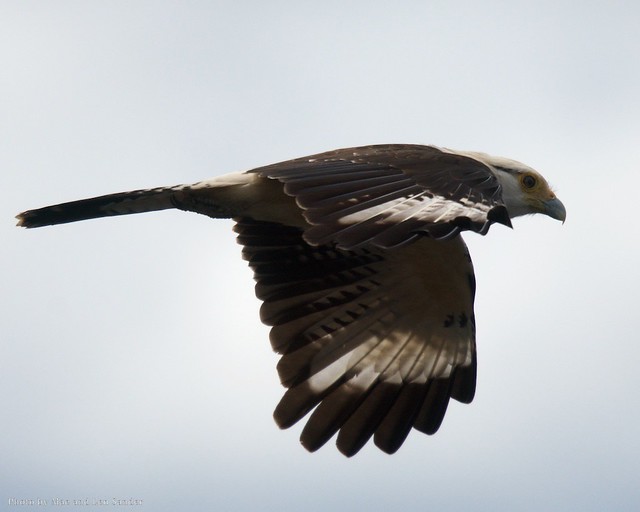
Yellow-Headed Caracara, Maranon River, Peru, February, 2017.

lifers_peru 59
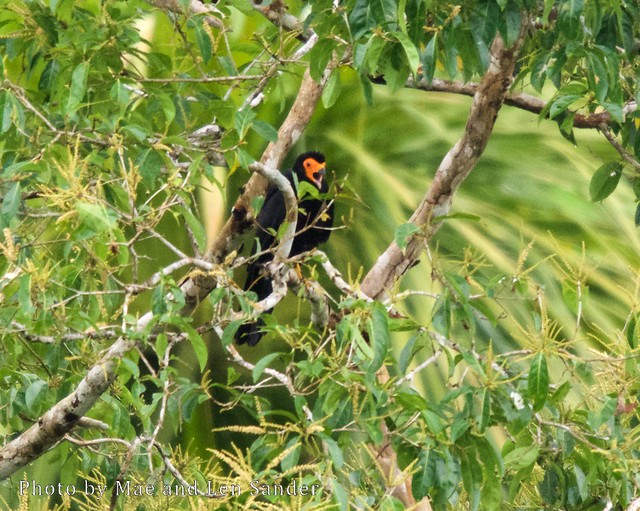
Black Caracara, Maranon River, Peru, February, 2017.


texaslifers 8
Crested Caracaras, Aransas Bay, Texas, October, 2016.

Crested Caracara, Costa Rica, December, 2019.

Striated Caracara, Staten Island, Argentina, October, 2017.