Showing posts with label Patagonia. Show all posts

Saturday, April 25, 2026

Four Dinosaurs and a Giant Sloth

Today we visited the Victoria an Albert Museum and the Natural History Museum which is across the street. I especially enjoyed a visit to the dinosaur section.

A dinosaur

Another dinosaur

Another one.

One more dinosaur. Of course I have their names, but it’s too much trouble to add them.
If you want to identify dinosaurs, ask a 4-year-old.

A Giant Sloth

Skeleton of a Giant Sloth from South America

My Previous Encounter with a Giant Sloth

Our visit to the cave of the Giant Sloth in Patagonia in 2017

The Milodon, or Giant Sloth, whose bones are found throughout Patagonia, was hunted by early people, who probably contributed to the extinction of this one-ton beast. The bones of this animal were found in the cave where the statue now stands. For a while, it was hoped that this beast was not yet extinct.

Photos © 2017, 2026, mae sander

Thursday, March 05, 2026

Too Many Sweets and other activities


Early spring in my neighborhood

Hellebore are always early bloomers!

Crocuses are also very early, sometimes blooming right in the snow.


I also found this puff ball. I guess these are also early to come up.

Mall Walking

Almost nobody here, but a handy space to walk when it’s cold and rainy.
Many of the kiosks that once filled the aisles are gone.

Like nobody here — some of the seating has been removed as well.Imagining the far away places I have been

“Once the beating hearts of suburbia, America’s shopping malls now stand as hollowed monuments to a vanished dream.”

From faraway places I have been…

The lighthouse at Cape Horn (2017) is probably the most remote place I have visited.

An iceberg in the Icefjord in Greenland. Also very remote! (2022)

A fishing village at the far end of the Hong Kong territory (2000)

Blog post and photos © 2000-2026 mae sander


Thursday, September 19, 2024

“Frostbite” by Nicola Twilley

Frostbite by Nicola Twilley describes two centuries of development of refrigeration: from ice houses and wooden boxes of ice in the 19th century through early technology for railroad shipment of meat and produce and onward to our current situation where a “Cold Chain” transports optimally chilled food from farm to table. In the US today this huge network ensures that we have fresh produce and meat no matter how far our meals have had to travel. Here’s a summary from the end of the book:

“Since the early days of the ice trade, refrigeration has changed everything about how and what we eat—reshaping trade, transportation, politics, and economics in the process. It has redesigned not only the contents of our plates but also our bodies, our homes, our cities, our landscape, and the global atmosphere. … Fridges have freed women from daily shopping and made fresh food both affordable and available year-round. For some farmers, refrigeration has offered a route to riches—or a way to escape the land. …

“Still, a wholehearted appreciation of those benefits shouldn’t prevent us from counting the cold chain’s costs and considering its alternatives—especially as the rest of the world starts to refrigerate. Some of its disadvantages are inherent to the technology. It takes a lot of energy to remove heat, which has environmental consequences but also tends to create socioeconomic ones, as smaller farmers growing a diversity of foods for local consumption are less likely to benefit than large landholders cultivating export crops at scale. The resulting concentration and intensification have their own ecological impacts. … Other outcomes are enabled by the fridge rather than fundamental to it. Food waste is used as a justification for refrigeration, but refrigeration also seems to encourage waste. … Refrigeration tends to shift where the waste takes place, as opposed to eliminating it. … In short, our food system is frostbitten: it has been injured by its exposure to cold.” (p. 309-310)

Frostbite includes fascinating histories of changes in agriculture, shipping, industry, and domestic life. Refrigeration affects the way food is grown, transported, processed, and sold. Home refrigerators as well as industrial advances made enormous changes not only in what can be purchased and kept on hand in households, but also ultimately in what is eaten. Fresh produce from farms can be quickly chilled, shipped in refrigerated train cars or trucks, held in cold storage facilities, and then delivered to supermarket refrigerators. Produce like tomatoes and bananas is harvested early and ripened on demand. Consumers generally are unaware of this long process or of the surprising age of their "fresh" food. They don’t seem to notice the loss of flavor compared to naturally ripened local and seasonal fruit and vegetables.

Bagged salad mix is an example of a recent invention that depended on refrigeration and changed people’s eating habits. This product required unbelievable new technology to create the storage bags that kept the leaves alive. “Astonishingly, the bag itself—a cheap, disposable plastic lettuce bag—was a miniaturized version of [a] … controlled atmosphere warehouse. The microperforations in its carefully designed films let oxygen in at one rate and carbon dioxide out at another to maintain the ideal atmospheric microclimate around the leaves as they traveled the country and sat on supermarket shelves.” (p. 130)

Orange juice, another revolutionized product, was radically changed after World War II. In its new frozen-concentrate form, it became a commodity product, not something squeezed at home from a seasonal fruit. The availability of frozen orange juice affected both supply and demand, including many newly planted orchards in Florida; innovations in the processing, packaging, shipping, and retail environment; and family habits: “Frozen orange juice, as opposed to fish sticks, ice cream, or TV dinners, was the killer app for home freezers.” (p. 148) Fresh-chill juice, which has largely replaced frozen juice, is a subsequent invention dependent on the “cold chain.”

Every chapter of the book had a few surprises for me as I read. While the author was more focused on the American experience with the progression from ice houses to modern refrigerated warehouses and huge home refrigerators, there’s also quite a bit about the more recent proliferation of refrigeration to other countries — such as China (where we meet a “frozen dumpling millionaire”) and Ruanda (where virtually no cold storage is currently in use at all). The impact of continued expansion of supply-chain dependence on refrigeration, with its enormous and environmentally dangerous energy demands, is very interesting. I’ve read many books about the development of food technology and about changes in agriculture and taste, and this is a good one!

The Earliest Large-Scale Cold Technology

Frostbite described the earliest machinery for managing large quantities of meat and produce, especially for managing large animal carcasses, which require specialized chilling to create meat that is tender and flavorful. As I read, I realized that I had once actually seen such a processing plant that was made into a combined museum and hotel. (It’s not mentioned in the book). 

This relic stands nearly at the southern tip of South America in Puerto Bories, Puerto Natales, Chile. The Puerto Natales region once raised sheep and cattle to be shipped to England via the docks of this town. The now-hotel preserves probably the most complete example of an early 20th century meat shipping facility with its interesting technology. Note that via modern air travel, we took around 3 days to get to Puerto Natales from North America, as it’s not even close to the nearest airport, which is in Puento Arenas — a truly remote place. Here are some photos from our trip in 2017.

This is the pier where the refrigerator ships once were loaded with frozen meat headed to England. Two black-necked swans are in front of the pier. Our reason to travel so far was seeing both scenery and wildlife.

A view from our room in the hotel. We stayed here one night on our tour of Patagonia and then continued to Torres del Paine, a Chilean national park. Then we traveled by ship to see more wildlife and scenery.

Looking out of the hotel you see the contrast to what was once a busy dock area.
The slaughter house and packing plant operated from 1913 to 1993.

I find the look of the old equipment — which was all imported from England — fascinating and beautiful, with its bright colors and complex patterns. But what are we seeing? In one room there is a huge electric-generating plant that supplied power not only for the factory, but for the town. In the meat-cooling areas, electric compressors turned ammonia vapor to liquid. Held in sealed coils it circulated and turned back from liquid to vapor, which removed heat from the surroundings and thus acted as a refrigerant. The scale was large enough to process large numbers of slaughtered animals and have them ready to load on ships at the dock.


To get from the reception and dining areas of the hotel to the bedrooms, one walks past the equipment that once was used to slaughter, butcher, chill, and prepare meat to be shipped from the nearby dock.


Chilling meat is important for both preserving and making it palatable: “For most of refrigeration’s short history, humans have focused on its ability to stop spoilage by slowing down the reproduction of bad bacteria. But in the much longer annals of meat eating, cool air has been equally, if not more, appreciated for its ability to ripen red meat, turning dry, tough muscle fiber into a juicy, savory steak.” (p. 98)

The Hotel in the Factory

The breakfast buffet is in one of the many converted areas where meat packing once took place.
 

The Singular Hotel, Patagonia, Chile.

 Photos of the hotel © 2017 mae sander.
Blog post and book review © 2024 mae sander

Sunday, June 20, 2021

"A Most Remarkable Creature"

"Indeed, nearly all the animals we regard as intelligent—baboons, crows, raccoons, caracaras, humans—are big-brained social generalists that thrive in unpredictable environments." -- A Most Remarkable Creature (p. 108). 


Books on natural history and evolution sometimes seem to me to be incredibly wonderful. Jonathan Meiburg's A Most Remarkable Creature: The Hidden Life and Epic Journey of the World's Smartest Birds of Prey is one of the most enjoyable that I've read. I loved the way the author combined his personal experiences exploring many areas in South America with descriptions of the behavior and evolution of the various caracaras that he saw; the question of what makes a bird intelligent; portrayals of people he traveled with; and biographical details of earlier observers of South American wildlife. The unifying theme of this book is the character and intelligence of caracaras (Polyborinae), which are a subfamily of the falcons (order Falconiformes). 

Rather than write a review of this great book, I would like to share my memories of seeing the birds and landscapes that Meiburg described. I found it really delightful to read about birds that I've seen on several trips to South America and elsewhere. On these trips, I have seen a number of caracaras of several different species -- as well as many other birds and animals, which made the book all the more interesting. I loved all the new things I learned from his book as well as the recollection of what I learned from the guides on these trips. Here are some of our photos of several types of caracaras, which we have enjoyed seeing in a number of places.

A striated caracara with a sea lion. October, 2017, Staten Island, Argentina.

Three Striated Caracaras, Staten Island, Argentina, October, 2017.
This species is one of the author's favorites. We couldn't tell
what they were doing, and it might have been simply playing!

Southern Crested Caracara, Torres del Paine Park, Chile, October, 2017.

lifers_peru 55
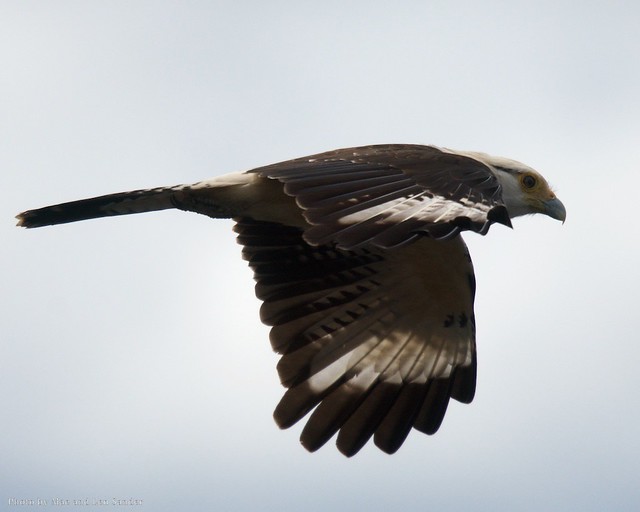
Yellow-Headed Caracara, Maranon River, Peru, February, 2017.

lifers_peru 59
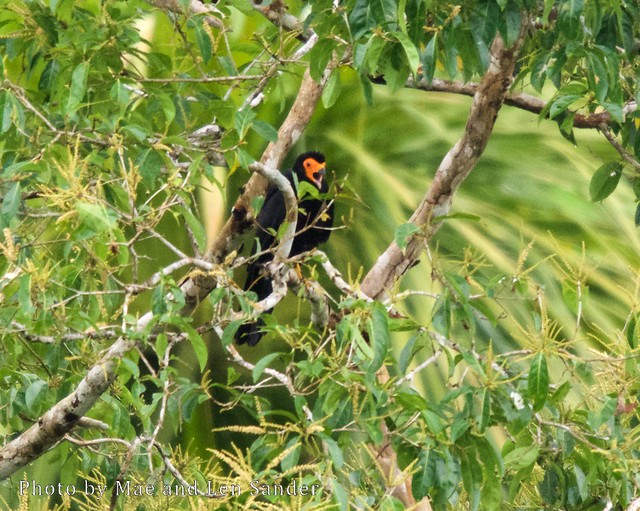
Black Caracara, Maranon River, Peru, February, 2017.


texaslifers 8
Crested Caracaras, Aransas Bay, Texas, October, 2016.

Crested Caracara, Costa Rica, December, 2019.

Striated Caracara, Staten Island, Argentina, October, 2017.

Friday, December 22, 2017

"Dinner With Darwin: Food, Drink, and Evolution"

Jonathan Silvertown, in his recently published book Dinner with Darwin, presents a tour of humanity from prehistory to recent times. He explains what hominids -- both humans and pre-humans -- ate while evolution, natural selection, and artificial selection were combining to create both our species and the many species of plants, animals, and even micro-organisms that we gather and/or cultivate for food.

Darwin's name in the title isn't just there because the publisher thought it would boost the book's sales (a temptation many publishers don't resist). There are quite a few references to Darwin's various publications, noting from the start of the book that Darwin's concept, natural selection, is "the process that not only produced our food but also produced us. Our relationships with food demonstrate evolution in ourselves and in what we eat." (p. 3)

The origins of cooking, the processes by which a number of pre-human species developed methods of improving food and crops, and how cooked food changed early hominids is the concern of one early chapter in the book. I was familiar with some of the details Silvertown presents, because of Richard Wrangham's important book Catching Fire: How Cooking Made Us Human (2009). The evolution of cooking and its effect on humans took place mainly before humans migrated out of Africa.

In the second chapter, I found material that I haven't read in other books. Silvertown continues his prehistoric coverage by tracing a migration that began around 72,000 years ago. Humans slowly proceeded from the horn of Africa along the south-west coast of the Arabian peninsula, around the coast of Southeast Asia, up the coast of China, across the Bering Strait, and down the West Coast of the Americas until humans reached Patagonia and Tierra del Fuego approximately 10,000 years ago. Generation by generation, what did they eat? Shellfish, especially mussels: "a food almost as timeless as mother's milk." (p. 29) Silvertown describes the mountains of seashells along the route of human migration, eventually quoting Darwin's description of the Tierra del Fuego natives whom he encountered when the Beagle visited there in 1832: "Whenever it is low water, winter of summer, night or day, they must rise to pick shellfish from the rocks." (p. 34) Of course I enjoyed this observation as I was recently in Tierra del Fuego -- though very sadly, the natives Darwin met were the victims of genocide by settlers later in the 19th century, and none of them are still present.

Throughout the book, Silvertown emphasizes not just what is known, but how scientists know it. For example, the history of grain and bread is reflected in a number of Egyptian tombs, in Mesopotamian clay tablets recording a large number of types of bread and flour and cooking techniques, and other evidence from archaeological sites. He also explains why agriculture began in the Fertile Crescent (the modern Middle East): the region was particularly good for the development of so many cultivated crops because its annually varying climate fosters annual plants which set abundant, large seeds at a particular time, and these plants, because of their adaptation to the varying climate, are relatively easy to change by artificial selection. 

Other scientific evidence of evolution in hominids and food species appears throughout the book. Silvertown explains how material left on human teeth found in ancient sites can show just what foods the teeth-owners were consuming, because the build-up of dental plaque can be analyzed by recently developed methods. In the chapter on wine, beer, and the processes of fermentation, Silvertown traces the evolution of the microbes that humans have domesticated in order to create alcoholic beverages and other fermented foods. He describes how naturally occurring toxins in herbs and vegetables evolved by co-evolution with animal and insect predators, and how these were tamed by human agricultural selection, by cooking, and by other food processing. There's also information about how early evolution enabled human sensory organs to detect poisons, and thus allowed us to consume -- and even to enjoy -- nutritious though poisonous plants. Many details about chemical receptors on the tongue, in the nasal apparatus, and elsewhere in the human body are very intriguing. The final chapter is a defense of GMO development, which the author sees as another extension of human ingenuity in evolving crop improvement.

Fascinating maps show the migrations and other information about human history. Here is an example:
Map from Dinner with Darwin, p. 10.
Ma means million of years ago.
Ka means thousands of years ago.
Unlike several of the authors I've recently read on food history and human evolution, Silvertown is a scientist, not a journalist -- he is a professor of evolutionary ecology at the University of Edinburgh. The science in the book is presented effectively for a non-technical reader, but the author does not talk down to the reader. I admire his approach to his topic: he finds out things by looking at scientific studies, not by interviewing people. I especially appreciate that he isn't a name-dropper! In sum, I found his book both entertaining and very enlightening.

Friday, November 03, 2017

The End of the Expedition: A Morning in Ushuaia

Early morning: the end of the voyage through Tierra del Fuego and Staten Island. From the window of our cabin,
we could see the lights of Ushuaia, Argentina, from which we were to fly to Buenos Aires and then home.
Ushuaia, with around 75,000 population, has a cargo and cruise ship port, a military base (from which some of
the action was staged during the war over the Falkland Islands), and some electronic assembly plants.
Ushuaia is farther south than any other city in the world -- the tip of South America is considerably south of Africa,
Australia, New Zealand, or anywhere else outside Antarctica.
From my last moments on the best viewpoint on the National Geographic Explorer. 
In the harbor, we got close-up looks at some of the pelagic birds that
had been flying around the ship as we traveled. This is the
southern giant petrel. For Len's complete bird photos, link HERE.
"Todos somos Fuentealba" -- political wall art which intrigued me on our brief tour of the small downtown (which is
mainly souvenir shops where I didn't go). A friend explained that Carlos Fuentealba (1966-2007) was a socialist/labor activist in Argentina. During a protest, he was shot in the back by a policeman.
At the Ushuaia Maritime Museum, we enjoyed seeing models of some of the most famous ships that explored and
developed the European presence in the area. This is Magellan's ship Trinidad, first European ship to explore here
in October and November of 1520.
In the US we have painted cows, pigs, etc.
Here evidently they did the same trick with penguins.
Tom Rohde, who was on the tour with us from Santiago, Chile, to Ushuaia, wrote this limerick to celebrate our departure:
It's the end of the world, so they say
And soon we're all going away
So as we say goodbye, a
Last look at Ushuaia
And a hope that we'll come back some day.

Tom also says my blog is "probably the most complete documentation of a cruise in the area since Darwin and Fitzroy" -- though I doubt that, I appreciate the sentiment and hope that I haven't overdone it. This is, however, the end!

Thursday, November 02, 2017

Staten Island and the Lighthouse at the End of the World

Cruising on the Zodiac, we visited several beautiful locations in the very remote Staten Island, the furthest point in Patagonia.
This depicts morning at Staten Island, which is to the east of Cape Horn and is where the Atlantic meets the Pacific.
The island is very rugged and inhabited only by a few Argentine navy men. We had picked up some Argentine
park rangers, who are happy to have a way to visit this Argentine National Park -- they aren't funded for their own ships.
The rockhopper penguin colony, which I've depicted in prior posts, was the first place we visited. It was a long
walk from the huge beach at the end of a large bay.
Zodiac landing near the penguin colony. This photo was taken during the rough walk up the hill & over the rise to the penguins.
Map of the ship's route around Staten Island. 
Staten Island was discovered and explored by a number of well-known voyagers, and it's in very dangerous waters. We had a number of hours of rough seas, but were able to make several landings when the weather cleared up. Normally the landings are to the north, but the wind was northerly so we visited more of the southern part of the island. The landing at the penguin colony was in an area that the Explorer had never gone before.

On our an afternoon Zodiac cruise at Staten Island, we explored a deep fjord.
We were a bit surprised at the sign marking the National Park.  
We enjoyed watching the cormorants that nest on the steep walls of the fjord.

They nested on many of the small shelves on the rocks. It's easy to know where to look for them: guano!

We walked across the narrowest neck of Staten Island on a stunningly beautiful afternoon, and reached this bay.
On each side of the island was one lone king penguin!
On the last of the three days at Staten Island -- also the final day before the end of the expedition -- we visited
the "Lighthouse at the End of the World." It was built in 1884, but placed unfortunately so that it was more likely
to cause ships to be wrecked than to prevent it. Decommissioned, it fell into ruins, but was replicated around 20 years ago.
Hiking up to it was a big deal! But we made it.
Waves were breaking with enormous force as we came into the bay behind the lighthouse. We saw a replica of the
lighthouse in the Maritime Museum in Ushuaia, Argentina the next day.
Lovers of this work by Verne have also built a replica
of the Staten Island lighthouse at La Rochelle, France.
I believe they were responsible for the reconstruction
we visited on Staten Island.
This pirate adventure novel by Jules Verne made the lighthouse at Staten Island famous. Verne changed many details -- such as the actual appearance of the lighthouse, which is a low building on a high point. The novel describes instead a tall building on a low point. A structure such as Verne envisioned would have no chance of surviving the incredible winds that pummel this remote island!

I read the book, which sets the lighthouse construction in 1859, much earlier than in reality, and which describes the struggle between the lighthouse keepers and a crew of evil pirates. They had been hiding in caves on the island and luring passing ships to wreck there. They had been stealing the ships' cargo, murdering the crews, and were looking for a ship that they could load up and sail off to the South Seas. It's not the type of thing I usually read but I had fun picturing the events in the landscapes that we just visited.

The Staten Island lighthouse in 1894 (photo from Wikipedia).
Above all, seeing the lighthouse and reading Verne's Lighthouse at the End of the World made me realize what the situation there was prior to the completion of the Panama Canal. Hundreds of ships had to make it either through the Strait of Magellan and associated channels, or had to make it around the extraordinarily dangerous Cape Horn. Something like 9 or 10 ships per year were wrecked, with large numbers of lives lost, as is commemorated on the monuments at Cape Horn.