Sunday, September 12, 2021

Pandemic Mural, Melbourne

A mural by two artists, Melissa Turner and Brigitte Dawson, from Melbourne’s Murals and Interior Design, caught my eye in an article in the Guardian. In 2020, these artists did several murals illustrating a view of the pandemic and the response to it. This one is on the wall of a Cole's supermarket (source).

Caption from the Guardian:
"A woman passes under the words ‘#physicaldistancing’ in a mural based on Michelangelo's The Creation
of Adam, in Melbourne, Australia. Photograph: Michael Currie/Speed Media/Rex/Shutterstock" (source)

Another view of the mural: "The Creation of #physicaldistancing." (source)
A quote by the artists:
“In times of great uncertainty, it’s refreshing when we can turn to creativity and the power of art to help reiterate the importance of remaining safe and doing our part to flatten the COVID-19 curve." (source)
I love art parodies: though I mostly collect images of the Mona Lisa, I have quite a few images that make use of Michelangelo's famous creation image from the Sistine Chapel, and others as well. In the last year and a half, as the pandemic ravaged the world, I've seen quite a few Mona Lisa parodies and murals about masks and the pandemic -- a google search offers many of them. Here's a good one, just for fun:

"Mona Lisa Corona Covid" (source)

When I saw the "Creation" mural depicted in the Guardian, I wanted to share it with the many lovers of murals and street art who share their finds at Sami's blog each Monday (which is Sunday where I live). Maybe some of the participants who live in Melbourne have seen this mural -- if they have already shared it with the group, I'm sorry that I missed their posts!

Saturday, September 11, 2021

Dr. Faustus


Thomas Mann's famous novel Dr. Faustus, published in German in 1947, is usually described as the story of Adrian Leverkühn, a German composer of great genius, who sells his soul to the devil in exchange for 24 years of brilliant musical production. Adrian, born in 1885, was a near-contemporary of Mann (1875-1955), and his life paralleled the dramatic events of the early twentieth century. Sometimes the novel is described as an allegory of the fall of German culture, an allegory of the Nazi project and its downfall, or as a critique of German bourgeois life, but that's oversimplifying, in my opinion.

The narrator of Dr. Faustus is Adrian's childhood friend, Serenus Zeitblom, a modest man who presents himself as a simple biographer, putting together the important facts of his famous friend's life and work. Serenus often says "this is not a novel," but of course it's a novel! And the reader has to try to understand both characters: the narrator and his subject, to see what Thomas Mann was doing. Serenus isn't exactly an unreliable narrator -- maybe he's too reliable, too detailed, too apologetic and self-effacing, too insistent on his unworthiness. But in any case, it's a novel about two men, not a biography of one man.

Narrator Serenus, who lived in Germany, began his biographical task after Adrian's death in 1940, and his writing takes place during the worst times of World War II. He is highly aware of the significance of the advancing armies that are conquering Germany as he is writing. His narrative dwells constantly on German choices, German responsibility, and German shame: his word. He's humiliated at the failure of German culture: and German culture is a major theme of his narrative. It's not evident that Adrian was particularly aware of these events, and in any case Adrian's conscious life ended in the early 1930s. As a result there's a kind of tension between the political consciousness in the two intellectual lives intertwined in the novel.

Many features of Adrian's life and work are of great interest to Serenus. In particular, the novel includes very detailed information about Adrian's musical theories and his compositions. At one point, music is described as a kind of direct link to thought and mind, a kind of pure abstraction. Obviously, the book can't include actual music that the reader can hear. Thus, the music in the novel really is mental only, though it has been identified with the 12-tone works of contemporary composers, particularly Arnold Schoenberg. Most of Adrian's music is vocal music, including settings of poems by famous German poets, operas and oratorios based on Shakespeare's work, and the like. These textual references also help to bring the non-existent music to life.

Just half-way through the novel, there's a long chapter detailing Adrian's encounter with the devil. The devil is a very vivid character who radiates penetrating cold and speaks in a very eerie way. This chapter is presented as a document written by Adrian himself. Serenus doesn't speculate as to whether Adrian's experience with the devil is real or entirely in his head, though Adrian (both at that time and later) is completely convinced of the objective existence of the devil and his bargain. The complete lack of speculation about this reality is one of the interesting characteristics of Serenus as a narrator.

Thomas Mann was indisputably a fantastic writer, especially an observer of incredible detail. I was amazed at his descriptions of faces, that made me able to image the individuals that he was describing, and even of his characterization of certain pet dogs that were present in the lives of the characters. I was bothered by some of the stereotyping of women and especially of Jewish people, which I found a bit dated and uncomfortable. However, I see that these features are meant to characterize the rather oblivious Serenus, not necessarily to reflect Mann's own thinking.

As always, I look for descriptions of food in a novel, and there were several passages where food was used to characterize a household or a person. For example, at the beginning of the book, Adrian's mother  offers visitors "the grainy dark bread with fresh butter, the golden honey in the comb, the delicious strawberries in cream, the curds in blue bowls sprinkled with black bread-crumbs and sugar." (p. 11-12) Later, the landlady with whom Adrian was to live most of his productive life "promised him light diet, milk, eggs, toast, vegetable soup, a good red beefsteak with spinach at midday, and afterwards a medium-sized omelet, with apple sauce -- in short, things that were nourishing and agreeable to a delicate stomach like his." (p. 256)

My very old copy of
Dr. Faustus.

Why did I read this novel? I chose to read it because I'm planning to read Colm Tóibín’s new novel, The Magician, which is a fictionalized biography of Thomas Mann. As the amazon review of Tóibín’s book says: "The Magician is an intimate, astonishingly complex portrait of Mann, his magnificent and complex wife Katia, and the times in which they lived—the first world war, the rise of Hitler, World War II, the Cold War, and exile." I decided to read something by Mann himself before I read the novel. This is the second time I have read Dr. Faustus, both times reading the English-language edition from 1948, which originally belonged to my father. (I probably should have made the effort to get a later, and better, translation.)

Here's something puzzling: when it was first published, Dr. Faustus was a selection of the Book-of-the-Month Club (though my father's copy seems to have been a regular commercial edition). It's hard for me to imagine the mainstream and not very intellectual subscribers of this "Book Club" at that time dealing with this ponderous book, but maybe it was simply chosen because of Mann's reputation and fame -- he had won the 1929 Nobel Prize for literature, and was admired for his politics and for fleeing Nazi Germany. The New York Times review from October, 1948, remarked: "Members of the Book-of-the-Month Club, whose co-selection for November it is, are in for a shock when they tackle 'Doctor Faustus.'" (source)

Blog post/review © 2021 mae sander.

Friday, September 10, 2021

The Gardens Are Back!

A year ago when I visited the Matthaei Botanical Gardens, I wrote:
The gardens behind the gate are off limits this year, as are the
greenhouses, shop, and restrooms. Because of the pandemic,
only distanced outdoor walks are allowed.
We visited after more than a year of pandemic closure. The gates are open!
The gardens have been fully open since August 10.

The Bonsai Garden


Ceramic Sculpture Installation by the Ann Arbor Potters' Guild

“"A Garden of Earthy Delights,' an installation of ceramic sculptures inspired by the habitats of the Great Lakes and the plants that grow in them, is on display at Matthaei Botanical Gardens.
"The multi-piece stacked sculptures were created in collaboration with the botanical gardens and the Guild in celebration of the Guild’s 70th anniversary. Thirty-three artists collaborated on eight teams to create 10 sculpture towers." (Botanical Gardens Website)


Blog post © 2021 mae sander.

Thursday, September 09, 2021

Around Me: Autumn is Coming

Near my house:

During one of my walks around my neighborhood, I saw a vulture eating a road-kill squirrel.

Although they often fly overhead,
they don't usually appear in the streets!

I've been impressed by this sunflower taller than the nearby stop sign.

At the Botanical Gardens:

After more than a year of pandemic closure, the gates are open!
Behind the gates: a beautiful collection of art works, to be documented later.

Just a touch of color for the changing season:


Late summer foods:

Duck eggs with a pearly pink shell.

White bean & carrot salad, inspired by the blog
Kitchen Riffs.

A tray of vegetables about to be roasted. Update by request: link to comprehensive vegetable roasting:
https://www.bonappetit.com/test-kitchen/how-to/article/simple-roasted-vegetables


Blog post © 2021 mae sander for mae food dot blog spot dot com.

Tuesday, September 07, 2021

The Nature of the Future: Not Good


"'Global change:' deforestation, habitat fragmentation, introduced predators, introduced pathogens, light pollution, air pollution, water pollution, herbicides, insecticides, and rodenticides. What do you call natural selection after The End of Nature?" -- Elizabeth Kolbert, Under a White Sky (p. 97). 

I hated reading this wonderful and enlightening book. The consequences of human action are too terrible to contemplate.  The most well-meaning interventions that humans have tried, following the best science that they could muster, often turn out to be disasters. An introduced predator eats the wrong target prey. Efforts to protect the Great Lakes create bigger problems than the ones they were meant to address. Pumping water out of a flood zone makes the land subside and thus flood more dangerously.  One good choice doesn't lead to another, they all go wrong!

Kolbert's research for this book was interrupted by the pandemic. It's the first book I've read that mentions the pandemic and its various effects -- I'm now waiting for pandemic fiction! About this, she writes:

"I was contemplating another trip ... when COVID-19 hit. Suddenly everyone’s plans were upended, including my own. As borders closed and flights were canceled, travel to the ice sheet—or, for that matter, pretty much anywhere—became impractical. Here I was, trying to finish a book about the world spinning out of control, only to find the world spinning so far out of control that I couldn’t finish the book." (pp. 197-198). 

There's not much amusing about a world spinning out of control, but Kolbert makes it very slightly amusing by comparing missed opportunities and botched fix-ups to great literature. I leave you with this:

"The reasoning behind 'genetic rescue' is the sort responsible for many a world-altering screwup. (See, for example, Asian carp and cane toads.) The history of biological interventions designed to correct for previous biological interventions reads like Dr. Seuss’s The Cat in the Hat Comes Back, in which the Cat, after eating cake in the bathtub, is asked to clean up after himself: 

Do you know how he did it?
WITH MOTHER’S WHITE DRESS!
Now the tub was all clean,
But her dress was a mess! (pp. 138-142). 

All the planet’s disasters and the inevitable doomsday predictions have been on my mind anyway. Kolbert’s book touches on all of them, and by going into very specific details about little organisms made extinct by one thing or another, she shows how small events are heading us for catastrophe. 

Review © 2021 mae sander.


Monday, September 06, 2021

Here's to Summer's End


Banksy, "The Cocktail Rat" (source)
Here in the US, Monday is Labor Day, the traditional end of summer. At this point, most children should be back in school and most workers would be finished with summer vacations. This year the feeling of back-to-school and back-to-work is even more powerful, as there are so many tensions about full-scale, in-person returns. 

I wondered what type of image would illustrate conventional summer vibes, and found this little mural by the famous and anonymous mural painter who uses the name "Banksy." Even though I spend little time at the beach or pool sipping cocktails, I like the image as an iconic reflection of summers past and future. This reminds me of the maybe non-existent idle leisure time, in contrast to whatever is coming up after Labor Day. And of the coming end of weather when one could sit outdoors with a drink.

Sunday, September 05, 2021

Ruth Ozeki

Coming later this month!


Before reading Ruth Ozeki's new book The Book of Form and Emptiness, I decided to read an old one, from 2003 titled All Over Creation. I don't know why I didn't read it earlier, as I read and liked My Year of Meats, her first novel, and read and liked A Tale for the Time Being, her third novel as well.

All Over Creation is an ambitious but flawed book. Like My Year of Meats, it tells the story of farm families who are caught in the trap of choosing to grow genetically modified and other chemically altered crops or choosing less artificial ways to farm. The book is set on an Idaho potato farm in the late 1990s. At that time, many of these issues were really on people's minds, as they still are now.

As Ozeki's farmer-characters succeed and acquire more land, they are more and more pressured to purchase altered seeds and cuttings to fill their vast fields. In this book, the dilemma is: do they plant potatoes that have built-in insecticide? Or do they spray large amounts of commercial insecticides? Or can they find a better way entirely?

The characters tend to resemble the types of a morality play, with everyone designed to embody a message, even when they are individualized. A dying man, once a large-scale farmer, has been converted to the rightness of natural farming, and makes meaningful and poignant speeches about his belief. His wife, who came to Idaho as a Japanese war bride, grows and sells heirloom seeds, and talks to her plants with stereotyped Japanese insights. Their daughter, who ran away at age 14, has just returned to see them one more time, and is discovering her true identity. A group of protestors living in a trailer create theatrical events to call attention to the problems of pesticide and other evils in the food supply. Several articulate children play a role: I found the portrayal of these children especially annoying because they seemed to be too perfect in expressing the author’s message. Aging Flower Children, who had been idealist hippies during the sixties but have sold out their ideals, play a role in the many complications and dramas in the book.

I found it readable but contrived. Unfortunately, the issues raised in the book are worse than ever. I hope I like the new book better!

Blog post © 2021.
 

Saturday, September 04, 2021

Argus Farm Stop

New mural at the farmers’ consignment store, Argus Farm Stop.
There’s one Argus near my house, and this one on the West Side of Ann Arbor.


The mural painted on the window has been there for a while.
Photos © 2021 mae sander for mae food dot blogspot dot com.

Thursday, September 02, 2021

Shiawassee National Wildlife Refuge


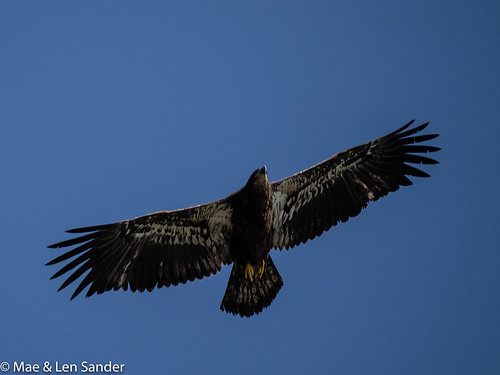
Birding at Shiawassee National Wildlife Refuge, we saw many young eagles,
as well as a wide variety of other birds.

ShiawasseeNWR-1
Another young eagle -- Len's photo.

There were herons everywhere, even on the road.


A few white pelicans were around.


ShiawasseeNWR-11
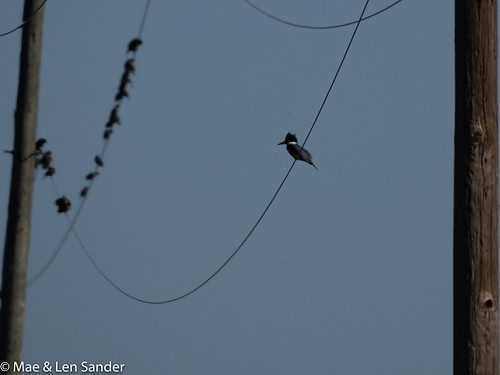
I love kingfishers. We saw several, but they are very active and hard to capture in a photo.


The whole refuge is very beautiful.


Where we were!

Our previous visit to the refuge was in October, 2014, blogged here.


 Photos copyright © 2021 mae and len sander.

Wednesday, September 01, 2021

UN Food Report: Ultra-Pasteurized Foods

'Taken together, the totality of evidence summarised here shows beyond reasonable doubt that increased consumption of ultra-processed foods is a major contributor to the pandemic of obesity, type 2 diabetes and related diseases.' Source: The need to reshape global foodprocessing: a call to the United Nations Food Systems Summit

A newly-published study of the global food system has surveyed the consequences of the increasing consumption of food that is manufactured by "industrial processes that convert food commodities such as wheat, soy, corn, oils and sugar, into chemically or physically transformed food substances, formulated with various classes of additives into generally cheap to make, long duration substitutes to minimally processed foods and freshly prepared dishes and meals." The study makes extremely well-thought-out distinctions between traditional types of food processing and modern rapacious industrial practices. 

A market in Africa (source)

A market in Indonesia (source)

It's easy to think about beautiful markets in exotic places like the ones in the above photos. It's fun to picture the fresh and unfamiliar produce and new flavors you might try, and hope that these lovely scenes are never spoiled by predatory Western corporations that are destroying traditional ways of life. But do we really know what distant individuals in unfamiliar cultures need and want? Have we created a vision of paradise that looks as good to them as perhaps their ways of life look to us? How does the UN imagine anyone can influence their choice of “modern” food when advertising has convinced them of its appeal?

Influencing people in far-away places is so complicated! American occupation couldn't change Afghan society by 20 years of war and forced social change -- only a small part of the urban population embraced the values and lifestyle we encouraged, and there was no success in sight, only endless expense of life and material goods. In the past, we couldn't change the "hearts and minds" of the Vietnamese people, only of a few collaborators. In both cases we found some citizens who wanted the political and social systems we offered, but in the end, we couldn't change their cultures by constant war, enormous expenditure, and propaganda. It seems ironic that in contrast to these military failures, deep changes to foodways have happened as a result of Western commercial activities. Food manufacturers from Europe and the US have succeeded in replacing traditionally processed food with the supercharged taste and accessibility of packaged snacks and drinks. Throughout the world, people are experiencing the consequences that the UN paper reports. 

The problems of the global food supply, as so well documented in this UN report and many other sources describing the abandonment of traditional agricultural and food practices, are part of the global situation that makes me so pessimistic that I can hardly face reading the news (a reaction that a lot of people are expressing). Hunger. The pandemic and embrace of crazy snake oil cures promoted by demagogues. Shortages of goods and housing. Worse and worse racism and exploitation of the vulnerable in our own society and others. Armed conflicts over resources. Desperate refugees. And more, looming ahead of us.

The world seems full of indications that we face the disintegration of the human project. More narrowly, we face the loss of optimism that our society will improve and influence other societies. Natural disasters loom as well. Fires in the Western US are dwarfed by similar fires that have ravaged other parts of the world. Floods, typhoons, hurricanes, and droughts currently affect many environments and countries. Of many examples, the suffering of Haiti seems especially notable: is Haiti, with its inability to recover from repeated natural disasters, a bellwether of the human future or just a sign of international indifference to their poverty, bad luck, and bad government? 

Obviously, there's much more to be said about all of this. One can find many controversies about causes, effects, and predictions. Please excuse my randomness! And please read the UN report on ultra-processed food -- only 3 pages long. In particular, check it out if you think my summary is wrong. The report makes very careful distinctions and observations, especially about what foods are considered ultra-processed and which ones are moderately or minimally processed and thus not necessarily being criticized. 

Coincidentally, CNN recently reported that a survey published August 10 discovered that American children received 67% of the calories they consumed from ultra-processed foods, "such as frozen pizza, microwave meals, packaged snacks and desserts." In 1999 the corresponding quantity was 61%. "The study analyzed the diet of 33,795 children and adolescents nationwide." (link)

I learned about the UN report from a blog post by Marion Nestle, a food scientist, writer, and one of the authors of the study.

This summary is my own interpretation, and this review is copyright © 2021.