Showing posts with label Japan. Show all posts

Thursday, February 26, 2026

A Food-Obsessed Book

Butter: A Novel of Food and Murder by Asako Yuzuki
Published in Japan in 2017 and in the US in 2024.
 
The characters in this book can’t stop thinking about food — including a woman who is in jail because she was a serial killer, and another character who is a journalist doing a story about the murders. As you can imagine, the plot is a bit over-the-top! Everything centers on food descriptions, which  are incredibly detailed but eventually get out of hand. Especially about butter. For example:

“As it melted under the heat of her tongue, the sweet butter expanded lusciously, rousing all the cells across her body capable of apprehending its rich goodness.” (p. 69)

Unfortunately, around half-way through the author seems to have lost her way, and the narrative becomes nearly unreadable. Earlier the book was a bit repetitive but this flaw gets worse and worse: really annoying. But I continued reading and finished the book despite being bored and bothered. 

I was surprised to learn that the plot is based on the history of an actual serial killer! Wikipedia says: “Kanae Kijima (木嶋 佳苗, Kijima Kanae; born November 27, 1974), known as The Konkatsu Killer, is a Japanese fraudster and serial killer, convicted for poisoning three would-be husbands and suspected of four more, spanning from 2007 to 2009.”

A few quotes:

“Reiko set down on the table a selection of large plates, each of a different design and glaze, and the meal began. Bagna càuda with a plentiful variety of steamed winter vegetables and a rich anchovy sauce, thinly cut slices of warmed salt pork, a tofu and leek gratin, rice cooked in an earthenware pot with vegetables and chopped oysters, and miso soup,” (p. 7)

“Eating was ultimately an individual and egoistic compulsion, Rika was starting to realise. A gourmand was ultimately a seeker of the truth. You could wrap up their mission in all kinds of fancy language, but they were simply confronting their desires day in and day out. As you learned to cook, you became increasingly able to shut out the outside world and create a fortress within your own spirit.” (p. 179)

“When I made them boeuf bourguignon, all they saw was beef stew.’ (p. 336) 

Note: I do not recommend this book! It’s tedious and I suspect the translation is bad, or at least in English the author often seems to use the wrong word for common things. (Example: for the entryway of an ordinary house, the book uses the word “lobby.” The book uses the phrase “a pat of butter” to refer to an entire 200 gram stick of butter. And so on.) If you want to read Japanese literature with food scenes, I recommend Haruki Murakami. 

Tuesday, July 08, 2025

Detective Kosuke Kindaichi: Another Japanese Mystery Story

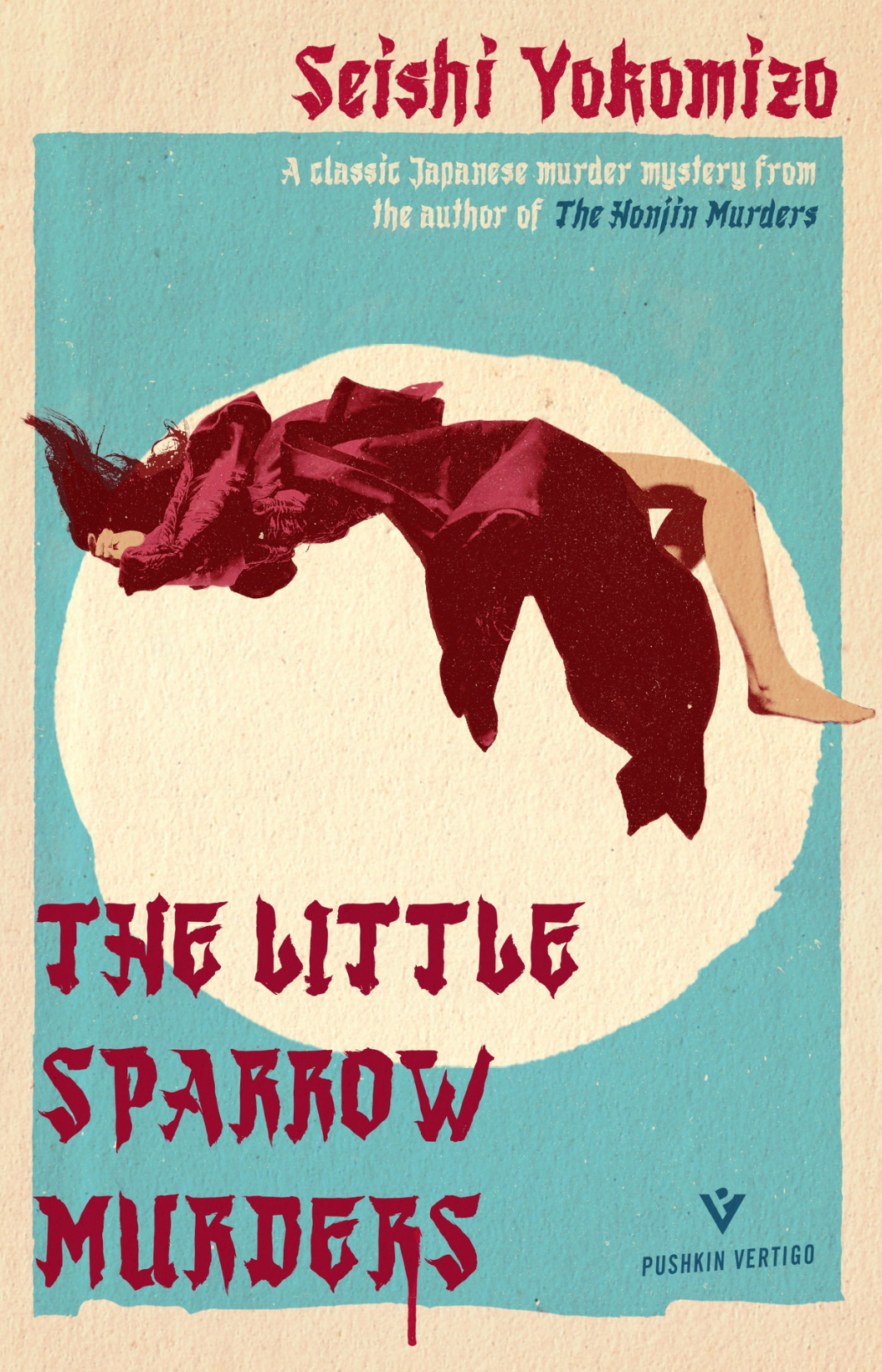
Good reading: The Little Sparrow Murders by Seishi Yokomizo (1902-1981). His detective in this novel, Kosuke Kindaichi, is eccentric, as I have found him in several other novels from a very long and permanently popular series. The action takes place in a village somewhere in rural Japan in 1955. The suspense builds as a series of murders baffle the local people and all of the professional detectives involved in trying to solve them. 

Kindaichi’s appearance conceals his brilliance, as witnessed by his colleague: “Inspector Isokawa looked at his friend, who, as usual, appeared dishevelled in his tired white-and-indigo kimono, which he wore with a pair of threadbare summer hakama.” This description also hints at the preponderance of details from Japanese life that may seem challenging to the modern American reader — but these details create a wonderful traditional atmosphere in post-war Japan. In my opinion, it requires patience and determination to read these novels — but it’s worth doing.


At the beginning of the novel, as is usual with many Japanese translations, the editors supply a list of characters in the village where the action takes place. In this novel, the list has 30 of them, grouped by families; most of the families have more than one identifying name. Also included: the names of several policemen and the detectives, including Kosuke Kindaichi, who is the principal character in the numerous novels in this series.

The breadth of descriptions and variety of personalities in the story create a vivid picture of village life — as experienced by the non-local detectives. I find this fascinating (as always in this series of books). I especially liked some of the food scenes, for example:

“It had already gone eleven o’clock by the time Kosuke Kindaichi and Inspector Isokawa stepped out of the bath and sat down to a hearty breakfast. The meal was comprised of miso soup with nameko mushrooms, salt-grilled salmon, stewed vegetables, and an egg each—and although it was an altogether simple affair, the delicious miso soup filled their empty stomachs.”

Other details involve the geography of this small place: in fact, the solution to the mystery, as of course reasoned out by Kindaichi, involves much trekking around on foot and on bicycles. The reader is offered a great amount of information about how the various houses and farm buildings (especially a winery where a terrible sour wine is made) are placed. 

The map is essential: 

A map of the village where the action occurs. 


The novel includes many examples of Japanese culture, such as a scene near a statue of the folk god Jizo.
I was quite intrigued and googled for images of this child-like god, who wears little clothes that people make for him.

Seishi Yokomizo (1902–81) was a famous and much-loved Japanese mystery writer, and Detective Kosuke Kindaichi -- who appears in many of the author's other novels -- has been in a variety of TV shows in Japan, and even in video games. The novels are currently being republished: this is a recent edition, published last fall. All those I have read are great for suspense, clever plotting, character development, and depictions of a now-lost culture from the mid-20th century.

Blog post© 2025 mae sander

Friday, March 07, 2025

What has happened this week?

Is Winter Ending?

Well, no, winter isn’t ending. We’ve had a bit of better weather but also some bitter weather. We took a walk under cloudy skies, but heard a Red-Winged Blackbird singing. At our house we are having a very quiet time, also pondering the rapid and increasingly alarming political and international scene in our national government. Not much to share with Deb’s Readerbuzz and her Sunday Salon on the weekend, but here it is!


Dreaming of summer and walks along the Huron River.

We cooked a bit, and had a few ready-made meals.


We shopped at the locally famous Zingerman’s Deli, and bought rye bread, salads, corned beef, and pastrami for sandwiches.


Now for my reading this week…. 

Sojourner Truth and Human Rights


The struggle to free the enslaved black people in the United States in the 19th century and the parallel and combined struggle throughout that century to endow men and women of all races with full rights of citizenship, property ownership, and voting, was a long and painful one. Sojourner Truth, who was born in slavery at the end of the 18th century, was a major figure in this struggle. She became a figure of legendary proportions, and in fact, her reputation depends on several anecdotes that were much embellished from the original events in which she participated.

Both the actual struggles, the political participation, and the myths of Sojourner Truth seem especially important now. As I have been reading about her life, I’m thinking about the horrifying way that the successes of that struggle are being reversed in our new political scene right now, this week, today.

Sojourner Truth’s Narrative tells how she was born in a Dutch community in New York, where slavery was less widespread than in the South, but where many Africans were held in bondage until New York ended legal slavery in 1827. Her narrative describes how she was enslaved until she was approximately thirty years old. She details her relationship with her owners, her family, and other people. She describes her religious development as a Pentecostal Christian, relationships with the preachers and leaders who influenced her, and her participation in various religious organizations and congregations. As she participated in many high-profile events of her time, she was conscious of her legend, and contributed in a positive way to being a leader and a proponent of human rights, freedom from slavery, and women’s suffrage.

The Narrative of Sojourner Truth was widely read throughout her life.

As the century progressed, antislavery activists conveniently forgot about Northern slave owners as they pursued the struggle to end slavery in the South. Thus Sojourner Truth’s origins were often forgotten, and she was sometimes thought to have been born on a Southern plantation rather than on a small-scale Northern farm where the language was Dutch, and where she would never have had the Southern accent that’s popularly associated with her. 

This association is especially strong with her most famous speech, delivered at a very early women’s suffrage meeting. You’ve probably heard the refrain of this speech known by the repetition of the words: “Ain’t I a woman.” These words were not reported at the time the speech was given, but were invented by a later proponent of women’s rights.  However, this legendary version of Sojourner Truth’s speech is so widely accepted that the author of the careful biography that I read feels it will never be corrected.

Sojourner Truth: A Life, A Symbol by Nell Irvin Painter.

What did Sojourner Truth stand for? Even her “Narrative” was the work of a white woman who took down her oral history because Sojourner Truth herself was unable to to read or write. In fact, Nell Irvin Painter’s biography summarizes it: “Everything we know of Sojourner Truth comes through other people, mostly educated White women.” (p. 207)

Painter’s book is fascinating, and very revealing about pre-Civil War attitudes and cultural stereotypes about the relationship of Black and White Americans, and the co-development of views on race and on slavery. Here is the passage that makes me tremble in fear that we are losing the progress that was made in that era and many subsequent eras when it comes to the rights of women, minorities. and non-white people:
 
“Women’s rights meant empowering women in a multitude of ways: securing women rights to their wages, their inheritance, and the custody of their children; admitting women to institutions of higher learning and the professions; and permitting women to vote, hold office, and serve on juries. This broad agenda dovetailed with the needs of Black people, who also lacked a wide range of civil rights.” (p. 261)

An article in the New York Times titled “Republican Men and Women Are Changing Their Minds About How Women Should Behave” summarized a number of recent studies:

“Surveys from 2024 show that support for traditional gender roles is increasing. Perhaps unsurprisingly, this is happening primarily among Republicans. Perhaps more surprisingly, it is happening among Republican women as well as among Republican men.”

Women being sent back from employment to stay home? Women being shut out of active high-level politics? In the most backward (but powerful) circles even questions of whether married women should be allowed to vote? 

That’s just one example: many news stories have been detailing extreme racism in the firing of high government officials and many overtly racist and anti-woman statements made by the incoming and less qualified replacements. What will become of us? 

We need another distraction…

Another Distraction

What would you think about a few cute bunny images? Again, I’ve looked at the work of the amazing artist Hokusai from 19th century Japan. Here are a few pictures by him and by one of his students to share with Eileen’s Saturday Critters.


Dreaming of Spring


At the Peony Garden in June a few years ago.


 Blog post © 2025 mae sander

Friday, February 21, 2025

Hokusai Cats

Hokusai, "Tiger in the Snow" (1849)

Last week I posted some images of birds by the Japanese artist Hokusai (1760-1849). Today I'll add some images of cats from his remarkable number of woodblock prints, notebooks full of sketches, and various paintings. Hokusai was enormously productive throughout his long life: his work includes over 30,000 paintings, sketches, woodblock prints, and images for picture books.

First, you have almost certainly seen Hokusai's most famous work, which is widely reproduced and often parodied or imitated.

Hokusai, "The Great Wave off Kanagawa" from 36 Views of Mount Fuji.

Hokusai’s Cats


Blog post by mae sander 2025, shared with Eileen’s Critters.

Friday, February 07, 2025

At My House

 Cooking 

Dinner for Guests

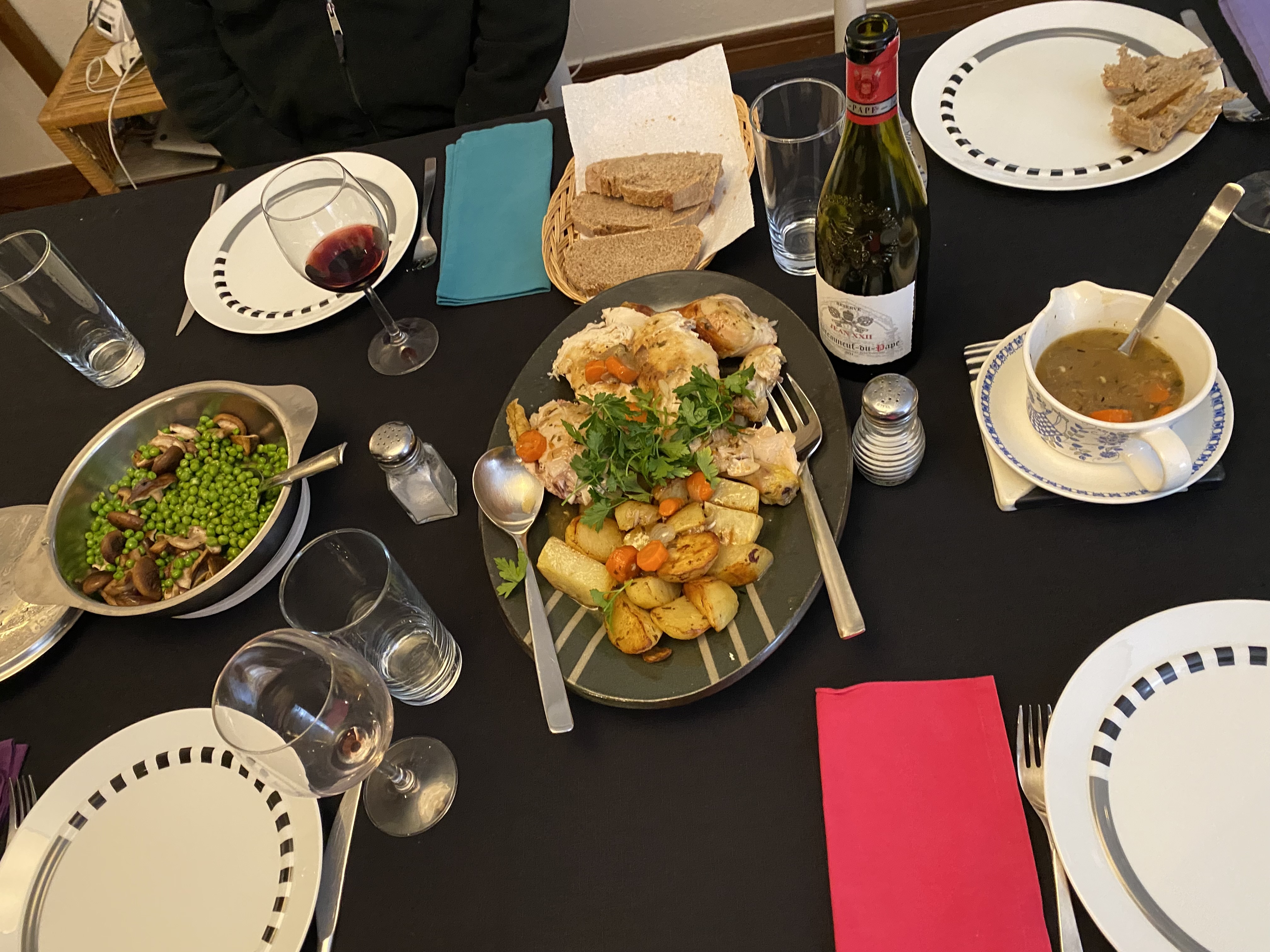
We hadn’t cooked any recipes from Mastering the Art of French Cooking lately, so when we started planning a meal for friends, we thought about an old favorite: casserole-roasted chicken with tarragon. If you want to get amazing results you have to do every step the way that Julia Child says to do it. So in addition to the recipe in the old favorite book, we watched the 60-year-old TV episode where Julia Child showed American cooks how to make this dish. Back then, it was revolutionary!

These original episodes of The French Chef are of course in black-and-white.
As you may know, Julia Child’s cooking show pretty much invented Food TV.

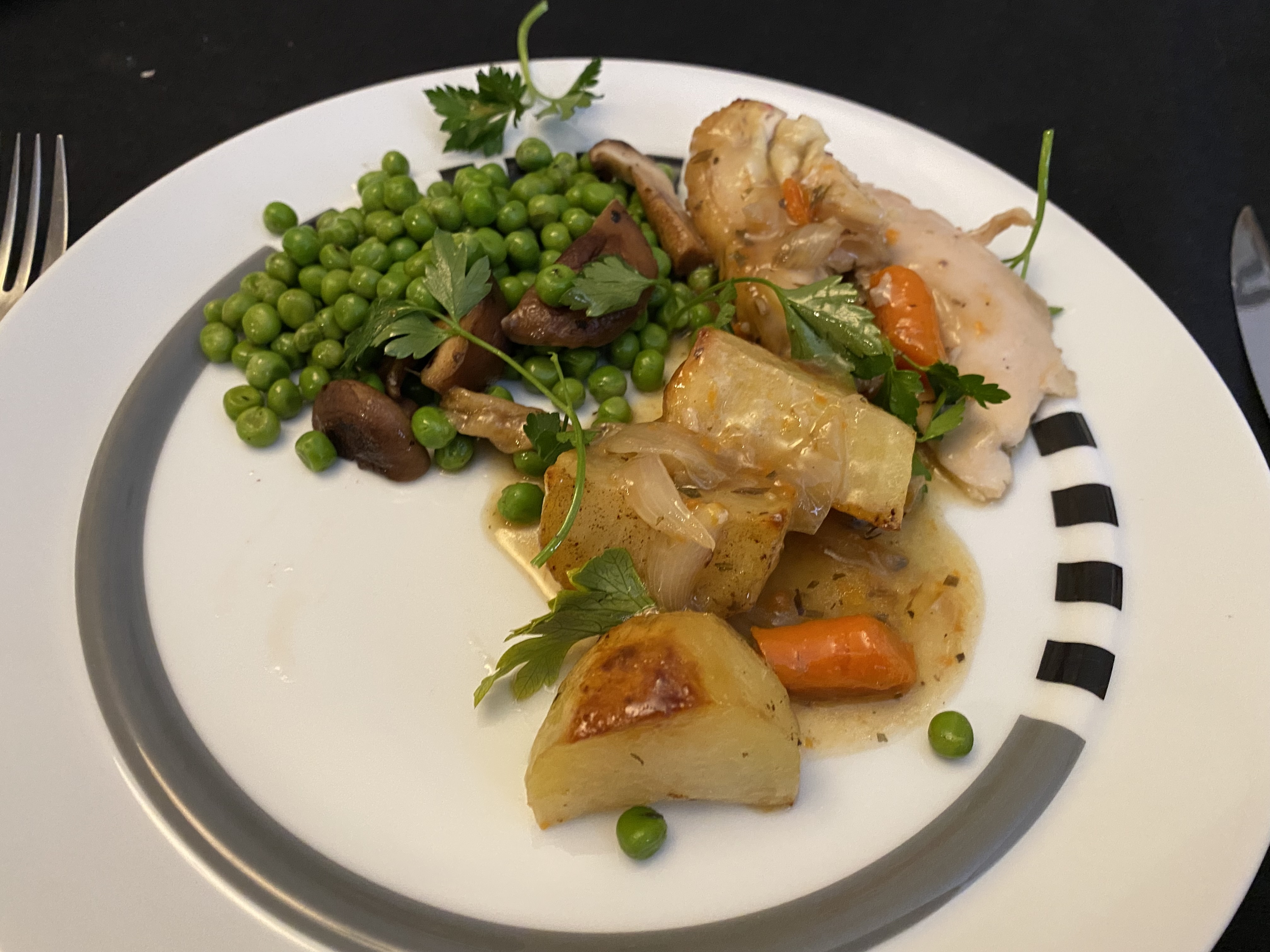
Julia Child’s recipe  recommends roasted potatoes and peas with mushrooms as side dishes. OK.

Unbelievably delicious!


Our guests.

Best Breakfast

 Another great bake by Len.


Reading

A bit of reading about Tokyo for a change of scene. Tokyo on Foot is a delightful collection of images.
Thanks to Emma at Words and Peace for recommending these books.

Reading next: classic haiku.

This is not one of the best novels by Patricia Highsmith.
I didn’t like any of the tediously portrayed characters and they weren’t
quirky enough to be interesting. 

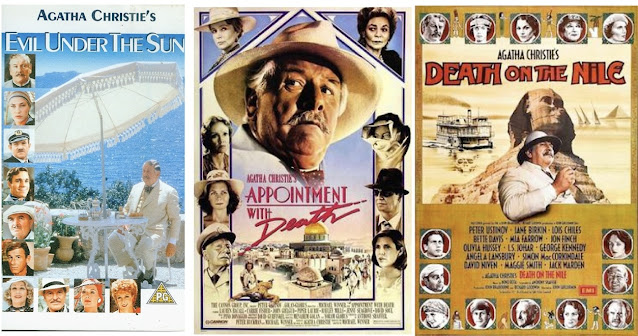
Watching Peter Ustinov’s Poirot

We wondered why we hadn’t seen these Agatha Christie films before. Each one has an all-star cast.
They have a delightful light touch. We also watched Kenneth Branagh’s Orient Express: very heavy-handed.

The Weather is Grim

Woody, the Michigan Groundhog saw no shadow and (as superstition has it) said no to more winter.
I agree that winter should end, but unfortunately, Woody is only right 35% of the time. (Photo Credit)
The “weather” in our nation isn’t so great either.

What I was doing two years ago

Whale watching in Baja California, February, 2023.


Photos © 2023, 2025 mae sander
Shared with Sunday Salon at Readerbuzz and Eileen’s Critters.


Wednesday, January 22, 2025

The Bells of Old Tokyo


The Bells of Old Tokyo: Meditations on Time and a City by Anna Sherman is a pretty good book, though I found that sometimes it seemed a bit unfocused. The author claims to be exploring the history of bells in the temples and other institutions of the city, but as she documents her visits many sites in Tokyo, she not only seeks the bells that are her specified topic, she also ranges over many other subjects and historic events. Her focus gets lost in many details that are interesting but very diffused. Above all, I felt that this book needed illustrations! Although the author’s descriptions are interesting, the scenes she describes just cry out for actual pictures. The kindle edition that I read had no illustrations whatsoever, which may also be the case for print copies of the book.

As I read I thought about our visits to Tokyo, always too short, and revisited some of my photos of our trip in 2011. Here are some quotes from the book with my photos.

The Sumida River as we saw it on a ferry ride in 2011

I enjoyed the many vignettes about the Sumida River and its long history because this river is one locale that we saw on our stay in the huge and varied city. Sherman’s summary:

“In its thousand years of written history, the Sumida has been moved and merged, its channels drained and diverted from one riverbed to another. Its waters were diverted so often – into canals, into gutters – that no one knows where the original channel once lay.” (p. 126)

“Today the Sumida has concrete banks and the buildings along its banks turn away from the river,
as if it weren’t even there.” (p. 127)

“Today the Sumida’s banks are scattered with new-fangled architecture from the 1980s Bubble
and the so-called Lost Decades afterward.” (p. 157)


“‘Of all Edo’s beauties, the river is paramount; its face changes from morning to evening.’ — Blossoms on the Sumida by Terakado Seiken” (Quoted as a chapter heading, p. 123)

The Black Gate, now at the museum in Ueno Park

“Ueno had seven gates. On 15 May 1868, the shōgitai massed near the main one, known as the Black Gate, where they faced off against the forces of Saigō Takamori, the era’s most gifted general and – even more ominous for the shōgitai – his five British-built Armstrong cannons.” (p. 84)

Now part of the museum in Ueno Park, which I visited in 2011, this gate had great historic significance
in the final defeat of the shogun and return of the emperor in 1868.

Throughout the book, the author returns to her discussions with the owner of a small old-fashioned coffee shop, which are interesting but not exactly on the topic of bells. She also has quite a lot of material about the 1923 earthquake and fire storm and the bombings of Tokyo in World War II. These were devastating to the monuments, including the bells, and to the entire city. In fact these chapters seem to defocus the book, especially the very long personal narrative about a Japanese woman’s experience in the war. I enjoy reading books about Japan, and I hope I’ll be finding some that I like better than this one!


Blog post © 2024, photos © 2011 mae sander 
for maefood.blogspot.com and maetravels,blogspot.com


Monday, September 16, 2024

A Miyazaki Film and some nice drinks


Yes it is a yellowjacket on my donut.

We like to go to the cider mill every autumn and have cider and donuts.

“The Boy and the Heron”

Finally, this long-awaited movie is on streaming.

We have watched this newly released film on streaming, and I’m sad to say, we didn’t find it as charming or captivating as our favorite Miyazaki films such as “Totoro,” “Spirited Away,” “Howl’s Moving Castle,” and “Kiki’s Delivery Service.”

The Japanese title is taken from a classic book written in 1937 and
 loved by Japanese youth.

I read the Japanese book How Do You Live last year, when I was first hearing about this new Miyazaki film. Like many reviewers, when I watched, I found the connection between them to be somewhat difficult to grasp, as the plot, setting and characters are all different. I reviewed this book in detail here:
How Do You Live?


Quite a few scenes include someone making tea served with bread & butter.

Miyazaki’s films often feature a “Granny” — in this one there are quite a few grannies who crave
food and cigarettes (since it’s set during the war when shortages were severe).

KAOS

Zeus drinks beer while barbecuing.


Blog post © 2024 mae sander.
Movie images from IMDB.

Saturday, May 11, 2024

Dragons and Other Creatures

In the past week, we visited three sisters: my sister (and brother-in-law) in Indiana, and Len’s two sisters in St.Louis. We also spent a morning at the St.Louis Art Museum with Len’s niece, and visited the Missouri Botanical Gardens. It was great to visit with everyone and catch up on the lives of their children, grandchildren, and two great-grandchildren. 

Dragons, Lion-Dogs, and More

At the museum in St. Louis we enjoyed several exhibits. I especially enjoyed seeing a number of interesting objects with fanciful creatures depicted on them. These came from China, Japan, New Guinea, Africa, and the ancient Middle East.

Note: this image is from an auction site, not my photo. All other photos are mine.


Amphora with Dished Mouth and Two Dragon Handles,
China, Tang Dynasty, late 7th-early 8th century.


Wine Ewer with Design of Phoenix-Headed Spout and Chi-Dragons.
China, 4th century BC, bronze.


Detail from a wall hanging with a design of Dragon and Phoenix amidst Waves and Clouds.
Japan, late 19th century.

Footed Cup with Ibex. 
Iranian, Chalcolithic Period, late 4th millennium BC

Detail of a memorial sculpture called a Malagan with a hornbill figure.
Papua New Guinea. Late 19th-early 20th century.

Detail of African beaded crown, 20th century.

Wedgwood Teapot, England, Early 19th century.


Godzilla

In West Lafayette last Saturday night, we had sushi at a very amusing restaurant called Sakanaya Izakaya. As in most sushi restaurants, the rolls have amusing names — especially this one:


I loved the paper lanterns that decorated the restaurant.

Blog post © 2024 mae sander.