Showing posts with label London 2016. Show all posts

Thursday, November 02, 2023

Recent Reading

 Some Short Genre Fiction

A nice short story by Silvia Moreno Garcia.
Although I usually am not a fan of this genre, I enjoy her work.
As suggested by the cover, there’s a wolf in the story.

First sentence of this book: “She’d always known her lover would come from beyond the forest. It was foretold when she cast a divination spell. It was a game she played with the other village girls—quaint superstitions passed from one generation to the next.”

I’m always vowing to read Sci-Fi, but I never really like it.

The last sentence of the book: “ We go forth to find this city’s singer, and hopefully to hear the greatness of its birthing song.” — From N. K. Jemisin "The City Born Great"

And One VERY Long Detective Story

The Running Grave

Writing as Robert Galbraith, author J.K.Rowling has produced another massive suspenseful detective story. Cormoran Strike and Robin Ellacot, partners in a private detective agency, are working on several commissions, most dramatically the case of a purely evil cult involving a self-proclaimed prophet (nearly a deity to his followers) and numerous offensive and manipulative activities. The abuses of the brain-washed, imprisoned followers are revealed as Robin bravely endangers herself by embedding in the headquarters of the cult somewhere in the wilds of the English countryside. 

The Perils of Robin in cult captivity are almost (but not quite) overdone in the style of an old movie serial, or maybe like the classic perils of Samuel Richardson’s novel Pamela (published 1740 as Pamela, or Virtue Rewarded, and considered to be the first ever example of the modern novel). I couldn’t stop reading!

The strength of this long book is that as Robin subjects herself to the horrors of this cult, the depths of evil that a single person can do are laid bare. I remembered, as I read about the cult leader and his willing victims, about Voldemort and the Death Eaters. All right, I still admire the Harry Potter books. I also admire the extremely pointed and well-observed criticism of cults and their exploitation of weak human beings expressed in this novel. 

As usual, there is plenty of personal detail about the two detectives, especially the struggle Cormoran Strike is waging to get his weight under control in order to reduce stress on his missing leg. His unwilling but disciplined choices, such as fish rather than steak, and his strenuous resistance against his craving for hamburgers and chips, as they are called in London, are very painfully familiar — as well as the circumstances where his will-power crumbles and he eats (in Robin’s estimation) 5000 calories worth of McDonald's. An example of his giving in:

“While Robin was in Kensington, Strike was back in the Denmark Street office, eating his second Chinese meal in two weeks, this time a takeaway. He was finding the last stone to go before hitting his target weight very hard to shift, and while he supposed a nutritionist might tell him the reappearance of takeaways and pub food in his diet might have something to do with that, the lure of sweet and sour chicken and fried rice had proved too strong for him this evening.” (p. 767) 

I was amused by one lunch: Strike is treated by a wealthy client at Rules restaurant in Covent Garden, an old restaurant with “comfortable glamour.” In fact, our friends in London, who are super knowledgeable about the city, took us there, and indeed we enjoyed the tradition and glamor of the place. Our visit was the same year as in the novel, 2016. Here are my photos of this experience:


After I found a couple of novels in the Cormoran Strike series to be grotesquely violent, I had decided not to read any more of them. However, a couple of people I trust (including our London friend in the photo!) said this one was better, and they were right. I’m glad I read it.

Reviews © 2023 mae sander
Shared with Eileen’s Saturday Critters and with Sunday Salon at Readerbuzz

Wednesday, December 28, 2016

2016, Year in Review Part 2.

In my year in review part 1 yesterday, I summarized what I blogged in January-June, 2016, about food, travel, and life in general. You can check out each month of blog posts as listed in the sidebar to the right of this post to see all the details. Part 2, here, continues with July through December.

July: At Home

We spent the entire month of July at home! A summer highlight of Ann Arbor is the annual Art Fair.
One of the artists we admire the most: Marvin Blackmore

August: Kauaii, Hawaii

We had a beautiful stay on Kauaii, including enjoying some of the most beautiful beaches in the world, birdwatching in the rainforest, and eating some really wonderful meals.

Len about to go scuba diving on his birthday.

September: Labor Day in Fairfax, VA.

Miriam and Alice heading for their first day of school.

September: Galway, Ireland and Nearby Places.

We visited Arny and Tracy who are on Sabbatical in Galway for the fourth time. They have really become almost natives, and are wonderful tour guides.
Rainbow behind one of the towers at Clonmacnoise National Historic Site, County Offaly, Ireland. 

October: London, England.

From Ireland we went on to several days in London, visiting our friends John and Sheila, with a side trip to their favorite Saxon village and the coast, and meals at several remarkable restaurants. For me, the visits to the Victoria and Albert Museum, the Tate Modern, the British Museum, and the Goldsmith's Fair were all exciting and wonderful elements of the visit.


October: San Antonio and elsewhere in Texas

We traveled to San Antonio for a reunion with a group of old friends, then went down to the coast for a few days of birdwatching, and finally visited another old friend in Austin.

The Alamo.
Two Whooping Cranes which we saw from a boat trip on the coast of Texas.

November: Thanksgiving in Pittsburgh. 

Family at the Thanksgiving table.

December: Fairfax, VA and Washington, D.C.

Beautiful December day in Washington, D.C.

December: Home for the Holidays

December 24: he first night of Hanukkah and also Christmas Eve. We roasted a goose!
Wishing everyone a Happy New Year!

Tuesday, October 11, 2016

Enlightenment

An Irish blogger named Ailsa Prideaux-Mooney wrote recently about her chagrin at the American election. She wrote: "To counteract this bleakness, I have resolved to actively seek out all that is enlightened, noble and beautiful about being human – and that’s what this week’s travel theme is about. I hope you’ll join me in celebrating the joy of the human condition."

I accept her challenge: to post photos from recent travels that make one think of enlightenment, and help to look forward from the current election season to what one hopes will be an enlightened woman in the Presidency. I am linking to her post, Travel Theme: Enlightened. 

My selection of photos I've taken in the past 6 months that have that meaning for me:

Paris, Museè D'Orsay, Statue of Liberty (one of various copies by the original French sculptor
Frédéric Auguste Bartholdi).
Gutenberg's Printing Press. Printing Museum, Provo, Utah.
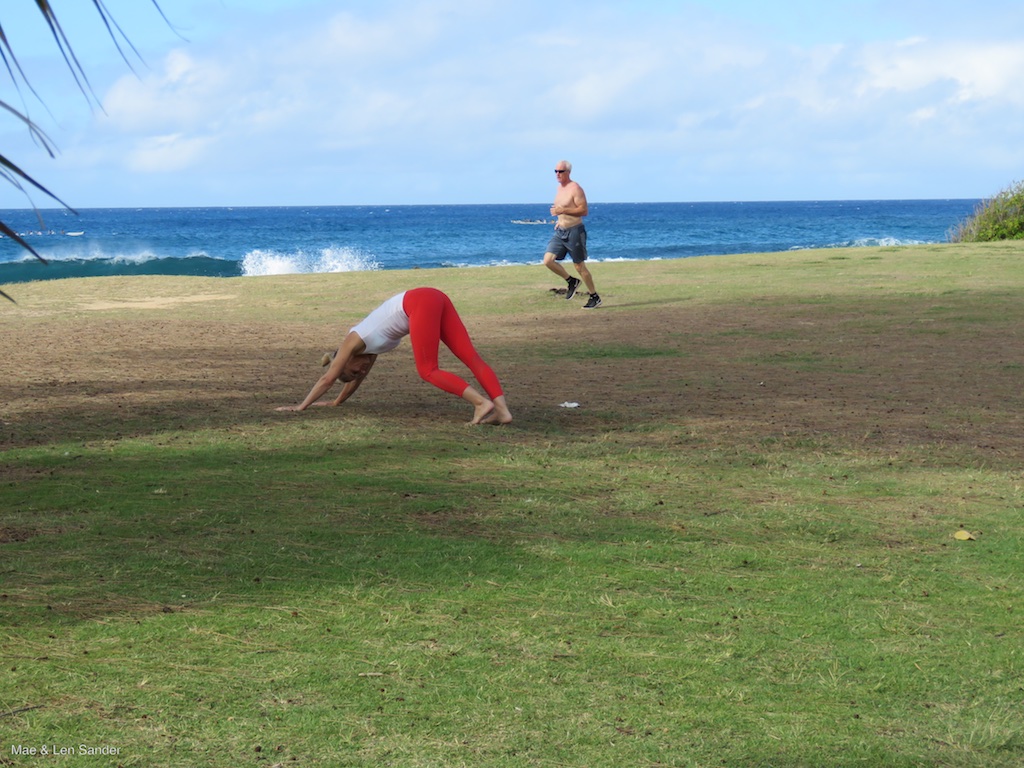
Woman doing Yoga by the Pacific Ocean. Kauai, Hawaii.

Hawaiian Rainbow.

Native Hawaiian Owl. While it denotes wisdom in our culture,
in Hawaiian culture the owl is a protector.
Chinese Scholar's Study, Victoria & Albert Museum, London.

Monday, October 10, 2016

At the Goldsmith's Fair

"The Worshipful Company of Goldsmiths, more commonly known as the Goldsmiths' Company, is one of the Twelve Great Livery Companies of the City of London and received its first royal charter in 1327." -- from the history of the Goldsmiths' Company.
The Goldsmiths' Company has a magnificent guild hall in central London, which opened in 1835. The building is the third goldsmiths' building to stand here since 1339 when the company purchased the land.  Last week, we attended the annual Goldsmiths' Fair where many professional crafts people display works in gold and silver to be purchased by those at the fair.

Talking to the jewelers at the Goldsmith's Fair at their guild hall in London last week.
Workers in gold and silver who belong to the guild still have a right to place an official "maker's mark" on their works.
The term "goldsmith" has traditionally referred to those who work in either gold or silver, making jewelry, tableware, and other gold and silver objects. Their guild -- the Goldsmiths' Company in London -- traditionally had responsibility for making assays of precious metal objects, maintaining standard measures (the Troy Weight), and making sure that members of the guild were properly qualified and followed correct procedures. Only guild members had the right to produce gold and silver objects during past times in England.

Our friends organized a guided tour of the fair for the four of us, led by a woman of great expertise who has curated various shows at places like the Victoria & Albert museum. She introduced us to many of the participants who explained their creative processes. They use a variety of techniques, both traditional ones and modern high-tech computer capabilities, which we found fascinating. The interest in the potential of computers and computer-aided design particularly impressed me, as the artists who are using computers do not compromise their artistry, but enhance it with technology.

A beautiful traditionally made necklace in gold and coral.
Hamish Dobbie, creator of this silver bowl, uses a 3-D printer to create prototypes that he designs on a computer.
From the 3-D printed object, he makes moulds, which are then used for making a variety of items.
Shown: a silver bowl (with a patina); the 3-D printed object used, the moulds made from the object.
In the front, in a shadow is a similarly created pendant with a different shape (detail below).
A decorative silver object from the above moulds.
Many of the artists described their use of various patinas in their creations.
A pendant made from other moulds made from 3-D printed objects.
A bracelet by a different artist, made with similar techniques.
In the tea room of the historic building are cases with a collection of items made by
members of the Goldsmiths' Company through the ages. This covered cup
was made by Thomas Jenkins around 1670.
As we talked to the silver and gold smiths at the Fair, learning about their varied techniques, I thought about the gold and silver objects I had seen in museums. The next day, at the British Museum, I photographed a few examples that seemed to me to connect with the contemporary artists' work.

Traditional methods of casting, beating, or otherwise forming precious metals date back to very early times.
This is a Byzantine sliver platter from around 300 CE. We saw it in the British Museum last week.
The Londesborough Brooch (8th-9th Century) made from cast gilded silver.
The interlaced designs are Celtic. Also in the British Museum.
Three gilded silver gothic brooches (400-650). British Museum.

Saturday, October 08, 2016

In My Kitchen: October, 2016

My Kitchen Door
While we were in Ireland and London, we had a new kitchen door installed. The old one was ruined by a painter who painted the gasket which therefore rotted the door inside. The new one also has a new doorstep and better weatherstripping.


The only other new items in my kitchen are three Irish magnets and one English magnet. The Irish ones depict writers James Joyce and William Butler Yeats as well as a 3-D "Irish Pub." The British Museum magnet is a cast of one of the famous medieval chess pieces (which I showed in an earlier post).

My bare refrigerator shelves after 2 weeks away: I need to go to the market!

The Kitchen In Ireland.

We stayed with Arny and Tracy for almost a week, so their Irish kitchen was sort of "my" kitchen for that time; at least, it's where we ate breakfast every day and fixed other meals. Here's Tracy -- the main cook -- as she was finishing several dishes for the 4 of us and 4 guests:


While we were visiting, their new refrigerator was delivered.
It's very small by US standards, but the landlords like it that way.
The dining room table, ready for the guests. The first course, Caprese salad, was made with
delicious ripe tomatoes, fresh basil, and Irish-made mozarella, all, I believe, from Aldi.
Tracy made chicken piccata and roasted vegetables for the main course, and one of the guests
brought a pear crumble made with pears from her own tree.
"In My Kitchen" is hosted by Lizzy of Bizzy Lizzy's Good Things. You can find links to many other blogger kitchens there.

Inside the Tate Modern

The architecture of the original power plant is evident in the incredibly gigantic Turbine Room of the Tate Modern.
"The Tanks" is the name of one section of the building. The walls have
been left with their original patina.
Within the galleries, one is allowed to forget the architecture and focus on the amazing collection of arresting modern artworks. As always, we were frustrated by having too little time to enjoy the impressive arrangements of works. We began with two rooms of sculpture and painting by Louise Bourgeois (1911-2010).

Louise Bourgeois sculpture.
The sculpture of a spider we saw this week reminded us of the monumental spider sculpture that Bourgeois did for the Tate Modern opening in 2000, which was on display during our previous visit. It dominated the vast turbine hall shown in the first photo above.

Louise Bourgeois works.
A sculpture made of cloth.
Bourgeois was amazingly adept at sculpting fabric with a needle and thread!
After seeing the Louise Bourgeois rooms, we spent the rest of the morning in the Georgia O'Keeffe special exhibit.
Schoolchildren with worksheets were everywhere in the O'Keeffe exhibit.
I was stopped from taking photos after the first rooms.

Despite the crowds, I enjoyed seeing the O'Keeffe exhibit. Her early work was well-represented, along with photos from the gallery of Alfred Steiglitz, who first exhibited her paintings in 1916. Steiglitz, who later married O'Keeffe, was a photographer and gallery owner who promoted the potential of photography as art. The exhibit included a few photos by Paul Strand, Steiglitz, and Ansel Adams. Although I've seen other O'Keeffe exhibits and her museum in Santa Fe, this was the most extensive show of her work I have seen. New to me: some paintings of Indian kachinas from her time in the Southwest.
  
Georgia O'Keeffe kachina paintings (and a few strays) from a google image search.
O'Keeffe's paintings of the desert near her homes in Abiquiu and Ghost Ranch, New Mexico, and her early stay in Taos were beautiful, and reminded me of visits I've paid to the area. I very much appreciated the exhibit's addition of photos and books that set her work in context.

After the O'Keeffe exhibit, we had lunch with our friends in the Members' dining room. As they live in London and often attend art exhibits, they are members of many museums and other cultural institutions. We then had another hour or so to try to see as much as we could justify doing in such a short time.

The Member's dining room at the Tate Modern.

A room of works by Sheela Gowda, also crowded with kids on a school tour.
All of the children we saw were behaving perfectly. Unfortunately there were way too many such tours in the building.
In another part of the museum, we saw a collection of photo collages by the German painter
John Heartfield. This 1928 work is titled "5 Fingers has the hand," which implores voters to
vote for the Communist Party.
John Heartfield was a highly political artist in Germany. The Tate's presentation of his works is extensive and very well-explained. His warnings to the German people seem uncomfortably relevant in my world today! From one of the placards in the Harfield room:
"From 1920, when he joined the German Communist Party, Heartfield’s work was focused on mocking the hypocrisy and cruelty of far-right politics. His most powerful work was made for the Communist weekly AIZ (Arbeiter-Illustrierte Zeitung, Workers’ Illustrated Newspaper). Although he showed his original photomontages in exhibitions, he always included copies of the mass reproduced magazine to show how his work addressed a wide public.
"Between 1930 and 1938 Heartfield contributed 237 photomontages to AIZ. The Nazis rapidly became his main target as he made ‘laughter a devastating weapon’ to expose their violence and fanaticism. His attacks became more urgent when Hitler became Chancellor in early 1933 and imposed anti-Communist censorship. Heartfield escaped to Prague where AIZ (and its successor Die Volks-Illustrierte, ‘People’s Illustrated’) continued publication until 1938. His cut-and-paste visual language remains fresh and immediate today, just as his challenge to Nazi propaganda still seems powerful and courageous." (source)
"As in the middle ages...
So in the Third Reich." 
A view from the galleries above the Turbine Room. 
A kinetic sculpture including several giant fish was on display
in the Turbine Room.