Showing posts with label American Immigrants. Show all posts

Sunday, April 21, 2024

Reading and Enjoying Spring Weather

 Julia Alvarez: The Cemetery of Untold Stories


Julia Alvarez is a wonderful story teller! In this novel, a successful New York writer decides to return to her childhood land: the Caribbean country of Dominica — which is also the birthplace of Alvarez. The character brings with her many boxes of notes and materials from novels that she hasn’t written, and creates a “cemetery” for these unrealized projects and the characters they were going to develop. She commissions a talented sculptor make a monument to each persona whose story she didn’t finish. 

The characters who now inhabit these monuments come to life and tell their stories to a local woman who has never read fiction (in fact, she can’t read at all). I loved reading these intertwined tales, along with the story of the illiterate woman herself, and of her family, which also has some members who have become successful American immigrants.

There’s so much in this novel — themes of identity; themes of chances and of opportunities both taken and missed; themes of good and bad family relationships; and themes of the history of the island, which is divided into two countries: Dominica and Haiti. Really good reading!

Claude Izner: Murder on the Eiffel Tower


This is a historical novel that takes place in Paris in 1889 during the great exposition for which the Eiffel Tower had just been built. The painstaking historical detail in the novel is fascinating — I assume it’s accurate, but I didn’t check. For example: 

“I was lucky enough to see the exhibition of Japanese prints organised by the Van Gogh brothers. The Great Wave by Hokusai made a real impression on me.” (p. 17)

“The Colonial Exhibition was made up of numerous buildings, either standing alone or grouped into indigenous villages. Victor did not wait to look at the seven pediments of the temple of Angkor but hurried towards the red structure of the Colonial Palace, an architectural mish-mash of Norwegian, Chinese and French Renaissance styles topped by green roofing.” (p. 60)

The food details are especially fun:

“Fried-fish vendors and left-over food sellers were setting up their stalls in the wind. Dishes of beetroot sat alongside rounds of cold black pudding.” (p 161) 
 
“In the kitchen, Germaine, with tousled hair and apron askew, was stirring the contents of a saucepan with a wooden spoon. Victor sniffed, recognising the aroma of partridge and cabbage in a cognac sauce.” (p. 207) 

Unfortunately, as a detective story this novel is too complicated. One murder after another piles up, and one man becomes obsessed with the murders and tries to figure out how they are linked and who is the perpetrator. At a frantic pace, he follows one suspect after another, becoming exhausted and confused. He also falls in love with a woman who is also enmeshed in the goings-on. He keeps having migraine headaches, or being hit over the head, or being baffled and overtired, or pursuing the love interest instead of the mystery. He’s always trying to think of some elusive insight that he can’t quite bring to the surface. There’s too much of this type of description:

“An idea was taking hold, but just out of his reach. He put on his frock coat as his mind worked on. … His memory was still teasing him: it was something to do with a name he had glimpsed recently, a name … But what name?” (p. 203)

I found the author’s mystery skills somewhat clumsy, and the piling-on of details and events somewhat unbelievable. Compared to Agatha Christie or other classic writers of the twentieth century, Izner just isn’t quite as good at creating a plot, embedding clues, or building suspense. I’m thinking of the well-formed detectives, victims, by-standers and witnesses in the novels of Martin Walker or Elly Griffiths or Donna Leon, and I just don’t find Izner’s focus and clarity to measure up.

Spring Pictures from This Week


Sunrise outside my bedroom window.

Just before the rain.


The beaver lodge at Matthaei Botanical Gardens.
Last year, the beaver built a dam across the stream, but a winter storm washed it away.


Michigan students painting “The Rock” — maybe in anticipation of finals during the next two weeks.

The magic spoon turns purple when the frozen ice cream touches it.
After a spring walk in the woods, we stopped for ice cream.

I enjoyed a scoop of each of these flavors.


Blog post and all photos © 2024 mae sander
Shared with Sunday Salon at Readerbuzz.

Thursday, March 28, 2024

Of Bats and Book Reviews


One of the twenty-six bat species in Cuba (source).

Thinking of bats makes me very curious. Mammals that have evolved to be able to fly and to navigate by speaking in high-pitched sounds that echo back to their sensitive ears for echo-location is just amazing. Can we humans ever imagine what a bat’s life feels like? Cuban bats play a role in the recent book Anita de Monte Laughs Last by Xochitl Gonzalez, so I decided to look them up. Some bats really look creepy, others just look like flying mice.


The plot of this recently-published  novel is so suspenseful that I’m not going to write about it because it would spoil it if you decide to read it (which I strongly recommend). Fortunately, I didn’t read any reviews before I read it so I loved the many surprising insights it offers about the challenges faced by American immigrants, about the huge egos of artists, and about the life of a college student from an immigrant family.

For example, the reviewer in the New York Times gave away too much of the plot: she (he?) didn’t like the book because it asked too much of the reader. Luckily I didn’t read this clueless review until after I read and very much liked the book. Xochitl Gonzalez, a writer I already liked, didn’t ask too much of me!

Review © 2024 mae sander

Tuesday, March 26, 2024

Another tale of the Promised Land

‘Although I wrote Kantika as a novel, I played with the line between fact and fiction and drew on the experiences of some real people, most centrally my maternal grandmother, Rebecca (née Cohen) Baruch Levy (1902–1991).” (From the author’s Acknowledgements, Kantika, p.283)


Kantika by Elizabeth Graver is a story of a family with deep roots in one place: Turkey. After the first World War, Turkey experienced major changes in government and policy. The long-enduring Sultanate was overthrown by nationalists, and thus minority communities were abused, persecuted, and expelled or driven to flee. The most extreme victims of this extremist nationalism were the Armenians: between 600,000 and 1.2 million Armenians were killed between 1915 and 1916 in what is now viewed as the first genocide of the twentieth century. 

A historic Jewish community in Turkey also suffered from the emerging policy. Kantika is the story of just one family from this community, told through the experiences of Rebecca, the author’s grandmother. Rebecca’s parents belonged to the Sephardic-Iberian Jewish community that had lived in the Ottoman Empire since their ancestors were expelled from Spain in 1492. They proudly identified as Turkish Jews and as long-term residents of Istanbul. Her father’s thoughts: “This city, the ground beneath his feet, here where he was born and his parents are buried—is his homeland.” (p. 39)

Rebecca’s father had a factory, and the family were well-off, able to pay for their children’s education (and not to rely on charity schools). They had a solid and respected position in the community, and a fairly luxurious house. Because the novel is presented from Rebecca’s point of view as a child and very young woman, there’s not an excess of historic or socio-political detail. Just this: her father loses his factory, and sees that he can no longer make a living under the increasingly hostile new regime. He can find nowhere to take the family except Barcelona, Spain, where there’s a very small Jewish community to which they can move. Somehow, her father was unable to find a way to go to much more promising places that other members of the community were managing to emigrate to: specifically, to Cuba or New York. 

Kantika follows Rebecca as she adapts to life in Barcelona, learns to make a living as a dressmaker, and marries an unreliable man who abandons her and her children. Her struggles and her optimism are fascinating to read: it’s not the broad events of history and politics that make this book relatable — it’s the way she deals with her circumstances. The way she realizes that she must conceal her Jewish identity. The way she deals with many setbacks. Spain in the 1920s was becoming a less and less safe place, so she agrees to an arranged marriage with a man from their original community in Turkey who has successfully immigrated to New York and become a citizen. 

Thus, by the mid-1930s, Rebecca is living in New York. Her story continues as she adapts to living in the US, managing to bring her two sons from Spain, and having three more children, besides the child of her husband and his first, deceased wife. One of the final chapters vividly describes her son's experiences in combat in the Pacific during World War II.

A fairly typical immigrant story? Yes, but it’s not the story, it’s how you tell it. The characters and events in Rebecca’s story, and above all, Rebecca herself, are in one way undistinguished, ordinary, and quite similar to many others in stories of how we American descendants of immigrants all got to where we are. But the telling: that’s special. The author loves these people — all her own relatives and their peers. And reading this, one gets to love them too. 

review © 2024 mae sander

Thursday, June 01, 2023

Food Issues: In My Kitchen Part 2

My kitchen.

Yesterday, I posted a review of what's been going on in my kitchen in May, as I do each month. I also like to think about food in a more general way, and ask how my narrow little world fits into the world at large. Unfortunately this frequently leads me to think about global food insecurity, which is the subject of my follow-up thoughts today.

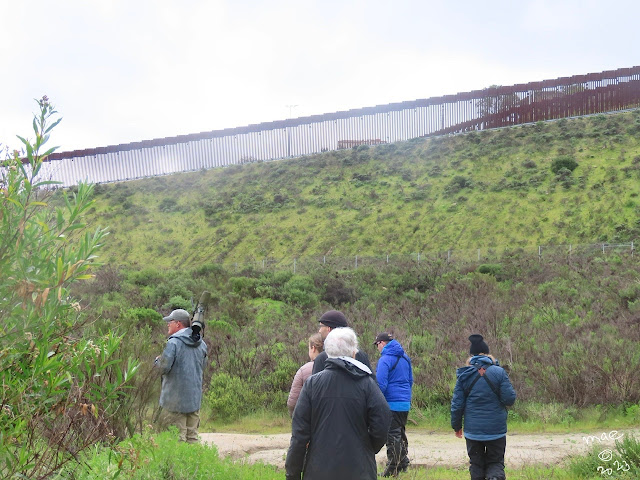
The border fence as we saw it last February while birding in San Diego.
Can we keep the evils of our world away from us by building higher fences?

Let's get out of our own narrow and mostly fortunate lives and think about the world — even if this thinking depresses us! It's so peaceful and happy in our kitchens that it's hard to see how the world is doing beyond our little lives. Sadly, every month seems to bring new reports about the disasters looming over humanity. The way we eat, the way we drive cars, the way we garden, the way we travel... are we  monsters? 

Desperate refugees are massed at the border of our country, but we don't see one important, underlying reason that drives them to come here: hunger! Such a contrast to our happy and maybe isolated lives, most refugees have fled from their own countries because of changes in political, social, and material stability. They take unimaginable risks because they think asylum in the US is worth the agony of long walks in uncertain conditions, exposure to predatory gangs, living without shelter, uncertain border crossings, and many other dangers. But a major problem where they come from is too often simple: not enough to eat!

José Andrés, a famous chef and also a famous leader of humanitarian programs to feed people after natural disasters and human-caused disasters, wrote a concerning op-ed recently, about the state of the world and the refugees fleeing so many disasters:  "Why Global Hunger is a National Security Threat," May 22, 2023.  He reminds us of this:

"We cannot build a wall high enough to stop the army of mothers with hungry children in their arms."

José Andrés founded a very effective organization, World Central Kitchen, which quickly sets up field kitchens in areas in crisis, and after the emergency situation has past, provides training and help for people to be self-sufficient. World Central Kitchen has brought good, appropriate foods to the people of Puerto Rico, Honduras, and others after hurricanes; to the victims of the earthquake in Syria and Turkey; to the people of Ukraine during the ongoing war; and to troubled areas in Africa, Asia, and the Americas. In creating this organization, Andrés has acquired expertise on issues of hunger and emerging disasters.

Andrés Warns of Global Hunger

A warning from Andrés in the article in the Washington Post paints a bleak picture of the current state of humanity. He writes:

"The scale of the global crisis is so great that hunger now represents a threat to our security, our borders and our projection of power. ... U.S. security agencies predicted a world, right around now, when water shortages and floods would 'risk instability and state failure, increase regional tensions, and distract them from working with the United States on important US policy objectives.'”

Social disruption and political instability are not just theoretical consequences of climate change in our world: they are affecting millions of people whose lives are now at risk. Refugees on our borders come from a growing number of countries where declining food supplies have contributed to political and social chaos. A severe drought is having a huge impact in Venezuela, Colombia, Nicaragua, Cuba, Honduras, Guatemala, and El Salvador. Shortages of food have increased political and social problems. Large numbers of refugees can see no option except to leave these countries and try to gain admission to a Western nation with better opportunities for them and their children. They dream of what life in America might allow them to accomplish.

Andrés points out that the instability of more and more parts of South and Central America and the humanitarian crisis there is a matter of our national security -- not something we can dismiss or ignore or solve by building a bigger fence. Needless to say, I agree with him that there is also a matter of human decency involved when it comes to these desperate people, who just a few years ago were farmers or workers or even middle-class residents of stable countries that are now in chaos.

When I think about my own security and well-being in our kitchen this month, I'm also thinking about the global problem that José Andrés is describing. He proposes that one solution is more coherent action by the US Federal Government and increased allocations of funds for international food programs that might forstall the coming disasters:

"Food can be the solution to multiple crises: from our health to our climate, from immigration to global security. But only if we think differently and prioritize our food. Our global food systems are broken, and we urgently need structural change. That starts right here in Washington."

Can Anything Save Us? 

I'm not optimistic about any solution to this huge problem being created (especially with our current Congressional gridlock situation). Food insecurity is just one consequence of the rapid changes in climate leading to many terrible situations, beginning with its effect on third-world countries, but also threatening to our own stability. More and more, we are part of one world with a set of emergencies that narrow-minded policies won't ever make better. 

I see the people at the border wall in California, Arizona, Texas... and think: it could happen to us. We need compassion and we need intelligent action. This is what hunger and desperation look like:

-- Source, CBS News

-- Source: Courthouse News Service

Why are the refugees risking so much by coming here?

Another look at the refugees and why they are trying to come here is described in the article "Pessimistic Americans fail to see the dream that migrants chase” by Gabriel Pasquini, in the Washington Post, May 30, 2023:

“The ‘negative’ motivations attributed to migrants have been met with equally ‘negative’ disincentives: threats of expulsion, detention and family separation, which all come at the end of an inhuman trek through a legal no man’s land.

“That ‘negative’ way of looking at migrants omits the most powerful force impelling them to brave the journey: a hope and a dream.”

One hundred years ago my father came to the US hoping for an education and opportunity. One hundred twenty years ago, my maternal grandfather brought his wife, three children, and mother-in-law to this country to seek a better life (and also for the children later born here, including my mother). Along with vast numbers of other immigrants, my relatives took risks for themselves and their descendants. Gratefully, I would say that we all have lived the American dream. When I think of the masses of people at the border, I think of these immigrants from an earlier time, and of the millions whose descendants now make up our country’s people. Can we find room for another generation of immigrants? I don’t know the answer.

Blog post © 2023 mae sander

Wednesday, April 19, 2023

Authenticity in Cuisine?

"The famous Somali poet Warsan Shire once wrote: 'no one leaves home unless / home is the mouth of a shark / you only run for the border / when you see the whole city running as well.'”

Somali chef Ifrah F. Ahmed quotes this poem in a fascinating article: "On Fusion, Forced Migration, and Somali Food:How Somali food in the diaspora holds the history of forced migration." She describes her thoughts about authenticity in cuisine as she expresses it in her cooking for her popular food truck and pop-up restaurants in Los Angeles, Seattle, and Brooklyn. Because I am very fascinated by the concept of authenticity in cuisine and how this concept is often, in my opinion, misused and historically muddled, I found her thoughts about how migration affects cuisine -- and authenticity -- very insightful. I particularly like her conclusion: "there are millions of ways to belong to a diaspora and to live authentically within a culture."

Somali chef and writer Ifrah F. Ahmed from Hiiraan Online

Ahmed writes about her family's forced migration from Somalia when she was a child, and how they eventually settled in Seattle, where she grew up, learning an immigrant version of the traditional cooking that they brought with them. Her fascination with cooking led her to become a chef, entrepreneur, and food writer for the New York Times and other publications. She developed recipes that interpreted her family traditions and built on them, continuing with the tradition and flavors of her heritage. 

Many people, especially her fellow Somalis, challenged the authenticity of the very popular foods she served at her food truck, particularly reacting to her specialty, "a Somali-style wrap — spongy and sour anjero-wrapped breakfast burritos filled with soft scrambled eggs, fuul (fava bean stew), and spicy vibrant green basbaas (Somali hot sauce)." She explains the inspiration for the dish: "I grew up eating fuul, eggs, and anjero. For me, serving the burrito was an opportunity to share a favorite family breakfast that was reimagined in its design; the only difference was rolling the ingredients into the soft sourdough bubble-lined pockets of the anjero. The burrito was a new thing and yet the original contents were the same."

Being alienated from the land they fled resulted in efforts for her family and her fellow immigrants to cling to the memories and traditions of their native cuisine, and to object to any changes, which they suspect of being "fusion food," and of deviating from authenticity. "Forced migration made it so we clung to what was most familiar, while trauma made it so we felt that we needed to protect and maintain what we once knew, just as we knew it."

This experience of cultural change combined with efforts at continuity very much parallels my understanding of the evolution of many immigrant cuisines in the 19th century when America became the home of many ethnic groups and nationalities. Though their departures from their original homes may not have shared the extreme desperation of modern forced emigration in the face of wars and famines, the wish of the earlier groups to continue family traditions seems to me to have been parallel to the experiences that Ahmed's family shared. 

Ahmed's thoughtful definitions of authenticity in the face of the critiques of her fellow immigrants are very enlightening. She writes: 

"Our dishes and traditions remained unchanged by time as we became dedicated to preserving the classical and 'purest' forms of culture and cuisine, because that was the last thing we had known. Forced migration made it so we clung to what was most familiar, while trauma made it so we felt that we needed to protect and maintain what we once knew, just as we knew it. ...

"No wonder, then, that it’s mostly in the diaspora where cuisine could be considered 'classic.' This adherence to 'classic' forms of culture and cuisine is a bridge connecting those in the diaspora to their homelands, a thread sewing the lost to what they left behind."

The New York Times has published some of Ahmed's recipes, such as Fuul, the fava bean stew that figures in her breakfast burrito. I haven't tried it, but it sounds quite delicious, and looks good in the image from the NYT article. (Note that NYT recipes require a subscription, so you may not be able to see this recipe.)

Recently, I've been thinking a lot about the meanings and misuses of food history, and how the idea of authenticity is misused, so I found this excellent article very interesting. I've also been thinking about the current global refugee crisis, and Ahmed's family story is very relevant to this as well.

The Ongoing Global Tragedy of Forced Immigration

The tragedy of forced immigration, where families have to struggle to create a new life in a new place (or often live in desperate and impossible circumstances) is horrifyingly common and increasing. Most tragic is that millions of people have lost their homes and have nowhere to go at all. The wars in Ukraine and Syria, the dictatorship in Afghanistan, and the famines in Africa have created millions of desperate people displaced from their homes and in need of all necessities of life.

Somalia has been one of the most desperately affected areas for a long time, and according to the charitable organization Concern:

"At the end of 2017, there were over 986,000 [Somali] refugees. While the numbers went up a bit in 2022, at just over 799,000 it’s still a significant decrease compared to five years ago. However, the situation is nevertheless dire for many. For the last several decades, a cycle of crisis in Somalia has been fuelled by drought, conflict, and hunger. The country is at the epicenter of the current Horn of Africa crisis, which could lead to a new famine being declared in the region. Even if it doesn’t, the UN still estimates that the effects could be similar to the country’s 2011 famine." (source)

Sunday, December 11, 2022

"Olga Dies Dreaming" by Xochitl Gonzalez

The devastating hurricane in Puerto Rico a few years ago is central to the events and character development in the novel Olga Dies Dreaming by Xochitl Gonzalez. Prieto, one of the two central characters, is a congressman representing a district in Brooklyn. He reacts to the plight of the Puerto Ricans:

“Unlike when Sandy took out power in New York, or when Houston was flooded after Harvey, or when fires burned the houses of Sonoma to the ground, these people had no one to go to. They had no real voice as far as the government was concerned. They paid taxes, served in U.S. wars, yet there was no one with actual power whose job was to fight for them. No one to represent them and demand action. On a good day, Prieto didn’t trust this administration not to fuck anyone who wasn’t a part of their ‘base.’ He could only imagine the cruel neglect they would subject upon an entire island of disenfranchised Brown and Black people. It was playing out before his very eyes. He wanted to stay to help, yes, but also so that no one could deny what he saw. No one could ‘spin’ it and say the footage was worse than the situation. He needed to bear witness.” (p. 264)

Olga Dies Dreaming (published in 2021) has many themes besides this, and I found a lot to like in the novel. I was impressed by the insights about the characters’ thoughts about material goods and especially the way that they view ultra-rich people and their values. The author has an original way to contrast wealth with poverty: contrasting those who have everything to people who want to avoid being poor and ethnically different. The author deeply understood how alienated and impoverished people wanted a place of their own:  “Stomping up and down the stairs of a house your family owned, not getting policed by a landlord who wants your money but not the smells of your food or the sounds of your language.” (p. 25)

Olga Acevedo, her brother Prieto, and others in the book really came to life as they were depicted in a plot that was appealing, if somewhat unbelievable when it came to their all-powerful mother the revolutionary!  The dialog was readable, though sprinkled with references to Puerto Rican music and use of New-York-Puerto-Rican-Spanish-in-group expressions that you were supposed to learn by reading. (It reminded me of some older New York novels that used Yiddish that way.)

Lots of home life characterizes the narrative; also lots of thoughts on the life of closeted or nearly closeted gay people afraid of the ethnic disapproval of their families. This is key. For example, here’s how the author shows Olga’s aunt, beginning as she makes arroz con habichuelas blancas—Olga’s favorite:

“Olga stared at Tía Lola intently as she seasoned beans, boiled rice, chopped onions, and sliced avocado. While she cooked, Lola hummed along to the Daddy Yankee song playing on the stereo system and from across the kitchen Olga attempted to discern something of her aunt beyond her boundless capacity to love. Her mother’s baby sister had always bucked convention. In college, she had studied accounting and, once done with school, landed a good job, chopped off all her hair, and took an apartment forty blocks north in Park Slope. Lola then proceeded to stack cheddar in a way that enabled her to care for her mother as she aged, keep Olga and Prieto in fresh back-to-school clothes, and still go on one cruise a year. On Saturdays, Lola, who had been the family chef since she herself was a girl, came and cooked for whatever family showed up. On Sundays, in good weather, she rode with her Puerto Rican motorcycle club. She never married. What she did with her days and nights outside of that, none of them knew. The block had long whispered that Lola was a lesbian, and Olga hadn’t ruled that out, but she also wasn’t completely convinced.” (p. 110)

Politics of Puerto Rican freedom and independence are a major topic in the novel, handled with a great deal of skill and tact so that they didn't overcome the reader with stuff that's not focused on character development. And character development is very much the center of this book: Olga, the central figure, learning to understand who she is, became able to relate to many people: friends, relatives, lovers, and coworkers, and to the memories of her dead father and absent mother.

The poem from which the author took the book’s title is “Puerto Rican Obituary,” and it’s worth reading at the Poetry Foundation website. The character in the book says of the poem: “That Olga was ashamed of her identity and died dreaming of money and being anything other than herself.” (p. 276) As the quote implies: this novel is about identity.

Review © 2022 mae sander

Tuesday, June 14, 2022

"A Jewish Refugee in New York"

A Jewish Refugee in New York: A Novel, by Kadya Molodovsky is a new translation from a serialized Yiddish publication that ran in the New York Yiddish newspaper Morgn-zhurnal (Morning journal), beginning in 1941. It consists of the entries of a fictitious journal of a girl called Rivke Zilberg. She relates the first 10 months of her life in New York, between December, 1939, and October, 1940. Rivke had escaped from Lublin, where the Nazis were just beginning to execute their plan to destroy the Jewish communities and their residents in Eastern Europe. She lives first with her aunt and uncle, and then with generous strangers who help her find work and some independence.

A question that has troubled me all my life is this: How much did American Jews know about what was happening to the Jews in Europe during the war? Over time, I have learned that from the earliest days of the war, there was no mystery about the ongoing destruction of Jewish life there. This book makes that perfectly clear. 

Often, I also wonder what was life like for a "greenhorn" -- the mocking term which the more assimilated Jews applied to newcomers. My mother's family arrived in the US in 1905, and she was born a few years later, and went to American school from kindergarten through college. So she was never subject to this treatment, but her sisters remembered the arrival of their cousins in the early 1920s. Their adjustment was swift but it must have been painful. In the 1990s, one of the immigrant sisters still complained because she said someone treated her "like a greenhorn."

A Jewish Refugee in New York offers a variety of insights into the thoughts and experiences of a refugee from Hitler as she joins an assimilated community and tries to learn English and not be a burden to others. Rivka's journal entries tell a fascinating story. After all these years, this book has just been translated for the first time by Anita Norich, who says: "It is the story of a young woman shaped by historical crises, trying to make sense of her place in a bewildering, threatening world." (Kadya Molodovsky. A Jewish Refugee in New York: A Novel, p. vii). 

Rather than reviewing the book, I'm going to quote passages that make clear how it illuminates the life of a 20-year-old woman.

Far away from New York: Quotes from A Jewish Refugee in New York

"Today, I read in the newspaper about what is being done to Jews in Lublin. Even though I already knew about it earlier, it was upsetting. Yesterday I dreamed that I saw my brother Mikhl standing deathly pale, and suddenly he jumped wildly as if he was in great pain."  (pp. 24-25). 

"My father writes that he’s living at Krasulye’s and Krasulye is no more. I received the letter this morning and read it aloud to my aunt and uncle. My aunt said, 'So, thank God, at least they have a roof over their heads!' She thought that Krasulye was someone’s name, but when I told her that it was the name of our cow and that my father and brother were now living in Krasulye’s shed, she stopped thanking God. I wept uncontrollably. The letter was mailed in January, in the coldest weather. Where are they living now? And what’s happened to our home? Has it burned down? Did the Germans take it away? Who knows?" (p. 47). 

"I dreamt about my father last night. He was lying in Krasulye’s stall, on the ground, with his back against the wall, and I saw how cold he was, how he held his hands under a mound of straw. It tugged at my heart, and I jumped up wide awake." (p. 50).

"I want to know what’s happening in Lublin. What’s happening with my father and brother? The newspapers say that they’re sending all the young men away to be slaves in Germany." (p. 98). 

"I was at the wedding, but I was seeing Lublin, my father in Krasulye’s stall, Chatskel, and poor, blind Janet [other relatives who had not escaped Europe]. It was as if they were all standing near me, behind a curtain." (p. 171). 

American Life from A Jewish Refugee in New York

"Everybody says something different about America. The laundress says you have to take America with aspirin in the beginning, and Mendl Pushcart says that you can’t take the measure of your headache here. Maybe he’s right. Should I be upset just because I’m tired? Maybe it’s all not so hard. I just thought . . . and then my heart ached again because I saw how alone I was on Grand Street. Will I be able to bear it? What will become of me? I don’t know. I don’t know. I don’t know anything." ( p. 101).

"Awlriyt is the kind of word that always comes in handy. Awlriyt means good. But if you say it twice—awlriyt, awlriyt—it means leave me alone! Enough already! Awlriyt also means I understand you fully. And that must have been what Eddie’s awlriyt meant." (p. 90). 

"So, despite the fact that my grandfather, Reb Mottele, lived in the forest near Lublin, and despite the fact that he’s been dead for about ten years, and even despite the fact that he probably never gave a single thought to New York, he’s still more important in New York than I am, even though I’m already able to ride the subway. Rebbe Finkl and Mrs. Rubin both thought it mattered a great deal that I was Reb Mottele Zilberg’s grandchild." (p. 120). 

Food in A Jewish Refugee in New York

"My aunt made blintzes for Shavuos." (p. 131).

"When I got home, I found my aunt pickling herring. The smell of vinegar and cloves was all over the apartment. It smelled like Purim." (p. 50).

"All of New York called us up on the phone because of the Purim ball. My aunt heads the table committee, so the phone never stopped ringing. Mrs. Rabkin, the new vice president, called up to say that she had a kayk, and what a kayk. She didn’t say what she meant by 'what a cake.' All she said was, 'You have to see it.' Mrs. Erlich called to say that she was bringing fifty hamantaschen and a poppy seed cake to the ball. She also reported that Mrs. Rubin had gotten a hundred bottles of Coca-Cola. Mrs. Sunshine called to say that she had twelve bottles of Carmel wine." (p. 55). 

"We drank a few cups of coffee, and I ate the sendvitch she offered me. I’m not so fond of eating sandwiches. As soon as I try to take a bite, either cheese or salami or some other filling falls out. Americans make a big deal of a sendvitch, but I think of it as three separate things that should remain separate." (p. 30). 

"No matter what’s going on, there are sendvitches. It’s really something, these sandwiches. You can always find them on a walk, at a party, or at a wedding. We had dairy sandwiches and meat ones. Mrs. Shore made two cheese sandwiches, so my aunt made two with chopped liver. Mrs. Shore made two with eggs, so my aunt made two with salami. Mrs. Shore made two with herring, so my aunt made two with chicken. Mrs. Shore made two with lox, so my aunt made two with meatloaf. Mrs. Shore made two with mayonnaise and green peppers, so my aunt made two with chicken gizzards. And whether the sandwich was dairy or meat, every one came with half a cucumber covered in salt. I looked at that mountain of sandwiches and saw Chatskel and Janet  before me, dragging themselves around who knows where and who knows how long it’s been since they’ve had any food in their mouths." (p. 139). 

A neighbor tells Rivke: “When my Harry gets a little crazy, it doesn’t matter to him who he fights with. He just has to find an enemee. He fights with whoever he finds.... Do you know what I do then? I make potato pancakes! My Harry really likes them. No matter how angry he is, if I bring in a plate of potato pancakes, he makes up with his enemee right away. I don’t know how we’d live if there were no potato pancakes in the world." (p. 42). 

Afterthought

Remember: A Jewish Refugee in New York was published at the very beginning of World War II, long before many the worst atrocities of the Holocaust happened, and before many other more famous Holocaust books were written! If you have been reading recently published novels that try to create a "feel good" attitude towards the Holocaust or purporting to create moral lessons from the fate of the Jews, you might consider reading A Jewish Refugee in New York -- or even consider reading a real first-hand account of life and death in wartime Europe. For more on this, see Dara Horn's book People Love Dead Jews, which I reviewed here.

Blog post © 2022, mae sander.
Q
uotes from A Jewish Refugee in New York as attributed.

Wednesday, August 19, 2020

Eating Canned Tuna

Skipjack, albacore, bigeye, yellowfin, Atlantic bluefin, Pacific bluefin, and southern bluefin tuna are the principal species in the tuna family. They vary widely in size, in scarcity, and in culinary desirability. Bluefin tuna, mainly fished for their use in sushi, are very large, and very expensive -- and also under extreme threat of becoming extinct. Some of the smaller and more common tuna types, such as albacore, though heavily fished, are at much less risk. In general, tuna play a large role in ocean ecosystems. Tuna also play a large role in American nutrition. (source)

Lunch: tuna and white bean salad with local
tomatoes and garden herbs.
Ingredients: red onions soaked in ice water, lemon juice,
a can of tuna, a can of white beans, vinaigrette sauce made
with Edmund Fallot mustard.
In recent months, I've been trying to revisit my choices of foods, and to develop a better sense of responsibility in what we eat. I'm looking at the issues of health and nutrition, of ecology and climate change, and of the welfare of workers in the food industry including faming, fishing, food processing, transportation of food, and many jobs in food stores. It's a big job! Today, I'm thinking about tuna, particularly canned tuna, and I’ve been reading about the history and current state of the tuna industry.

Tuna canning in America began around the turn of the 20th century, and continued to grow for most of the century. Tuna was a staple for Americans from virtually all ethnic groups, with use by a very high percent of households: "For nearly nine decades, Americans ate more and more tuna out of tin cans. For nearly five decades — from about 1950 until 2000 — tuna, almost all of which was canned, was the most popular seafood in the United States." However, between 1990 and 2010, Americans' tuna consumption decreased from 4 pounds per person per year to just 2 pounds. As the industry grew over time, the original numerous small tuna canneries slowly consolidated into just a few, and began to engage in collusion to drive up prices. This year an executive of one company has even been convicted of illegal price fixing. (sourcesource)

After a decline in the early part of this century, tuna sales seem to be going back up now. Specifically a study from Fortune Business Insights reports: "Consumers are highly dependent on ready-to-cook and ready-to-eat food products due to the convenience of cooking offered by them. The rise in working women population and the less time spent on cooking has led to wide utilization of canned tuna. The millennial population is highly inclined towards such convenience food products as it is easy to prepare, nutritious as well as saves the food preparation time. Many manufacturers are focusing on launch of new products and certifications to provide the consumers with quality products and for serving them better." (source, source)

Despite the legal setbacks to specific producers, overall the market for canned and packaged tuna has been growing for a few years, and the market changes caused by the pandemic have driven up demand for all canned products, tuna included. Collectively, the tuna industry production totals in the tens of billions of dollars per year; though total consumption is still down, the value of tuna purchased is up because of higher prices and higher quality of the product. Here's a graph of recent and projected growth:


As for me: tuna salad is one of the easiest recipes in my repertoire -- a can of tuna with mayo, pickle relish, maybe chopped onion or celery, maybe hard boiled egg. We like it in a cold sandwich, as a classic tuna melt, or just as a salad with other veggies. We also like the Italian-style salad made with white beans and tuna. Another favorite: the French Salade Niçoise -- tuna, tomato, olives, green beans, pommes à l'huile (French potato salad), optional anchovies. A famous American classic, though I don't make it myself, is the tuna hot dish with cream of something soup and noodles. With all the challenges to grocery shopping we're facing these days, these pantry-shelf recipes are surely more valuable than ever. Tuna sandwiches (maybe made directly from a pouch, maybe by adding your own mayo) are still a mainstay of lunches throughout America.

Issues about the rights and wrongs of eating tuna are numerous. Is it safe to eat tuna? Especially, is there a risk of mercury contamination? Is tuna environmentally responsible? In particular, are dolphins being killed by nets that capture the tuna? And are the tuna in oceans throughout the world being irreversibly fished out, leading to many ocean-wide problems? Is the price going up, making it less and less affordable? Finally, are the fishermen on the tuna boats taking terrible risks of infection from coronavirus? Answers to these questions are disputed: the fishing industry trade association denies the warnings from consumer and environmental organizations, while most other organizations suggest caution with regard to mercury in tuna and strongly recommend responsible methods of fishing.

Except for the self-serving National Fisheries Institute positions, most analysts recommend pole-and-line or trolling methods of fishing, which would mean purchasing tuna labeled to have these methods, and recommend albacore or skipjack species of tuna. The extreme vulnerability of the bluefin tuna isn't relevant to the discussion of canned tuna, as these giant fish are used only for sushi (but you might want to think about this if you do eat sushi). The "Eat This Not That" website points out:
"Resources like the Monterey Bay Aquarium Seafood Watch Site or Greenpeace's canned tuna report, which ranks 20 well known brands for their sustainability, as well as ethical and fair trade practices, are good places to start making more informed choices with canned fish."
Yes, I’ve been buying recommended ethically fished and handled canned tuna brands, namely Wild Planet and Whole Foods 365 brand, for some time, but I try to revisit these decisions occasionally in case the situation changes.

Blog post © 2020 mae sander for mae food dot blog spot dot com. 


Thursday, June 11, 2020

“American While Black” by Niambi Michele Carter

"For most of their existence in the United States, black people were noncitizens. Regardless of status, whether free or enslaved, blacks were not deemed members of the American body politic. In fact, they were not inaugurated as full citizens until 1965. Their noncitizen status was cemented in the Dred Scott v. Sandford (1857) Supreme Court decision, which stated all people of African descent— whether free or enslaved— could not become citizens." --American While Black, p. 87.
This book appears on several lists inspired by the recent protests against police brutality against Black Americans. American While Black: African Americans, Immigration, and the Limits of Citizenship by Niambi Michele Carter (published 2019) seems to me to be full of wonderful insights. I was very interested in the author's approach to understanding Black Americans on their own terms, not by comparison to other groups.

American While Black explores the current attitudes of American Blacks about immigration and how these attitudes came about. The immigration issue is of little political importance in their voting behavior, in contrast to the attitudes of many white groups. Carter discusses how Black Americans' historically developed sense of identity informs the way they view other minorities, particularly immigrants. The discussion is detailed and nuanced, and I don't intend to try to reproduce it, just to acknowledge that it's very interesting and, as promised on the book lists, offered me a lot of new insights.

Carter provides some definitions of commonly used terms that I find quite penetrating:
"White supremacy is the system that favors white people and structures all of our life chances according to skin color, gender expression, sexuality, nationality, religion, and the like. This means all of us can participate in perpetuating the system of white supremacy regardless of whether that system benefits us individually or whether we participate in or believe in racist practice." (pp. 4-5).
"Under colorblindness, racism only exists in the minds of those who see themselves as victims, not as an objective fact. Consequently, what appears to be the result of race— poverty, infant mortality, and high rates of incarceration— is explained in nonracial terms by the (unwise) choices individuals make." (p. 42).
I was especially interested in this point about how Black people view their history:
"It is difficult not to understand how black life is bounded by and to past circumstances, because they are not past events but frame the racial dynamics blacks find themselves living in at present. This is not because blacks are backward-looking victims; rather, this is a demonstration of the power of communal or collective memory and the vigilance required so that we do not return to that place." (p. 140). 
Beginning in the 19th century, Black Americans did not have the rights of citizenship nor the ability to enjoy the product of their labor as slaves. As a result, they could view themselves as stateless people. Continuing through much of the 19th and 20th centuries, there were a variety of efforts and suggestions to enable American Blacks to "return" to Africa, often with the enthusiastic commitment of Black leaders, as well as with less-well-intentioned white leaders. Carter writes in the context of this suggested emigration:
"Individual agency matters, because that is at the heart of who can be a citizen. In the United States, where citizenship is not defined by culture but an allegiance to certain ideals like life, liberty, and pursuit of happiness, being a sovereign person means that one is 'fit' for citizenship. In this way, the purest expression of being an American is being able/ free to find a place in the world, literally, and contribute to its advancement. This freedom was denied to all blacks who, during the period under study, had no status as Americans, even if free." (p. 85). 
Combined with the post-Civil-War mistreatment of the freed slaves, the suggestion that Blacks should return to Africa in a way haunts their political consciousness. At the same time, the waves of immigrants, first from Europe and more recently from Latin America and Asia have repeatedly been offered better opportunities for entrepreneurship, for education, and for integration into the white middle and even upper classes. Carter explores how Blacks have responded over time to these new citizens and their enjoyment of opportunities that were consistently denied to the Black population.

Clearly, the book shows, Black people understand that immigrants are their competitors and often willingly participate in perpetuating the unequal status of Black people, yet the author's studies and surveys (described in detail in the final chapters of the book) find that immigration and immigrants are not of crucial importance in the worldview or political view of Black Americans. In some cases, they see immigrant groups as unwitting victims of the same prejudices and abuses that Blacks have suffered. She writes:
I identify several ways that blacks talk about immigration: how race impedes blacks’ abilities to be viewed as full citizens; disappointments over America’s failure to live up to its promise regarding blacks; and the perceived failure of immigrants to understand fully the nature of white supremacy." (p. 134).  
This is a very worthwhile book! I don't feel as if I am doing it justice, as it's full of really interesting insights and details about how immigrant groups have often been absorbed into the white mainstream while adopting white attitudes and prejudices, thus reinforcing the unequal status of Black people. I find this book even more interesting in light of other books I've read recently, especially Carol Anderson's White Rage (blogged here).

Demonstrators hold up their signs as they listen to speakers at a police brutality protest at the Washtenaw County Sheriff's Office on Tuesday, June 9, 2020. The peaceful protest, organized by Survivors Speak, marched from the Sheriff's Office to the Arborland shopping complex.
This image from a news report of a local Ann Arbor
protest march yesterday seems to me to be relevant
to this review. (source)

Review text copyright © 2020 by mae sander for maefood dot blog spot dot com. 

Friday, May 15, 2020

The Perfect Mexican Daughter

The novel I Am Not Your Perfect Mexican Daughter by Erika L. Sánchez was recommended a few months ago on a list of books by Mexican-Americans and other Latina women. These books bear witness to experiences by their authors, who did not receive enormous amounts of money and publicity for their work. In contrast, at that time, an unfortunate -- probably bad -- book by a non-Latina author became notorious for the outsized money and acclaim it accumulated.

This seemingly racist reaction on the part of publishers and reviewers made me sad, and I decided to read some fiction by women who really belonged to the Latinx communities they wrote about. Additionally, I decided that I would never read the book that was the target of the critique: a sensational novel that is still making huge amounts of money for its unworthy author and getting disproportionate attention. My earlier blog post on this topic is "Vulnerable and Sympathetic Characters," posted January 30.

But let me talk about the book I read: Sánchez has written a very nice coming of age story of a teenager named Julia who lives in a Mexican neighborhood in Chicago. Julia, the imperfect Mexican daughter of the title, narrates the novel. She suffers from many typical American teen problems, all made worse by her family situation. Her parents are undocumented residents, victimized in several ways, poor, over-protective, suspicious of relationships with anyone outside the family, unable to understand her love of studying or her aspiration to go away to college, and culturally different from their successfully assimilated daughter. While she can travel to her parents' village in Mexico and see her grandparents, her parents don't dare leave the US for fear of repeating their earlier horrendous trip across the desert to enter the country illegally.

The book begins with the death of the narrator's sister, who is run over by a semi-truck. Julia's parents, whom she calls Amá and Apá, are naturally devastated. As they talk about the perfect daughter they lost, she's sure they've always felt her sister was superior to her and that she was flawed. Although the novel is classified as "Young Adult" -- a category that most emphatically doesn't include me -- from the starting point where she describes her sister's death I found it perfectly readable. The accounts of the urban environment, the rural setting in Mexico where she visits her extended family, and the details of American high school life were very enjoyable.

Here's an example of the way the author tells the story. It appears early in the book when her grieving mother is not cooking any meals. Julia is always hungry, though she fears being fat and is criticized for her body type, except in Mexico where her grandmother and aunts see her as too thin! She wants independence -- and wants to eat out though her parents never take her out. She wants a lot of things:
"I want Amá to tell me that she loves me and that we’ll get through this together, but she doesn’t. I stand there like a dope, waiting and waiting for her to say something that will make me feel better. When I realize she’s not going to, I dig through her wallet on the dresser, take out a five-dollar bill, and slam the door.  
"After searching every crevice of my room, I manage to find $ 4.75 in change. I’ll be able to buy three tacos and a large horchata, which isn’t much, but it will do. If I have to eat one more plain tortilla or boiled potato, I swear I’ll cry. I slip out the back door to avoid Apá in the living room, not that he’d even ask or notice. Now I have a ghost father and ghost sister. 
"The taco place is bright with fluorescent lighting, and smells like grease and Pine-Sol. I’ve never eaten alone at a restaurant, and it makes me nervous. I can feel everyone watching me. They probably think I’m a loser for eating alone. The waitress gives me a funny look, too. I bet she thinks I’m not going to tip her, but I’ll prove her wrong. I may be young, but I’m not dumb. 
"I order two tacos de asada and one al pastor with extra limes. The smell of fried meat and grilled onion makes my mouth water. When the tacos arrive, I try to eat them slowly, but end up inhaling them with desperation. Not only am I bad at cooking, I’m bad at being hungry. I’m always convinced I’m going to faint when my stomach starts to grumble. Each bite of the taco shoots a rush of pleasure through my body. I guzzle the bucket-sized horchata until I feel sick."(p. 23).
Julia's curiosity about food mirrors her curiosity about books, culture, and other people. For example, later in the book she tries Indian food and loves the spices -- "it tastes like a foreign paradise." When visiting relatives in Mexico, she participates in a communal cooking event making menudo: tripe stew, and eating it: "The texture of the meat can be shocking to the average American tongue, but I like it."

The sequence of events in the book involves Julia's progress through high school and her effort to learn more about her sister's life, which involves a lot of surprises. She describes her experience with a teacher who says she's his best-ever student and helps her with the college application process. She talks about her friendship with a school friend, a girl from the same background, but not a relative, so not ok with her mother. In secret from her parents, she has a relationship with a boy from Evanston (read: rich and white) who calls himself "a typical American mutt— German, Irish, Italian.” (p 235).

There are some stereotyped and seemingly obligatory elements in this coming-of-age story, but they are balanced by the well-portrayed and individualized characters. Julia struggles in the same way as many characters in similar books, but the differences caused by her ethnic identity and her love of literature are critical to the novel's success. For example, when she first meets Connor, the boy from Evanston, he asks what's her favorite book and her answer is a combination of predictable and unpredictable reactions:
"I love so many…. The Awakening? One Hundred Years of Solitude? The Great Gatsby? Catcher in the Rye? The Heart Is a Lonely Hunter? The Bluest Eye? Poetry or prose? If poetry, then maybe Emily Dickinson… or wait, maybe… Fuck, I don’t know.” I’m not sure why the question fills me with panic." (p. 229). 
But also, Connor's reaction to her differences is interesting, especially when he asks her the question that mainstream Americans ask of so many ethnically different people they meet:
“But where are you from from?”
“I’m from from Chicago. I just told you.”
“No, what I mean is… Forget it.” Connor looks embarrassed.
“You mean you want to know my ethnicity. What kind of brown I am. ... I’m Mexican. You could’ve just asked, you know?”  (p. 234). 
As the novel progresses Julia learns much more about her sister, but also a great deal about her parents, for whom she develops more understanding. Details about this would be a spoiler so I won't discuss it more. The novel was published in 2017 and takes place in 2013-2015, so it doesn't reflect the recent official persecution of people like her friends and family. However, our government's ongoing policy of cruelty and abuse toward aspiring immigrants and undocumented residents makes reading parts of this book even more painful.

All in all I was pleased that I did read I Am Not Your Perfect Mexican Daughter.

This review © 2020 mae sander for mae food dot blog spot dot com.

Saturday, May 02, 2020

"The Sympathizer" by Viet Thanh Nguyen

"We did our best to conjure up the culinary staples of our culture, but since we were dependent on Chinese markets our food had an unacceptably Chinese tinge, another blow in the gauntlet of our humiliation that left us with the sweet-and-sour taste of unreliable memories, just correct enough to evoke the past, just wrong enough to remind us that the past was forever gone, missing along with the proper variety, subtlety, and complexity of our universal solvent, fish sauce. Oh, fish sauce! How we missed it, dear Aunt, how nothing tasted right without it, how we longed for the grand cru of Phu Quoc Island and its vats brimming with the finest vintage of pressed anchovies! This pungent liquid condiment of the darkest sepia hue was much denigrated by foreigners for its supposedly horrendous reek, lending new meaning to the phrase 'there’s something fishy around here,' for we were the fishy ones. We used fish sauce the way Transylvanian villagers wore cloves of garlic to ward off vampires, in our case to establish a perimeter with those Westerners who could never understand that what was truly fishy was the nauseating stench of cheese. What was fermented fish compared to curdled milk?" (Viet Thanh Nguyen, The Sympathizer, Kindle Locations 1158-1166). 
The Sympathizer. Published 2015.
Pulitzer Prize for Fiction, 2016.
Vietnamese author Viet Thanh Nguyen, in the novel The Sympathizer, tells the reader a lot about the life in America of Vietnamese immigrants and their children, along with the story of the narrator, a participant in the South Vietnamese support of the American side of the Vietnam war, but at the same time a sympathizer with the Communists whom the Americans were fighting. "I longed to tell someone that I was one of them, a sympathizer with the Left, a revolutionary fighting for peace, equality, democracy, freedom, and independence, all the noble things my people had died for and I had hid for," the narrator wrote. (Kindle Locations 1028-1029).

I liked the quoted paragraph at the beginning of this post for the way it uses food to tell the story, but the real story is politics and war, and the portrait of a complex man caught in the currents of history. The plot includes many events and experiences that I'm not going to relate in this review -- I have skipped any discussion of the last portion of the book to avoid spoilers. I especially admired the satire and irony used to portray the complexity of the narrator's experiences.

The fall of Saigon, told from the narrator's point of view, is one of the most informative elements of the novel. This crucial event took place almost exactly 45 years ago, April 30, 1975, if you have forgotten the date. From the time that war protests started until the fall of Saigon, I thought about Vietnam all the time. I went to anti-war rallies. I read war coverage in many anti-war news and opinion sources. I deplored the persecution of war resisters and the attacks on innocent bystanders like the dead of Kent State in 1970, in a protest against the bombing of Cambodia, which was also part of the War in Vietnam.

Once the war was over, I forgot everything I ever knew, or at least stopped thinking about it. That was sort of ok because what I knew was probably wrong anyway. I never understood what we were fighting for, only that good men and women fighting on both sides, as well as protestors, were dead who should have lived. Some bad ones, too. I knew one big thing: our leaders refused to stop the war. I was angry, just the way I am angry now with the misguided and malevolent officials of our government. This book made me remember -- and I'm grateful to Evelyn who inspired me to read it.

A recurring theme of The Sympathizer is the way that American insiders never understand the outsider. It's an old idea that has been explored by numerous other groups of outsiders. Here's how this narrator -- vividly -- explains this truism:
"Even with liberal white people, one could go only so far, and with average white people one could barely go anywhere. The General was deeply familiar with the nature, nuances, and internal differences of white people, as was every nonwhite person who had lived here a good number of years. We ate their food, we watched their movies, we observed their lives and psyche via television and in everyday contact, we learned their language, we absorbed their subtle cues, we laughed at their jokes, even when made at our expense, we humbly accepted their condescension, we eavesdropped on their conversations in supermarkets and the dentist’s office, and we protected them by not speaking our own language in their presence, which unnerved them. We were the greatest anthropologists ever of the American people, which the American people never knew because our field notes were written in our own language in letters and postcards dispatched to our countries of origin, where our relatives read our reports with hilarity, confusion, and awe." (Kindle Locations 3898-3905).
Americans, the narrator realized, never seriously want to understand or connect to him: "Only losers like us couldn’t have seen what’s so obvious now, how you wouldn’t want anyone for your friend who actually wanted to be your friend. Deep down you suspect only fools and traitors would believe your promises." (Kindle Locations 2523-2525).

A major plot element of The Sympathizer involves the narrator's role in the making of a Hollywood blockbuster about Vietnam: a movie being made soon after the war was over. In the Afterword, the author mentions as a model Apocalypse Now, which was released in 1979, so that suggests the time frame of the novel and the genre of the movie. The description of the narrator's role in the film is full of irony and satire, and is wonderful to read. It's a masterful portrayal of the film-makers' contempt for the humanity of the Vietnamese, no matter which side they supported. You are made to share the narrator's frustration and fury at Hollywood's indifferent stereotyping and willful lack of empathy for the Vietnamese characters in the film -- "Here I speak of those cartoons named Fu Manchu, Charlie Chan, Number One Son, Hop Sing— Hop Sing!— and the bucktoothed, bespectacled Jap not so much played as mocked by Mickey Rooney in Breakfast at Tiffany’s." (Kindle Locations 1995-1997).

One way that Americans, perhaps myself included, think they are learning about another culture is to appropriate some of the food ways of the outside group. This process has been the subject of numerous cultural studies, and I don't have anything to add to it, I just wonder if the presence in my pantry of two bottles of different types of Vietnamese fish sauce has any deeper meaning.

This review copyright © 2020 by mae sander for mae food dot blog spot dot com.

UPDATE, May 3, 2020 -- For a very enlightening comparison between the effects of the Vietnam War and the effects of the current pandemic on American black communities, see this article: "As with Vietnam in the 1960s, COVID-19 is exposing racial fault lines in the U.S." by Emily Quint Freeman, published May 3.


Friday, April 10, 2020

Food on the American Frontier

The American West was the Promised Land, the land of plenty, the near-mythical dreamland of hungry and ambitious people. Large numbers of settlers came to the West from the cities of the East as well as from Europe.

In the 1790s, Ohio was the frontier. By a century later, the Dakotas were essentially the last unsettled lands, and just being plowed for farmland. The 19th century saw development of agriculture, mining, and other industry in the West. Settlers and workers arrived on the frontier by wagon via the Oregon Trail, the Santa Fe trail, various routes to the California Gold Rush, and the Mormon trail to Utah. They made their voyages from the East by wagon train or even on foot. They took ships around Cape Horn; to New Orleans, up the Mississippi, and then on west; or to Panama across the isthmus and then up the Pacific coast. They built and then traveled on the ever-increasing rail network. Military wagon trains brought troops to Western forts and outposts. The settlers' relationship with the native Americans varied: at the beginning the Indians were frequently helpful, but as their lands were taken over, they became hostile and warlike.

In Feast or Famine: Food and Drink in American Westward Expansion, historian Reginald Horsman examines what these travelers ate. He describes how they got their food, what they brought with them as provisions for their long journeys, the cooking equipment they used, and how they prepared meals. He documents highly appreciated dishes of game, vegetables, and pies, and describes desperate hunger rations. He includes the likes and dislikes of many of the settlers — such as a woman who hated venison, or many people who tried roasted bear meat or beaver tail with varying reactions. He provides the specifics of how many pounds of flour, salt pork, and coffee would be needed for a 6 month wagon trip across the continent, and notes the changing standards for US military rations, which weren’t always provided to the troops. Above all, once they settled most of these pioneers found a land that yielded amazing bounty from wheat fields, orchards, and pastures for domestic animals.

Many settlers experienced hunger, sometimes near or actual starvation along the way, and homesteaders were often both isolated and food-deprived during at least the first season before they established their fields and farms. One family was reduced to feeding one potato per day to each child during the winter, and eventually to only half a potato. Sometimes in desperation, the wagon train voyagers slaughtered and ate their pack horses, their teams of oxen, or even their dogs. Some members of the famous Donner Party, trapped by heavy snow in the Sierras, ate the flesh of their fellow travelers. Less dramatically, scurvy was a common affliction of people crossing the desert on the 6-month wagon train trip; although they knew the possibility, they often couldn't provision adequately. Only in parts of the country did they find wild fruit to gather, which would prevent scurvy as well as being very satisfying after a daily diet of hardtack and salt pork.

The incredible variety of wild plants and game animals mentioned in the text was especially fascinating. Some meats -- such as wolf -- were eaten only in desperation. Recipes were changed when key ingredients were lacking. Here are just a few quotes from the many accounts cited in the book:
"Early in January, three hunters [from the Lewis and Clark expedition], after killing nothing for days, killed and ate a wolf. They 'relished it pretty well, but found it rather tough.' Early in February, a hunting party led by Clark brought in forty deer, sixteen elks, and three buffalo, and later in the month Lewis came in with two sleighs loaded with meat from a kill of thirty-six deer and fourteen elks. Some of the animals were so thin that they were largely unfit for use." (p. 60)
"When mountain man Jedediah Smith went on a famous exploratory trip from the Great Salt Lake to Los Angeles and back, he and the two men who returned with him depended on horse meat for their survival. ... They ate some fresh meat when they made the kills but spread the rest out in the sun to dry so that they could take it with them. ... David Meriwether described making wolf soup. On a journey from Santa Fe, Meriwether and his party had nothing to eat for three days. Finally, they shot an old wolf and boiled it in the camp kettle. They drank the resulting soup but found the meat too tough to eat until it had boiled all night." (p. 84)
"Before they had enough milk and eggs, they had to improvise. Mrs. Biddle remembered two recipes that had been handed down from a woman who had been on the frontier at midcentury. 'Custard' was made without eggs or milk by using six tablespoons of cornstarch in enough water to thicken it when cooked. It was flavored with essence of lemon and sugar. 'Apple pie' was made without apples by using soda crackers that were soaked in water, warmed until soft, and flavored with essence of lemon, sugar, and 'a great deal of nutmeg.'" (p. 263)
Of course I connected the lives of the settlers to the strange and unfamiliar situation that we are all currently living in today. How is our hunger different from their hunger? Is there a connection of the early farmers trying to make a living and farmers now who have lost their markets?

Feast or Famine is a hard book to like, but I found it mesmerizing at times. Relying on settlers’ diaries, letters home, and published memoirs, the author goes into detail: sometimes excruciating detail. But I can’t really recommend it to anyone else -- it's just not sufficiently interesting. The main problem is this: the author doesn't exactly present the big picture of life on the frontier. Readers have to connect for themselves the threads in masses of detail.

One theme that did repeat throughout the book: the change from very abundant wild game in the West at the start of the 19th century to almost none by the end. When the Ohio settlers arrived in the 1790s, buffalo herds still roamed the areas where they cleared land for farming. Lewis and Clark's expedition -- documented in great detail -- employed hunters to supplement the food they carried with a wide variety of game: elk, bison, antelope, ducks, prairie chickens, and many others. By the end of the mass migration west, settlers and wagon trains were finding game scarcer and much harder to shoot or trap. At times, hostile Indians made hunting too risky. Mainly, the animals and birds became more wary, or species were becoming extinct.

In short, there's a lot of fascinating material in this book, and a lot to learn from the adventures and misadventures of our predecessors.

This review copyright © 2020 by mae sander for mae food dot blog spot dot com.