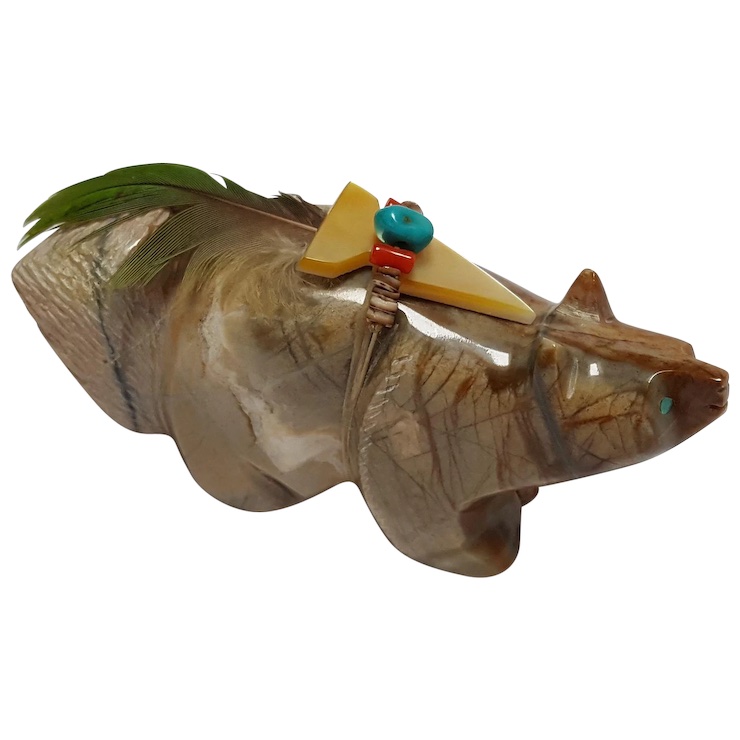
Showing posts with label Tony Hillerman. Show all posts

Thursday, May 08, 2025

Books This Week


The Story of the Forest by Linda Grant doesn’t live up to its promise as a family saga. It tells the story of an immigrant Jewish family who come to Liverpool, England, just before the first World War, and despite their intentions of continuing onward to America, somehow never leave. It’s clear that this book is an effort to reconstruct the author’s own family history, based on rather sketchy information and a few often-retold stories. Indeed, it’s much too close to the way personal stories come off: a bit vague and tentative, somewhat pointless, lacking the power of a strong narrative voice or a really vivid central character. Wimpy. Sad. Not up to some of Linda Grant’s best fiction, of which my favorite is When I Lived in Modern Times, which won the Orange Prize in 2000.


Ursula Le Guin (1929-2018) was a fantastically imaginative writer, and I’ve read many of her books. This was her last book, published in 2008. It’s based on the Aeneid of Vergil, which I have never read, so it was entirely new to me, and I have no idea how Le Guin’s novel borrows from the original. I know only that Le Guin says that the title character, Lavinia, was only named, not developed by Vergil, and the detailed life of Lavinia was thus entirely her creation. Of course Le Guin brings the character to life in a wonderful and very readable way, and this book is genuinely a good read.

In the Afterword, Le Guin makes a point that I find especially important in thinking back on my experience reading this novel:

“From the Middle Ages on, the so-called dead language Latin was, through its literature, intensely alive, active, and influential. That’s no longer true. During the last century, the teaching and learning of Latin began to wither away into a scholarly specialty. So, with the true death of his language, Vergil’s voice will be silenced at last. This is an awful pity, because he is one of the great poets of the world.
“His poetry is so profoundly musical, its beauty is so intrinsic to the sound and order of the words, that it is essentially untranslatable. … More than anything else, my story is an act of gratitude to the poet, a love offering” (p. 359)


We never miss a new novel about the Navajo detectives Joe Leaphorn, Jim Chee, and Bernadette Manuelito. In this one, published quite recently, Chee and Manuelito — a husband and wife, both police officers — are subject to all kinds of terrible risks, and are both almost killed by the criminals they are investigating. Poor Bernie, she’s always a victim of some violence, but of course she outsmarts her opponents every time and quickly gets over whatever injuries she suffers. No surprises here. 

Shadow of the Solstice is interesting for the author’s focus on actual current issues for Southwest Indian tribes. There issues as a driving force in the two intertwined detective assignments of Chee and Manuelito. One issue is the continuing problems on the Navajo reservation caused by uranium mining in the past, and the necessity to block new efforts at destructive and damaging extraction of minerals from the territory. 

The other plot element is based on an actual series of fraudulent claims for social benefits in which criminal scammers tricked members of the tribe into cheating the government. These fraudsters exploited their Indian victims and left them in desperate straits, including homelessness, worse addiction, and even death. In the novel, the scammers are caught and the victims mainly rescued.

Joe Leaphorn, the original detective in the series, is mentioned but he never actually appears in this novel. After the original author of the series, Tony Hillerman, died in 2008, his daughter has continued to write a book just about every year, and though the detectives age slowly, it’s apparent that Joe must be well into his nineties and not really very active even as a retired mentor. Jim Chee first appeared in 1980 in the novel People of Darkness. But we won’t calculate how old he would be if he aged like real people.

There are now around 25 books in the series beginning with The Blessing Way in 1970. I’ve read them all, and reread some of them. I like that the detectives still enjoy a stop at a diner for coffee at a tense moment, or some fresh, home-made fry bread like this treat enjoyed by Jim Chee:

“An irresistible aroma had begun to fill his patrol unit. He could tell without opening the bag that Mrs. Yazzie had given him fry bread, freshly made in her own kitchen. He started to salivate. He reached in, grabbed the piece on top, as big as a dinner plate, pulled a bit free, and took a bite. He chewed slowly, savoring it as if it were his last meal.” (p. 174)

I wouldn’t say that Shadow of the Solstice is the best of the series, but it’s ok.

New Mexico landscape from our 2015 visit. The landscape is always a big part of the story in all the Navajo detective books.

Blog post © 2025 mae sander

Saturday, July 13, 2024

In Ann Arbor, Thinking about Paris

On the Water

Enjoying a beautiful morning after two rainy days.


Len kayaked on Argo Pond in the Huron River.

I watched a group of young children tubing on the Argo cascades.
The water in the cascades was too high for kayaks.

A flock of geese swam out from the reeds from time to time as I enjoyed the view.


Reading This Week

Another book in the Leaphorn and Chee series by Tony Hillerman: The Dark Wind (1982). Policeman Jim Chee faces down a group of ruthless drug smugglers who are using the huge Navajo and Hopi reservation lands to conceal their activities. Chee is fantastically adept at tracking humans in the desert and mountain environment — far better than the federal police who don’t have the needed skills to find large vehicles that have been concealed in the uninhabited canyons away from the roads. He’s also very brave and nearly gets killed more than once, but always outsmarts his attackers and lives to star in another book. (In fact, he has outlived his creator: Tony Hillerman died in 2008, and his daughter Anne Hillerman has published nine sequels.)

As he investigates, Chee often has to evade other people — both drug smugglers and other policemen, as well as looking for hidden and buried objects. I was fascinated by the way he watched birds and used their behavior to deduce who and what was nearby. For example, he didn’t want to be surprised while getting back to his truck after looking for signs of hidden activity:
“He spent a quarter of an hour sitting in the shelter of the rocks there, watching for any sign of movement. All he saw was a burrowing owl returning from its nocturnal hunt to its hole in the bank across from him. The owl scouted the truck and the area around it. If it saw anything dangerous, it showed no sign of it until it saw Chee. Then it shied violently away. That was enough for Jim Chee. He got up and walked to the truck.” (p. 119)

Another example:

“A flock of red-winged blackbirds had been foraging along the arroyo. They moved from one growth of Russian olive toward another, veered suddenly, and settled in another growth, farther up the arroyo. … A dove flew down the gully. It banked abruptly away from the same growth of olives. … The only thing that would arouse such caution in birds would be a human. Someone was watching him.” (p. 63)

As always, I paid attention to the occasional mentions of food that Chee eats as he carefully searches the wild areas for signs left by the criminals. One day, he starts very early and eats breakfast outdoors: “hot coffee from his stainless-steel thermos and two sandwiches of bologna and thin, hard Hopi piki bread. As he chewed he reviewed.” Another day, he brings a pack of ice and  “a can of corned beef and a box of crackers.” Once, he has a meal of Hopi stew in a restaurant, which he thinks is not bad — though as he is a Navajo, this isn’t what he’s used to. (Quotes p. 56 and 110)

I read the Tony Hillerman series years ago, and I’m very much enjoying my return to these books. They are among the most interesting police procedurals I know of, because of the extremely careful depiction of the lives and beliefs of the two protagonists Leaphorn and Chee.

Reviewed this week: books by Kenn Kaufman and Stefanos Geroulanos.

An Old Favorite for Dinner

Beef, mushroom, and scallion stir-fry served with sesame-flavor cucumbers.

Paris in July: Thinking about the Eiffel Tower

Viewed from Belleville in 2013


From across the river, 2013

Up close in 2016.

From Montmartre, 2018.

Viewed by Remy the Rat in Ratatouille, 2007.

Fireworks for July 14, 1888, launched from the partially built Eiffel Tower.

July 13, 1989. Bicentennial of the Revolution. We were there — but not this close.
(Photo from National Geographic.)

Blog post © 2024 mae sander.
Original photos © 2013-2024.

Saturday, April 27, 2024

This Week In Ann Arbor

Spring Progresses


Our grass was mowed for the first time this week. It reminds me of the quote from Dostoyevsky: 

“Though I may not believe in the order of the universe, yet I love the sticky little leaves as they open in spring. I love the blue sky, I love some people, whom one loves you know sometimes without knowing why. I love some great deeds done by men, though I’ve long ceased perhaps to have faith in them, yet from old habit one’s heart prizes them.…I love the sticky leaves in spring, the blue sky — that’s all it is. It’s not a matter of intellect or logic, it’s loving with one’s inside, with one’s stomach.” (From The Brothers Karamazof) 


Two Good Books, One Bad Book

Good book: reviewed earlier this week (link).

Annoying and not funny, DNF.
Why I bought it: it only cost $1.99

Latest in a long series first by Tony Hillerman, continued  by his daughter Anne.
I’ve read them all, and they are all good.

We Worked a Jigsaw Puzzle

Birds for Eileen’s Critters!


Blog post and photos © 2024 mae sander
Shared with Eileen’s Critters and Deb’s Sunday Salon

Sunday, December 24, 2023

Alien Detectives

In 1953, Isaac Asimov’s Sci-Fi-Detective story “The Caves of Steel”
was set in the distant future when space travel to colonized planets would be the norm.
Many authors set detective fiction in rather exotic places: this one is extreme! (source)

Jean-Luc Bannalec is an author I’ve been reading recently, and I thought he was French. Nope. Turns out that Banalec is a pen name, and his real name is Jörg Bong. He is German. Bannaluc’s Brittany mystery series about Commissaire Dupin is his big international success. His police officer, Dupin, is from Paris, so we are seeing Brittany from the point of view of an outsider, but not a German! Dupin loves Breton food, which is described in every novel as part of the local color. 

Thinking about this made me consider how many other detective fictions are set in places not native to their authors, about detectives from very different backgrounds from their own. I’ve also noticed that in creating their exotic settings, many of these authors use local foods to create atmosphere and provide a background for the action — in several cases, cookbooks have been written to show what the detectives ate and how it was prepared. I’ve enjoyed reading books from each of these series, and recommend them all!


Martin Walker, born in Scotland, was a journalist who became a crime-fiction writer. His Bruno books are written in English about the Perigord area of France, where he and his wife have lived for some time. Bruno is an amazing cook. Walker has also written a cookbook about the fantastic French country cuisine that is described in every novel — I’ve been exploring his recipes.


Georges Simenon, author of a renowned series of police procedural novels, was actually from Belgium. His famous Inspector Maigret lives in Paris and works for the Paris police. Madam Maigret is a fantastic cook — and yes, there’s a Madam Maigret cookbook.


Donna Leon, inventor of Guido Brunetti of the Venice police force, was born in New Jersey. All thirty-two of her novels were written in English and have never been translated into Italian. Brunetti is another policeman who loves good food — and yes, there’s a cookbook.


Tony Hillerman invented the Navajo policemen Joe Leaphorn and Jim Chee. He lived not far from the reservation, but no way was he a Native American. Hillerman’s daughter has continued the series after his death. She’s also written guides — including restaurant guides — to the New Mexico area, though food is not as central in these books as in many others. Her book Santa Fe Flavors isn’t connected to the detective novels.

Jason Goodwin has written five novels about Investigator Yashim, set in Istanbul in the 1830s. Goodwin, who was born in England, identifies himself as "a novelist, historian and columnist; host, dragoman and hierophant." Yashim, while in the course of solving a crime, often spends time buying food at the market and then preparing it, which is described in great detail. Goodwin has published a collection of recipes titled Yashim Cooks Istanbul. (Note: a hierophant is a priest of esoteric mysteries.)

Louise Penny, born in Toronto, Canada, was a radio host; she is the much-loved author of a series of books set in Quebec, featuring French-speaking detective Armand Gamache. Yes, there is food: Penny has written a short cookbook titled The Nature of the Feast, which is available online from her publisher.

Sujata Massey, born in Sussex, England, grew up in St. Paul Minnesota from the age of five. She has written two series of novels featuring amateur women detectives. The first series is set in Bombay, India, in the early 1920s with detective Perveen Mistry. The second is set in Tokyo and Washington, DC, with a Japanese-American detective named Rei Shimura. Every one of these novels offers lots of food descriptions that create atmosphere and help define the characters.

Edgar Allen Poe was one of the first ever detective writers, and his most famous story is “The Murders in the Rue Morgue.” He never actually visited Paris. (Note that his detective, who also appeared in two other stories, was also named Dupin!)

Robert van Gulik may be the creator of a detective with the most totally different cultural background from his own. Van Gulik’s character, Judge Dee, based on a semi-fictitious Tang Dynasty government official, investigates a series of murders in various parts of China in the seventh century. Van Gulik was born in the Netherlands, and wrote both in Dutch and English. He got the idea for his series from a 19th century treatment of the character, but invented new plots and stories.


On TV?


I’m tempted to mention “Death in Paradise,” with its catchy Caribbean rhythms and beautiful island settings as well as numerous murder victims and police officers of various ethnicity. It’s filmed in Guadeloupe (though the TV island is the fictional Saint Marie) and made by English and French TV companies. The first episodes were made in 2011. Twelve seasons with a total of 98 episodes have now been released.

Blog post © 2023 mae sander


Tuesday, November 28, 2023

Endangered Eating

Endangered Eating: America’s Vanishing Foods by Sarah Lohman is a very readable account of the efforts to preserve several cultural culinary treasures. Inspired by the organization titled Slow Food International, and their endeavor called the Ark of Taste, Lohman selected a few very interesting American traditional foods, and described their current state, their cultural significance, and some recipes that use them. In addition, she presented the history of the owners of these foods. I really enjoyed reading this book.

Foods that are covered:

  • A few special varieties of dates from the Palm Springs, California, area
  • Native Hawaiian sugarcane now raised only by a few descendants of the original Polynesian inhabitants of the islands
  • Navajo sheep, a special breed that’s become quite rare
  • A specialized type of salmon fishing practiced by natives of the Puget Sound area in the Pacific Northwest and nearby Canadian islands
  • Wild rice from the Great Lakes region (now being replaced by cultivated forms of the native marsh crop)
  • Heirloom apple varieties once used for making cider, now almost lost
  • Louisiana Filé Powder, traditionally gathered by native Americans and used for making gumbo
  • Carolina runner peanuts, a small and flavorful variety that was almost lost because they were not good for mechanized processing.
As I read many of the chapters, I thought about the way I had visited the locations that Lohman describes, and how I had heard about some of the rare and endangered foods she discusses. This made me especially enjoy reading these chapters. Here are a few of my memories.

Santa Barbara: Dates from a Farmers’ Market

At a California Farmers’ Market: empress dates and honey dates (source)

The first chapter of Endangered Eating is titled “Coachella Valley Dates.” As I read, I recalled the date vendors from the Coachella and Palm Springs area who came to the Santa Barbara Farmers’ Market where I shopped during several long visits there in the past. I particularly remember the incredible variety of dates, and the way the vendors offered samples so that one could decide which were the most delicious. 

Lohman writes:

“Although the Coachella Valley primarily grows commercial date varieties like Medjools and Deglet Noors, several small farmers still carry on the tradition of growing unique date varieties that were developed in the area a century ago. It’s these rare American dates, grown nowhere else on the planet, that have been onboarded to the Ark of Taste: Empress, Abada, Blonde Beauties, Brunette Beauties, Honey, McGill’s, Tarbazal, and Triumph.” (p. 2)

Although as Lohman points out, few trees with these special date varieties still are growing in California, it’s interesting that they can be tasted at least from a few sellers at the farmers’ markets of the area. I’m curious as well about the dates we tasted at a date farm in Israel, where we also encountered a number of different and interesting date flavors.

Santa Barbara Farmers' Market Date Vendor with his samples (2011)

Maui, Hawaii: Sugarcane and Native Agriculture

Early Hawaiian agriculture shown at Iao Valley State Park (2009)

Sugarcane first reached Hawaii with the original Polynesian colonists, centuries before the famous voyage by Captain Cook. This variety of cane was kupuna kō or Hawaiian legacy sugarcane. It was cultivated by the native people along with their traditional crops including coconut, taro, breadfruit, Hawaiian purple sweet potato, and Kalua pig, sometimes known as “canoe foods” because they were brought on the canoes of these early settlers. I wrote about this native agriculture here: Native Species and Canoe Foods.

Now, in the twenty-first century, Lohman visited a few farmers who are growing the native variety of sugarcane. She writes: “The Ark of Taste has five entries for Hawaiian sugarcane, chosen to represent the over forty varieties of legacy kō that have been identified as unique to the Hawaiian Islands.” (p. 38)

Native sugarcane is different from the variety imported by Europeans and cultivated in destructive, farming operations and refined in huge industrial refineries (which entirely ceased production in 2016). Her chapter on native Hawaiian sugarcane explores the current efforts and the history of sugar in the islands. One interesting fact is that sugarcane cultivation had two distinct histories: one with the Polynesian settlement of the islands in the Pacific, and the other with its spread to the west via Arab and European merchants and then to the New World, where it was cultivated in the Caribbean and the American South.

A sample of native foods that I tried at a festival on the Big Island in 2013. 

New Mexico: Navajo Sheep


Near Sandia, New Mexico (2015)

I’ve been on Navajo reservations more in Arizona than in New Mexico, the subject of Lohman’s chapter on the endangered species of sheep that are precious to the Navajo people for their wool and for meat. Thanks to the Tony Hillerman novels and their sequels by his daughter Anne Hillerman, I feel as if I am very very familiar with the people on the New Mexico part of the area!

Lohman describes the sheep and their special wool, which makes very beautiful weavings: 

“Navajo-Churro have an inner coat of lustrous wool and a shaggy outer coat that can reach up to 14 inches in length. The low lanolin content of the wool means that very little water is required to wash it, which is ideal in desert conditions. The wool is perfect for hand weaving because it is remarkably straight, strong, and durable. And it comes in over a dozen different natural colors, ranging from dark black to pure white as well as heather gray, tan, peach, and a light reddish-brown. Navajo-Churro wool is so recognizable and connected to Diné weaving that in the Art of Native America gallery at the Metropolitan Museum of Art in New York City, a Diné chief’s blanket dating to 1840 is labeled “handspun undyed and indigo-dyed Churro fleece.” The sheen of the wool in the blanket is unmistakable.”

I love learning about Navajo art and history, so this chapter was especially interesting to me.

A Navajo weaving — “Two Grey Hills” — in my home.

Traditional Salmon Fishing in the Pacific Northwest

Graffiti in Alert Bay, Canada (2018)

A few years ago, we traveled on a National Geographic cruise to see the Puget Sound and many islands and towns in Washington state and Canada. The cultural specialist onboard the ship introduced us to many historic facts about the Native Americans who lived in the area, and he especially talked about a tribal group called the Lummi, who employed a traditional type of salmon fishing with nets. He described. how this method had been lost but was being reintroduced. (My blog post about this is here.)

Lohman’s chapter called “Sxwo’le Straits Salish Reefnet Fishing” describes this exact restoration of a nearly forgotten fishing technique, and describes the struggles of Native Americans in both the US and Canada to recreate their traditional practice.

Reefnet fishing (Sxwo’le) is an ecologically responsible method of trapping the salmon on their run up one of the rivers where they go to spawn. It’s non-destructive of by-catch, and humane to the salmon. It uses a net called a reef. Lohman’s description:

“The reef is a web of rope which guides salmon both up from the ocean floor and in toward the net, like a funnel. The reef starts with two 200-foot rope lines that extend upstream from the platforms; the lines float with the help of buoys. The ends of these lines are about 80 feet apart at the upstream end, and narrow to the width of the net between the two floating platforms. Ropes are tied at intervals horizontally between these two main lines. At the upstream end, these horizontal ropes are anchored 80 feet below the surface of the water, nearly at the bay’s floor. Gradually, the ropes slope upward until their depth matches the opening of the net strung between the platforms. 
 
“Onto these horizontal ropes are tied blue or green plastic ribbons that shimmy in the tide and look like underwater plants. The ribbons trick the salmon into thinking that they are swimming safely on the ocean floor up a shoal, a natural shallowing of the bay.” (p. 111)

There are no illustrations in Endangered Eating, but I found this image helpful in trying to imagine the activity, involving several boats and a large system of nets:

Reef netting near Point Roberts, ca. 1940 (source)

Blog post © 2023 mae sander
Photos by mae sander or as credited


Thursday, September 21, 2023

Very Very Noir: "Total Chaos"

Total Chaos by Jean-Claude Izzo (1945-2000)

You couldn't imagine a less cozy mystery than this graphically violent police story about Marseilles around 30 years ago. Jean-Claude Izzo's Total Chaos (written in 1995) is dark and often ugly with lots of underworld characters from all the ethnic and social strata of the Marseilles underground and police force. It's narrated by a policeman named Fabio Montale, a native of the city. Unlike him, his friends, both alive and dead, are mainly petty criminals and hookers. His enemies are gangsters and maybe some of his fellow policemen. The plot centers on the deaths of his two best friends and a young woman, and his efforts to discover who killed them, and maybe get some revenge. 

I didn't like the book at all: just not my kind of literature. However, one feature of this novel did appeal to me very much: between the scenes of unpleasant violence and the depiction of unsavory characters, Fabio's narrative is full of very savory food descriptions. Food here is totally central to the essence of the main character/narrator and his milieu. You could almost cook following his descriptions: in fact, if you were familiar with the local cuisine, you probably could use them as recipes.

Since I'm not fond of novels with this much graphic violence, I'll just quote a few of the amazing food descriptions. 

First, here is Fabio's childhood memory of his family dining table:

"The whole family used to come here on Saturdays. There’d be big plates of pasta in sauce, with headless larks and meatballs cooked in the same sauce. The smells of tomatoes, basil, thyme, and bay filled the rooms. Bottles of rosé wine did the rounds amid much laughter." (p. 38). 

Next, his friend Honorine makes Fabio some food to take on his boat:

"I made you some foccaccia, Honorine had written on a little piece of paper. Foccaccia is made with pizza dough, filled with whatever you like, and served hot. Tonight, the filling was cured ham and mozzarella." (p. 44).

And Honorine cooks another dish:

"Honorine made stuffed peppers like no one else could. Romanian style, she called it. She’d fill the peppers with a stuffing of rice, sausage meat and a little beef, well salted and peppered, then place them in an earthenware casserole and cover them with water, add tomato coulis, thyme, bay and saw-wort, and let them cook on a very low flame, without covering. They tasted wonderful, especially if you poured a spoonful of crème fraîche over them at the last moment." (p. 161).  

Another Marseilles specialty, by Céleste, another friend:

"Céleste made better aïoli than anyone I knew, except Honorine. The cod was desalted just right, which is rare. Most people leave it to soak for too long, and give it only two soakings. It was best to soak it several times. Eight hours the first time, then three times two hours. It was also a good idea to poach it in simmering water, with fennel and pepper grains. Céleste also used a particular olive oil to give the aïoli a ‘lift.’ .... Her salads always tasted different." (p. 194).  

Fabio's colleague Pérol supplies some provisions:

"Pérol had brought beer and sandwiches. Tomatoes, anchovies and tuna. Not so easy to eat, but better than the usual revolting ham sandwiches." (p. 139).  

Simple foods reflect the Marseilles atmosphere throughout the novel.A meal with a friend at a place called Chez Mario:. 

"Mozzarella and tomatoes, with capers, anchovies and black olives, for starters. Spaghetti with clams as a main dish. Tiramisu for dessert. To drink, a Bandol, from the Pibarnon vineyards." (p. 75).

Besides the tastes and preparations, there is also frequently a memory of aromas:

"On Rue Longue-des-Capucins, the market was in full swing. Smells of coriander, cumin, curry, mint. The East. I turned right, through the Halle Delacroix, went into a bistro and ordered a double espresso and a few slices of bread and butter." (p. 79). 

Sometimes Fabio himself prepares the meal:

"I’d started cooking early in the morning, listening to old blues songs by Lightnin’ Hopkins. After washing the bass, I’d filled it with fennel, then drizzled olive oil over it. Then I made the lasagne sauce. The rest of the fennel had simmered gently in salt water, with a touch of butter. In a well-oiled pan, I gently fried slivers of onion, garlic and finely chopped pepper. A spoonful of vinegar soup, then I added tomatoes that I’d cut into little cubes and plunged in boiling water. When the water evaporated, I added the fennel." (p. 100).  

To wrap up...

In contrast to Izzo's very hard-boiled crime stories is the genre of cozy mysteries. These were just becoming popular in the 1990s when Izzo's Marseilles novels were written. The cozy mystery genre in fact was initially developed as a reaction against noir tales like this. The main focus of cozy  novels is the food (cute little lady detectives in cozy mysteries are often owners of food establishments), but I think Izzo's food is much more fascinating and appealing. The meals served in a lot of cozy mysteries probably wouldn't be as delicious as Fabio's dishes. 

If you like your police tales noir and graphic, you should read this book. I prefer my crime fiction to be somewhere in the middle, not cutesy-cozy and not ultra-violent. I like quite a few authors of this in-between style. such as Donna Leon, Martin Walker, Tony or Anne Hillerman, Elly Griffiths, Sujata Massey, Robert Parker, and quite a few others. Total Chaos is the first volume of a trilogy, but I don't think I'll be reading the other two volumes.


Blog post © 2023 mae sander

Thursday, July 07, 2022

"The Blessing Way" by Tony Hillerman

Tony Hillerman (1925-2008) published his first book about the Navaho police detective Joe Leaphorn in 1970. While I have read most of Hillerman's books, this one somehow escaped me -- or I didn't remember reading it. I've now made up for that: I read it this week, and I loved it!


It would be hard to believe that this police procedural dates from 50 years ago, except for some details, such as a character who recalls serving in the Korean War, or another character who was a juvenile delinquent in the 1930s! This novel has all the features that make great reading throughout the entire series. Suspense builds intensely! The plot and characters are vivid. The physical details of the Southwest are fascinatingly described, including ancient Indian ruins, small farms and towns on the Reservation, mountain and desert scenery, and sudden thunderstorms. People see the scenery in various ways: "The white man sees the desolation and calls it a desert, McKee thought, but the Navajo name for it means 'Beautiful Valley.'"  (p. 36)

Hillerman creates wonderful dialogues, especially when Joe Leaphorn interviews people and manages to elicit information by being sensitive to their cultural background (whether they are white or Navaho). He offers various insights about the myths in the Navaho believe system, and about the way people view themselves, their social and spiritual obligations, and their relationships to others. The challenge of belonging to two cultures is made clear. Hillerman quotes beautiful songs and blessings that Leaphorn and others sing privately or in ceremonies.

Food is also used to set the scene, for example, McKee, a central character visiting the Indian Reservation, eats a heavy meal of "lamb stew, floating in fat, boiled corn, fried cornbread, and canned peaches"  (p. 57). Or McKee, camping out, "walked back to the butane cooker, forked an egg onto a piece of bread and folded it into a sandwich." (p. 112).  Or a young Indian alone in the wilderness: "was hungry and there was a porcupine to singe, clean, and roast before he would eat." (p. 5). 
 
Throughout The Blessing Way, beliefs in supernatural animals and witchcraft motivate the behavior of the witnesses and the victims of the evil criminals that Leaphorn is chasing. Witches can turn into wolves and wolves can suddenly walk on two legs as men. Coyotes, owls, and other birds also figure in these beliefs. 

Instead of further discussing the plot of this very old novel, I just wanted to find some images of these animals to help my imagination.

Navaho Wolf Fetish by Stewart Alonzo. In The Blessing Way, a wolf might be
a witch in disguise, and might suddenly turn into a man.

Navaho Wolf Kachina by Raymond Parkett
Date: 1990. Source: PBA Galleries

Owl depicted on a tiny vase in my collection. An owl might be the spirit of a recently deceased person.

Polychrome coyote figure with a rabbit and geometric design
by Gerardo Tena and Norma Hernandez.
From Mata Ortiz and Casas Grandes Pueblo, sold at Andrea Fisher Gallery.
Coyote and rabbit play a role in several traditional Navaho stories.
Blog post © 2022 mae sander.