Showing posts with label Food in Detective Fiction. Show all posts

Friday, June 19, 2026

Martin Walker: “A Murder in Springtime”


A Murder in Springtime is Martin Walker’s latest police mystery, as always starring Bruno, the police chief of a small town in (idyllic) rural France. With each successive Bruno book, Walker seems to become increasingly interested in the food that’s served at village festivals and that Bruno cooks for himself and his friends (and even for his dog). Walker spends less and less effort on the murder mystery side of the book. In this one, I felt as if solving a crime is less the main point of the book than ever. The real focus is a méchoui — that is, communally roasting a lamb on a spit over an open fire. This ritual is popular with French people who live in the countryside or visit it for a long summer stay, mainly at one’s second home outside of Paris.

In the spirit of the novel, I’ll skip describing the plot and proceed directly to a quote about the méchoui — the all-day cooking task was performed by Bruno (always dedicated to culinary activity) and several of his close friends in the village:

“The morning passed in a blur of activity. Momu taught Fabien how to build the spit for an aboveground méchoui, with Jack Crimson watching, offering unsolicited and inexpert advice. The four men made fast work of carting the lamb down from Pamela’s dining room table in its insulated box, the task made easier when Bruno pointed out they could drain the melted ice onto the lawn and lighten their load. Once the animal had been prepped, speared and hung over the hot embers, Momu asked Pamela for some large mixing bowls. Into them went several liters of cooking oil and his magic box of herbs from his car. He banished the others indoors while he set about preparing his secret baste, keeping a watchful eye on their makeshift furnace.” (p. 194)

In a way, it’s surprising that so little development of the plot can result in such a long book. If you’ve never read this series, I strongly suggest that you start with some of the earlier mysteries about Bruno and the idyllic village. 

A Méchoui in 1989

A photo from our experience with a méchoui in 1989 
at a country house in France. The revolutionary hat was part of
a celebration of 200 years since the French Revolution.

Blog post © 2026 mae sander; photo © 1989

Monday, April 06, 2026

Quiet Sunday

 Tana French: The Keeper


This book is too long. There is a detective story in it but the author seems much more interested in describing the complex relationships among dozens of inhabitants of the little Irish town where Cal Hooper, an American policeman, has retired, but where he gets no peace. I forced myself to read to the end. By the time the one and only death in the story was explained, I didn’t really care.

Occasionally, I found some amusing mentions of food in the book, especially raspberry jam that one of the women puts up in little jars and gifts to several other women, an action that becomes enmeshed in the plot. Detective Cal likes to cook: “even though he only took it up out of a belief that Trey [his daughter] needed to eat something other than hamburgers and grilled cheese and whatever boiled-into-submission stuff her mother came up with. Now he tries fancy things all the time, and mostly they work out.” (p. 180)

At a cafe that’s central to the action, the food isn’t very good, mostly fried eggs and “toasties,” but the cozy atmosphere is important, especially in contrast to the nastiness that is a big part of life in the town (and not just the mystery part). It’s a depressing town, as exemplified here:

“The townland is scattered with these places, homes emptied by famine in the 1840s, orphaned by emigration in the seventies, left behind in the millennium rush to easier city jobs. Mostly no one bothers to knock them down.” (p. 356)

I’ve read all of Tana French’s earlier police and detective stories, and I think I liked them better than this one.

The Power Plant

Besides reading, we took a Sunday afternoon walk along the Huron River.


Review © 2026 mae sander 

Friday, October 17, 2025

Reading Fast and Slow


I read this book fast because I didn’t understand it.

The reputation of Thomas Pynchon is extremely good, and I’ve always meant to read a book by him. I chose The Crying of Lot 49 — originally published in 1966, so it’s a very long-held intention. Maybe the humor in the book didn’t hold up for the long term. I understood all (most of?) the puns and jokes in the names of the characters, and I get the humor but it doesn’t really appeal to me. Maybe it’s past its sell-by date. Mea Culpa.

I tried reading the New York Times review that was published in 1966 when the novel was new. It started with a list of authors that could be compared to the clearly eccentric Pynchon. The list includes Melville, Conrad, Joyce, Faulkner, Nathanael West, Nabokov, John Barth, and Joseph Heller. Whew! 

The review was incredibly long and self-absorbed, expressing more about its own author than about Pyncheon, so I didn’t finish reading it. I take this as a lesson in Pynchon’s essential weirdness. Wikipedia calls the book postmodernism. I don’t think I’ll read any more Pynchon.

A Serious Book

This is the second book by Ocean Vuong that I’ve read.
I’m partway through and will review it soon.
I reviewed the earlier one here.

A Lighter Book: A Mystery set in India

Harini Nagendra: A Nest of Vipers (published 2024)

The woman detective at the center of the books in this series is a very young wife in 1920s India, and the book is full of local color, including descriptions of the city, of the clothing that people of various socio-economic levels wear, and of the relationships of the local native Indian people with the occupying British people. The plot is somewhat over-complicated plot, and at times seems repetitive and too long. However, there’s lots of food:
 
“She prepared a simple lunch for herself – coconut rice with toasted sesame seeds and fried curry leaves, along with a simple red pumpkin raita” (p. 63)

“The unseasonal heat of the afternoon had receded, leaving them dehydrated and on edge. She added a pinch of black salt and a spoon of grated ginger to the jaggery water, garnishing their glasses with sprigs of mint. The drink gave them fresh energy, the sweetness easing the last remnants of Kaveri’s headache.” (p. 174)

The first book in the series: I reviewed it here.
I liked it better than A Nest of Vipers.

Connected: A New York Times Article about Saris

Constantly, the author describes the saris that the central character wears, including very elaborate and expensive ones that indicate her husband’s high status as an Indian doctor, and also sometimes very poor quality, worn-out saris that she borrows to hide her identity when detecting. A few days ago, in a New York Times article, I read;

“Not for nothing are so many English words connected with weaving — chintz, calico, shawl, pyjamas, khaki, dungarees, cummerbund, taffetas — of Indian origin.” (Source)

Reviews by mae sander © 2025. 
Shared with Deb at Readerbuzz .

Friday, September 19, 2025

Time Flies

Autumn is coming

Time to hide some nuts and berries! (This is Mr.Chips who lives on our porch.)

A few leaves have gone from green to yellow, red, or even white.


Recent Reading


Martin Walker’s latest book about detective Bruno in rural France is a sad shadow of the earlier books in this series. There’s no real plot, no real crime, and no real character development! Bruno does cook a lot — to the point where it feels like one is reading a cookbook, with the detailed descriptions of prep and ingredients for one local dish after another. In earlier books, the cooking was an interesting distraction — here it’s totally over used. Sad to see this travesty on what was once a good detective series.


In Bury Your Past detective Tom Janssen in the English town of Wells-by-the-Sea solves the mystery of a body that has been hidden for six years. The body is uncovered by a violent storm that sets a grim mood for the many revelations that explain this and also other crimes. The detective is relatable, and the plot is well-thought-out. I hope to read more of the books by J.M.Dalgliesh.


Published in 1933, Death on the Oxford Road by E.C.R.Lorac is still a suspenseful and enjoyable read — though the author expresses some outdated attitudes towards people who didn’t fit into village society. A body is found on a little-traveled road, where very few cars pass by. Just this lack of traffic is a notable feature of life 90 years ago: cars were a rarity! Life was different then, but the main conventions of detective fiction were already in place.


 Samantha Schweblin’s short stories, set in argentina, are a little strange. What peculiar characters she depicts!

Good Food

Left: two different ways that we prepared salmon: patties and pan-broiled.
Right: blueberry pancakes and apple-peach cobbler with ice cream.

Classic dinner: lamb chops and corn-on-the-cob with butter.

© 2025 mae sander

Saturday, August 02, 2025

July Reading


Back home in my garden 

While we were on the ship in the Mediterranean in July, I didn’t have time or energy to read. We were busy seeing ancient ruins, modern villages, beautiful island scenery, and just watching the water. Long plane trips are a good time to read, though on the two 9-hour trips between Boston and Athens, I mainly slept — one book each way including airport time! 

Since we returned, I have read a few books — especially my chosen follow-up to the trip, which was to read Homer’s Odyssey. Here are the books I’ve read recently.

Airplane Reading


Gary Shteyngart’s latest book, Vera, or Faith is different from his earlier books.
Vera is a ten-year-old girl with some symptoms of Asberger’s like flapping her hands,
and being very very intelligent, perceptive, and socially uncomfortable.
But there’s no medical theme, you have to diagnose her as you read. She’s a person. Good book!

During the trip I read two detective novels by Anthony Horowitz.
I’ve enjoyed the Susan Ryland dramatizations, as well as the third, newest one in the series.
I also liked one with another detective at the center. I suspect I’ll read more.

After the Voyage

Silvia Moreno-Garcia’s horror novels are (oddly) relatable.
I think I like the others better than The Bewitching: it’s too conventionally a horror tale,
with evil monsters and a naive smart girl to defeat them. It was just published.

When we came back, I wanted to read a book about traveling around the Mediterranean.
Odysseus was in a slightly different area, on the other side of Greece,
but nevertheless I found many of Homer’s descriptions very easy to picture, based on experience.
Notice that I read my old, dog-eared version of this ancient classic.

Detective Tom Janssen is entirely new to me.
I enjoyed One Lost Soul by J.M.Dalgliesh. It even has some pretty good food scenes.

Before the Voyage

Autocorrect: Stories by Etgar Keret is an interesting book by the Israeli author.
I read it and a couple others before we left, and I reviewed it July 9.

Blog post © 2025 mae sander


Tuesday, July 08, 2025

Detective Kosuke Kindaichi: Another Japanese Mystery Story

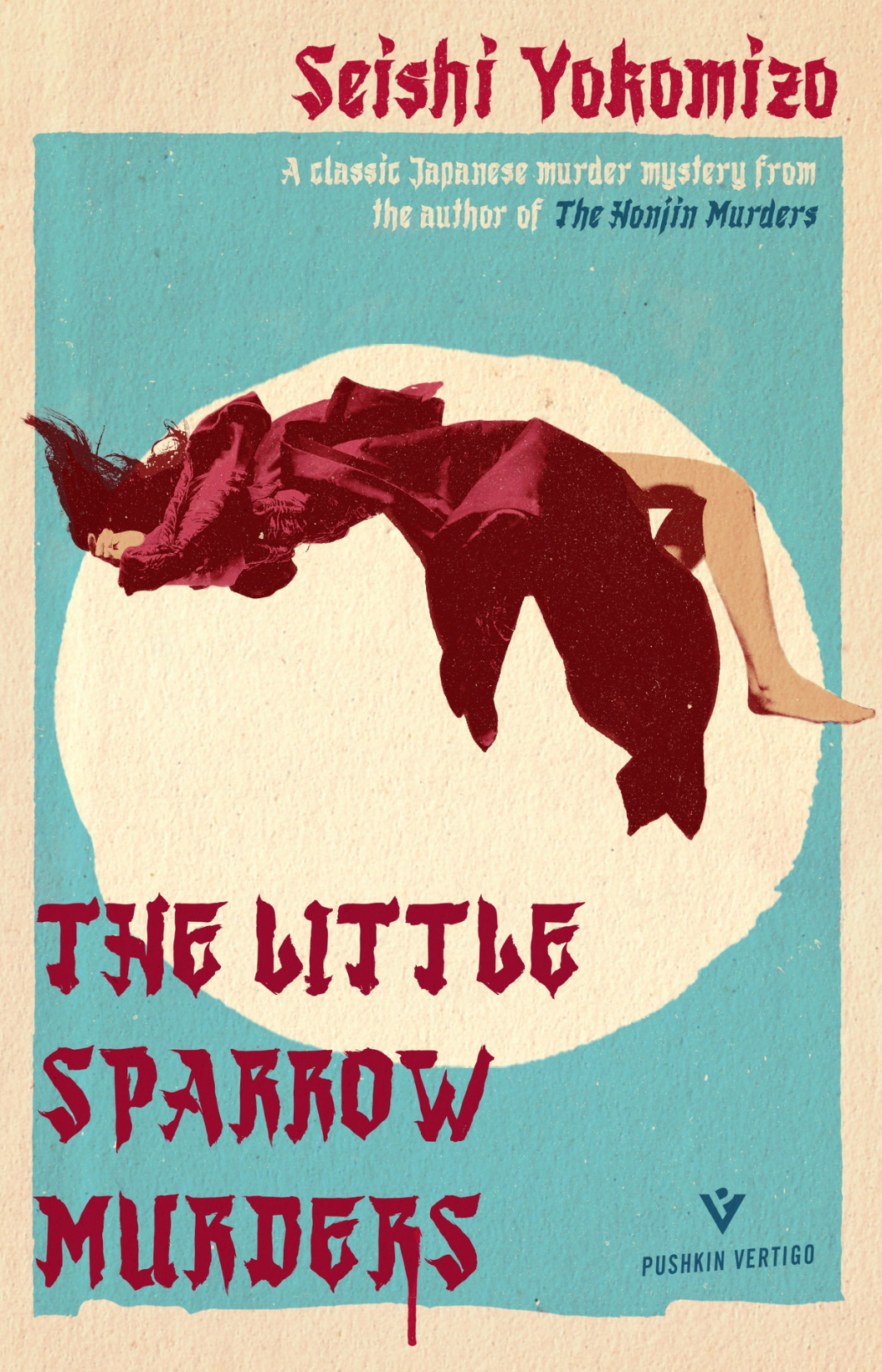
Good reading: The Little Sparrow Murders by Seishi Yokomizo (1902-1981). His detective in this novel, Kosuke Kindaichi, is eccentric, as I have found him in several other novels from a very long and permanently popular series. The action takes place in a village somewhere in rural Japan in 1955. The suspense builds as a series of murders baffle the local people and all of the professional detectives involved in trying to solve them. 

Kindaichi’s appearance conceals his brilliance, as witnessed by his colleague: “Inspector Isokawa looked at his friend, who, as usual, appeared dishevelled in his tired white-and-indigo kimono, which he wore with a pair of threadbare summer hakama.” This description also hints at the preponderance of details from Japanese life that may seem challenging to the modern American reader — but these details create a wonderful traditional atmosphere in post-war Japan. In my opinion, it requires patience and determination to read these novels — but it’s worth doing.


At the beginning of the novel, as is usual with many Japanese translations, the editors supply a list of characters in the village where the action takes place. In this novel, the list has 30 of them, grouped by families; most of the families have more than one identifying name. Also included: the names of several policemen and the detectives, including Kosuke Kindaichi, who is the principal character in the numerous novels in this series.

The breadth of descriptions and variety of personalities in the story create a vivid picture of village life — as experienced by the non-local detectives. I find this fascinating (as always in this series of books). I especially liked some of the food scenes, for example:

“It had already gone eleven o’clock by the time Kosuke Kindaichi and Inspector Isokawa stepped out of the bath and sat down to a hearty breakfast. The meal was comprised of miso soup with nameko mushrooms, salt-grilled salmon, stewed vegetables, and an egg each—and although it was an altogether simple affair, the delicious miso soup filled their empty stomachs.”

Other details involve the geography of this small place: in fact, the solution to the mystery, as of course reasoned out by Kindaichi, involves much trekking around on foot and on bicycles. The reader is offered a great amount of information about how the various houses and farm buildings (especially a winery where a terrible sour wine is made) are placed. 

The map is essential: 

A map of the village where the action occurs. 


The novel includes many examples of Japanese culture, such as a scene near a statue of the folk god Jizo.
I was quite intrigued and googled for images of this child-like god, who wears little clothes that people make for him.

Seishi Yokomizo (1902–81) was a famous and much-loved Japanese mystery writer, and Detective Kosuke Kindaichi -- who appears in many of the author's other novels -- has been in a variety of TV shows in Japan, and even in video games. The novels are currently being republished: this is a recent edition, published last fall. All those I have read are great for suspense, clever plotting, character development, and depictions of a now-lost culture from the mid-20th century.

Blog post© 2025 mae sander

Thursday, May 08, 2025

Books This Week


The Story of the Forest by Linda Grant doesn’t live up to its promise as a family saga. It tells the story of an immigrant Jewish family who come to Liverpool, England, just before the first World War, and despite their intentions of continuing onward to America, somehow never leave. It’s clear that this book is an effort to reconstruct the author’s own family history, based on rather sketchy information and a few often-retold stories. Indeed, it’s much too close to the way personal stories come off: a bit vague and tentative, somewhat pointless, lacking the power of a strong narrative voice or a really vivid central character. Wimpy. Sad. Not up to some of Linda Grant’s best fiction, of which my favorite is When I Lived in Modern Times, which won the Orange Prize in 2000.


Ursula Le Guin (1929-2018) was a fantastically imaginative writer, and I’ve read many of her books. This was her last book, published in 2008. It’s based on the Aeneid of Vergil, which I have never read, so it was entirely new to me, and I have no idea how Le Guin’s novel borrows from the original. I know only that Le Guin says that the title character, Lavinia, was only named, not developed by Vergil, and the detailed life of Lavinia was thus entirely her creation. Of course Le Guin brings the character to life in a wonderful and very readable way, and this book is genuinely a good read.

In the Afterword, Le Guin makes a point that I find especially important in thinking back on my experience reading this novel:

“From the Middle Ages on, the so-called dead language Latin was, through its literature, intensely alive, active, and influential. That’s no longer true. During the last century, the teaching and learning of Latin began to wither away into a scholarly specialty. So, with the true death of his language, Vergil’s voice will be silenced at last. This is an awful pity, because he is one of the great poets of the world.
“His poetry is so profoundly musical, its beauty is so intrinsic to the sound and order of the words, that it is essentially untranslatable. … More than anything else, my story is an act of gratitude to the poet, a love offering” (p. 359)


We never miss a new novel about the Navajo detectives Joe Leaphorn, Jim Chee, and Bernadette Manuelito. In this one, published quite recently, Chee and Manuelito — a husband and wife, both police officers — are subject to all kinds of terrible risks, and are both almost killed by the criminals they are investigating. Poor Bernie, she’s always a victim of some violence, but of course she outsmarts her opponents every time and quickly gets over whatever injuries she suffers. No surprises here. 

Shadow of the Solstice is interesting for the author’s focus on actual current issues for Southwest Indian tribes. There issues as a driving force in the two intertwined detective assignments of Chee and Manuelito. One issue is the continuing problems on the Navajo reservation caused by uranium mining in the past, and the necessity to block new efforts at destructive and damaging extraction of minerals from the territory. 

The other plot element is based on an actual series of fraudulent claims for social benefits in which criminal scammers tricked members of the tribe into cheating the government. These fraudsters exploited their Indian victims and left them in desperate straits, including homelessness, worse addiction, and even death. In the novel, the scammers are caught and the victims mainly rescued.

Joe Leaphorn, the original detective in the series, is mentioned but he never actually appears in this novel. After the original author of the series, Tony Hillerman, died in 2008, his daughter has continued to write a book just about every year, and though the detectives age slowly, it’s apparent that Joe must be well into his nineties and not really very active even as a retired mentor. Jim Chee first appeared in 1980 in the novel People of Darkness. But we won’t calculate how old he would be if he aged like real people.

There are now around 25 books in the series beginning with The Blessing Way in 1970. I’ve read them all, and reread some of them. I like that the detectives still enjoy a stop at a diner for coffee at a tense moment, or some fresh, home-made fry bread like this treat enjoyed by Jim Chee:

“An irresistible aroma had begun to fill his patrol unit. He could tell without opening the bag that Mrs. Yazzie had given him fry bread, freshly made in her own kitchen. He started to salivate. He reached in, grabbed the piece on top, as big as a dinner plate, pulled a bit free, and took a bite. He chewed slowly, savoring it as if it were his last meal.” (p. 174)

I wouldn’t say that Shadow of the Solstice is the best of the series, but it’s ok.

New Mexico landscape from our 2015 visit. The landscape is always a big part of the story in all the Navajo detective books.

Blog post © 2025 mae sander

Monday, March 24, 2025

Good Books


I enjoyed reading the novel Eleanor Oliphant is completely fine. It was a top bestseller in 2018 when it was published. Along with several other books, it’s been on my list for a long time. I thought that the author, Gail Honeyman, did a good job of building a character who had been very damaged as a child by neglect and uncaring authorities who were responsible for her welfare. The first-person narrative works very effectively at portraying a person who doesn’t have a good grip on what really happened, but who learns to be more and more honest in attempting to attain insights — one might almost say enlightenment — about her experiences. 

The word FINE is used throughout the book as a kind of touchstone about Eleanor’s experiences. She always says she is fine. A search discloses use of the word over 80 times in the text. At the end, she points out that saying she is fine was always the only way she was allowed to describe her condition. And thus she was never allowed to develop any insight into what was being done to her or how she authentically felt. My summary sounds trite, but her way of using the word “fine” is much more nuanced.

Near the end of the book, she finally grasps the significance of her childhood and also her adult isolation:

“I woke again. I had not closed the curtains and light was coming in, moonlight. The word connotes romance. I took one of my hands in the other, tried to imagine what it would feel like if it was another person's hand holding mine. There have been times when I felt that I might die of loneliness. People sometimes say they might die of boredom, that they're dying for a cup of tea, but for me, dying of loneliness is not hyperbole. When I feel like that, my head drops and my shoulders slump and I ache, I physically ache, for human contact—I truly feel that I might tumble to the ground and pass away if someone doesn't hold me, touch me. I don't mean a lover — his recent madness aside, I had long since given up on any notion that another person might love me that way — but simply as a human being. The scalp massage at the hair-dressers, the flu jab I had last winter— the only time I experience touch is from people whom I am paying, and they are almost always wearing disposable gloves at the time. I'm merely stating the facts.

“People don't like these facts, but I can't help that. If someone asks you how you are, you are meant to say FINE. You are not meant to say that you cried yourself to sleep last night because you hadn't spoken to another person for two consecutive days. FINE is what you say.” (p. 393)


I also loved the book Remarkably Bright Creatures by Shelby Van Pelt, which was also a bestseller. after its publication in 2022. The center of this book is an octopus named Marcellus, who lives in a display tank in an aquarium. Marcellus narrates some of the chapters of the book, and he has an incredible grasp of what he has seen, with uncanny insights into the people who maintain and visit the aquarium. However, the author doesn’t overdo the insightful narrative of this remarkable invertebrate creature — most of the book is narrated from a conventional omniscient point of view.

Here are a few of the words of wisdom from Marcellus:


“IF THERE IS ONE TOPIC OF CONVERSATION HUMANS never exhaust, it is the status of their outdoor environment. And for as much as they discuss it, their incredulity is ... well, incredible. That preposterous phrase: Can you believe this weather we're having?

“How many times have I heard it? One thousand, nine hundred and ten, to be exact. One and a half times a day, on average. Tell me again about the intelligence of humans. They cannot even manage to comprehend predictable meteorological events.

“Imagine if I were to stride over to my neighbors, the sea jellies, and, while shaking my mantle with disbelief, make a comment such as: Can you believe these bubbles these tanks are putting out today?

Preposterous.

“(Of course, this would also be preposterous because the jellies would not answer. They cannot communicate on that level. And they cannot be taught. Believe me, I have tried.)”  (p. 149)


More of the wisdom of Marcellus:


“I have observed humans at every life stage, and they are, at all times, undeniably human. Even though the human baby is helpless and must be carried by its parent, no one could mistake it for anything else. Humans grow from small to large and then sometimes recede again as they approach the end of their life span, but they always have four limbs, twenty digits, two eyes on the front of their heads.

“Their dependence upon their parents is unusually prolonged. Certainly it makes sense that the smallest children require assistance with the most basic of tasks: eating, drinking, urinating, defecating. Their short stature and clumsy limbs make these activities difficult. But as they gain physical independence, oddly, their struggle continues. They summon mother or father at the slightest need: an untied shoelace, a sealed juice box, a minor conflict with another child.

Young humans would fail abysmally in the sea.“ (p. 117)


I enjoyed Remarkably Bright Creatures, both for the wonderful creation of Marcellus, the sentient octopus, and for the human story that’s partly observed by Marcellus.


I mentioned in an earlier post that I was in the middle of reading Bluebird, Bluebird by Attica Locke, and I have finished reading it. The suspense and the tightly-wound plot all are sustained until the end. This author is really adept at creating complicated characters!

Here’s an example that shows the author’s portrayal of a character — and also shows the way Locke uses food scenes:


“By the time he pulled into the parking lot at Geneva's, the sun was setting. Randie left the truck first, lifting the bottle of bourbon from the backseat and walking it into the cafe.

“She chased it with sips of ice-cold Dr Pepper, kept a sweating bottle of it at her side as they waited for their food. Thin slices of pork, ringed in fat crisped in its own grease in the pan, dirty rice, and grilled onions, with pickled cabbage and sliced tomatoes on the side.

“The first two drinks went down on an empty stomach, and Randie grew strangely quiet, her fingertips grazing the tabletop in time to the slide guitar coming from the jukebox.” (p. 339)

Unfortunately, drinking and overeating don’t agree with Randie! Sometimes there’s an overdose of realism in this book. 


Reviews © 2025 mae sander

Saturday, November 09, 2024

Hanging in There

Two of the many self-tamed Sandhill Cranes in Kensington MetroPark.
This is an iPhone photo taken from a few feet away from the bird.

Len’s photo of a Wilson’s Snipe, a normally shy marsh bird that was out in the open in the late afternoon.
This photo was taken with a telephoto lens — the snipe aren’t as bold as the cranes!
And yes, snipe are real birds as well as the subject of 200 years of practical jokes.

Not much consolation for this week’s debacle, but beauties of nature are probably our best hope.


A Good Read by Louise Erdrich

The Mighty Red is a long book full of rich details, and typically of Louise Erdrich’s books, also full of historic and cultural background: just the right amount to make it interesting, though. The book’s focus is on farming, especially all the issues and challenges of raising sugar beets in North Dakota, and especially on the extreme dangers of pesticides. One of many lists in the minds of the farmers whose lives are being affected: “Dual Magnum. Roundup. Warrant. Outlook. Chloroacetamide. Betamix. Ethofumesate. UpBeet. Gramoxone.” (p. 220) At the end, two of the farmers (both having been harmed long ago by their work and exposure) are talking and one summarizes their lives: ‘Nobody ever said farming was easy.” (p. 369)

I enjoyed the food descriptions — one of my favorite parts about good books about ‘real” people. Here are three of them:

A favorite food of the mother and daughter, Crystal and Kismet, whose stories are at the center of the book: “Crystal put a pot of water on to boil and peeled some carrots. She’d boil the carrots in salt water, mash them up with fried garlic and onions, add some basil, oregano, a can of tomatoes, a few spoonfuls of tomato paste, red pepper flakes, a dash of cinnamon. Voilà. Sauce. They almost never ate meat because meat, even misery meat, cost more than carrots.” (p. 208)

Another passage about Kismet and her mother-in-law: “Winnie and Kismet drove over late in the afternoon with two versions of potato salad. Winnie swore by her mother’s warm potato salad, made with red potatoes, a dressing of white vinegar, bacon fat, bacon bits, parsley, salt, pepper, sugar. Kismet swore by her mother’s recipe: golden potatoes, parsley, sliced boiled eggs, chopped onions, and a dressing of mayonnaise, oil, vinegar, yellow mustard, salt, pepper, and cayenne. Paprika to decorate. The bowls were covered with Saran wrap.” (p. 235)

And a description of lunch-making by a landlady in an oil-field area: “Janice did not prepare just any lunch. Cold pop swaddled in Ziplocs of ice when it was hot. Hot chocolate and coffee in a thermos when it was cold. Sandwiches with cheese, heavy on the meats, the lettuce kept separate and crisp. The bread thick and soft. Squares of cake in a Tupperware box, a dozen boiled eggs, cookies. Sliced apples with lemon squeezed over them and cinnamon sugar to dip them in. Peeled oranges, baby carrots, ranch dip. Home-canned pickles. Janice was a goddess.” (p. 269)

To me, these descriptions and many others are indicative of the author’s eye for the details of her characters lives, and the way she uses these details to show character. I also loved this description about a bookseller who is another key character:

“One of the best things about selling old books was going through them before they went onto the shelves. She tried not to buy marked-up or underlined books, but there were other ways books were personalized. People kept or left things in books—quotes, clippings, often about the author, letters that arrived while they were reading the book, bills they didn’t want to pay, foil gum wrappers, bookmarks from now-closed bookstores, funny drawings from their children, dry autumn leaves, grocery lists, complaints. She stored these scraps in a manila envelope marked Ephemera. From another time, another place, the bits had come into her hands. Some were personal. A bookmark made from dried yarrow flowers arranged between pieces of clear packing tape had kept the reader’s place in Rosemary’s Baby. Later, when she looked it up, she found that yarrow was a banishing herb against evil. In a copy of The Aspern Papers, she’d found a lock of dark brown hair.” (p. 319)

As usual, I  haven’t written a review of this book — lots of those have already been published. I’ve just tried to show you some reasons why I enjoyed the book.

A Murder Mystery


Everyone in my Family Has Killed Someone by Benjamin Stevenson is what I would call a meta-mystery. I view a book as meta when the text constantly talks about how it’s a text and self-consciously over-shares what the author is doing. In this example, Stevenson begins with a list of rules for writing a mystery, which originated with a writer named Knox, a member of a famous mystery writer’s club. (For nonfiction details and the original of these rules, which I looked up, see Ronald Knox: 10 Commandments of Detective Fiction.)

The fictitious narrator then comments throughout the book about his writing decisions, his writing methods, his choices about Knox’s rules, and the comparison of his mystery to those of other writers, like Agatha Christie. The narrator himself is deeply involved with the mystery at hand; that is, with several murders from the past and present, while telling the story. I assume that this is all fiction — and that all of Stevenson’s family members have not actually killed someone. Making things even more meta, the narrator also talks about the reader, specifically about how he’s sure you are reading an e-book, not a paper book.

All this digressive stuff works ok but gets tedious. It begins in the Prologue, when the narrator explains that he himself is a professional writer of advice to writers — and thus has his own rules about how to write a mystery, going back to the basics of Agatha Christie and all that. He promises to make it all come out correctly according to his rules, and lists the chapters where he describes various victims’ dead bodies: “I promise that’s the truth, unless your Kindle or whatever device you have mucks with the pages. There is only one plot hole you could drive a truck through. I tend to spoil things. There are no sex scenes.” (p. 2)

Here are a couple more meta passages, then I’m done:

“Police officers in these books, while being Last Resorts or Only Hopes, can also have character traits such as By The Book or Screw The Rules.” (p. 103)
 
“A lot has happened, so I thought I’d jump in here with a quick recap. I know: it’s a bit weird. But I want us all to be on the same page. (Figuratively: I know you bought the e-book.) If you’re confident in your cognitive abilities, you can skip ahead. Books like this generally tease out the backstory of an ensemble of reprobates, lock them in a singular location, and then present a body that can be linked to parts of each player’s backstory as possible motive. I’ll try that.” (p. 105)

“In a mystery like this one, there are clues in every word—hell, in every piece of punctuation. If you don’t know what I’m talking about, think about the device in your hands. If a killer is ever revealed and your ‘percentage read’ isn’t at least in the high eighties, they cannot be the real killer; there is simply too much of the book still to be read.” (p. 231 or 62%)

“On the other hand, suspicious as I was of Gavin, it’s simply unfair to introduce the killer this far past the midpoint. Knox would have me drawn and quartered—that’s his first rule. And, reader, your ‘percentage read’ should tell you there is just too much to go.” (p. 282) 

The only classic mystery trope Stevenson seems to miss is describing food, but I guess he’s afraid of being accused of coziness. He does mention instances when the characters eat. The sequence of breakfasts, lunches, and dinners contributes to the passage of time as is usual in classic detective fiction. Here’s a sort of anti-food breakfast description as an example of his writing: “I joined the line, shuffling past the bain-maries, and filled my plate. The bacon was untouched, assumedly because people were confronting their own mortality and avoiding saturated fats.” (p. 60)

If you like this sort of wink-wink-nudge-nudge writing, I recommend this book. Although the actual suspense and plotting are pretty good, it’s too precious for my taste. 

On TV


Watched the first two episodes of The Marlow Murder Club, Season 2.
It’s ok, not great, but we’ll keep watching.

New York Times Cooking

We have been using many recipes from the New York Times cooking archives. I believe between the two of us, Len and I have tried something like 50 of the recipes, which number over 22,000, they say. We figure we have a few hundred years left to get through the ones that appeal to us. Here are some of the recipes that we have liked:


Blog post and original photos © 2024 mae sander

Sunday, September 22, 2024

New Detectives from Richard Osman


Photo of the private pool in a luxury room at Jade Mountain, Saint Lucia, 2010.

In Richard Osman’s latest book, We Solve Murders, the main characters at one point check into a resort on the island of Saint Lucia in the Caribbean. I recognized this location immediately when their driver took them over a hair-raising rough road that the resort refuses to pave because they want to keep out the rabble. Here’s the description of an impressive suite — like one that we toured. We stayed down the hill in the less expensive part of the resort. Osman’s description:

“There is a swimming pool actually inside his room, brilliant sapphire blue, marbled with dancing veins of sunlight in gold and silver. Tiny birds are cheeping and chirruping on the wide, high terrace, and three bottles of beer sit sweating with frost in an ice bucket. In the far distance twin volcanoes jut out into the sea, two perfect triangles dipping their toes into the Caribbean.” (p. 182)

Having read all four of the Thursday Murder Club mysteries, I was eager to see what author Richard Osman would write next. Again, the book is suspenseful in the extreme, with very likable detectives: one is a professional body guard who’s accustomed to extreme violence; another is a best-selling author; and the third detective is a retired policeman who is reluctantly drawn into the action. They start out trying to solve a series of three or maybe four murders, but the plot becomes more and more elaborate.

The action is located all over the place. An English village with a weekly pub trivia contest and a typical menu from which Steve, the retired policeman, orders for himself and friends: “Two shepherd’s pies, a beer-battered fish and chips, and a lamb shank. Same as always.”

Other places where the action takes place: a private estate on an island in South Carolina. The resort in Saint Lucia. A prison in Dubai. And so on. Everyone is constantly crossing oceans and continents on private jets, with a wide selection of beer and onboard gourmet meals presented by well-trained servants — but the retired policeman prefers crisps or a scotch egg to gourmet food. Here’s the conversation on the plane between former-policeman Steve and Brad, the steward on one of the private jets:

When Steve returns to his seat—a sofa, of all things—Brad offers him sushi on a silver tray. Steve takes a look. “Do you have anything else?” he asks. “A sausage roll? Some crisps?” 

“I think we have some Parmesan croutons?” says Brad. “I’ll ask the chef.” 

“Or a Scotch egg?” says Steve. “Whatever you’ve got. I was supposed to be having bolognese tonight, so if there’s any bolognese?” 

“Of course,” says Brad. “And can I get you a drink? We have eighteen types of vodka.” 

“Do you have beer?” asks Steve. 

“We have twelve types of beer,” says Brad. 

“Do you have an ale? Something with a bit of oomph?” 

“I couldn’t say,” says Brad. “Why don’t I bring out all twelve, and we’ll have a tasting?”

When the detectives-in-spite of themselves aren’t flying on some rich person’s jet, there’s a lot of excitement. Gunshots are fired over and over. A few dead bodies result. No time for sympathy. Sometimes there’s too much going on and it’s hard to keep all the characters and crimes straight. But it’s fun!

Besides the many characters who are unwittingly drawn into the search for the murderers, we learn about the perpetrators of an immensely complex and multi-layer set of mainly financial crimes. All very intriguing! The final reveal is a bit of a surprise, including disclosure of lots of multiple identities and aliases.

Read it!

Review © 2024 mae sander. Photos © 2010.