Showing posts with label zombies. Show all posts

Sunday, February 08, 2026

A book about Haiti: DÉZAFI


This book is written in a very special format called spiralism. As you follow the spiral in a sort of imagined space, you see some of the same sights and hear some of the same stories on repeat, as if you are passing by them recurrently. A dézafi (in Haitian creole) is a cockfight, literally, and can also mean a struggle like the struggle to live in a brutal dictatorship of the type that Haiti suffered at the time the novel was published (1975). It’s challenging to read but I find myself connecting the abstractions about tyranny to what’s going on right now in our own country, especially in Minneapolis, especially under the dictator in Washington and his passive enablers in Congress and his goon squads of masked thugs.

In the novel, typeface changes signal the type of narrator. Sometimes an omniscient narrator who portrays the characters such as Uncle. Sometimes the stream of consciousness of a sort of collective. Third person narratives appear in a sanserif typeface — these describe life in the village and a story about some individuals.

“In Ravin Sèch, in Bouanèf, life is hard for the villagers. Thick tangled underbrush, thorns, dense shrubs, whitethorn acacia, sisal. In the midst of the collection of decrepit huts that make up the village a few strangely elegant houses with corrugated iron roofs stand out. Under a rusty bridge a few children are sitting around, arms crossed. A chatty river the color of horse piss flows caressingly over rocks and pebbles. The MacDonald Company railway tracks unfurl straight ahead flanked by two battalions of banana trees. Farther in the distance the sky and the sea are quarreling over whose blue mantle prettier.” (p. 21)

Alternately there is a stream of consciousness with various individual’s identities, printed in italics:

“The cock crowed long ago...  The drums have been rumbling, the bamboo  horns growling, and the conch shells honking for quite a while.  Don’t keep hanging on to a rotten branch.  Don’t rush to speak while the wind is blowing. Learn to listen  so you don’t mistake the sound of rain falling for the rumbling of  the storm. You just open your mouth and the swirling dust changes  direction and the smoke somersaults. Let’s learn to observe! Let’s  learn to listen.” (p. 22)

Dézafi is a challenging book, as it constantly spirals back to the same thing, and as I read I felt more and more how it was repetitive and demanding of my attention to what was new and what I had read before. We return frequently to the Loupgarou or werwolf and to zonbis, a kind of undead creatures. Poetic passages define the terms;

A stab with a dagger  to puncture the two-headed drum  
A flash of lightning  to reveal the double-edged knife  
A loaded word  to unmask the fifth-column traitor  
A shedding of skin  to undress the mardi gras figure  
A handful of salt  to knock out the lougarou’s teeth 
A stroke of the whip  to knock o% the rotting navel 
A cup of water  to kill the death vèvè  
A single rock thrown  to blind the eye of the devil peering through the  peephole  
A single word uttered  to open up the road to the sun  
A single cry for help  to clear the path to the light. (p. 56-57)

 There’s so much to learn about zonbies such as their reaction to salt —

“Alibé, my brother, salt gives soul. When salt gets  into a zonbi’s bloodstream, it slaps his body, shakes  up his guts, wakes up his brain. Once a zonbi gets  a taste of salt, he stops being passive, he becomes a  bouanouvo, he sees clearly, he becomes strong. That’s  when he gets enraged and wants to break loose. You  understand, Alibé? You understand why Sintil says salt  is poison?” 

I’m not sure I understand this book.

Review © 2026 mae sander 


Friday, March 01, 2024

Reading and Watching This Week

I reread There, There by Tommy Orange, which I originally reviewed in 2018 (link)
I am now reading the newly-published sequel. My recent visit to the Museum of the American Indian
included an exhibit about broken treaties between the US and the Native Americans. Totally relevant here!


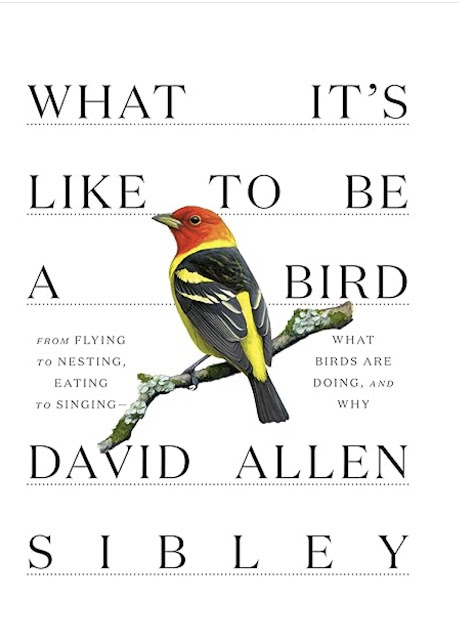
A Beautiful Bird Book


Thanks to Deb at Readerbuzz, who reviewed this last week, I bought a copy —
there was a great price on amazon.com.

I’m reading this wonderful book a little at a time. It’s very packed with information about birds.
The large format enables images of many birds at their full size.


The details of each bird’s capabilities illustrate the general way that birds are adapted to life on earth.

New on Streaming


I have only watched a few of the episodes from the first 12 seasons of Vera, but now started the new one.


Finally Read


Finished this book on my second attempt. 
Colson Whitehead is a brilliant writer. During the last few years, I’ve read four of his literary and historical novels which are fantastic. Zone One was published in 2011 — a very different type of book. It’s about an apocalyptic future where a plague is turning humans into living skeletons that eat not-yet-turned humans. “There were hours when every last person on Earth thought they were the last person on Earth.” (p. 108)

The book is centered around one character who goes by the name Mark Spitz (because he can’t swim). He is a very average American, but somehow a survivor. Whitehead  shows Mark Spitz’s consciousness of the apocalyptic scene that has replaced a recognizable America — especially New York. There are wonderful observations of middle-class people who had a comfortable life until faced with disaster. Food descriptions help to set the horrifying atmosphere in a nightmare world: Whitehead is a wizard with working food descriptions into the narrative to make it come alive. I marked many passages; here’s one about Mark Spitz:

“On impulse he purchased a deluxe combo juice at the café on the way out and decided not to say anything when the pimply skel dropped a banana slice into the blender. He hated banana. He drank it anyway, blowing into the striped straw to dislodge a plug of pulp, and stepped out to the sidewalk into the rush-hour stream of the dead on their way home, the paralegals, mohels, resigned temps, bike messengers, and slump-shouldered massage therapists, the panoply of citizens in the throes of their slow decay. The plague was a meticulous craftsman, dabbing effects with deliberation.” (p. 133)

Mark Spitz works with others to try to restore humanity by destroying the living skeletons and disposing of the corpses — anyone can see that they are zombies, but Whitehead is such a clever writer that the word never appears in his text. A search of the Kindle edition turns up only one use of the word which is on the copyright page as a keyword for library searches!

I’m really happy that Whitehead turned his fantastic gifts to creating novels that I’m more enthusiastic about. I think he’s one of the best authors writing now.

Strange Weather We’re Having!

Tuesday, February 27: Record High. Detroit was 73°


Wednesday, February 28: More than 35 degrees colder!

Temperature dropped as low as 19° F by Thursday morning.


Blog post © 2024 mae sander


Saturday, April 11, 2020

Jumbled Quotes for Here and Now

"No man is an island, entire of itself. Each is a piece of the continent, a part of the main. If a clod be washed away by the sea, Europe is the less, as well as if a promontory were, as well as if a manor of thine own or of thine friend's were. Each man's death diminishes me, for I am involved in mankind. Therefore, send not to know for whom the bell tolls, it tolls for thee." (John Donne, 1624)

From the Guardian, April 11, 2020
"Many of us are getting a glimpse of dystopia. Others are living it." (Viet Thanh Nguyen -- link)

"We are in the zombie apocalypse, which my students have been writing about for well over a decade, so young people are mentally prepared. Is a virus not a kind of zombie, a quasi life-form moving in and out of inertness? It is zombie time: the virus can’t be transmitted when all of its hosts have died. So we are all social-­distancing; that is, pretending to have died, lying very still, so the virus—the shooter in the school—won’t get us." (Lorrie Moore--link)

"As the pandemic upended our lives, people around me worried that they were having trouble focusing and being productive. It was, I suspected, because we were all doing other, more important work. When you’re recovering from an illness, pregnant or young and undergoing a growth spurt, you’re working all the time, especially when it appears you’re doing nothing. Your body is growing, healing, making, transforming and labouring below the threshold of consciousness. As we struggled to learn the science and statistics of this terrible scourge, our psyches were doing something equivalent. We were adjusting to the profound social and economic changes, studying the lessons disasters teach, equipping ourselves for an unanticipated world." (Rebecca Solnit -- link)

"Trying to translate your old social habits to Zoom or FaceTime is like going vegetarian and proceeding to glumly eat a diet of just tofurkey, rather than cooking varied, creative, and flavorful meals with fruits and vegetables." (Ashley Fetters -- link)

"The pandemic will eventually end; the economy will eventually recover. But democracy, once lost, may never come back. And we’re much closer to losing our democracy than many people realize." (Paul Krugman -- link)

"The coronavirus, Passover and Holy Week remind us that suffering is part of the human condition; we all face the prospect of death. But rarely has our own contingency confronted so many of us so vividly and so urgently." (Randall Balmer, an Episcopal priest -- link)

original photos copyright © 2020 mae sander 
for mae food dot blog spot dot com.

Thursday, July 25, 2013

The American Paradox

Why do Americans get fat and stay fat? When did they start getting fat? Why weren't they fat before that (whenever it was)? Can legislation make them stop getting fat?

The number of books and articles on the subject of American fatness is vast, and the answers aren't really conclusive. And every day, it seems, there's news of another country approaching or even surpassing American fatness.

The End of Overeating: Taking Control of the Insatiable American Appetite by David Kessler is one of the many to ask what can be done. Kessler examines not just the food Americans eat, but the way it affects them. Specifically, he argues, carefully engineered food products of many types change people's brains to make them crave more and more of their favorites. Beyond describing how food affects people, The End of Overeating offers advice on how to overcome the effects of this manipulation, though I'm doubtful that most people have the willpower to do so.

Crave is the key word here. Creating food that people just can't stop eating is the goal of many industrial food laboratories, and Kessler describes both how they do it and how they express their goals of making people into a kind of food-crazed zombies: not his choice of words, but I think the current obsession with zombies reflects a kind of pervasive fear that we have been seized by forces that we can't control, and this is one of them.

Satisfying food is the alternate to cravable food, according to Kessler. Satisfying food is the old-fashioned kind that could be eaten until one had enough. Satisfying food was plain food that didn't have a lot of added salt, sugar, and fat but also included complex traditionally cooked dishes. I think the American paradox, as suggested in Kessler's book and others, is that satisfying food has been crowded out by cravable food. Many people who have been conditioned by cravable food have simply lost the ability to recognize when they aren't hungry any more. The products of the food industry, Kessler demonstrates, make many consumers helpless. Though they often see themselves as victims, they keep eating and overeating, unable to stop.

Kessler uses a number of examples of such individuals who say they just can't stop thinking of some favorite donut, cookie, sandwich, pizza, or other cravable delicacy -- people who engage in what he calls conditioned hypereating. The foods they mention share certain not-very-natural characteristics, Kessler demonstrates in a number of chapters. There's some overlap here with Salt Sugar Fat: How the Food Giants Hooked Us by Michael Moss (as I wrote in Who's Rational?) but Kessler emphasizes how people experience the food in real life, while Moss concentrates more on the labs.

It's not just the content, which includes meticulously researched combinations of fat, sugar, and salt. To create a product that people can't stop eating, food labs also engineer the way that the food behaves when it's chewed. A potato chip may begin with a rush of salt and crunchiness, but it quickly melts away in your mouth: cravable food doesn't have too much fiber. A slice of pizza is layered with several flavors that pop and excite your mouth, but can be chewed and swallowed easily, allowing you to take another bite, another bite, another bite. Cravable meat dishes use tenderized or ground meat that requires minimal chewing compared to a real steak. A Cinnabon roll has a super appealing aroma and sweet spiciness, along with a creamy frosting that provides just the right mouth feel along with the flavor.

Kessler talked to the food engineers whose research has provided Americans (and those to whom we export) with the perfect cravable foods, and he talked to their victims who couldn't stop. He provided statistics about how very young children studied in the past seemed able to keep eating until they had had enough to grow normally, and even how their food choices were balanced to match their needs. Recent research, he pointed out, suggests that this is changing: the engineered foods (like MacDonalds) hijack this innate ability, so children lose the capacity to know when to stop eating.

Kessler mentions the French Paradox: why French people don't seem to get fat in the same statistical sense that Americans do -- or at least why that hasn't happened yet. As I read the book, though, just after my recent trip to Paris, I was struck by Kessler's category of satisfying foods: those that one eats with great pleasure, but that don't trigger the hypereating that he discusses. Satisfying food -- highly satisfying food -- is what's on the menu in the traditional homes, restaurants, bistros, cafes, and brasseries where I ate in France. Is that what most young French people are eating now? Maybe not. Maybe the French paradox will dissolve as their food industry catches up with ours and discovers how to make much more money with fat, sugar, salt, and engineered textures.


Saturday, February 27, 2010

A straw-wrapped wine bottle

What could be more retro than a straw-wrapped wine bottle? Music by Nat King Cole and Frank Sinatra? Red and white checked tablecloths? Candles in little jars? Garlic bread and cruets of oil and vinegar? If you know what's more retro than all that, please don't tell me.

The stuffed lobsters we ordered were very good. And we did enjoy the atmosphere. Those were good old days, and the AAA guide knows it.

For what we did before dinner see Everglades and Zombie Vultures ate my T-Top.