Showing posts with label yeast. Show all posts

Saturday, January 28, 2023

“The Rise of Yeast” by Nicholas P. Money

The Rise of Yeast: How the Sugar Fungus Shaped Civilization by Nicholas P. Money is a challenging book. In presenting the workings of yeast, discussions are often very technical. The author explains the internal structure of the yeast cells, the details of yeast’s cellular reproduction, and also the chemical formulas for the various alcohol reactions that occur. 

Leavened bread, beer, and wine are not the only important products that require the complex organisms classified as yeast; The Rise of Yeast offers information on the expected uses and on the others too, such as the industrial processes that produce ethanol for biofuel and other biotechnology applications. The author includes the history of yeast research, along with the way yeast was discovered to be a living organism. He presents brief sketches of the scientists who worked on discovering yeasts' life cycle and developed its technological uses. The role of yeasts in many natural processes including digestion is included, along with the history of claims that yeast supplements can contribute to health, or contrariwise, the claims that consuming yeast is harmful and should be avoided. One chapter is devoted to diseases caused by yeast — yes, gross!

 From the introduction:

“Supernatural mediation in the experience of inebriation was imagined throughout the ancient world and alcoholic gods and goddesses flourished, including Dionysus and his Roman manifestation Bacchus, the Aztec god Tezcatzontecati, and the Sumerian goddess Ninkasi…. Wine is the essential beverage of the Bible of course. Benjamin Franklin wrote, ‘Behold the rain which descends from heaven upon our vineyards, there it enters the roots of the vines, to be changed into wine, a constant proof that God loves us, and loves to see us happy.’ For those of agnostic persuasion, we may toast the evolutionary roots of our little fungus.” (p. 5)

From the conclusion:

“Our complex relationship with alcohol, and later with leavened bread, drove agriculture and settlement. From these splendors came civilization, political organization, militarization, and mass starvation. Later fruits of our yeast-driven civilization included science and technology, engineering and medicine, exponential population growth, and the attendant destruction of the biosphere. And in this time of considerable climatic peril, industrial applications of yeast promise major advances in biotechnology and offer some hope — perhaps our only hope — of powering a carbon-neutral economy. The future of humanity depends more on this bug than on any farm animal or crop plant.” (p. 183)

 It’s a difficult book, but full of interesting facts and insights. This is my third post this week about yeast, beer, bread, wine, and the associated history and science. Now I’m planning to read something completely different!


Review © 2023 mae sander


Friday, January 27, 2023

In Vino Veritas

"Indeed, the idea that drunkenness reveals the ‘true’ self, though ancient and universal, is perhaps most famously expressed by the Latin in vino veritas, ‘in wine there is truth.’ This perceived link between honesty and drunkenness goes back to the Greeks,” (Drunk: How we sipped, danced, and stumbled our way to civilization, Edward Slingerland, p. 141)

Titian's vision of an ancient Greek feast of Bacchus, God of Wine. A favorite example of Edward Slingerland, used on the cover of his book.

It’s Dry January. The first Dry January was in 2012. This month-long event started small and now it’s big. Popular culture embraces an extreme solution for everyone, whether they have a problem with alcohol or not. Recent news articles promoting paranoia about the most moderate of drinking strike me as evidence of a continuing streak of puritanism that plagues American society. Sure, it doesn’t hurt anyone to give up alcohol, but it hurts society to refuse to acknowledge its benefits as well as its risks. It might be worthwhile to create a responsible, not hysterical, assessment of how they stack up. Prohibition a century ago didn’t accomplish its goals and contributed to the growth of organized crime, alcoholism, and other undesirable results.

As a society, we aren’t viewing this issue rationally. Here’s a book that tries to put alcohol in historic and evolutionary perspective, and look for the benefits of alcohol use as well as the negative effects. 


This is a very complex and detailed book, and I can't begin to describe all of the arguments that author Edward Slingerland gives in support of the hypothesis that alcohol and other stimulants contributed to the development of civilization, of social cohesion, and of technological progress in human history. For these accomplishments, both now and historically, he says, humans need what he calls "the Three Cs: we are required to be creative, cultural, and communal." (p. 77). 

Drinking alcoholic beverages, he says, has contributed to all three of these requirements. I can't try to reproduce his discussion: I strongly suggest that you read the book to see this fascinating exploration of history, evolution, and adaptation.

Both good and bad results come from drinking alcohol; Slingerland summarizes the risks: 
 
"An alcoholic beverage typically provides calories but little nutritional value, and is made from otherwise valuable, and historically scarce, grains or fruit. Its consumption impairs cognition and motor skills, damages the liver, kills off brain cells, and fuels ill-advised dancing, flirting, fighting, and even more louche behaviors. In small doses, it can make us happy and more sociable. But increased consumption quickly leads to slurred speech, violent arguments, maudlin expressions of love, inappropriate touching, or even karaoke." (p. 11).

But he also states the following:

"This book argues that, far from being an evolutionary mistake, chemical intoxication helps solve a number of distinctively human challenges: enhancing creativity, alleviating stress, building trust, and pulling off the miracle of getting fiercely tribal primates [humans] to cooperate with strangers. The desire to get drunk, along with the individual and social benefits provided by drunkenness, played a crucial role in sparking the rise of the first large-scale societies. We could not have civilization without intoxication." (p. 17). 

Alcohol use, the author shows, predates much of human evolution. He describes how even primates and certain other animals intentionally consume over-ripe fruit that has begun to turn alcoholic, and offers evidence that early humans brewed alcoholic beverages from pre-agricultural plant matter. In fact, he ascribes one of the motives for domesticating grain in prehistory to producing something to ferment into beer! (This is known as the beer-before-bread hypothesis.)

In ancient China, in ancient Turkey, in ancient Greece, and many other prehistoric sites, there is evidence that alcohol was part of life: 

"Jars containing our earliest documented alcoholic beverage—a 'Neolithic grog,' made of honey mead, rice beer, and fruit wine—from the Jiahu tomb (7000 to 6000 BCE) in the Yellow River Valley, were 'carefully placed near the mouths of the deceased, perhaps for easier drinking in the hereafter,' and the contents were no doubt also imbibed by those performing and attending the funeral." (p. 156).  

Potsherd from Göbekli Tepe, Turkey (p. 156)

"Indirect evidence of the ancient connection between chemical intoxication, ritual, and ecstasy is found in a remarkable potsherd, dating back to the early Neolithic (ninth millennium BCE), and found at a site in what is now modern-day Turkey not far from Göbekli Tepe. It shows two joyful individuals being accompanied in dance by a turtle, the presence of a dancing animal being interpreted by scholars as a sign of 'altered states of consciousness.'” (p. 156).

Slingerland argues that collective benefits to society, to creativity, and to individual satisfaction for moderate and controlled drinking, especially drinking of low-alcohol beverages like wine and beer (but not distilled spirits) outweigh the purported benefits of total abstinence:

"All things considered—liver damage, calories, and all—a spot of social drinking is good for you, and this has nothing to do with any French paradox or narrow health benefit. Moderate, social drinking brings people together, keeps them connected to their communities, and lubricates the exchange of information and building of networks. We social apes would find it very challenging to do without it, both individually and communally." (p. 206). 

Here is an example of Slingerland's approach to studies that conclude that drinking is unequivocally bad for everyone and bad for society:

"Demonized from the early modern era well into the twentieth century as the “poisonous tap-root” of all evil, alcohol won back some utilitarian respectability with research suggesting that moderate alcohol consumption—on the order of one to two drinks a day—might reduce risks of heart disease, diabetes, or strokes. As we have noted, though, practicing physicians have never been terribly impressed by this body of research, and have resisted actively recommending light drinking in the same way they do, for instance, regular exercise. The health-based defense of alcohol finally suffered a massive body blow from the 2018 Lancet article that has haunted our discussion, a terrible document that concluded definitively that the only safe level of alcohol consumption was zero. As mentioned above, responses to the Lancet study ranged from a predictable 'I told you so' from the teetotaler crowd to those wanting to challenge the methodology and salvage some health benefits for alcohol. An alternative tack is the one taken in this chapter: uncovering or drawing attention to the various ways in which alcohol continues to serve important individual and social functions, the value of which must be weighed against the more obvious health risks." (pp. 227-228).

Drunk is a readable book because it's so full of highly specific examples; however, this makes it hard to review and summarize. In addition to alcohol, the author adds observations about other similar intoxicants. Consider this, for example:

"The anthropologist Dwight Heath, a pioneer of the study of the social function of alcohol, notes that it has always played a crucial bonding function in situations where otherwise isolated individuals are required to get along—sailors in port, loggers just having come out of the woods, cowboys gathering at a saloon. ... Other chemical intoxicants have also been used to create the particularly intense form of social bonding required for warriors. An early Spanish missionary to the New World noted that some indigenous groups used peyote before heading out to war. 'It spurs them to fight with no thought of fear, thirst, or hunger,' he reported. 'And they say that it protects them from all danger.' The battle rage of the legendary 'beserkers' of Norse legend was likely driven by psychedelics, and the feared assassins of ancient Persia derived their name (Persian hashashiyan, Arabic hashīshiyyīn) from the intoxicant from which they drew their fighting spirit, hashish." (p. 145-147)

I found many interesting and significant insights into the uses and abuses of alcohol in this very penetrating study of a subject that in some ways is almost taboo! A major conclusion:

"We cannot properly grasp the dynamics of human social life unless we understand the role that intoxicants have played in making civilization possible." (p. 303).


Somehow, the book didn’t mention the iconic function of
alcohol in the famous St.Bernard snow rescues.

Review © 2023 mae sander.


Monday, January 23, 2023

Beer, Bread, and Yeast

Brewing beer, 16th century (source)

As I’ve mentioned many times, Len makes absolutely wonderful bread, mainly from sourdough starters (one wheat, one rye) that he has kept going for several years. Recently, he became curious about the history of bread baking, particularly the history of using starters and of obtaining yeast from breweries, such as the one depicted. 

Len’s Bread

Len’s discussion about where bakers got their leavening

I've done a lot of reading to answer the question about how traditional bakers got their yeasts, i.e. beer, old dough, or liquid levain (our method). For 19th century America I came to a very unexpected result: it depended on where in the country you were. In the East people exclusively used brewer's yeast. I got this from a Dover reprint of a cookbook from 1841 by Sarah Josepha Hale, and from a discussion in a book by Linda Civitello called Baking Powder Wars. Hale says that you should use what's left in the bottom of the cask when you make your household beer, or, if you don't brew beer, get it from the local brewery. She lived in Boston and Philadelphia.


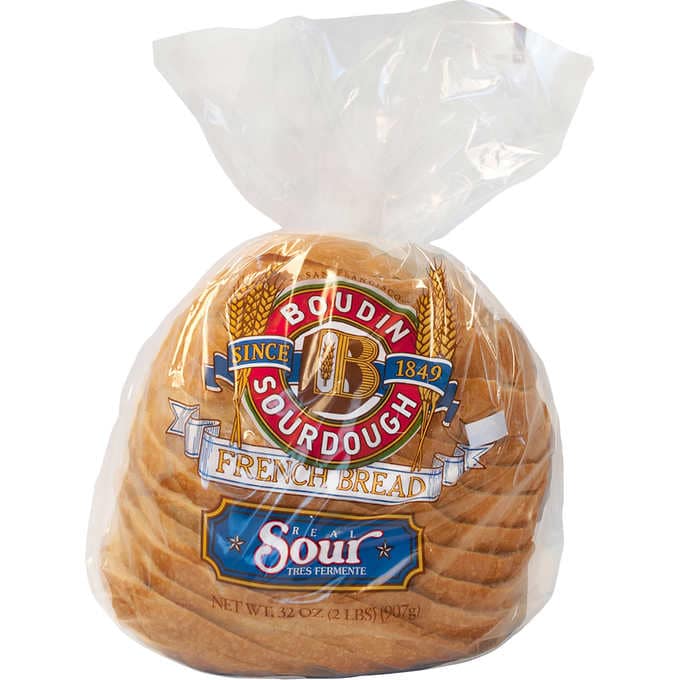
However, In California, they used sourdough of the type we use from early times. For example, Boudin bakery (which still exists) started making sourdough loaves in 1849. They claim that they are still using the starter that their founder, Isidore Boudin, had in the original shop. In the 1906 San Francisco earthquake and fire, the wife of the then owner heroically saved the levain in a bucket and ran out of the shop with it. 

Boudin Sourdough: available at Costco!
It’s quite good (but Len’s is better).

Mae found accounts of people on the Oregon trail who had levain in the wagons and baked on the trail. Of course, you know the stories of the miners who slept with their levain to keep it from freezing.

My guess is that this split reflects European practice. In England all bread was made with brewer's yeast before commercial yeast became available (1860's more or less). The Brits had a horror of sour bread, and prefered it bitter, like beer. (Hale's recipe for bread using brewer's yeast added hops). On the other hand, on  the European continent, our kind of levain was the standard. Isidore Boudin was from a family of bakers in Burgundy, and came to California around the Horn. Many of the people on the Oregon trail came directly from Europe (e.g. Sweden) and carried their starters with them.

So it all comes down to custom, and snobbery.

Beer and Bread Were Invented Together

Ancient Egypt: Kneading a starter for beer.
(Israel Museum)

Ancient Egypt: Kneading bread. (Toronto Museum)

… and Humans Have Never Been the Same.

Source: “How Bread, Beer, and Soy Sauce Changed the Human Biome”

Blog post © 2023 mae and len sander


Friday, April 17, 2020

What happened to our yeast?

"In the first half of the nineteenth century, the future of the new nation, it seemed, was in the hands of the women who kneaded its daily bread. ... Good bread was the measure of a good woman, a good wife, and a good mother." (Linda Civitello, Baking Powder Wars, p. 5)
Here we are, living as they did in frontier days, family units confined together, with our accustomed ease of access to food supplies disrupted. The urge to bake bread (or cake or cookies or pies or turnovers or...) has seized us -- not just women, also men across the country want to bake. Baking occupies idle people more satisfyingly than watching Netflix, and if done right, supplements dwindling food reserves. Home-made bread may save money over buying other types of food. The result of this reaction: flour has been in short supply for over a month, though in my own experience, it seems to be coming back. And as I've documented in other posts, Len has been trying a large number of bread recipes, both with starter and with yeast, which we fortunately had on hand. The photo shows his most recent loaves.

Gold miners' cabins, Bodie, California, where I visited last fall.
Sourdough would have been the most likely bread in the 1880s,
when most men ate in boarding houses and saloons.
Maintaining sourdough starter then as now means no need for yeast.
Yeast for home baking is currently in short supply, and it's very difficult for the yeast suppliers in the US to meet the increasing demand. A spokesperson for Fleischmann's yeast estimates that it may take the yeast industry two months to catch up with the increased demand for household-sized yeast jars and packets. The number of yeast manufacturers in the US is small, only 13 plants according to an EPA study from 1995, maybe more by now. Yeast production is also important for the commercial baking and alcohol production industries and is used in production of biodiesel. (source)

Two recent articles, "The Yeast Supply Chain Can’t Just Activate Itself" by Aaron Mak, and "The hot grocery item no one can find? Active dry yeast" by Chase Purdy, explain many of the challenges. In particular, production of yeast in a factory requires 50 days from the time it's ordered until it can be packaged and shipped. Industrial-scale yeast growing is nowhere near as simple as what you can do by mixing flour and water and maybe some raisins and waiting for wild yeast to populate your culture!

Roadblocks to meeting the current shortages include a shortage of packaging material (the jar supply comes from a now-closed factory in India), an unprecedented surge in demand (up 600% from last spring), and need to create a safe environment for workers in the yeast factory. In addition:
"There’s another hurdle that makes it difficult to quickly scale up yeast production. While plants may be able to streamline production domestically by hiring more people and working longer hours, certain segments of the process are restricted by a biological clock. 'Yeast takes a certain time to go from one cell to two cells,' says Sudeep Agarwala, a yeast geneticist who works for the biotech firm Ginkgo Bioworks. 'You can do everything you can to speed it up, but there’s a hard limit to how fast they can double.' Yeast also needs to consume sugar gradually—a production plant can’t force-feed the cells at a faster clip." (Mak)

Yeast in American History

Throughout the nineteenth century, the American food industry was developing new methods for the efficient processing of many types of foods. Canned fruit, vegetables, and meat products became important staples, and industrial canning was improved repeatedly. Large-scale bakeries and other packagers became common. Yeast definitely went from small-scale individual production to large-scale industrial production. Interestingly, today's major yeast corporations were mainly founded in the 19th century.

The Fleischmann brothers founded their yeast-making business in the 1860s.
Their product greatly improved the baking process for both home bakers
and commercial bakers. The large factory, as shown, developed later. (link)
Photo from the Red Star Yeast company, founded in 1882 in Milwaukee.
At first, the company was a brewery and distillery, but quickly converted to
yeast production, and constantly improved its methods of yeast manufacturing.
Red Star is now owned by Lesaffre yeast, also founded in the 19th century.
Before the microscope was invented, the rising of bread seemed to be a magical transformation. By the time the pioneers packed barrels of flour and crocks of sourdough starter on their wagons or their river boats, the basics of yeast fermentation (whether from sourdough, cake yeast, or dry yeast) were reasonably well understood. Going back in time, prior to the invention of the microscope and discovery of micro-organisms, the transformation of dough as it rose and then as it baked was viewed with awe. Explanations by Medieval writers, Greek, Roman, and Jewish religious practices, and many other cultures often invoked supernatural processes. Bread was fundamental to nutrition but also to many religious rituals.

The earliest evidence of yeast bread is in ancient Egypt 4000 years ago. Yeast was used for both brewing beer and making bread, as illustrated in these tomb figures that I've seen in museums. The figures of workers in Egyptian tombs were intended to ensure supplies of bread in the afterlife to the person who was buried there.

Kneading bread in ancient Egypt. 
My photo taken in the Royal Ontario Museum (link)
Kneading dough for a beer starter: Egypt, 2100-2000 C. BCE
Bread and beer were both made from yeast and grain,
and made by the same workers in ancient times.
Carved wooden statue in the Israel Museum, photo from 2016. (link)

A rather mystical and subjective account of the history of fermented breads and their significance in European history can be found in the book Six Thousand Years of Bread by H.E.Jacob. There are also many other books on bread that of course discuss the origins of yeast baking and its role in history.

This blog post copyright © 2020 mae sander for mae food dot blog spot dot com.