

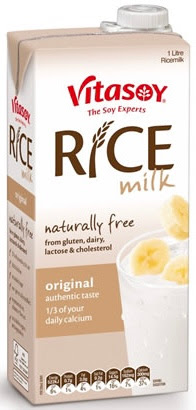
The US Food and Drug Administration (FDA) has recently announced that they will not object to the word “milk” in product names like coconut milk, soy milk, almond milk, oat milk, and other plant-based beverages. Evidently, the FDA experts think consumers are smart enough to know that these aren’t dairy products, and the public isn’t going to be confusing them with dairy milk. This seems very obvious to me as these products aren’t new at all — they’ve been in use and called “milk” for centuries! The problem isn’t with consumers, it’s with the powerful dairy industry that hopes to regain a market share that they enjoyed for several decades — but this hasn’t been true forever!
A number of historic discussions recently have been pointing out that in fact, almond milk has been made and used for nearly 1000 years. And soy milk was invented even before that in China, and has been in use in the US for well over a century. Oat milk only dates back a few decades. But the use of the word “milk” for any milky liquid whether from a plant or from animal milk is not new in the least. The dispute over the commercial use of the word “milk” isn’t even new: it’s come up before with the FDA and the milk producers.
Outside the discussion of plant-based milk, there’s another possibility on the way: lab-generated milk proteins and enzymes. Products made from such vegetarian but chemically identical substances are already on the market, competing with both dairy milk and with plant-based milk.
According to the Washington Post:
“Dozens of companies have sprouted up in recent months to develop milk proteins made by yeasts or fungi,…. The companies’ products are already on store shelves in the form of yogurt, cheese and ice cream, often labeled ‘animal-free.’”
Journalists and Peevers “Protect” the Word Milk

From SECONDS Food History:

From Atlas Obscura:
“Almonds have been central to Mediterranean and Middle Eastern cuisines as far back as the Roman era, yet almond milk is likely a religiously-motivated, European innovation. The first mention of almond milk appears in a medical context in 12th century Salerno, but it quickly spread from the Mediterranean as far as Germany, England, and Denmark. During Lent, European Christians were barred from consuming milk, as well as eggs and meat. So they needed a substitute….“Animal milks were typically destined for cheese and butter production, not drinking, thanks to a lack of refrigeration. One could make a faux butter by combining almond milk, salt, sugar, and vinegar and straining the result, even if it sounds like a far cry from today’s almond butter (or real butter).”
Nutritionist Marion Nestle on "What this is about"
"Simple. The dairy industry does not like concoctions made from soy, almonds, cashews, macadamias, oats, peas, or other such plants to get to be called 'milk.' It argues that they are not as nutritious as milk and will confuse consumers into thinking they are the same. Most surveys show that the public understands the difference quite well and has reasons for choosing plant-based alternatives that may or may not have anything to do with nutrient contents (think: animal welfare, dairy fat, environmental protection, industrial production, or what have you)....
"For the record, I like dairy products. But the dairy industry is a mess (overproduced, increasingly consolidated, fighting public health and animal welfare concerns) and needs to get its act together. The FDA is not helping it get there with this decision"
 |
Cartoon by Joe Heller |

I wonder if the linguistic and food-history ignoramuses will come after creamed corn next: after all, the white liquid in the can, sometimes called “corn milk,” came out of the corn cob and kernels not from the cream-top of a pail of cow’s milk. What about tiger’s milk? “Leche de tigre, literally ‘tiger’s milk,’ is the citrus-based, spicy marinade used to cure the fish in classic Peruvian ceviche.”
What about shaving cream? Face cream? Will they condemn a monarch butterfly for loving milkweed with its white liquid sap?
Maybe a clown will throw a pie shell filled with Cool Whip in their faces.
Shared with Elizabeth’s Tuesday blog party.
Text © 2023 mae sander. Images from product ads.


