Our Life In March
Spring is coming, and this is the best reason to celebrate the end of March. We did have pie for Pi Day (but not home made) and we enjoyed St. Patricks Day (but no special food). It’s the end of the week and also the end of the month, so I’m sharing my thoughts and photos with Sherry’s
In My Kitchen, Deb’s
Sunday Salon, and Elizabeth’s
Tuesday Tea Party. I wish everyone a very beautiful April with beautiful weather, no matter which climate zone you live in.
 |
| My Peeps in my kitchen: Happy Easter! |
What we cooked
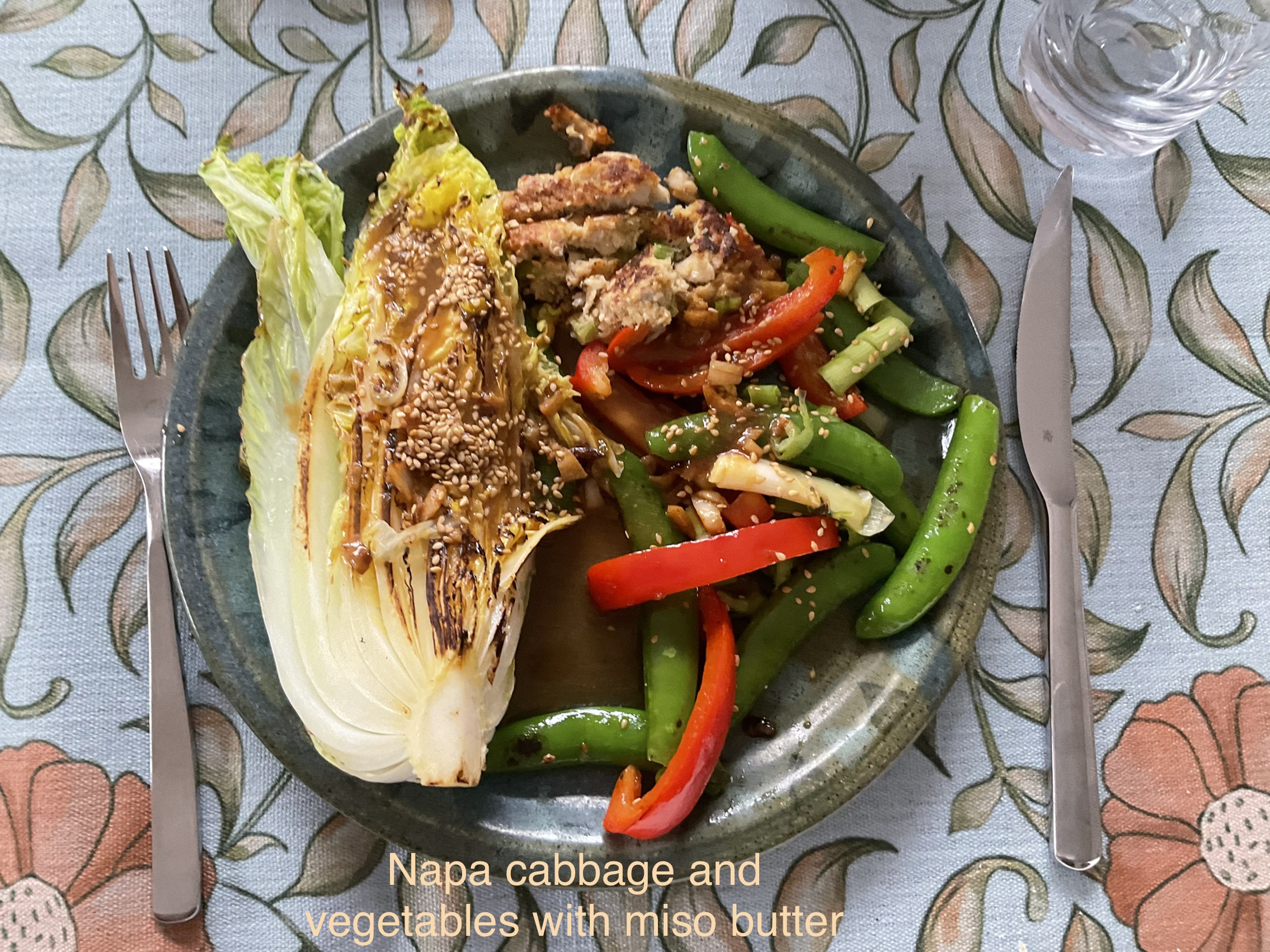
Here are some of the things we cooked in March. We each made some of these dishes.
 |
This dish was a disappointment. We added several more ingredients
to the leftovers to give it more flavor. |
 |
| Made from scratch (not from Ikea). Both wine & water to drink. |
 |
| From Evelyn’s kitchen: Hamantaschen for Purim. I wish I had been there to eat some! |
Fun Stuff in the Kitchen
 |
| New dish towel |
 |
| One more good ready-made dish from Trader Joe’s. |
 |
| And a good sweet thing, also from Trader Joe’s |
 |
| Some of the enjoyable jam, preserves, jelly, etc. in my refrigerator. |
Bread
 |
| Len’s latest rye bread was awesome! |
 |
| New dough whisk that Len used when combining ingredients for the rye bread. |
Remembering Four Years Ago
In the beginning of March 2020, the coronavirus pandemic seemed to be a distant rumor. By the end of March, there were cases in every state, and the government had shut down virtually all non-essential activity in businesses, schools, recreations, public performances, and many other areas. Emergency rooms were overwhelmed, and hospitals were overflowing with very sick patients. Essential commodities and those that people thought would become scarce were all out-of-stock as people hoarded shelf-stable foods, frozen foods, and household goods. The resulting toilet paper shortage lasted several months.
The effects of the pandemic still echo through our society. From the New York Times this week:
“Elected officials, strategists, historians and sociologists say the lasting effects of the pandemic are visible today in the debates over inflation, education, public health, college debt, crime and trust in American democracy itself” (source)
Injustices became apparent as the pandemic left some people working at their own risk to do essential jobs, and left others without a livelihood. The situation is no better today:
- According to the Washington Post this week: “Nearly 1 in 5 people in the essential workforce — people who cleaned hospitals during the pandemic, who provided home health care and child care, who kept food coming to our tables, who built temporary clinics — do not have permanent legal authorization to live in this country.” (source)
- The Baltimore Key Bridge disaster last week brought home how vulnerable immigrants work on our essential infrastructure. The bridge workers who were killed and injured were all immigrants from Central America. (source)
- Farmworkers are especially vulnerable: “According to data from Farmworkers Justice, there are an estimated 2.4 million farm workers employed on American farms and ranches, the large majority of whom are immigrants. Foreign-born workers make up 68% of the workforce (the USDA cites a slightly lower number at an estimated 60%) and approximately 36% lack authorized work status under current U.S. laws. (source)
The pandemic left us with a lot of thinking to do: one essential question is why we continue to deny legitimacy of residence to workers who are clearly essential to our nation.
From IMK, March 2020: What’s really important?
Reading my blog posts from the start of the pandemic is interesting: we decided to isolate ourselves, not knowing how long we would be without social contacts. Our isolation ended a year later when the remarkable vaccine became available to us. This is what I wrote four years ago:
“My food thoughts are not just with my own needs, but with the vast numbers of people who are fearing or already experiencing hunger. I'm thinking of those whose jobs have suddenly ceased, and who don’t know how they will afford food. I worry about children who were dependent on school lunch programs but whose schools have closed, and about college students without meals or shelter after dorm closures. I'm mindful that homeless people and refugees everywhere are subject to increased uncertainty. People already living in poverty in the US and throughout the world will be suffering even more now than in the past.
“Even more pressing than the challenge of getting food to those in need, our society has enormous problems with protecting health care workers and providing care for the sick. Compared to the vast numbers of people with limited resources, to those who are already suffering from coronavirus, and to those mourning the victims, I'm extremely fortunate and grateful, and I do not want to sound like I'm complaining.”
 |
| Graffiti on a park bench in March, 2020. |
WE SURVIVED!
Blog post and photos © 2020, 2024 mae sander.