Showing posts with label Ann Patchett. Show all posts

Tuesday, September 05, 2023

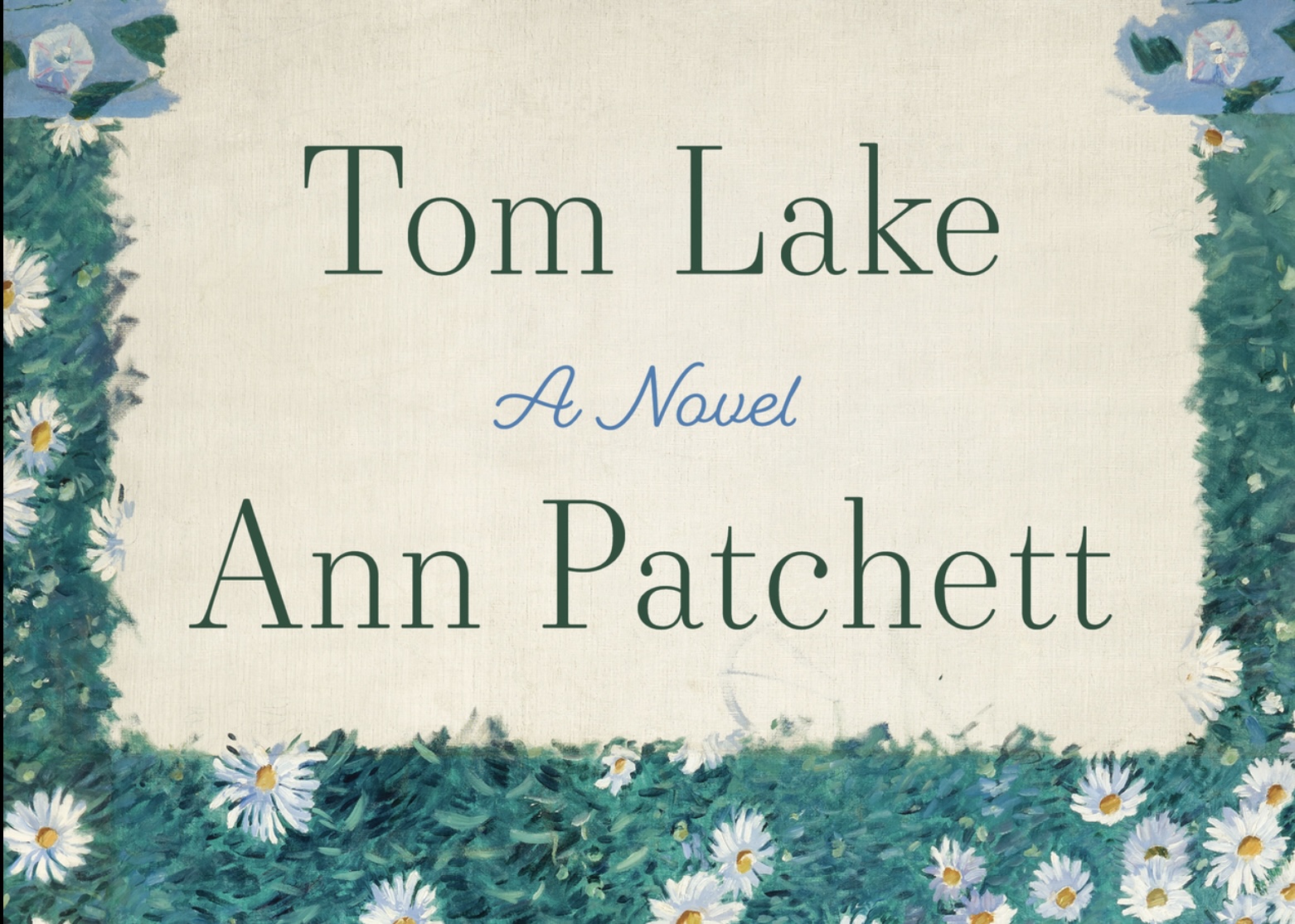
“Tom Lake” by Ann Patchett

“There is no explaining this simple truth about life: you will forget much of it. The painful things you were certain you’d never be able to let go? Now you’re not entirely sure when they happened, while the thrilling parts, the heart-stopping joys, splintered and scattered and became something else. Memories are then replaced by different joys and larger sorrows, and unbelievably, those things get knocked aside as well, until one morning you’re picking cherries with your three grown daughters and your husband goes by on the Gator and you are positive that this is all you’ve ever wanted in the world.” (Tom Lake, p. 116)


Isolated by the pandemic, the Nolans reunite on the family farm near Traverse City, Michigan, as narrated in Ann Patchett’s latest novel, Tom Lake. The five members of this family are constantly working to keep the farm going, tend their small herd of goats, pick the cherries from their orchard (with fewer than usual hired workers), watch their collection of movies, and remember their past lives. A remarkable feature of the way Patchett tells the story, is that the pandemic is very much in the background; the emphasis is on the relationships of the characters and their day-to-day lives, as well as on the story the three daughters manage to tease out of their mother, Lara.

The three daughters, all in their mid-twenties, have always been curious about their mother’s past, particularly about her life before marrying their father and taking over the farm and orchard from his aunt and uncle — a time long before the girls were born. As Lara tells the story, she also revives untold memories of that time; Patchett interweaves these secret thoughts with the way that Lara tells the story to her daughters.

The dominant theme of Tom Lake seems to be the question “What is happiness?” If this sounds corny, maybe it is. Ann Patchett carries it off with flair and style, in my opinion, making her point through the events and choices of Lara’s life.

Underlying Lara’s entire life before marriage, as she tells it, was her early experience playing the role of Emily in Thornton Wilder’s 1938 play Our Town (which is a pretty corny play, but in a good way.) Our Town begins in 1901, and ends in 1913. Emily, the central character, was a small-town girl; she married her high-school sweetheart just after graduation, and died in childbirth at the age of 24. I don’t know if the play is as well-known as it used to be, when almost all American students were assigned to read it at some point in high school English class, but Patchett seems to assume that her readers know it.

Twenty-four is also Lara’s age in the most critical parts of her story, and the age of one of her three daughters; at the time of the novel, she is fifty-seven. In high school and college, Lara didn’t just read Our Town: she played the role of Emily in student productions. Her performance attracted the attention of a movie producer in Hollywood. Then, after making a film, she tried out for the role of Emily in the 1988 Lincoln Center production of Our Town with Spalding Gray — a historic event with real people, inserted into a fictional story, which to me echoes the kind of peculiar real/not real mood that I get from the Thornton Wilder play. 

When Lara doesn’t get the role, she settles for second-best: performing in a summer stock company somewhere in northern Michigan not far from Traverse City in a venue called Tom Lake. Unlike Lincoln Center, this venue is fiction. The Tom Lake theater company and its actors and directors become the center of Lara’s story, including her affair with Duke, her fellow actor in Our Town. This relationship has always obsessed her daughter Emily because Duke went on to be an insanely famous Hollywood actor. Lara, on the other hand, went on to be several low-profile things, and eventually married Joe Nolan, who had been the director of the summer-stock plays and then had inherited the family farm. 

Patchett  sets up a major contrast between the glamorous and high-profile Hollywood or New York life that Lara and Joe rejected and the hard work and deep satisfaction of their lives on the farm. The book is almost preachy with its message of happiness, but you have to read it to see how amazingly Patchett avoids any sentimentality, and how solidly she makes that point. And to me, how much better she manages to do this than Thornton Wilder did. 

Wilder isn’t the only literary figure in the novel. The actors in the summer stock company are also putting on two other modern plays, and there are constant parallels to another rural play: The Cherry Orchard by Chekhov. As the New York Times reviewer puts it: 

“Like some guardian angel in the sky, Anton Chekhov hovers over this story, which features three sisters in their 20s and is set on their parents’ cherry orchard (albeit in northern Michigan during the recent pandemic, not the tuberculosis-torn Russian provinces). But Thornton Wilder is driving the tractor.”

I feel as if I have a whole reading list of plays to read before I should really write this review of Patchett’s highly enjoyable book, but I don’t think that’s really necessary. It’s a great book on its own.

Review © 2023 mae sander


Thursday, October 17, 2019

Ann Patchett: "The Dutch House"

Ann Patchett has written several books that I find amazing and wonderful, especially Bel Canto (2001; I haven't seen the movie which came out last year). Her newest novel is The Dutch House, published a few weeks ago. I find her work as good as ever.

Above all: Patchet portrays characters vividly. They are astonishingly vivid! And in each of her books, you find a kind of fairy-tale starting point, a fairy tale where the vivid characters figure out how to be real: how to live and manage in their extraordinary circumstances. (All the reviews I read, after writing this, also called it a fairy tale.)

The Dutch House tells the tale of an evil stepmother for our time. A bit like Cinderella, a bit like Hansel and Gretel, somewhat further away from Snow White.

What do evil step mothers do? They quietly abuse their step-children under the purblind eyes of the uncomprehending father (usually besotted or enchanted by the stepmother). The stepmother captures his love and loyalty. Then she takes control. Somehow she throws the step-kids out. Yup. That's the plot here.

Events for the family in The Dutch House start in the late 1940s and continue for around 50 years. The father is a very rich father, as befits a fairy tale. The character who narrates The Dutch House is the younger of the two step-children, a boy who is around nine years younger than his older sister. She remembers their birth mother. He cannot remember her. Neither of them really understands why she left them or knows where she went, only that she is has disappeared. Their father is distant, and then remarries Andrea -- a woman who clearly wants only his money and privilege for her two daughters. (They aren't actually named Anastasia and Drizella like those of Disney's Cinderella, and they aren't as mean).

They all live in a opulent house that had been built in the 1920s by very rich people who all died. Their father had purchased the house with all the former owners' possessions, even their portraits on the walls, their clothing in the closets, and a hair brush with hair in it on the dresser. Even three servants of the former owners, Fluffy, Sandy, and Jocelyn, became the loyal caretakers of the children. When the father dies, children and servants are all thrown out of the house because Andrea wants everything.

Patchett knows how to tell a story, how to set everything up so you see the child in the man who later narrates the tale. Once the book gets going, it's all about the narrator's piece by piece discovery of who he is, how he feels, and what was the real story of his mother and his father. I'm not going to tell much of it, because that's the real plot. I'm sure you don't want spoilers. Surely you will read it for yourself!

One of the key passages, fairly early in the tale, describes the moment when the narrator and his sister Maeve are forced to baby sit for Andrea's two daughters, who are then small children. They take them on a tour of the entire house, which firmly shows the reader its permanent importance. In the basement:
"Maeve went bravely ahead while Norma and Bright and I tried to stay in the general vicinity of her flashlight’s beam. She opened a wooden door that creaked so loudly the girls pressed against me for a second, then Maeve pulled another string, illuminating yet another bare lightbulb. 'This is the basement pantry where the extra food is kept, just in case you’re here and get hungry. Sandy and Jocelyn make pickles and jams and stewed tomatoes. Pretty much anything that goes in a jar.' We looked up at the shelves of immaculate jars, every one labeled with a date and organized by color, golden peach halves floating in syrup, raspberry jam. There were crates of sweet potatoes and russets and onions on the cold floor. I had never exactly thought of being rich until then, seeing all that food stored away in the presence of those little girls." (Kindle Locations 471-477).
Somehow jars of food and gifts of food become a kind of metaphor for a lot of things in the book, as did the loyalty and effectiveness of Sandy and Jocelyn. Slowly the narrator realizes that they are real people with real feelings and real lives, but at first he sees them as an assumed part of life:
"Sandy and Jocelyn had always run the house with complete autonomy. Maybe on occasion we would tell them how nice it would be to have beef stew with dumplings again, or that wonderful apple cake, but even that was rare. They knew what we liked and they gave it to us without our needing to ask. We never ran out of apples or crackers, there were always stamps in the left-hand drawer of the library desk, clean towels in the bathroom. Sandy ironed not only our clothes but our sheets and pillowcases." (Kindle Locations 681-685).
But the stepmother destroys this idyll:
"All of that changed after Andrea arrived. She made weekly menus for Jocelyn to follow and gave her opinion on every course: there wasn’t enough salt in the soup; she had given the girls too many mashed potatoes. How could they be expected to eat so many mashed potatoes? Why was Jocelyn serving cod when Andrea had specifically told her sole? Could she not have troubled herself to check another market?" (Kindle Locations 687-690).
After they are kicked out of the house, the narrator and his sister still see Sandy and Jocelyn from time to time, and he begins to understand what these "servants" had done for them:
"Sandy and Jocelyn hugged us and kissed us in a way they never had at home. Jocelyn was wearing dungarees and Sandy had on a cotton skirt with cheap tennis shoes. They were regular people now, not the people who worked for us. Still, they handed over one big jar of minestrone soup (Maeve’s favorite) and another of beef stew (mine)." (Kindle Locations 1432-1434).
Slowly he grows into the full understanding of the love and security that he and his sister lose, for their mother's love, and for the entire house which somehow dominates them even as they develop into adults with distinct and interesting personalities, and especially as he becomes the head of his own family with his own wife, daughter and son. But the house means everything to them, and they can't get away from it. I especially love the way that the book continues throughout so many years of the narrator's life. I would tell you how it ends, and what happens with the house, but that would be a spoiler. It's another fabulous book by a great author.

This blog post copyright © Mae Sander for maefood dot blogspot dot com.
If you are reading this at a different website or at a different host than google's blogspot, you are reading a stolen version.

Tuesday, January 29, 2019

Ann Patchett: "Commonwealth"

Ann Patchett's ability to create believable, likeable characters is amazing. In Commonwealth she presents something like 14 vivid characters; maybe more. Her center is a large, blended family with four parents and two or three divorces. The novel spans over 50 years,  meaning that many other partners enter and leave the lives of this huge ménage.

Commonwealth seems to be named for the Commonwealth of Virginia, where we view the critical events in the life of the six children. Besides Virginia, there are scenes in Los Angeles, Chicago, Iowa, New England, Switzerland, and maybe some other places I've overlooked. Further, it's not in precise chronological order, but moves around, sometimes as an ordinary narrative, sometimes as flashbacks.

There are only a bit more than 300 pages for all these developments of time, space, relationships, and themes of love and death and more, including hints that Commonwealth means more than just Virginia. Does this sound like it would make you dizzy? It made me dizzy. But I enjoyed it very much, and in the end it didn't seem that random.

Franny, a daughter of one of the fractured couples, is one of the most in-focus characters in the novel. In fact the first chapter takes place at her parents' home in Los Angeles, where they are celebrating her Christening. There's a free-wheeling atmosphere in this suburban, summery party, where oranges from the back-yard trees are squeezed and mixed with vodka and other booze, and where sandwiches and cookies are devoured by kids and adults.  Of course demons lurk: at the party, Franny's mother meets a colleague of her father and all the children are fated to be shuttled between the resulting rearranged homes.

Food and drinks are always a part of Franny's life. After dropping out of law school, she works as a cocktail waitress at the Palmer House in Chicago (where we stayed a couple of years ago, as it happens: this made the book more vivid for me!) She then lives with a famous writer whose works she loves, perhaps more than she loves him;  he's 32 years older than she is. Another party, in the middle of the book, lasts for weeks during a vacation stay in a mansion in New England.

During this vacation, Franny gets stuck with cooking and shopping for groups of the writer's friends and colleagues, who treat her like a servant and demand that she wait on them, making every one of them a different kind of eggs for breakfast and slaving over dinners while scarcely being noticed. This cringe-inducing sequence of meals is a key to Franny's identity, I think. There are many other keys too as she goes through life relating to her siblings, step-siblings, parents, step-parents, and so on.

The sunny parties in California and the New England vacation house contrast with a wintery party at the end of the novel over 50 years later. Refreshments again are organized by Franny's mother, Beverly, but this time with hired waiters and caterers. The scene at the Christmas party seems to wrap up many of the themes about Franny and her mother that started at the very beginning of the book:
"Franny found her mother at the breakfast table by herself, arranging petits fours on a tray. 
"'You know there are people here who will do that for you,' Franny said.
"Her mother looked up and gave her an exhausted smile. 'I'm hiding for just a minute.' ... 
"Beverly put out the last of the tiny square cakes from the box, pink and yellow and white, each one crowned with a sugared rosette.... 
"Franny picked up a pale-yellow petit four, the color of a newly hatched chick, and ate it in a single bite. It wasn't very good, but it was so pretty that it didn't matter." (p. 311-312)
Palmer House Hilton Hotel where we stayed in Chicago and where Franny worked.

Wednesday, January 18, 2017

A terrifying trip

Next month, I'm planning to go on a one-week trip to see and photograph birds, wildlife, and local people along the upper Amazon River in Peru. A few years ago I had read Ann Patchett's book State of Wonder, which takes place mainly along the Amazon River in a similar area but in Brazil. Because I'm going there, I just reread it.

Bad idea! Marina, the protagonist of the novel has a terrifying trip in which she experiences many of my worst travel fears. Reviews praise the details of the nature descriptions in State of Wonder, but a lot of them are unnerving: several types of dangerous snakes, biting insects, invasive parasitic worms, hostile monkeys, many undiagnosable fevers, and more.

In Peru, Marina's destination is a village where there's a medical experiment taking place; she needs to search for a colleague who has died of fever. While trying to find a way to get to the village, Marina attends an opera performance in Manaus -- Orpheus by Gluck. She realizes that she is about to descend into Hell like Orpheus, who went in search of his wife. She's attempting to rescue her colleague or at least find out the details of his death. It's a great premise for fiction, but not a good thing for me to read when preparing to travel.

While flying from Minnesota, Marina lost her checked suitcase full of necessities. She travels to the village on a makeshift pontoon boat piloted by a deaf 12-year old, and on this boat she also loses the replacement suitcase.  Marina has horrific nightmares due to a bad reaction to malaria preventatives -- which I'm about to start taking. In the village she sleeps in a hut shared with the 12-year-old.

Food for the medical research staff consists mainly of canned foods like apricots, corned beef hash, and tuna which are imported on the makeshift pontoon boat. The villagers themselves eat completely repulsive foods. There's no internet, phone service, or even mail pickup or delivery -- the village has virtually no contact with the outside world. Members of a neighboring tribe are very dangerous users of poisoned arrows who attack visitors. Marina suffers from the heat and insects, has little opportunity to bathe, and experiences lots of other problems that I hope will not occur on a Lindblad boat next month.

It's actually a great book full of fascinating ideas about civilization, medicine, and human interactions --  if you don't take it personally. I shouldn't have been reading this!