Friday, July 11, 2025

The Acropolis Museum

A wonderful museum full of treasures of the ancient Greek world.

Athens and the classics of ancient Greece have been a dream of mine since I was in high school. This morning (Friday, July 11) we landed at the Athens airport, and this afternoon we visited the Acropolis Museum. The museum opened in 2009, and it contains wonders! Its mission is to preserve some of the fragile masterpieces, as well as to display the riches of Athens. Here are a few of my photos (without much documentation!)


When the excavations for the modern building began, of course they found layer upon layer of earlier constructions. In front of the entrance, you look down into remains of a Roman city.

A modern model of the sculpture on the pediment of the Parthenon.

Archaic statues. (I will post more about them eventually.)


The porch of the Erechtheion temple on the Acropolis is supported by cariatids, that is
sculptures of women who support the structure on their heads. These statues were degrading badly
due to air pollution and acid rain, and special laser techniques were devised to clean them.


The Parthenon seen from the museum.

Huge windows on the top floor provide a magnificent view of the Acropolis.

Photos © 2025 mae sander

The Acropolis from Afar


The Acropolis as we fist saw it from the roof of out hotel on Friday, July 11.

Morning: moon over the Acropolis on Saturday, July 12.
Photos © 2025 mae sander

Thursday, July 10, 2025

Part Way There


We flew from Michigan to Boston this morning. Our flight to Athens is predicted to leave on time. With any luck, we’ll be traveling soon!!

Wednesday, July 09, 2025

Does Life Follow Art? Or What?

 A Short Read


Today: news that Grok, an AI bot inside X (Twitter) has begun producing antisemitic comments to relatively ordinary questions: 

“The comments were part of a flood of offensive responses offered by Grok in recent days that shocked even users who have become accustomed to offensive speech on X.   In a statement posted on xAI’s account for Grok, company officials said they are ‘aware of recent posts made by Grok and are actively working to remove the inappropriate posts.’ They said they would improve Grok’s training model.” (source)

A story by Israeli author Etgar Keret, from the collection titled Autocorrect, had an incident very like this, though set in the future when all information comes from a bot named Sigmund:

“Simple queries on Sigmund, the most popular search engine of the day, received peculiar answers that occasionally bordered on trolling: a young man from Stuttgart wondered where he could buy cut-rate designer shoes and was told he’d be better off barefoot. An elderly woman from Wisconsin asked when Thanksgiving would be celebrated that year and was answered wryly: ‘Whenever you’re feeling most thankful.’ And a Chinese student from Shanghai University who wanted Sigmund to recommend the best antidepressant in the world was given the chemical formula for hydrogen cyanide.”

The very short stories in this collection make many pointed observations about life in modern times, especially in Israel, where things seem to me to be even more off-kilter than what we are living through now in the USA. 

Review © 2025 mae sander

Tuesday, July 08, 2025

Detective Kosuke Kindaichi: Another Japanese Mystery Story

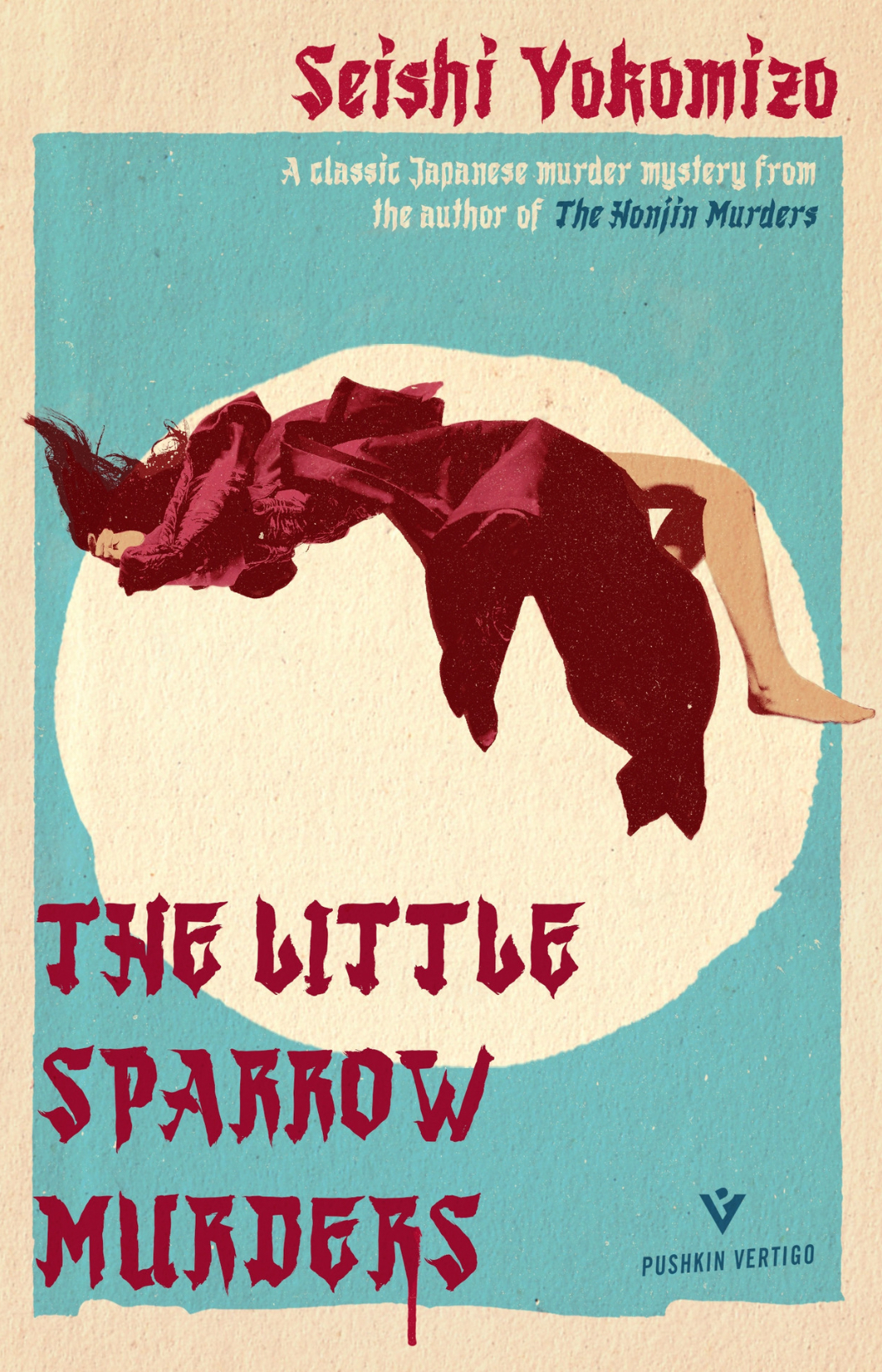
Good reading: The Little Sparrow Murders by Seishi Yokomizo (1902-1981). His detective in this novel, Kosuke Kindaichi, is eccentric, as I have found him in several other novels from a very long and permanently popular series. The action takes place in a village somewhere in rural Japan in 1955. The suspense builds as a series of murders baffle the local people and all of the professional detectives involved in trying to solve them. 

Kindaichi’s appearance conceals his brilliance, as witnessed by his colleague: “Inspector Isokawa looked at his friend, who, as usual, appeared dishevelled in his tired white-and-indigo kimono, which he wore with a pair of threadbare summer hakama.” This description also hints at the preponderance of details from Japanese life that may seem challenging to the modern American reader — but these details create a wonderful traditional atmosphere in post-war Japan. In my opinion, it requires patience and determination to read these novels — but it’s worth doing.


At the beginning of the novel, as is usual with many Japanese translations, the editors supply a list of characters in the village where the action takes place. In this novel, the list has 30 of them, grouped by families; most of the families have more than one identifying name. Also included: the names of several policemen and the detectives, including Kosuke Kindaichi, who is the principal character in the numerous novels in this series.

The breadth of descriptions and variety of personalities in the story create a vivid picture of village life — as experienced by the non-local detectives. I find this fascinating (as always in this series of books). I especially liked some of the food scenes, for example:

“It had already gone eleven o’clock by the time Kosuke Kindaichi and Inspector Isokawa stepped out of the bath and sat down to a hearty breakfast. The meal was comprised of miso soup with nameko mushrooms, salt-grilled salmon, stewed vegetables, and an egg each—and although it was an altogether simple affair, the delicious miso soup filled their empty stomachs.”

Other details involve the geography of this small place: in fact, the solution to the mystery, as of course reasoned out by Kindaichi, involves much trekking around on foot and on bicycles. The reader is offered a great amount of information about how the various houses and farm buildings (especially a winery where a terrible sour wine is made) are placed. 

The map is essential: 

A map of the village where the action occurs. 


The novel includes many examples of Japanese culture, such as a scene near a statue of the folk god Jizo.
I was quite intrigued and googled for images of this child-like god, who wears little clothes that people make for him.

Seishi Yokomizo (1902–81) was a famous and much-loved Japanese mystery writer, and Detective Kosuke Kindaichi -- who appears in many of the author's other novels -- has been in a variety of TV shows in Japan, and even in video games. The novels are currently being republished: this is a recent edition, published last fall. All those I have read are great for suspense, clever plotting, character development, and depictions of a now-lost culture from the mid-20th century.

Blog post© 2025 mae sander

Sunday, July 06, 2025

Weekend Fun

French Detectives

“Murder In…” — a very long series that we just started.

“L’Art du Crime” — sometimes far-fetched, but usually fun.

Both of these series have subtitles, of course, but I can still sometimes understand what they are saying in French. Both have tons of local color! French provincial towns and cities or Paris and the Louvre. All great to see.

Celebrating the Fourth of July


More Fireworks Photos


I love fireworks! So glad for this unofficial display in our local park.

Saturday Afternoon Ride in the Countryside

The corn is growing in the fields not far from our small city.

Reading fiction and essays 

Homage to Kafka: Ten Short Stories

a cage went in search of a bird

I can’t read all these stories one-after-another, the way I read a regular anthology, because the writers were doing homage to Kafka. Therefore most of the selections are very weird, surreal, and frightening. Characters are trapped or they are uncomprehending, or they are desperate to control their own circumstances which have gotten away from them. The fear and dislocations expressed here seem to outdo Kafka, whose 100th death anniversary they were written to celebrate — he died on June 3, 1924. Some of the stories seem more like Italo Calvino than like Kafka because they are not only surreal but they double back on themselves in a self-referential way.

If somehow you decide to read this collection, consider yourself warned!

Homage to Nobody: Essays by Rebecca Solnit

Essays by Rebecca Solnit: all written before the current administration took over.

The world was already becoming strange and disastrous when these collected essays were written a few years ago, many during or just after the pandemic. The book was published in 2025, but the author’s position of cautious optimism about the future of a number of issues (even climate change) and about the possibility of political action to mitigate them seem depressingly retro. I can’t bear this optimism in view of this past six months of rapid decommissioning of positive endeavors of the US government and the replacement of responsible officials with lackeys who oppose the earlier policies and are only destructive.

The more I read these essays from the past, even with a few author’s notes written in 2025, the more I simply find them painfully obsolete. The small possible changes played up in Solnit’s essays are now obliterated by our newly powerful backwards-looking and kleptocratic government. The possibility, for example, that there could be some way to counter fossil fuel dominance has been utterly cancelled along with the defunding of most government-funded projects to overcome it and the re-empowering of the interests of the fossil fuel industry. Ditto social change. Ditto environmentalism. Optimism is now simply crazy.

The more I read, the more I find myself speed reading because Solnit’s rosy view that small changes will counter big trends has become so impossible. Virtually all positive actions for racial and social justice, environmental protection, higher education, and many other virtuous initiatives once taken by our nation have been brutally cancelled in just half a year by the new administration. Horrifying!

Some depressing quotes:

“A standard complaint of the right: the real victim is the racist who has been called a racist, not the victim of his racism; the real oppression is to be impeded in your freedom to oppress.” (p. 81)
  
“The Covid-19 pandemic was, like the climate crisis, a reminder that we are interconnected and that what we do as individuals and together affects the whole; that’s a scientific fact rather than a political position, but those who reject the facts treat them as political opinions (and in some versions of the libertarian worldview, everyone gets to have their own facts).” (p. 59)

“Of course, in the face of the climate crisis, sticking with the status quo isn’t an option. We either make the changes science has shown are necessary and engineering has made possible, or we let runaway change of the worst kind devastate people and places.” (p. 155) 

“All mining needs to be done with respect for the land and people in the vicinity, but the impact of mining for renewables needs to be weighed against the far more devastating impact of mining for and burning fossil fuel.” (p. 144) 

Don’t bother to read this book — it no longer speaks to our current situation, and there are much more important issues to think about! Of course I hope that some miracle will stop the current effort to create a totalitarian and anti-progressive government in Washington, but I have no rational reason to expect this outcome.

Quote for Today

“More than 80 years ago, as France was under occupation and repression, America welcomed exiled researchers, offering them a helping hand and allowing them to keep science alive. And now, in a sad reversal of history, some American scientists have arrived in France in search of a space for freedom, thought and research.” — Ã‰ric Berton, president of  Aix-Marseille University, quoted in the Guardian.

Sunday Morning In My Garden 


Blog post © 2025 mae sander

Friday, July 04, 2025

Critters, Art, and Happy 4th of July

A chipmunk lives on my porch  (or maybe a few of them). He resents us when we sit out there.
He often perches on the railing when we are not bothering him.


A Carolina Wren has a nest on Nat’s windowsill. (Photo by Carol/Nat)

Penguins! Alice found this graffiti in Paris.

Another Paris Mona Lisa from Alice and Evelyn.


From my friend Roberta who is also in Paris.

Random web Mona. Something to do with AI.

Another graffiti from Alice. This one is in Strasbourg. 

New murals at the Stravinsky Fountain in Paris. Photo by Evelyn.


Woodworking


Len has been working with new tools and a variety of wood — poplar, maple, and oak — recently. The three boxes in the photos are the very useful results of his project.

Happy Fourth of July!


“The Flag is Bleeding” by Faith Ringgold (1930-2024).
On this July 4th, as I did last year, I have both patriotic and pessimistic feelings.

Update: fireworks this year.


How Happy?

An example of what we have to lose from our government’s policies.

Illustrating why we should fear for our democracy and institutions that we cherish, here's a quote from Michael Roth, president of Wesleyan University, posted on Robert Reich's Substack:

Under pressure from the Trump administration, the University of Virginia’s president of nearly seven years, James Ryan, stepped down Friday, declaring that while he was committed to the university and inclined to fight, he could not in good conscience push back just to save his job.

The Department of Justice demanded that Ryan resign in order to resolve an investigation into whether UVA sufficiently complied with Trump’s orders banning diversity, equity, and inclusion.

UVA dissolved its DEI office in March, though Trump’s lackeys claim the university didn’t go far enough in rooting out DEI.

This is the first time the Trump regime has explicitly tied grant dollars to the resignation of a university official. It’s unlikely to be the last.

The New US Budget

While I have been writing this blog post, the US House and Senate passed a bill that will cause suffering and death throughout our country and the world, while enriching the already rich members of our society.
  • This bill defunds much of the Supplemental Nutrition Assistance Program, which helps feed people in need (source). Without the funding that has supported food programs and welfare programs in America, there will be men, women, and children going hungry. 
  • This bill reduces benefits from Medicaid, which provides healthcare to low-income and disabled Americans, cutting $1 trillion from its funding: 11.8 million more people are predicted to be without health insurance by 2034 (source). 
  • This bill defunds many important global health initiatives. Without ongoing funding for programs to prevent and treat AIDS in the US and throughout the world, more people will be infected and victims will die: possibly an additional 6 million HIV infections and 4 million Aids-related deaths by 2029 (source). 
  • Environmental programs have also been cut or eliminated. 
  • Because of tax cuts for wealthy Americans, this bill will add billions of dollars to the National Debt. 
Sadly, I am thinking about these terrible consequences of the new budget as we celebrate our most patriotic holiday.

“Today, Donald Trump and the Republican party sent a message to America: if you are not a billionaire, we don’t give a damn about you,” said Ken Martin, the Democratic National Committee chair.

Blog post © 2025 mae sander
Shared with Eileen’s Critters, Deb’s Sunday Salon, and Sami’s Murals.

Wednesday, July 02, 2025

Walking around My Neighborhood This Morning


Our house with our wonderful hydrangea bushes.


Photos © 2025 mae sander


Living Rivers

“One way to stop seeing trees or rivers or hills only as ‘natural resource’ is to class them as fellow beings – kinfolk. I guess I’m trying to subjectify the universe, because look where objectifying it has gotten us. To subjectify is not necessarily to co-opt, colonize, exploit. Rather it may involve a great reach outward of the mind and imagination. — Ursula K. Le Guin (2017)” Quoted in: Is a River Alive? by Robert Macfarlane, p. 45.


I have read two of the three major parts of this book. At first, I found author Robert Macfarlane too exaggeratedly poetic and pretentious in the way he discussed natural history. I was not convinced by his over-the-top rhetoric about “living” rivers. However, when he came to specifics, about the rivers of Ecuador and about the Ganges River in India, and when I began to understand exactly what he meant by seeing a river die, I found much to interest me. Here is a quotation that illustrates the perspective that I find useful:

“Both the Ganges and the Yamuna have their sources in the glaciers of the Himalayas: the Ganges at the Gaumukh, or snout of the Gangotri Glacier; the Yamuna further west at the Yamunotri Glacier. The Yamuna flows south to Delhi, before bending eastwards through Agra and past the Taj Mahal, to unite with the Ganges – and, supposedly, the mystical underground Saraswati river – in the city of Prayagraj (formerly Allahabad). Until it reaches Delhi the Yamuna is a life-bringing river, who carries in its cold blue waters the memory of its glacial birth. In Delhi, it becomes one of the most polluted waterways in the world. Oxygen content collapses to near zero. About the only life is extremophile bacteria – and the thousands of pilgrims who bathe in the waters of the river each year, believing it will spare them from hell in the afterlife. Many of these water-worshippers emerge from their baptism covered in toxic river-sludge. Further downstream, where the Yamuna flows past the mintcake-white, hyperbolic love-token of the Taj Mahal, its waters are oily-black and rancid. For the Yamuna, as elsewhere in India, holiness does not equal cleanliness.” (p. 190)

In sum, this book held my interest for two of the three parts, and I may return to read the last part. The human dependence on rivers is profound, and ancient, and worth thinking about. I found it strange that the author missed two great writers whose works would be relevant: Langston Hughes (quoted below) and Henry David Thoreau on the world’s watery identity.

I do love seeing rivers!

Rivers I Have Seen

The Seine, from Evelyn who is in Paris this week. When we lived there for a time,
I walked along the quays many times.

The Huron River last Saturday.

The Mississippi River in 2024.

The Thames River with historic bridges and landmarks, 2016.

The Isis River in Cambridge, England from our trip in 1999.

Langston Huges: A River Poem

The Negro Speaks of Rivers

I’ve known rivers:
I’ve known rivers ancient as the world and older than the flow of human blood in human veins.

My soul has grown deep like the rivers.

I bathed in the Euphrates when dawns were young.
I built my hut near the Congo and it lulled me to sleep.
I looked upon the Nile and raised the pyramids above it.
I heard the singing of the Mississippi when Abe Lincoln went down to New Orleans, and I’ve seen its muddy bosom turn all golden in the sunset.

I’ve known rivers:
Ancient, dusky rivers.

My soul has grown deep like the rivers.

Blog post © 2025 mae sander