Showing posts with label Elly Griffiths. Show all posts

Tuesday, May 19, 2026

The Zig Zag Girl by Elly Griffiths


Magicians on stage know how to make their viewers imagine that magic is taking place. In Elly Griffiths’ novel The Zig Zag Girl, the backstage real life of the magicians is a bit sordid, which affects one’s view of how they mystify their audience. I enjoyed reading this portrayal of the illusion and reality and of the egotism that goes into performance. 

Against this exotic theatrical background, there’s also an exciting plot — violent at times. The main action takes place a few years after World War II, but the characters are constantly harking back a few years to a time when they participated in a deception to support the war effort. The author’s summary:

Magic, murder and a mystery rooted in a murky wartime past. Meet DI Stephens and Max Mephisto

Brighton, 1950. When the body of a girl is found, cut into three, Detective Inspector Edgar Stephens is reminded of a magic trick, the Zig Zag Girl. The inventor of the trick, Max Mephisto, is an old friend of Edgar’s. They served together in the war as part of a shadowy unit called the Magic Men. Max is still on the circuit, touring seaside towns in the company of ventriloquists, sword-swallowers and dancing girls. Changing times mean that variety is not what it once was, yet Max is reluctant to leave this world to help Edgar investigate. But when the dead girl turns out to be known to him, Max changes his mind. Another death, another magic trick: Edgar and Max become convinced that the answer to the murders lies in their army days. When Edgar receives a letter warning of another ‘trick’, the Wolf Trap, he knows that they are all in the killer’s sights.

This is a very entertaining spy novel!

Review © 2026 mae sander 

Saturday, March 23, 2024

Miss Marple Carries Her Purse (I mean Handbag)

Agatha Christie’s Miss Marple in the BBC series from 1987.
I love the way she carries her handbag! 
Corrected because it’s been pointed out to me that in England it’s a handbag, not a purse.

Joan Hickson (1906-1998) is my favorite portrayer of Miss Marple, the seemingly invisible old lady in Agatha Christie’s detective novels who always figures out who committed the crime, how they did it, and why. Joan Hickson’s acting suggests that Miss Marple was dotty and did not know what was going on — but meanwhile she was observing everyone and figuring out their motives and methods. The character’s sharp grasp of human nature was developed by watching the people in her little town, Saint Mary Mead, where she classified her fellow inhabitants by their type, and applied these observations in her successful career as a clandestine detective.


“At Bertram’s Hotel,” based on the 1965 novel.

“At Bertram’s Hotel” takes place at a hotel in London, beginning as Miss Marple and several other people are checking in at the counter in the beautifully retro hotel lobby, full of comfortable leather arm chairs, a fire burning in a fireplace, and lots of uniformed servants. Guests are constantly having tea with wonderful traditional sweets like “seed cake” — a dryish caraway-flavored cake whose popularity dates to the 18th century (source).

Miss Marple mentions that as a child she had once stayed at Bertram’s with her aunt — and that nothing has changed there since that moment. Watching this drama, you are thus aware of at least three eras in the past: the 1980s when the series was filmed, the 1960s when the action takes place, and perhaps the pre-World-War-I era when Miss Marple remembers her first visit there. Very amusing!

Ultimately, Miss Marple realizes that the retro atmosphere is faked, like a magician’s misdirection, concealing a deep criminal plot, and also becoming the scene of a crime of passion. She helps two police detectives to bring the criminal gang to justice, and solves the other mystery as well, ending with the statement:

“I learned what I suppose I really knew already — that one can never go back, that one should not ever try to go back—that the essence of life is going forward. Life is really a one way street, isn’t it?”


This week we also watched two other dramatizations of Miss Marple novels, both with Joan Hickson.

I also read one volume of an Elly Griffiths series,
The Vanishing Box It’s not as good as her Ruth Galloway books.

It’s definitely been a week of mysteries!

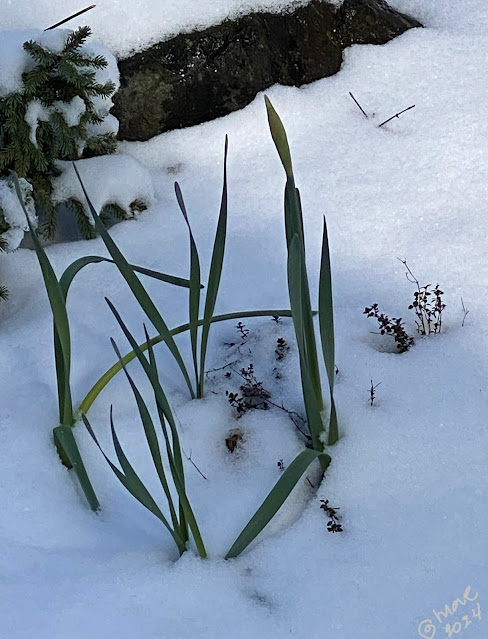
Winter is back. Poor daffodils!


Blog post © 2024 mae sander


Saturday, May 06, 2023

Elly Griffiths Says Goodbye


Elly Griffiths is the author of fifteen novels about the forensic archaeologist and amateur detective Ruth Galloway. I've now read them all! And I'm disappointed to learn that Griffiths is sunsetting the series -- at least for now. She writes:

"I’ve been so touched by the way that people have taken Ruth to their hearts. At first, I wasn’t sure if readers would take to a slightly grumpy, unglamorous heroine who frankly prefers cats and books to people. But Ruth seemed to touch a chord and I regularly get messages from readers who love her company and that of DCI Nelson, Cathbad the druid and the rest of the cast. This was particularly moving during lockdown when many people told me that Ruth and co. had kept them company through months of isolation. So, when I announced that Book 15 would be the last book (for now), I knew that some devotees would be upset. I wasn’t prepared, though, for the avalanche of messages on social media talking about bereavement and betrayal. ‘I’ll never forgive Elly Griffiths’ was a common line. ‘Please reconsider,’ begged others.

"But I thought it was time for the series to come to an end. ‘For now’, as I kept emphasising. This was my instinct as a writer. There is an on-going ‘will they, won’t they’ love story in the books and, with the best will in the world, there comes a time when you have to say whether they will or they won’t. Readers will find out in Book 15, The Last Remains (the clue is in the title)." (source: Elly Griffiths on Knowing When to Say Goodbye)

I read this farewell statement before I bought the final volume in the series, so I decided to give Ruth (and Elly) a good farewell. Over the last few years I've been enjoying a slow read through all of the novels, though I did not review every one of them on the blog. I read Books 13 and 14 earlier this year. This week, in preparation for the last one, I reread the first Ruth Galloway novel, titled The Crossing Places, and I reread Book 14, titled The Locked Room, which is a remarkable tale of the covid epidemic in the spring of 2020. In retrospect, I loved the way Book 1 introduced so many of the characters that appeared repeatedly in the series, especially the very eccentric Druid whose nom-de-guerre is Cathbad.

Both times I read The Locked Room I found myself reliving the eerie experience of lockdown and the knowledge that hundreds of people were dying of the new, dangerous virus while everyday chores such as shopping and cooking became more and more difficult, and seeing anyone outside one's household was unpardonable and dangerous. Griffiths really captured that in the experience of Ruth, while still creating a suspenseful plot. As in all the books, I find the central characters colorful, the guilty criminals often satisfyingly creepy, and all entirely enjoyable to read. The setting of Ruth’s life in the marshes near King’s Lynn, England, is always leveraged in imaginative ways, as well as the academic setting where she works, with its department politics and various good and evil characters, and the technical and human details of her work as a hands-on archaeologist.

This statue of a civic hero in Ruth’s town of King’s Lynn was enhanced
(or in some opinions, defaced) by the famous street artist Banksy in 2021.
The city fathers quickly removed Banksy’s addition. Ruth’s town in the news!

Unlike many detective and police series where the characters never age or change much (they just solve one crime after another), it’s an interesting feature that Ruth Galloway ages one year for each book, as does her daughter Kate, who is born in Book 2 and goes through the baby, toddler, early schoolchild, and now early adolescence stages. In The Locked Room, Ruth’s experience being shut in with Kate and having to home-school her while continuing her own university teaching job struck me as especially real and pressing. The near-death covid experience with one of the main characters (whom I won’t spoil the book by naming) was also very emotional and beautifully written.


The Last Remains, Book 15, is for now the last Ruth Galloway book. I found that it maintained the excellent quality of plot, characters, local color, and suspense that kept me reading throughout the series. Each of the books advances Ruth’s relationships with the other characters, especially her very insecure romance with Harry Nelson, the policeman who investigates the crimes central to each plot, and who is also the father of Ruth’s daughter Kate.

In reading this last book, I also appreciated the character of Tony, a newer policeman in Harry Nelson’s department. Tony is Asian, and in the course of the investigation he visits his family home. When his mother, Min, offers him supper, he considers her cooking, and how it doesn’t meet the expectations of his peers who have always stereotyped him:

“‘I bet your mum’s a great cook,’ is one of the less offensive things people say to Tony. But, in truth, Min has never been keen on the labour-intensive dishes of her native Guangdong province. She was quick to embrace convenience foods, especially when she was training to be a nurse. Hao, Tony’s dad, was a better cook and, at weekends, would produce slow-boiled soup and shahe noodles.” (Book 15, p. 89)

Ruth, in contrast, is a bit stereotyped in her allergy to domesticity, and her workmanlike approach to chores like cooking. At one point, Nelson for the first time spends an afternoon and evening at her house with Kate, Nelon’s dog Bruno, and Ruth’s cat Flint:

“They are sitting in the garden, Nelson with a beer and Ruth with a glass of red wine. Kate is upstairs in her room. Bruno is lying panting on the grass. Flint is watching from the lower branches of the apple tree, looking like the Cheshire Cat. It’s domestic bliss, of a sort. There’s even a casserole in the oven. Lancashire hotpot. Ruth took the recipe from a packet of stock cubes. She hopes Nelson will appreciate the northern connection.” (p.139) 

Nelson loves real British cooking, which he has always received from his wife Michelle. Here’s how he reacts when she has just come home from a stay at her mother’s house, and he enters to be greeted by Bruno the dog:

“But it’s not just the canine welcome that stops Nelson on the doormat. It’s the smell. Nelson is suddenly catapulted back through the years, a feeling that is both pleasurable and slightly dizzying. He’s a teenager coming home from football practice, he’s a DS in Blackpool and he can hear his children’s voices in the garden, he’s older but not much wiser, returning from a crime scene in King’s Lynn. All these memories are linked to the fact that someone inside the house is cooking shepherd’s pie.” (p. 274)

At an earlier point in The Last Remains Nelson and his wife, their adult daughters, and their very young son George go out for a Father’s Day dinner to an upscale trendy restaurant: I enjoyed the description of his reaction to the meal:

“Lunch seems to go on for ever. Nelson orders things almost at random but, when they arrive, they are unrecognisable, swimming in green sauce or arranged in a tower with berries on top. The girls say it’s delicious. So does Michelle although Nelson notes that she doesn’t eat much. George demands chips but the nearest thing the restaurant can provide are thin wafery things that, according to George, taste of poo. Nelson tries one and agrees with his son. He can’t be entirely sure that they’re not beetroot.” (p. 226)

I love the way Elly Griffiths uses food to portray the characters in these and numerous other snippets from her books! 

If you haven’t read the Ruth Galloway books, and if you like well-crafted mysteries, I recommend that you try them. I advise you to start at the beginning and read in order, because there’s really a lot character and relationship development in the stories. And until Elly Griffiths changes her mind and writes another book, we have to be satisfied that Ruth and Nelson’s relationship has reached a final point after all the many years of uncertainty.

Blog post © 2023 mae sander

Wednesday, April 26, 2023

Medieval Women Were Powerful!

Would it surprise you to learn that during the Victorian era, historians (all men) revised the historic record to support the theory that great men are the only important actors of significance in the past? It shouldn’t be a surprise — but it is definitely interesting to read a book about the actual details of the lives of the great women in Medieval times. The accomplishments and often the power and economic advantages of these women were denigrated or just erased from the historic works of the 19th century, and remained forgotten until fairly recently. Though she is not the first recent writer to restore them to the history books, their portrayals make a very interesting subject for Janina Ramirez’s recent book. 

Femina: A New History of the Middle Ages Through the Women Written Out of It
by Janina Ramirez. Published 2022.

Ramirez begins most of the chapters in the book with a description of a modern discovery or event that relates to the medieval woman featured in the chapter. For example she might present an archaeology dig that was done under an old English shrine, a revealing DNA test of a seemingly male Viking woman’s skeleton, the issues involved in restoring the Bayeux Tapestry, or even the discovery of a copy of a lost medieval book in a closet in an English country house. She then usually describes a scene in the medieval town where the woman lived or an event they experienced, for background. She continues with a portrait or biography of the featured woman and her life circumstances in as much detail as is historically available.

An archaeology dig often reveals a skeleton or an artifact linked to a fascinating story of a women's life in the early Middle Ages. Sometimes as I read I was thinking about Ruth Galloway, the fictitious archaeologist and amateur detective in the long series of books by Elly Griffiths. Ruth Galloway lives, digs, and detects in the town of King's Lynn, which also happens to be the home of one of the women featured in Femina: the writer and mystic Margery Kemp (b. 1373), “an ordinary married woman, mother to fourteen children.” Ramirez convinces me that such discoveries are much richer than the fictional ones. She makes the reader see the unexpected parts of history, the parts about women and their vigorous and active role in the times when they lived, and especially the way they traveled. Margery went all over, even to the Holy Land!

I was fascinated by several of the subjects of Ramirez's book, especially the Viking women who sometimes dressed as men and may have been warriors, and of several other women who overstepped the expectations for women of the time. I. have written summaries below of a few of the places and people I learned about while reading Ramirez's book, illustrated with some of her pictures. The Kindle edition has only black and white images, but I've found colored versions on the web, because color is often important in her descriptions. I've only excerpted a very small part of each of these discussions, and only chosen a few of the many fascinating portraits in the book.

The Lichfield Angel

"The Lichfield Angel"

This is a limestone carving of an angel dated 800 CE, excavated in 2003, from the shrine of Saint Chad (d. 672), first Anglo-Saxon Bishop of the Mercians of Lichfield. The town of Lichfield was very briefly important in the 8th century, in the reign of King Offa and Queen Cynethryth of Mercia, one of the English kingdoms in the era before William the Conqueror.  The angel was found in an archaeological exploration underneath the modern shrine in 2003. Ramirez uses the sculpture as an example of the fine craftsmanship of the time, pointing out that traces of color on the stone show that sculpture then was painted, not left white. The style echos classical art that was still a big influence in this era. Offa and Cynethryth perceived themselves as cultural rivals of Charlemagne, then the ruler of much of Europe.

The Bayeux Tapestry


The Bayeux Tapestry is in fact a work of embroidery, not tapestry, which is made by weaving. The work "is an extraordinary medieval survival, depicting the events leading up to the Battle of Hastings of 1066, culminating in William the Conqueror’s defeat of King Harold." (Femina, p. 132). While it is held in the city of Bayeux, France, it was probably made in Canterbury, England. Its huge size shows that it had to be embroidered by a team of women working together to a central plan. Ramirez discusses the work from a variety of points of view, both as a work of women’s art, a historical document, and a former decoration for a very large cathedral. A reconstruction of how it looked in the church is shown above. Ramirez also discusses one panel of the textile:
 
Queen Edith at the deathbed of her husband, Edward the Confessor.
From one panel of the huge Bayeux Tapestry. Edith is the only identifiable woman portrayed in the work.

Queen Edith survived her husband and managed to retain wealth and power despite the death of her brothers and the conquest by William the Conqueror. She commissioned a book about her late husband and her family, and may have also been at least partly responsible for the creation of the Bayeux Tapestry, which is a highly important source of information about the era. Her early life: she came from a rich and powerful family, and is compared to an earlier powerful woman named Emma:

"Edith was a patron of the church and of the arts. She gave lands to the abbey in Abingdon and the see of Wells, and sponsored artists in her role of tending to the king’s regal presentation. She commissioned items of clothing and jewellery, keeping a goldsmith as one of her tenants. Through her expansive land-holding, ruthless decision-making and political engineering she overtook Emma, becoming by the time of the Norman Conquest the richest woman in England and the fourth-richest individual after her husband, her brother and the Archbishop of Canterbury." (Femina, pp. 165-166). 

After the conquest:

"Edith spent most of the latter part of her life in her dowry city of Winchester, where she had access to manuscript art, and at Wilton, where a team of skilled embroiderers could have been developed. She is recorded as having been an excellent embroiderer herself and certainly knew a good deal about working fine fabrics, since she commissioned and oversaw the production of high-status clothing for her husband. She was also witness to scenes depicted on the tapestry and would have had first-hand accounts of the battle in which she lost three brothers – all of whom are memorialised in its stitches. The events of 1066 were incredibly disruptive for English women, many of whom lost male relatives and lived in fear of being forcibly married to Norman incomers. The number of nuns swelled as women sought sanctuary in convents. This would have provided Edith with a growing body of skilled, dedicated embroiderers capable of completing a project as demanding as the Bayeux Tapestry. The argument is compelling, but once again, it is not possible to say with any certainty that Edith was involved in the creation of the tapestry. True, she is the only identifiable woman stitched onto its scenes, and she had good reason to produce it. But the arguments in favour of Odo as patron remain strong. Ultimately, all we can confidently deduce is that her influential position means she was capable of such an undertaking, and reminds us that eleventh-century women could be patrons and producers of art. Emma, Edith and the women who embroidered the Bayeux Tapestry played a large but mostly uncredited part in the male-orientated accounts of dukes." (pp. 167-168).  


Saint Jadwiga's Purse

Purse made in France in 1340, used for alms by Saint Jadwiga of Poland.
The front and back of the purse illustrate part of the story of Tristan and Isolde.

Where artifacts exist, Ramirez tells us about them and about their significance. Jadwiga (or Hedwig) was "the one and only female ‘king’ of Poland. In fact, she and her sister Mary, who was declared King of Hungary, are two of the only women in Europe to have held the title of ‘Rex’ rather than ‘Regina’. But Jadwiga has been misunderstood, misrepresented and misused down the centuries." (p. 246). Her beautiful purse is held in the Wawel cathedral of Kraków. Ramirez views Jadwiga's life story as it is related to the chivalrous tale of Tristan and Isolde. Here is this real-life tale:

"Jadwiga’s love life has all the elements of a tragic romance. As a toddler she’s told she will marry William, heir to the Austrian dynasty. At five years old, she takes part in a glorious chivalric ceremony where her eight-year-old fiancé declares he will marry her in front of the most important leaders on the world stage. This was no doubt a terrifying situation for a young girl to find herself in, but the glamour, riches and ritual could not have been lost on her. The knowledge that she would eventually marry this boy dictated her early years. She lived in his court in Vienna, developing into an educated and courtly child, fluent in many languages and educated in matters of church and state. She read romances, in which beautiful princesses fell in love with powerful knights and pursued an idealised courtly love which morally enriched both parties. But after her father’s death everything changed. She could only become King of Poland if she became a resident of Kraków and accepted her advisers’ choice of husband. And they had their eyes on someone else." (pp. 255-256).

Political considerations made the nobles of Krakow prefer for this female heir to the throne to marry Lithuania’s Grand Duke Jagiełło. However, before they can be married, William shows up to claim his betrothed, and she forces her way out of the castle: 

"Having escaped her watch, the teenage Jadwiga reunited with William and the couple danced together one last time in the refectory of St Francis’s Monastery in the city. But ultimately Jadwiga turned him away, choosing instead to follow the advice of the decision-makers of Poland." (p. 257). 

Jadwiga's life after she eventually married Jagiełło involved politics, wars, and above all overseeing the conversion to Catholicism of his still-pagan land, Lithuania, and the subduing of the order of Teutonic Knights who had been trying to convert them violently. After a somewhat wild youth spent as a famous part of a romantic triangle, she became a devout Catholic, and continued to be admired and supported in her efforts by the Pope, and she founded various church institutions in Poland, and did many other things while reigning as King of Poland. Objects that she used or donated to the church include the purse, a manuscript, and a famous large cross that still hangs in the cathedral. She lived only to age 26, and died in 1399, shortly after giving birth: death as a result of childbirth was excruciatingly common for women in that era.

The piety and success that Jadwiga exhibited in promoting Catholicism was the motivation for her being made a saint in 1997 by Pope John Paul II. The story of how her identity and memory have been used and manipulated by Polish patriots and other political actors in history is complicated and her sainthood is a kind of culmination of many such factors, but her actual life is much more interesting, as shown in Ramirez's account.

Overall, a Good Book!

There are so many stories about women in the Middle Ages, how they lived, how they were remembered over time, how they were forgotten or their stories repressed, and how they have been rediscovered in our time. And I didn’t even get around to the Viking women, who were so wonderfully colorful and lived such daring lives.

                                                                                    Blog post/review © 2023 mae sander.

Saturday, March 25, 2023

My Current Reading

Two Comic Novels


Jesse Q. Sutanto has written two very funny easy-reading books about an Indonesian-Chinese family who live in Los Angeles. A lot of the humor is good-natured depiction of Meddy, the narrator (a young graduate of the California University system) and her mother and mother’s sisters, whose varying degrees of understanding of American language and culture result in a variety of comic mishaps. 

I’ll just offer one or two brief quotes from Dial A for Aunties, and say that the plot is suspenseful and not to be taken too seriously. I am trying not to overthink the fact that a young man, though not of good character, ends up dead, and there’s no sympathy for him at all, he’s just a body to be disposed of.

Here is an example of the family dynamic showing up at a Dim Sum restaurant:

“‘Eat more, Meddy. You should keep your strength up for tomorrow,’ Big Aunt says in Mandarin, plopping two pieces of braised pork ribs on my plate while I carefully place dumplings on everyone else’s plates and pour them tea. Second Aunt cuts the char siu baos into two each and places one half on everyone’s plate. The table being round means all the dishes are equally within reach of everyone, but Chinese family meals aren’t complete without everyone serving food to everyone else, because doing so shows love and respect, which means we all need to do it in the most attention-seeking way possible. What’s the point of giving Big Aunt the biggest siu mai if nobody else notices?” (p. 9)


The second book, Four Aunties and a Wedding, is if anything funnier than the first. Meddy, the narrator, is marrying her lifelong love Nathan, and the wedding is being held in Oxford, England, where his parents live. As they meet these very proper Brits, the cultural confusion of the aunties is amplified because they try to speak not only American vernacular but British slang. No one gets killed in this one, which makes me like it better. Again, this little book is not to be taken seriously!

At a very formal meal at the beautiful English home of Nathan’s parents, her auntie embarrasses her in various ways: 

“As we help ourselves to the feast, I catch sight of Big Aunt dipping into her handbag. Oh no. I already know what she’s going to get before she even takes it out. It’s like I’m moving in slow motion. I reach behind Second Aunt to grab Big Aunt’s hand, but I’m too late. The bottle of chili sauce is placed on the table with an earth-shattering thunk…. 
 
“This is why I can never take my family to nice restaurants. I’ve tried explaining countless times why it’s rude to bring your own chili sauce to restaurants or other people’s homes, but they just don’t get it. ‘In Indonesia, everybody bring their own chili sauce everywhere,’ Ma would say. ‘Why you call that rude? Is just practical. Everybody like different kind of chili, if host is good, host will provide all the different brands. But we be understanding, don’t put that kind of pressure on host. We bring our own.’” (p. 52-53)

Sutanto is a new author to me. I read a review of her most recent book, Vera Wong's Unsolicited Advice for Murderers, in the Washington Post (here) and thought I'd see if I liked her older books. Now I might read the new one too!

Two Serious Books 


Back to serious reading, I chose Poverty by America, a very recently-published and much admired study of poverty in the US, and strong advocate for rethinking how racism and fear or hatred of poor people affect our national policies. The book studies the expensive, and rather ineffective ways that America fights poverty and proposes ways in which our nation should create new attitudes and methods to achieve more economic and racial justice. 

The topic of poverty in American life  is a very popular one, constantly under discussion in newspaper op-eds and feature stories. Why does poverty in our country seem so intractable? It’s growing, not shrinking, despite more and more federal money being spent on a wide variety of programs to help the poor. The reason the author finds for this depressing result is that while the richer Americans receive huge benefits in the form of tax breaks and subsidies, they do not acknowledge the privileges and advantages they receive. A number of factors, especially including racism, also provide them with a motive to oppose changes.

All the reviews find Matthew Desmond’s analysis to be very penetrating. Beyond analysis, he also strongly advocates for reform to the system, by a number of means. I don’t think the reviewers have fully discussed his proposed changes to our society, such as better wages for working poor people, affordable housing integrated into richer neighborhoods, and better education through less segregation by wealth and by race. One quote:

“The majority of Americans believe the economy is benefitting the rich and harming the poor. The majority believe the rich aren’t paying their fair share in taxes. The majority support a $15 federal minimum wage. Why, then, aren’t our elected officials representing the will of the people? This we must demand of them.” (p. 188)

And now a book on a completely different topic: Ten Birds That Changed the World. A review of this book sounded so fascinating that I didn’t even wait for publication in the US (scheduled next September), but I ordered a copy from England! I’m glad I did because the book is both fun to read and also very enlightening.

Each of the ten species of birds mentioned in the title has its own chapter. Each of these chapters covers an era of human history and many topics, mostly connected to the relationship between humans and birds. Specifics include how humans have affected the lives of birds, learned from birds, worshipped birds, profited from birds (especially in the case of the cormorant that produces guano), and repeatedly extinguished entire species of birds (especially the dodo, but also many others). The final chapter, whose bird is the emperor penguin of Antarctica, contains a strong analysis of how human actions have led to a climate crisis which threatens the penguins and quite a few other bird species directly, and which threatens all bird life and ultimately all human life with extinction.

What I'm Reading Next

This is the 13th in the Ruth Gaolloway series
by Elly Griffiths. I've read numbers 1-12.

... and I Read the News Every Day


Reviews © 2023 mae sander.


Thursday, June 02, 2022

Recent Reading

My recent reading has not been at all ambitious! I read The Chalk Pit, continuing my reading of the Ruth Galloway series by Elly Griffiths. I read The Typhoon Lover, continuing the Rei Shimura series by Sujata Massey. At the recommendation of a neighbor, who loaned me the book, I read Slow Horses, the first in author Mick Herron's series about British espionage agents. These were all fun to read but I don't have anything particular to say about them. As always, I am on the lookout for interesting references to what the detectives eat and why they eat it at that point in the story -- does it help build suspense? OR diffuse tension? Or just reveal a bit about their personalities?

The Chalk Pit by Elly Griffiths


Ruth Galloway, the amateur detective in this series, has a domestic life as the single mother of a daughter, who was born in the first book in the series, and in this one is now six years old. Ruth has a successful career as an anthropologist and consultant to the police, and has many friends and connections. However, she's neither a cook nor a gourmet, and the food in the novels is of a more ordinary sort. My favorite food mention in The Chalk Pit is from a character who runs a mothers-and-children group who says 

"There’s hell to pay if I don’t open the Jaffa cakes." (p. 90). 

If you haven't tasted Jaffa Cakes, you should -- they are very popular orange-filled cookies made by the British cookie company called McVitties. The mothers-and-children group was surprisingly important in the mystery. The amateur detective, Ruth Galloway, isn't much of a cook, but food manages to highlight various events in every novel.

The Typhoon Lover by Sujata Massey

Amateur detective Rei Shimura in this series is anything but domestic! Her adventures in The Typhoon Lover occur against a background of her love affairs with two men, one in Tokyo and one in Washington, D.C. Rei doesn't cook, but in every book she enjoys excellent meals, both Japanese and American.

There's lots of food in The Typhoon Lover! I especially liked this: "I knew that okonomiyaki, the delicious Japanese savory pancake, was as essential to the survival of Waseda’s students as pizza was to American undergraduates." (location 2943, Kindle edition) The history of this dish is very interesting -- it was invented after World War II, partly to use available ingredients in a time of scarcity. Now the dish is so standard that of course the book makes no reference to this history.

Rei's Aunt Norie Shimura, who lives in Yokohama, is a model of a good Japanese wife and great cook, as well as an expert at Japanese flower arranging. Norie impresses Rei with her skills in almost every book. In this one:

"Eight o’clock was about the right time to telephone Aunt Norie, who would have already given breakfast to her family. The Shimuras usually breakfasted together, no matter what. My aunt was the kind of cook who made miso soup and rice fresh every morning, and would present enough pickled vegetables and fish alongside it to make you think you wouldn’t need another meal that day." (Location 1473)

Slow Horses by Mick Herron 


Food in Herron's Slow Horses is a little more incidental to the action, though it definitely contributes to the atmosphere of a spy story, and maybe provides a bit of a distraction from the bodies that pile up as the novel proceeds. Among the numerous characters who work at a bureau of the official London spy agency, not one has a domestic life -- all loners or losers. In fact, they have been demoted from the central bureau of the spy agency because of a big mistake they made, or because they have been set up by rivals, and in some cases that's why they lost their more conventional family lives. Most of them are rather stereotyped, especially the Asian computer genius named Ho who can break into ANY computer ANYWHERE and get the information that's needed for the action. (I think he's a better hacker than even Elizabet Salander, the girl with the dragon tattoo.)

Though the novel starts out very slowly with around 100 pages of introduction to the huge cast of characters, it gets pretty suspenseful in the later chapters. At one point, several of the secret agents gather in a cemetery -- just the place for a stereotyped British meal? Yes. An agent named Lamb was sitting on the rail surrounding a tomb and "eating a bacon sandwich. In his other had he held a second sandwich, wrapped in greaseproof paper." And all the other spies have to go hungry, especially feeling deprived when Lamb opens the greaseproof paper and eats a warm sausage sandwich! (p. 270)

Shortly after that, the group gets a perfectly predictable breakfast for an English spy novel. "They were in a café on Old Street: long and narrow with a counter along the window, and tables against a mirrored wall. Coffee had arrived, and breakfasts been ordered." Then the inevitable for morning in an English café: "Their breakfast arrived: three platefuls of the full English; one mushroom omelette." Ho forks up the beans. The woman who ordered an omelette slices it up and eats in a picky way. The author doesn't need to detail the rest: we know what's on their plates! (p. 282-285)

I'm sorry I haven't read anything more enlightening than mystery and spy novels lately, so I don't have anything very interesting to review. 

Blog post © 2022 mae sander.

Thursday, March 10, 2022

Recent Reading

All the time, I’m thinking about the war. I’m looking at news sites to see if there’s anything new (there isn’t). I’m feeling terrible for the suffering of the victims of Putin and his willing executioners. But I have to do something else, and that’s reading. As it stands here, I don’t really have the energy to review the last few books, so here’s a simple summary of what I’ve read. Every book is by an author that I already know and have read several of their books.

Julie Otsuka, The Swimmers.

The Swimmers is a hard book to read, because it's a remarkably penetrating portrayal of dementia, which I don't want to think about. There are some good memory parts, though, like memories of odors -- "She remembers the smell of incense and pickled cabbage in the kitchen." (p. 63).  Julie Otsuka is a wonderful writer, so her masterful prose makes up for her depressing subject matter, but if you want to read one of her books, I suggest that you start with The Buddha in the Attic or When the Emperor was Divine.

Louise Erdrich, The Night Watchman.

Louise Erdrich's characters, mainly native Americans, are really a pleasure to read about. I loved every individual in The Night Watchman, which takes place in the early 1950s. The locale is mainly on the reservation where the tribe's treaty rights are about to be revoked. The main plot line is how the members of the tribe, led by the main character named Thomas, peacefully challenge the government threat against them. The sub-plots are equally fascinating, about the struggles of very poor but proud and imaginative people against a variety of challenges. As I have with every one of Erdrich's books that I've read, I also loved the descriptions of the food the people cook and eat, and I love the occasional humor.

Arnaldur Indridason, Voices.

Although I enjoyed the local color of the Icelandic hotel in mid-winter where most of this novel takes place, the characters and events -- especially the murder at the center -- are all a bit too sordid and ugly for me to really like it. The previous two books in the series are also similarly extreme.

Elly Griffiths, The Woman in Blue.

Slowly, I'm working my way through the many books in the Ruth Galloway series by Elly Griffiths, watching the lives of the characters as they solve one murder mystery after another. I think I was more enthusiastic about the earlier ones, but they are a tempting distraction from reality, so I'll probably read more (and more).

Reviews © 2022 mae sander.
 

Saturday, September 25, 2021

Anthropology: Rice as Self

Katsushika Hokusai: woodblock illustration of a poem by the Emperor Tenchi Tenno (628-681).
The poem describes a sudden storm that forced the Emperor to shelter in a common rice farmer's hut.(
source

Was the Japanese Emperor a god? This turns out to be a fascinating question, because in Japanese belief, gods were quite different from gods in Western traditions. To understand the emperor's divinity, it's interesting to know that in former times in Japan, every grain of rice was also believed to be a god. The Emperor himself acted as a shaman: he played a role in various ceremonies and rituals to ensure successful rice harvests. While the Emperor is no longer seen as closely linked to the rice crop, rice remains a key to Japanese identity.
  
Rice as Self: Japanese Identities through Time by Emiko Ohnuki-Tierney is a challenging technical/anthropological  account of the many meanings and uses of rice in Japan over more than 2000 years. Here are some of the fascinating aspects of Japanese historical culture that I learned from this book.

Rice as Self. Published 1994.
In some parts of Japan, rice was the major source of nutrition, and elsewhere in Japan other grains like millet were more nutritionally important, as well as other foods. However, rice had a major role in the way everyone thought about food, no matter what their actual diet included. Even in modern Japan, where many other foods -- for example, toast and eggs for breakfast and KFC or American burgers for lunch -- are a major part of people's diets, rice has a significance that elevates it from ordinary food. Moreover, rice that is grown in Japan is vastly preferred, and the Japanese rice paddies are envisioned as a key feature of the Japanese landscape.

In fact, the word for rice is the word in Japanese for food. A serious meal, like a formal dinner, that doesn't end with at least a small portion of rice (or more) doesn't seem complete to traditional Japanese people. The importance of rice was diminishing in the years after World War II; in the 30 years since the research for this book was completed, its importance may have diminished even more, but the material in the book shows how significant it has been.

For most of Japanese history, until the industrialization of the 20th century, a large majority of Japanese people worked as farmers, growing many types of foods. The rice they grew was identified as the source of all wealth, both symbolically through folk tales and religious beliefs, and literally. Farmers paid their taxes in set quantities of rice. At the end of this time, as money, like coins, was in the process of being invented, oblong gold coins called koban were created with a value equal to a standard measure of rice. There was a belief that rice was always a pure currency, while money was often impure. Some circulating Japanese coins still have images of rice on them, recalling the connection of rice and wealth.


A Japanese 5-yen coin, mid-20th century,
showing a sheaf of rice.

Rice was beautiful to look at, in the aesthetic sense of Japan. Appreciation of this beauty was expressed in poetry and in art such as the poem illustrated in the woodblock print at the top of this blog post. Eating pure, white rice is the ideal, and the sight of rice being cultivated, gathered, and threshed is also appreciated: "Ripe heads of rice grain are described as having a golden luster." (p. 75) 
"As for the beauty of cooked rice, the most important characteristics are the related qualities of luster, purity and whiteness." According to the author Tanizaki Junichirō: "When cooked rice is in a lacquer container placed in the dark, shining with black luster, it is more aesthetic to look at, and it is more appetizing. When you lift the lid... you see pure white rice with vapor rising. Each grain is a pearl." (p. 76-77)

Rice fields also became the emblem of the changing seasons in Japanese art and literature, such as the autumn scene in the woodblock above, and many other such works by Hiroshige, Hokusai, and others. The author's discussion of rice in art before the westernization of Japan in the Meiji era (beginning in 1868) is especially fascinating: 

"The recurrent motifs of rice and rice agriculture in these woodblock prints represent not rice and rice agriculture per se but something far more abstract. At the most obvious level, they signal seasons of the year. Flooded rice fields... are the most familiar sign of spring or early summer... .Rice harvesting scenes, including sheaves of rice stalks... represent fall and its joyful harvest but also the end of the growing season.

"What is striking ... is that these cycles of rice growth have become markers of the seasons for all Japanese. For urbanites, fishermen, and all other nonagrarian people, life became marked by rice and its growth.

"At an even more abstract level, travelers are often depicted agains these agricultural scenes, suggesting that the scenes of rice and rice agriculture are a backdrop for an unchanging Japan, in contrast to the transient and changing Japan epitomized by Edo (Tokyo)." (p. 90)

Although Japan was not predominantly agricultural, and definitely not predominantly populated by rice farmers, rice culture became very intertwined with Japanese identity, "just as rice has been important for practically all Japanese, whether or not it was a staple food." 

There's much more to ponder in Rice as Self. I read it a long time ago, and I'm glad I finally managed to get back to it and read it again. 

UPDATE: for a modern version of rice in art see this: Japan’s Rice Art Festivals of 2021

 ... and a silly comparison 

Anthropology interests me, so I really enjoyed Rice as Self despite the dense technical and sometimes jargon-filled style and too-frequent, awkwardly inserted references to the author's sources. Ohnuki-Tierney, a real anthropologist, isn't anything like the fictional Ruth Galloway, the forensic anthropologist at the center of the easy-reading detective stories by Elly Griffiths. I'm reading them fast:  I reviewed The Outcast Dead last week, and read another in the series a few days ago. I bet Emiko Ohnuki-Tierney, unlike Ruth Galloway, is never threatened by strange old men with antique guns, and never chases down kidnappers or identifies murder victims the way that Ruth Galloway does. It's fun to do a lot of reading at very different levels.

Blog post © 2021 mae sander.

Monday, September 13, 2021

Another Ruth Galloway Novel: "The Outcast Dead"

"It seems that over the last three days they have done nothing but drink tea and watch television. The mere action of filling the kettle is comforting, giving the impression that something, at least, is being achieved. Liquid is reaching boiling point, hot drinks are being made. Setting out the cups, finding sugar for Darren, waiting for the water to boil; in those minutes Cathbad allows himself not to think, except about whether he should bring in a plate of digestives. Even being in a separate room is a relief. The kitchen, with its shiny new cabinets, is pleasantly sterile in contrast to the teeming emotions in the rest of the house." -- Elly Griffiths, The Outcast Dead  (p. 326).

Yes, tea for comfort, tea for distraction from frantic worry, tea to soothe difficult relationships or cement friendly ones. Ruth Galloway, main character of The Outcast Dead, habitually pours herself cups of tea at breakfast with her daughter Kate. After a minor car accident, "she doesn’t want to get into the whole ‘are you all right, have a cup of tea, are you sure you haven’t got whiplash’ thing." (p. 79). Drinking tea with her brother, whom she hasn't seen much of, brings them together. Her feelings about going out in the evening: "Even after a day in the sun, she’s longing to be home with a cup of tea. That’s what being forty-three does to you." (pp. 180-181). In stressful times and relaxed ones, everyone is always offering to make someone a cup of tea. 

I'm sure this is very natural and normal for any British mystery series, even though Ruth is a heretic when it comes to certain other institutions -- for instance: "She goes into the kitchen to make breakfast. She’s pretty sure that Simon will expect the full English. It’s a concept which... is almost entirely alien to her."  (p. 257).


The Outcast Dead
is book 6 in the series of police procedurals, featuring Ruth Galloway, a forensic archaeologist in a small town in England. Like books 1 through 5 in the series, this one offers lots of suspense and a continuation of building the complicated lives and relationships of Ruth, her one-time lover Nelson (a policeman), other members of the police force, the egocentric head of Ruth's academic department, and the druid, born Michael, whose chosen name is Cathbad. As usual, several different crimes have occurred, and the police are investigating. Meanwhile Ruth is engaged in a professional dig that comes to the attention of a popular TV series, and she also helps the police to solve the crimes. There's a bit too much violence for this series to be classified as a pure cozy mystery, but it sure has plenty of tea.

Mystery author Elly Griffiths has written many more Ruth Galloway books, and other mysteries as well. I suspect I'll be reading more of them, as they are very lighthearted and amusing -- including the constant drinking of tea, which I'm sure will continue to occur on many occasions, as it was also drunk in books 1 through 6.

Blog post © 2021 mae sander.

Friday, May 07, 2021

Recent Reading

Here are some books I've read recently. Writing reviews would be challenging, and I just don't feel like it! The fiction has some really great food descriptions, so I've put in one quote for each novel to give you the flavor. 

I found Mark Bittman's Animal, Vegetable, Junk
to be disappointing. I just didn't learn enough.

The Ruth Galloway novels by Elly Griffiths
are fun to read. This is the third in a long series.
I wrote about first two novels here and here.

"Ruth is reminded of a public school (which is surprising as she went to a plate-glass comprehensive). She can almost smell the school lunch—cabbage and overcooked lamb." (Elly Griffiths. The House at Sea's End  p. 31).   


Crying in H Mart by Michelle Zauner is a book about grief.
I found it both wonderful (especially about food) and unbearably sad.

"Inside the dining room were heavy stone-top tables, each equipped with a hardwood charcoal grill. Nami slipped the waitress twenty thousand won, and our table quickly filled with the most exquisite banchan. Sweet pumpkin salad, gelatinous mung-bean jelly topped with sesame seeds and scallions, steamed egg custard, delicate bowls of nabak kimchi, wilted cabbage and radish in salty, rose-colored water. We finished the meal with naengmyeon, cold noodles you could order bibim, mixed with gochujang, or mul, served in a cold beef broth. I chose the latter." (Michelle Zauner. Crying in H Mart, p. 203.)   

Another sad book: A Single Swallow by Zhang Ling.  

"But more than that, you were a tall, imposing figure, with a physique derived from beef, eggs, butter, and cheese, where our stomachs only knew porridge, radishes, and salted fish all year-round. A wall separated you from the Chinese students, a wall called English." (Zhang Ling. A Single Swallow, p. 230.) 


Tuesday, January 26, 2021

The Janus Stone by Elly Griffiths

The area of King's Lynn, England, where the action of The Janus Stone takes place.
I toured that area once, with friends, which makes the novel that much more fun to read!

The Janus Stone, published 2010.

The Janus Stone is the second novel in Elly Griffiths' series of mysteries about forensic anthropologist Ruth Galloway and her adventures as an amateur detective and helper of the police. I read the first one a few months ago (briefly blogged here), and I guess I'm hooked!

The setting of The Janus Stone is a variety of picturesque, rural villages near King's Lynn, England. This area has been inhabited for millennia, including iron age people, Roman settlements, and continuous occupation until the present. So archaeologists have lots to excavate -- and forensic archaeologists like Ruth are challenged when mysterious bodies appear, because they could turn out to date from recent times (and thus be candidates for a murder investigation) or from any of the earlier eras. 

Of course that's what's going on in the novel: a body must be identified, and connected to events in the past. Ruth Galloway and her fellow anthropologists and police investigators figure it out, with much drama and with lots of perilous moments for Ruth.

I enjoyed the portrayal of the little villages and their inhabitants, streets, museums, and especially life in pubs and other public places: villages "heavy on antique shops and low on fast-food outlets." (p. 57). 

Ruth and the police, as they investigate the mystery, encounter rich people, middle class people, and marginal people. Ruth's friends include many academics -- tenured and not-so-stably employed -- who work with her in the university where she teaches. Showing who they are with just a few words is a strong point of the author. Some quotes about the people, including, sometimes, what they ate:

  • Nelson, the policeman at the center of the investigation: "All those smug yuppies will soon be saddled with negative equity and serve them right. His own house is mortgaged up to the hilt, of course, but that doesn’t bother him. Nelson was brought up in a council house. For him, a mortgage is a sign of respectability."(pp. 56-57).
  • Ruth and her friend Shona choosing a restaurant: "Shona would want to eat in King’s Lynn, somewhere where she can be sure of extra virgin olive oil and ciabatta. Ruth fancies something a little more rustic. Suddenly, a vision of the Phoenix [a more rural pub] comes into her head— the smell of chicken cooking on the outdoor grill, the view over the hills, the clink of glasses and the hum of conversation." (pp. 158-159).
  • Max, another anthropologist, cooks for Ruth at his temporary home, a boat: "He disappears below to check on the food which, when it appears, is absolutely delicious— chicken in red wine, saffron rice, green salad. ‘You really can cook,’ says Ruth, smiling." (p. 148). 
  • Nelson, visiting the home of Spens, a rich property developer: "Spens ushers him through to the kitchen, which is at the back of the house with windows opening onto the garden. Michelle [Nelson's wife] would die of envy if she saw this kitchen, thinks Nelson. Everything is perfect; from the gleaming surfaces, to the yellow roses on the table, to the blue cushions on the wicker sofa (sofas in the kitchen— that would never happen in Blackpool), to the expensive Italian coffee machine chugging away in the corner." (p. 182). 
  • Judy Johnson, one of the police investigators, preparing for an interview: "At nine o’clock sharp, full of a Full English Breakfast, Judy Johnson presents herself at the convent." (p. 256).
  • Nelson again: "Nelson once spent a holiday in Southport. Long, wet walks along the seafront, a B and B where you got one slice of toast for breakfast and weren’t allowed to touch any of the thousands of knick-knacks grinning evilly from the shelves." (p. 259).
  • Another policeman: "Detective Sergeant David Clough is eating. Nothing new in that. Clough eats almost constantly throughout the working day, starting with a McDonald’s breakfast, moving on through several Mars Bars and a Pot Noodle for lunch, through a sustaining sandwich and cake at tea time before treating himself to a pint and a curry for supper." (p. 292)

This is a fast-paced novel, with suspense and danger and many details about the complicated personal lives of the characters. While details about history and pre-history are invented for purposes of the novel, the overall historic setting appears to be accurate. It's fun and a fast read!

As I indicated, I was once there, briefly, while with friends who were following an itinerary of places that appeared in Dorothy Sayers' novels. I remember the high points of the area. The Guardian had this to say about the town:
"Were King’s Lynn anywhere else in the country but squelched into the remoter end of the Fens, it would be overrun with tourists. ... The wealth of the north Norfolk coast is tantalisingly near, but not quite near enough. That relative remoteness today (I mean, it’s only just over an hour to Cambridge, so it’s hardly Siberia, is it?) has bred an independent spirit: there’s some great local culture behind those pedimented porticoes, and a fair bit of money has been spent on sprucing up the place. Geography favoured King’s Lynn hundreds of years ago, before trade shifted to the Atlantic. That’s why it’s so beautiful today, all cobbles, alleys and warehouses. King’s Lynn was once the biggest port in the country, and its merchants flashed their cash on those 18th-century townhouses. Maybe fortune will smile on it again some day."

Maybe it's just a perfect place as a setting for mystery stories. 


Review © 2021 mae sander.