Showing posts with label The English Breakfast. Show all posts

Sunday, June 30, 2024

June Food Stories in My Life

Food in Film and Fiction

Pixar’s “Bao”

A fun kitchen movie we watched this month: “Bao,” made by Pixar in 2018.

Bao, of course, are Chinese steamed buns — super delicious!

These bao are from a small lunch place downtown where they also show the movie over and over!
I’ve mentioned this restaurant several times, and it’s quite a favorite. Bao and a coke: perfect!

In the movie one of the bao turns into a living human-like creature.

Sherlock Holmes’s Breakfast

From Neil Gaiman’s Sherlock Holmes monster tale.

From a Murakami Tale

A mysterious business owner’s dinner in “Birthday Girl” one of the Murakami Manga.

Chinese Food from The Murder of Mr. Ma

A recent crime novel by co-authors SJ Rozan and John Shen Yen Nee features several Chinese inhabitants of 1924 London, including a reborn version of the ancient Chinese detective Judge Dee. They eat well, and I wished I could join them; for example:

“Dee and Jimmy Fingers contentedly devoured the spring rolls with copious amounts of hot mustard and, following those, a plate of steamed pork buns. The turnip cake and pan-fried noodles had arrived together … .Dee ordered a dish of clay-pot rice with sausage.”

Sweet treats from Madame Bovary

What were sweets like in France in the 1850s? The Bovary family received the following gift:

“Six boxes of jujubes, a whole jar of racahout, three cakes of marshmallow paste, and six sticks of sugar-candy … .”

Explanation:
  • Racahout was a paste made from acorns and sugar, and used to make a hot drink or a porridge. 
  • Jujubes are a fruit, also called red dates (not related to normal dates) — a candy made from this fruit had been invented in the 18th century. The modern candy called Jujubes does not contain this fruit.
  • Marshmallows back then were made from a gelatinous substance produced by the plant called marsh mallow. The recipe for modern marshmallows made from sugar and artificial (or animal) gelatin is an imitation of this natural plant gelatin.

Fairy wine from Emily Wilde’s Encyclopaedia of Faeries

“Like the food, the wine smelled lovely, of sugared apples and cloves, but it slid eerily within the ice, more like oil than wine.”

From Our Own Kitchen this Month

Len did most of the cooking this month. This swordfish was a really delicious dish!


A Julia Child recipe: Gratin Savoyard, or potatoes cooked in stock and topped with cheese.


We worked together on this recipe, which was tasty. We chose it because we had the ingredients on hand:
pork, green lentils, onions, carrots, and tomatoes with some interesting spices.


Of the dishes depicted here, this is the only one that I cooked.

Food Elsewhere

At Sweetwaters’ Cafe. An espresso with a classic donut.


Ice cream at the Dexter Creamery.


Blog post © 2024 mae sander
Shared with Sherry’s In My Kitchen and  Elizabeth’s Tea Party.

Tuesday, May 16, 2023

Bee Wilson’s Sandwich


Unanswered question: Was John Montagu, the Earl of Sandwich really the inventor of the sandwich in the mid-18th century, or does history tell us some earlier origin story about this globally popular food? Author Bee Wilson, in her book titled Sandwich: A Global History, has researched the subject and finds “a frustrating lack of evidence for sandwiches before 1762.” She found a number of references to combinations of bread and meat or bread and cheese etc. but not any clear reference to a food item placed between two pieces of bread. 

“Many people must have combined cheese and bread into a ‘sandwich’. Others, however, may have chosen to spear their cheese on their knife and eat it that way, or placed the cheese on a single piece of bread without adding a top layer, or munched on alternate chunks of bread and cheese.”

What does Wilson find distinctive about the Earl's choice of two slices of bread with roast beef between?

“The answer, I would propose, is that what was new about John Montagu’s sandwich – and we cannot entirely discount Grosley’s reference to it as a ‘new dish’ in 1765/1770 – was not the fact that he ate it but the fact that he called for it ready-made. Countless anonymous others must have constructed their own sandwiches from a plate of bread and meat over the thousands of years that bread and meat were eaten. But only aristocratic Montagu – too busy to leave his desk – asked for the bread and meat to be assembled in advance on his behalf, so that he would not have to stop work for even a moment. It was not the eating that was novel but the ordering. This would explain, too, how it took on his name.”

Fun with history 

The makings of a sandwich from the 17th century? (link)
Wilson covers a lot of prior sandwich-like preparations, including the nearly 2000-year-old "Hillel Sandwich" (two pieces of matzoh with horseradish and charoset between them) that's traditional at modern Passover Seders. She discusses various types of falafel sandwiches. And demonstrates that sandwich foods were included in Dutch Golden Age still-life paintings such as the one shown here: "a pink and white cooked ham on a white tablecloth with a crusty roll and some mustard." There are a wide variety of other hints that sandwiches could have preceded the Earl's famous request, but none quite qualifies as a sandwich until the eponymous creation for the work-obsessed Earl of Sandwich. 

Once she's done with the precursors, Wilson offers many examples of sandwiches throughout the centuries and throughout the world. She cites cookbooks from the 19th and early 20th century. In early days, upperclass British sandwiches were very thin and delicate, she explains, while the lower classes ate huge ungainly but nutritious combinations on thick slices of bread. She describes club sandwiches, Reuben sandwiches, hero sandwiches, Philly cheese steak sandwiches, and many many more, and mentions how each one is the subject of conflicting claims about who invented them! In contrast, she gives examples like Dagwood sandwiches and Elvis sandwiches of which the origins are totally clear.

Our Local Sandwich Maker

These days, of course, the sandwich often consists of a huge, thick and sometimes overwhelming tower of meat between the two (or more) bread slices. I'm thinking of our famous local sandwich shop Zingerman's (not mentioned in the book). For around $20 you get massive quantities of deli meat, cheese, condiments, and a pickle.

From Zingerman's menu: Pastrami & yellow mustard on double-baked, hand-sliced Jewish Rye bread.


A Few More Sandwiches

But I digress from Bee Wilson's book. So many examples… here’s an interestingg one: 

“Like all great sandwiches, Bánh mì … has immaculate balance: the sour freshness of the vegetables and herbs offset the richness of the pork. Any suspicion of dryness is warded off by the pâté. It is a true global concoction, illustrating how a sandwich may be assembled from many disparate cultures and countries yet retain its own delicious integrity.

This Vietnamese sandwich as you probably know is the result of colonialism in Vietnam. The French baguette came to Vietnam when it was a French colony, and the traditional fillings of pâté, pork, pickles, and butter or mayo, which are also introduced Western ingredients. The result is completely distinctive and characteristic of Vietnamese traditions, which were brought to the US by immigrants after the Vietnam War.

I liked Wilson’s diescussion about breakfast sandwiches:

“Bonnie and Clyde bought sandwiches for breakfast on the very morning that they were finally apprehended and shot by the police, opinion differs as to whether their final sandwich, bought from Ma Canfield’s café in Gibsland, Louisiana, was a fried bologna or a BLT. But the remains of Bonnie’s sandwich was still on her lap when she was killed, wrapped neatly in a paper napkin.It’s worth noting that Bonnie and Clyde saw sandwiches as a breakfast food. In Britain the choice of breakfast sandwiches is essentially limited to the ‘greasy spoon’ bacon or sausage sarnie (though some cafes do now do Panini filled with an all-day British breakfast of egg and bacon). In America, however, breakfast sandwiches are plenteous and various.”

Many types of American breakfast sandwiches are mentioned, including the Egg McMuffin of course. While Sandwich is a rather short book, it’s packed with lots of examples, names of sandwich-centered cookbooks from many eras, and lots of historical detail — or maybe trivia. And it ends with a list describing 50 sandwiches which all (or mostly) sound very delicious: the best thing is you don’t need a recipe for a sandwich,  just a description. I’m afraid though that she missed the great Israeli sandwich called the Sabich.

Friday, November 11, 2022

Time Travel

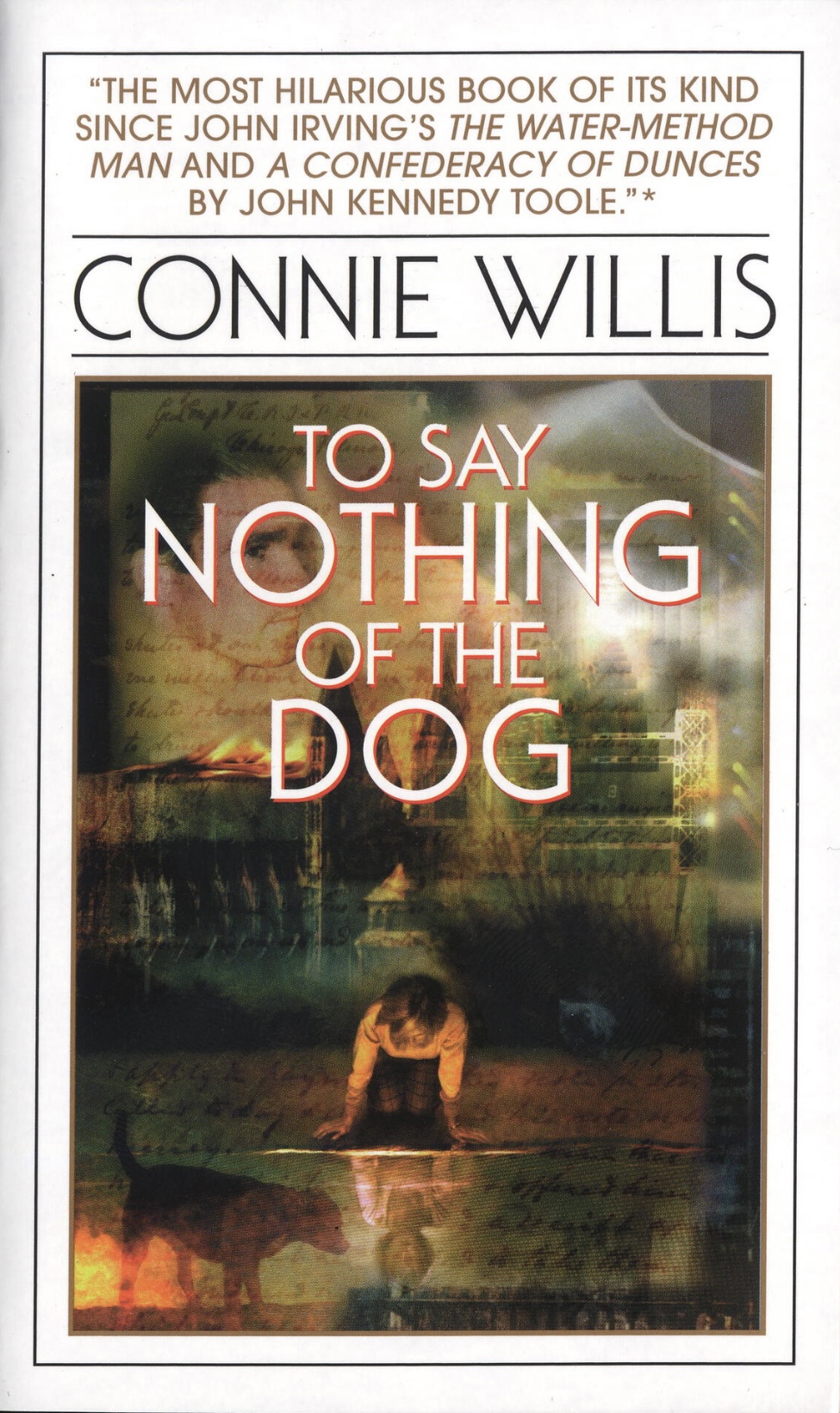
“Darwin, Disraeli, the Indian question, Alice in Wonderland, Little Nell, Turner, Tennyson, Three Men in a Boat, crinolines, croquet, … penwipers, crocheted antimacassars, hair wreaths, Prince Albert, Flush, frock coats, sexual repression, Ruskin, Fagin, Elizabeth Barrett Browning, Dante Gabriel Rossetti, George Bernard Shaw, Gladstone, Galsworthy, Gothic Revival, Gilbert and Sullivan, lawn tennis, and parasols.” — To Say Nothing of the Dog,  p. 38.

Time travel to the nineteenth century requires some preparation, and Ned, the narrator of Connie Willis’s novel  To Say Nothing of the Dog, only receives the quoted summary of Victorian life before being transported to a long adventure in 1888. His adventures are controlled by somewhat bumbling time-travel monitors in the late twenty-first century Oxford, his native time and place. 

The book does have a plot, sort-of — centered on the bombing of Coventry Cathedral in a Nazi raid in 1940. But the narrative is mostly humor about Ned’s efforts to keep his secret: that he’s in the wrong place at the wrong time, with a mission that he doesn’t quite understand, which involves finding a hideous Victorian flower holder called a bird stump. He collaborates with other time travelers from his own era, all avoiding the paradoxes that occur when you mess with the continuum. Or something. 

It’s fun to read Ned’s story, and to finally find out what his mission probably was, and how he and his co-travelers used bits and pieces of popular twentieth-century literature to figure out how to act and what to expect. The book was written at the end of the twentieth century, so the characters really don’t know about the twenty-first century except that there was a pandemic around 2020 — really! I wonder how the author knew that. Also, cats had gone extinct, seemingly from some disease. I guess the cat pandemic will happen in a few years from now, as the author predicts.

I especially enjoyed Ned’s bafflement at the manners of 19th century people. For example, he almost gets into TERRIBLE trouble when he notices that a Victorian cat (which he loves seeing in the flesh) is soon going to have kittens — an UNMENTIONABLE condition in front of the ladies. 

Ned is also challenged by the typical country house breakfast at the stately home where he somehow manages to be invited as a guest, as the characters who are there are part of his mission. I think the author probably read the same English Breakfast documentation that I reviewed a few years ago (blog post here). 

Ned begins by describing covered dish “which had a statuette of a flopping fish for a handle.” His colleague, Verity, also suitable disguised from her 21st century self, takes off the lid:

“Good Lord, what’s that?” I was staring at a bed of blindingly yellow rice with strips of flaked white in it. “It’s kedgeree,” she said, putting a small spoonful on her plate. “Curried rice and smoked fish.” “For breakfast?” “It’s an Indian dish. The Colonel’s fond of it.” She put the lid back on. (p. 214)

As they check out the breakfast buffet, they discuss their mission, and she helps him cope with the food: 

She moved down to the next covered dish. This lid had a large antlered deer. I wondered briefly if they represented some sort of code, but the next one down was a snarling wolf, so I doubted it. … Inside was a mass of pungent-smelling brown objects. “What’s that?” “Devilled kidneys,” she said, “braised in chutney and mustard. In Hercule Poirot mysteries, there’s always one little fact that doesn’t fit, and that’s the key to the mystery.” She picked up a charging bull by the horns. “This is cold ptarmigan.” “Aren’t there any eggs and bacon?” She shook her head. “Strictly for the lower classes.” She held out a shellacked fish on a fork. “Kipper?” I settled for porridge. (p. 215)

The Hercule Poirot mysteries, the Jeeves stories by P.G. Wodehouse, Three Men and a Boat (which was published a year after the events at the breakfast table), and many others are constantly in the thoughts of Ned and Verity as they jump back as far as the fourteenth century, to 1940, or to 2022. In a way, reading this novel could make you a little dizzy.

Review © 2022 mae sander. 
With thanks to Elaine & Larry for the recommendation,


Thursday, June 02, 2022

Recent Reading

My recent reading has not been at all ambitious! I read The Chalk Pit, continuing my reading of the Ruth Galloway series by Elly Griffiths. I read The Typhoon Lover, continuing the Rei Shimura series by Sujata Massey. At the recommendation of a neighbor, who loaned me the book, I read Slow Horses, the first in author Mick Herron's series about British espionage agents. These were all fun to read but I don't have anything particular to say about them. As always, I am on the lookout for interesting references to what the detectives eat and why they eat it at that point in the story -- does it help build suspense? OR diffuse tension? Or just reveal a bit about their personalities?

The Chalk Pit by Elly Griffiths


Ruth Galloway, the amateur detective in this series, has a domestic life as the single mother of a daughter, who was born in the first book in the series, and in this one is now six years old. Ruth has a successful career as an anthropologist and consultant to the police, and has many friends and connections. However, she's neither a cook nor a gourmet, and the food in the novels is of a more ordinary sort. My favorite food mention in The Chalk Pit is from a character who runs a mothers-and-children group who says 

"There’s hell to pay if I don’t open the Jaffa cakes." (p. 90). 

If you haven't tasted Jaffa Cakes, you should -- they are very popular orange-filled cookies made by the British cookie company called McVitties. The mothers-and-children group was surprisingly important in the mystery. The amateur detective, Ruth Galloway, isn't much of a cook, but food manages to highlight various events in every novel.

The Typhoon Lover by Sujata Massey

Amateur detective Rei Shimura in this series is anything but domestic! Her adventures in The Typhoon Lover occur against a background of her love affairs with two men, one in Tokyo and one in Washington, D.C. Rei doesn't cook, but in every book she enjoys excellent meals, both Japanese and American.

There's lots of food in The Typhoon Lover! I especially liked this: "I knew that okonomiyaki, the delicious Japanese savory pancake, was as essential to the survival of Waseda’s students as pizza was to American undergraduates." (location 2943, Kindle edition) The history of this dish is very interesting -- it was invented after World War II, partly to use available ingredients in a time of scarcity. Now the dish is so standard that of course the book makes no reference to this history.

Rei's Aunt Norie Shimura, who lives in Yokohama, is a model of a good Japanese wife and great cook, as well as an expert at Japanese flower arranging. Norie impresses Rei with her skills in almost every book. In this one:

"Eight o’clock was about the right time to telephone Aunt Norie, who would have already given breakfast to her family. The Shimuras usually breakfasted together, no matter what. My aunt was the kind of cook who made miso soup and rice fresh every morning, and would present enough pickled vegetables and fish alongside it to make you think you wouldn’t need another meal that day." (Location 1473)

Slow Horses by Mick Herron 


Food in Herron's Slow Horses is a little more incidental to the action, though it definitely contributes to the atmosphere of a spy story, and maybe provides a bit of a distraction from the bodies that pile up as the novel proceeds. Among the numerous characters who work at a bureau of the official London spy agency, not one has a domestic life -- all loners or losers. In fact, they have been demoted from the central bureau of the spy agency because of a big mistake they made, or because they have been set up by rivals, and in some cases that's why they lost their more conventional family lives. Most of them are rather stereotyped, especially the Asian computer genius named Ho who can break into ANY computer ANYWHERE and get the information that's needed for the action. (I think he's a better hacker than even Elizabet Salander, the girl with the dragon tattoo.)

Though the novel starts out very slowly with around 100 pages of introduction to the huge cast of characters, it gets pretty suspenseful in the later chapters. At one point, several of the secret agents gather in a cemetery -- just the place for a stereotyped British meal? Yes. An agent named Lamb was sitting on the rail surrounding a tomb and "eating a bacon sandwich. In his other had he held a second sandwich, wrapped in greaseproof paper." And all the other spies have to go hungry, especially feeling deprived when Lamb opens the greaseproof paper and eats a warm sausage sandwich! (p. 270)

Shortly after that, the group gets a perfectly predictable breakfast for an English spy novel. "They were in a café on Old Street: long and narrow with a counter along the window, and tables against a mirrored wall. Coffee had arrived, and breakfasts been ordered." Then the inevitable for morning in an English café: "Their breakfast arrived: three platefuls of the full English; one mushroom omelette." Ho forks up the beans. The woman who ordered an omelette slices it up and eats in a picky way. The author doesn't need to detail the rest: we know what's on their plates! (p. 282-285)

I'm sorry I haven't read anything more enlightening than mystery and spy novels lately, so I don't have anything very interesting to review. 

Blog post © 2022 mae sander.

Monday, September 13, 2021

Another Ruth Galloway Novel: "The Outcast Dead"

"It seems that over the last three days they have done nothing but drink tea and watch television. The mere action of filling the kettle is comforting, giving the impression that something, at least, is being achieved. Liquid is reaching boiling point, hot drinks are being made. Setting out the cups, finding sugar for Darren, waiting for the water to boil; in those minutes Cathbad allows himself not to think, except about whether he should bring in a plate of digestives. Even being in a separate room is a relief. The kitchen, with its shiny new cabinets, is pleasantly sterile in contrast to the teeming emotions in the rest of the house." -- Elly Griffiths, The Outcast Dead  (p. 326).

Yes, tea for comfort, tea for distraction from frantic worry, tea to soothe difficult relationships or cement friendly ones. Ruth Galloway, main character of The Outcast Dead, habitually pours herself cups of tea at breakfast with her daughter Kate. After a minor car accident, "she doesn’t want to get into the whole ‘are you all right, have a cup of tea, are you sure you haven’t got whiplash’ thing." (p. 79). Drinking tea with her brother, whom she hasn't seen much of, brings them together. Her feelings about going out in the evening: "Even after a day in the sun, she’s longing to be home with a cup of tea. That’s what being forty-three does to you." (pp. 180-181). In stressful times and relaxed ones, everyone is always offering to make someone a cup of tea. 

I'm sure this is very natural and normal for any British mystery series, even though Ruth is a heretic when it comes to certain other institutions -- for instance: "She goes into the kitchen to make breakfast. She’s pretty sure that Simon will expect the full English. It’s a concept which... is almost entirely alien to her."  (p. 257).


The Outcast Dead
is book 6 in the series of police procedurals, featuring Ruth Galloway, a forensic archaeologist in a small town in England. Like books 1 through 5 in the series, this one offers lots of suspense and a continuation of building the complicated lives and relationships of Ruth, her one-time lover Nelson (a policeman), other members of the police force, the egocentric head of Ruth's academic department, and the druid, born Michael, whose chosen name is Cathbad. As usual, several different crimes have occurred, and the police are investigating. Meanwhile Ruth is engaged in a professional dig that comes to the attention of a popular TV series, and she also helps the police to solve the crimes. There's a bit too much violence for this series to be classified as a pure cozy mystery, but it sure has plenty of tea.

Mystery author Elly Griffiths has written many more Ruth Galloway books, and other mysteries as well. I suspect I'll be reading more of them, as they are very lighthearted and amusing -- including the constant drinking of tea, which I'm sure will continue to occur on many occasions, as it was also drunk in books 1 through 6.

Blog post © 2021 mae sander.

Wednesday, February 24, 2021

Breakfast or Brunch?

"The bounteous and leisurely English Breakfast, survives in brunch... Effectively a country house breakfast without the game and with desserts and champagne, Bucks Fizz, or Bloody Mary cocktails added, it is usually served on a Sunday morning from eleven o'clock onwards." (The English Breakfast, p. 54)

"The Best Full English Breakfast Is the One You'll Make at Home" by Alex Delaney in Bon Appétit.

The iconic English Breakfast that I've been writing about recently seems to be a huge meal -- one that still fascinates some modern American food writers as in the article in Bon Appétit magazine a few years ago. You could make it at home, as suggested, but in modern culinary terms, you would probably serve it for brunch -- that is, a morning meal that begins rather late and stretches out over quite a bit of one's day -- usually reserved for a Sunday or holiday. The big buffet option of either brunch or the English country house breakfast is generally not viewed as a meal to precede a day's work in an office, in the fields, on the assembly line, or wherever one works. Maybe not even a meal you would want before a day's work at your home computer on Zoom!

In fact, at the English country houses where the English breakfast began, the meal was served rather late. Breakfast took place after the lord of the manor and his male guests had been out shooting or some such activity -- and after the servants had taken time to prepare and lay out the varieties of porridge, casseroles, eggs, fish, meat, game, pies, beverages, and so on that were expected. Sherlock Holmes' landlady Mrs. Hudson, as I mentioned in a previous post, had prepared a breakfast of curried chicken in "The Adventure of the Naval Treaty," which Holmes appreciated after spending hours in Surry looking for a lost paper. At the country house, the hostess and women guests would have taken a dainty cup of tea in their bedrooms before entering the breakfast room, if they chose to do so at all. 

In Kaori O'Connor's The English Breakfast, the collected nineteenth-century breakfast cookbooks often encourage working people to eat at least some of the substantial foods of an English breakfast. However, it's these early working person's breakfasts that have most turned to the use of instant foods, especially packaged cereal. By the 1970s, the English Breakfast survived mostly in "independent country inns and small hotels." (p. 361) 

According to O'Connor, a number of British marketing boards in the mid-twentieth century promoted products such as eggs and bacon that were going out of style for breakfast. The egg marketing board, in particular, offered "Anytime, any day egg recipes," extending the times when people might eat their product. This set the stage for what happened to breakfast next: 

"'Brunch'-- a combination of 'breakfast' and 'lunch' -- is an English invention, being neither more nor less than the elaborate late breakfasts of the Victorian era.... Having fallen out of fashion in Britain, it survived in America where it was first developed into a lavish meal offered at the weekend by hotels, private social clubs and society hostesses, then imitated more widely. For Americans, the great appeal of brunch was conviviality in a more informal setting, with guests able to serve themselves from a wide variety of foods. In the 1970s -- with great irony -- brunch was imported back to Britain as an American invention." (p. 387)

Does it sound as if we are going in circles? That seems to be the case with brunch, which is now a very luxurious and indulgent meal. Huge buffets from international hotels, especially, compete for the honor of being the world's best brunch -- or did before the current restrictions on public dining. For example, Condé Nast Traveler in 2016 published a list of "The Best Hotel Brunches in the World." They listed hotels in Hong Kong, Morocco, Madrid; San Diego and Long Beach, California; Berlin, London, Buenos Aires, Argentina; Las Vegas, Nevada; Singapore, New York, and Paris.

Brunch at the Intercontinental Hotel, London: "This restaurant specializes in sweets and made-from-scratch pastries paired with a healthier version of the beloved Sunday roast." (Condé Nast Traveler)

What will be the next fashion in breakfasts and brunches? When restaurant dining and travel are able to resume, who knows which of the many trends in English Breakfasts and morning meals around the world will take? This blog post concludes my discussion centered around O'Connor's book. I've enjoyed sharing all this reading on a wonderful meal.

Blog post © 2021 mae sander.

Monday, February 22, 2021

Breakfast and Tea Time in British Classics

Holmes and Watson at breakfast: from The Memoirs of Sherlock Holmes,
"The Naval Treaty," illustrated by Sidney Paget (1860-1908).
Holmes is about to eat a dish of curried chicken, and Watson will have ham and eggs. 
Mrs Hudson with breakfast, from the 2009 Sherlock Holmes movie.
She is played by Geraldine James.

Hercule Poirot at breakfast, played by David Suchet.

Ian Carmichael as Lord Peter Wimsey.
From "The Nine Tailors," originally broadcast on the BBC in 1974.

Tea time on Downton Abbey for the Dowager Countess, and Isobel Crawley
played by Maggie Smith and Penelope Wilton.


Serving tea on Upstairs, Downstairs.
Jean Marsh acted the part of Rose the maid.

Continuing my exploration of breakfast and tea time in popular culture, I've put together a few scenes of these meals from various sources. This post is to be shared with Elizabeth's blog event celebrating drinks. Put together by mae sander at mae food dot blog spot dot com. If you read this elsewhere, it's been pirated.

Sunday, February 21, 2021

Eggs on the Wall

-- link

-- link

-- link

-- link


-- link


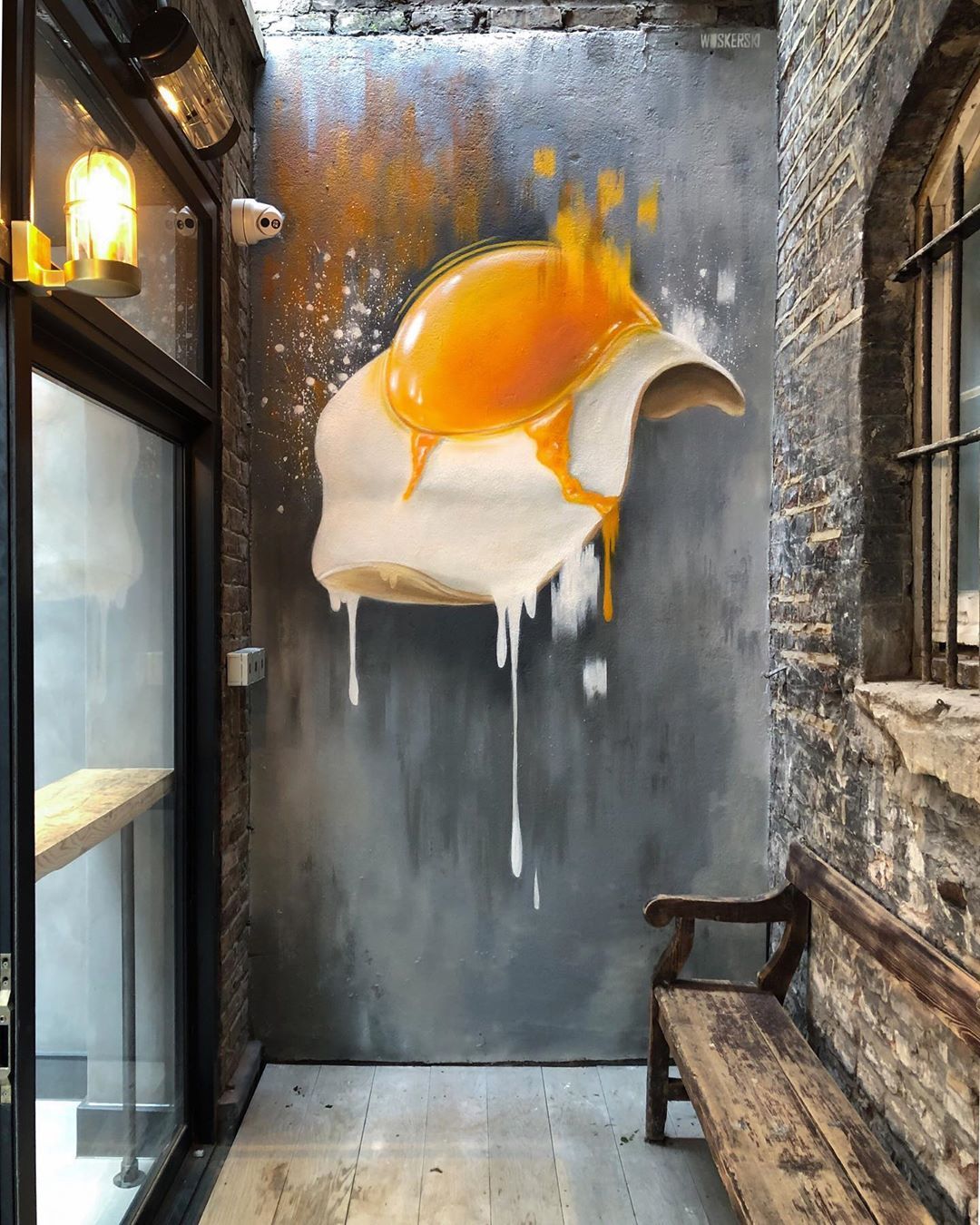
Thinking about the English Breakfast, sometimes called a fry-up, I wondered if I could find any examples depicting such a breakfast in a mural posted on some street somewhere in the world, though most likely in England. My goal: to share with Sami and her "Monday Murals," which actually takes place on Sunday because she's in Oz.

The almost-appropriate images that I found were all of eggs -- eggs on walls, eggs on sidewalks, eggs frying on manhole covers, and the like. I googled everything I could think of: I just don't think the mural artists and taggers are into the great English Breakfast. These are ephemeral graffiti as well as possibly ephemeral links, so any of these may have disappeared from the sidewalks and from the internet.

Saturday, February 20, 2021

Kedgeree

Several Victorian books and articles with recipes, menus, and advice for serving breakfast in genteel British homes are reproduced in Kaori O'Connor's book The English Breakfast: The Biography of a National Meal with Recipes. These are "a feast of lost dishes that richly deserve rediscovery," a collection that she includes to encourage her readers to try the foods of the past. In her view, "When  reading or writing about food, one should also be able to taste it." (p. 54-55)

Despite O'Connor's exhortation that I, the reader, should try the recipes, I can't honestly say I see any of them that make me curious to eat them -- especially not for breakfast! All those strange fish preparations, all those meat pies, all those game dishes for which I couldn't legally obtain the main ingredient... snipe on toast, anyone? Cooked with its head tucked underneath its wing? Uh-uh.

In reviewing the book, however, I would like to give you at least some information about the recipes and menus, of which there are an overwhelming number. I have decided to focus on one dish that is often mentioned in literary breakfasts, like country house detective stories. That would be kedgeree, a dish of rice, hardboiled eggs, and smoked fish. In modern recipes the dish usually includes curry powder and other Indian spices, but not so much in the Victorian cookbooks included in O'Connors selection.

Kedgeree from a modern recipe on the BBC website.

A recipe for kedgeree, as well as recommendations for inclusion in menus, appears in almost every one of cookbooks and menu books that O'Connor reproduced (I have used O'Connor's page numbers below, rather than the original pagination from the reproduced books). 

Menu XIV from the book Fifty Breakfasts by Colonel Arthur Robert Kenney Herbert specified a breakfast suitable for days of abstinence, such as Lent. Every breakfast in the Colonel's book has different items on the menu; this one lists:

Kitchri (Indian).
Macaroni à la Livornaise.
Eggs in white sauce.
Sally Lunns.

The text below the menu explains: "This dish, from which the so-called 'kedgeree' of English cookery books was doubtless taken, was originally a dish of rice cooked with butter and an Indian pea called dál, but now it may either be composed of cold cooked fresh fish, or of salt fish that has been soaked and either boiled or fried." He continues with a detailed recipe using hardboiled eggs, shallots, and turmeric, used to color the dish "a nice light yellow color." (p. 265)

Another book included by O'Connor is Breakfast Dishes for Every Morning of Three Months by Miss Allen. This includes kedgeree on the menu for "January 4, Wednesday." (p. 209) It consists of

Savoury omelette.
Kedgeree.
Potted pheasant.
Cold ham
Scones
Marmalade (orange).

Miss Allen's kedgeree recipe uses dried haddock, and it begins by boiling some rice, melting butter with flour and milk, adding anchovy sauce and chopped egg whites, and finally the fish. The hardboiled egg yolks are grated over the top of the dish, which is also garnished with parsley. (p. 170)

Only the introduction from The Dictionary of Dainty Breakfasts by Phyllis Browne appears in O'Connor's book. This introduction is written by "A Mere Man," and consists of a list of various categories of dishes. Category 3 (d) appears thus on page 67:

(d) Products of fish, etc.
Cod's roe: excellent.
Herring's roe, on toast: an admirable accessory.
Kedgeree, from the remains of yesterday's fish (not very good).

Would I try kedgeree if faced with a country house or hotel buffet that included it? Maybe. Depends what else they had on offer. Being an American, I'm partial to sweet breakfasts. I might choose some of the various breads and rolls and marmalades that appear on most of the menus. However, I find it fascinating to learn about all these things. 

As a final indication of what you can find if you check out the hundreds of menus and recipes in O'Connor's book, here's one of the most unfamiliar menus, from The Breakfast Book: A Cookery Book for the Morning Meal or Breakfast Table by Georgiana Hill. This menu, which appears on p. 154, also indicates how the various dishes should be arranged on the breakfast table: 

Autumn Quarter.
BREAKFAST FOR 8 OR 10 PERSONS.
______________________________
Middle of the Table.
Collared Sucking Pig
__________________________
4 By-dishes, Cold.
Anchovy canapés.                 Pressed Caviare.
  Potted Cheese.                      Pickled Mussels. 
__________________________
2 By-Dishes, Hot.
        Brain Cakes.                         Dried Sprats, tossed.
__________________________
2 Entrées.
                         Salmi of Partridges.              Pork Cutlets and Poached eggs.
_________________________
          Compotes of Fruit, Cheese, Breakfast cakes, etc.
                       
I hope that when I'm free to go to hotel buffets for breakfast again, I don't encounter a sucking pig or brain cakes.

This review © 2021 mae sander.

Friday, February 19, 2021

What did English detectives eat for breakfast?

Continuing with my exploration of the English Breakfast, I checked my bookshelves for cookbooks that tell what English detectives ate and how it was prepared. The most famous fictional English detectives often visited traditional country houses where their rich clients lived. These clients sometimes became murder victims and sometimes turned out to be the murderers -- but they still ate breakfast! Each of the cookbooks I found has rather extensive discussions of such breakfasts, including recipes. And these breakfasts were frequently just the type of English Breakfast that's described in Kaori O'Connor's book The English Breakfast (which I discussed here yesterday). While I've written posts about these three books before, I want to concentrate on their treatment of the detectives' breakfasts.

Agatha Christie

Agatha Christie's childhood home Torquay, and her favorite country residence Greenway House both served breakfast in the traditional country house manner, always in the special-purpose breakfast room.  Christie loved these homes, and others where she lived as well, according to Crèmes & châtiments: Recettes délicieuses et criminelles (Creams and Punishments: Recipes both delicious and Criminal from Agatha Christie) by Anne Martinetti and François Rivère. My diligent searches have not turned up an Agatha Christie cookbook in English: I fear this is the only one that's been published.

The only Agatha Christie cookbook I can find. Published 2005.

From her first detective novel onward (published 1920), Agatha Christie often featured English country house breakfasts, as well as breakfasts eaten in other venues by her detectives and her other characters. The recipes and descriptions in Crèmes & châtiments begin with a detailed explanation of tea: its history, its many types and origins, and how English people enjoy it. Coffee lovers are also accommodated at a classic country house breakfast. As for Hercule Poirot, his beloved hot chocolate at breakfast is distinctly non-English. He requires it to be served on a very symmetrically arranged tray with a croissant or roll for dipping. 

In her chapter on breakfast, Martinetti also includes recipes for tomatoes with white beans, grilled tomatoes, sautéed mushrooms in which you might just include one or two poisonous ones if you are an aspiring murderer; several types of eggs including omelet curry and eggs Benedict; kidneys with bacon, many fish dishes suitable for breakfast, and a couple of home-made marmalades. For every recipe there's an appropriate quotation from one of Agatha Christie's numerous stories, and many beautiful pictures.

In short: this book offers a very good selection for the classic English Breakfast!

Arthur Conan Doyle

"A good roast beef, plum pudding, or English trifle" are quintessential dishes named at the beginning of Dining with Sherlock Holmes: A Baker Street Cookbook by Julia Carlson Rosenblatt and Frederic H. Sonnenschmidt (published 1976 and 1990). Breakfast, however, is "by far the most prominent meal in the Sherlockian Canon." One expert they cite "Has counted 73 specific mentions of breakfast, as opposed to 30 references to lunch, 3 to high tea, and 58 to dinner or supper." (p. 19) 

Not the only Sherlock Holmes Cookbook.

While Rosenblatt and Sonnenschmidt's details about the foods provided by Holmes and Watson's landlady Mrs. Hudson are speculative, they reflect the fact that Mrs. Hudson was working in the 19th century tradition of an English Breakfast. (The first Sherlock Holmes publication was in 1887.) Mrs. Hudson's repertory specifically included eggs, bacon, ham, a cold joint of beef, and other classics. Although Arthur Conan Doyle rarely listed the full menu, the cookbook authors speculatively provided complete menus that might have been eaten before or during the hectic investigations in the stories.

Dorothy Sayers

Lord Peter Wimsey was a member of the aristocracy, the English class that lived in country houses and thrived on breakfasts of eggs, fish, game, organ meats, and many other savory dishes, served at a buffet in a special breakfast room. Indeed, from Dorothy Sayers' first detective story (published 1923) Lord Peter often enjoys such a meal, and many are documented in quite a whimsical way in The Lord Peter Wimsey Cookbook by Elizabeth Bond Ryan and William J. Eakins. 

"Ah, I have never regretted  Paradise Lost since I discovered that it contained no eggs and bacon," observed Lord Peter (quoted on p. 14). The authors add quite a number of the detective's other observations about classic English Breakfast foods as well. For example, he wished he could tell off his charlady for her "tiresome habit of boiling his breakfast kippers till they resembled heavily pickled loofahs." (p. 15)

The Lord Peter Wimsey Cookbook, published 1981.

The chapter on breakfast provides a number of helpful menus with suggestions for re-enactments of the scenes in Lord Peter's breakfast room, such as assigning your guests to pose as characters from the novels. Here is one of the menus, which the authors recommend that you serve in "bilibeastly" weather:

BLOATERS
RIDDLESDALE BREAKFAST CURRY
SCRAMBLED EGGS (optional)
BREAD, BUTTER, TOAST, AND SQUISH (Marmalade)
COFFEE

There follows a very helpful explanation of bloaters:
"Bloaters are herrings which have been lightly salted and smoked. They do not keep for long periods of time so they should be eaten right away like fresh fish... They are the famous 'red herrings' of literature. 
"Allow one bloater per person. Not everyone at the breakfast table will want one. Trim each bloater of head and tail. Make incisions in the skin at approximately one-inch intervals across each side of the fish. Place the fish in a lightly buttered, shallow ovenproof dish. Dot each fish with butter and bake for about 30 minutes in a preheated 350º oven. ... 
"An even more distinguished bloater dish is suggested by Mrs. Sayers's husband, Atherton Fleming, in his cookbook. Major Fleming recommends putting two bloaters in a soup plate, poring on whiskey to cover, setting the dish afire, and letting it flame until done." (p. 9-10)
The Lord Peter Wimsey Cookbook is highly entertaining, even if you are not a Dorothy Sayers fan. It's a lot more fun to read than the Victorian breakfast cookbooks and household manuals reproduced in Kaori O'Connor's The English Breakfast. I will return to this topic!

Blog post © 2021 mae sander.


Thursday, February 18, 2021

What is an English Breakfast?

What I'm reading: a definitive treatise on the English Breakfast.

The English Breakfast today is a popular choice for discriminating lovers of all things British. In London and other English destinations there are B&Bs, country inns, urban hotels, pretentious and unpretentious dining establishments, Harry Potter theme park restaurants (representing the Hogwarts dining room), and probably a few surviving country houses that still offer a menu that fits the description of this classic meal. You can even get an English Breakfast at some places in New York; cruise ship menus often have English Breakfast options, as do trains and car ferry restaurants -- providing they aren't stopped by pandemic closures 

If you order an English Breakfast, the expectation is that you will find a set choice of foods. The usual offerings would be tea or coffee, toast drowned in butter, two kinds of bacon, variously cooked eggs, a grilled tomato, a few mushrooms, several types of English-style sausage such as chipolatas; a dish of kedgeree; fish such as bloaters, smoked salmon, haddock, or kippers; black or white pudding, Heinz baked beans, marmalade, and possibly something or other in a white sauce. 

If you find a croissant, a blueberry muffin, or a Danish pastry in an "English Breakfast" your host has probably overstepped the traditional definition of this very English meal. An egg-white omelet would also be suspect. The English Breakfast flavors are traditionally mostly savory not sweet, and the choices are mostly fattening, not abstemious. 

Two items that were blamed for the demise of the English Breakfast in the 1920s were grapefruit and packaged cold cereal, which were more convenient and faster, and less dependent on domestic servants. The Americans were held responsible for these innovations, but that's not fair. After all, it was the American Heinz corporation that developed the canned baked beans that became a luxury item for country house breakfasts  before canned food was a cheap and easy choice and a required item on the English Breakfast list. In any case, the English Breakfast did not die, but was resurrected after the World War II rationing almost brought it to extinction.
"The English Breakfast is the national dish of a mythic and indivisible England, a repast that, despite differences in execution, binds its people together as one." (The English Breakfast, Kaori O'Connor, p 46). There are Welsh, Irish, and Scottish versions but there is one English Breakfast to rule them all.

The English Breakfast as many people imagine it now may take inspiration from literary versions of the meal. A century ago, detective fiction by Agatha Christie, Dorothy Sayers, A.A.Milne, Arthur Conan Doyle, and others often set their imagined murders in a country house. The resident servants got up early to produce a lavish buffet with every item on this list and maybe more, to be consumed by hosts, guests, and possibly murderers and detectives. Versions of the English Breakfast still show up in current detective fiction by authors like Tana French, sometimes called a fry-up or a Full English. Such a breakfast in more recent detective fiction is rarely presented by a staff of servants in a serious country house, but still -- it survives in fiction as it does in real life.

While twentieth and twenty-first century versions are more familiar, the origin of the English Breakfast was actually during the Victorian era, when gentry living in country houses were a model of English propriety — and culinary correctness. The increasing wealth of the non-gentry created a new class: one that aspired to act genteel, but that had not been born into gentility nor inherited an estate. A real gentleman's estate would ideally stretch as far as the eye could see from the manor house. From these lands would come all the food served in the dining rooms and breakfast rooms of the stately home at the center of the property. The dishes that showed up on the table were the products of "one's own soil, rivers, forests and moorlands. The upper class fondness for venison, game and salmon springs from the fact that these are all specific products of country estates, once largely available only to those who possessed them." (p. 23)

For aspiring non-aristocrats, the Victorian era produced a large literature on how to act genteel even if you weren't born to it. Some of the challenges included training your domestic staff to cook and serve as they should, and setting tables worthy of the class to which you wanted to belong. O'Connor's book includes facsimile versions of three Victorian manuals on the ideal high-class breakfast -- that is, instructions on how to emulate the gentry in their country houses no matter how humble were your actual circumstances. To serve a proper breakfast required proper recipes for the foods, but also demanded the use of damask tablecloths, china place settings and serving dishes, silver tableware, utensils like a purpose-made scissors for cutting the top off a boiled egg, various types of toast racks, or coffee and tea sets with ewers, creamers, and so on. You needed a special diagram to know how to arrange all this on the table. Not to mention a big table. It wasn't easy!


From O’Connor’s book: an illustration of how to set a breakfast buffet for twelve.

In a future post I'll describe more of the fascinating story of the English Breakfast as told in O'Connor's wonderfully detailed book.

Review © 2021 mae sander for mae food dot blog spot dot com.

Tuesday, January 26, 2021

The Janus Stone by Elly Griffiths

The area of King's Lynn, England, where the action of The Janus Stone takes place.
I toured that area once, with friends, which makes the novel that much more fun to read!

The Janus Stone, published 2010.

The Janus Stone is the second novel in Elly Griffiths' series of mysteries about forensic anthropologist Ruth Galloway and her adventures as an amateur detective and helper of the police. I read the first one a few months ago (briefly blogged here), and I guess I'm hooked!

The setting of The Janus Stone is a variety of picturesque, rural villages near King's Lynn, England. This area has been inhabited for millennia, including iron age people, Roman settlements, and continuous occupation until the present. So archaeologists have lots to excavate -- and forensic archaeologists like Ruth are challenged when mysterious bodies appear, because they could turn out to date from recent times (and thus be candidates for a murder investigation) or from any of the earlier eras. 

Of course that's what's going on in the novel: a body must be identified, and connected to events in the past. Ruth Galloway and her fellow anthropologists and police investigators figure it out, with much drama and with lots of perilous moments for Ruth.

I enjoyed the portrayal of the little villages and their inhabitants, streets, museums, and especially life in pubs and other public places: villages "heavy on antique shops and low on fast-food outlets." (p. 57). 

Ruth and the police, as they investigate the mystery, encounter rich people, middle class people, and marginal people. Ruth's friends include many academics -- tenured and not-so-stably employed -- who work with her in the university where she teaches. Showing who they are with just a few words is a strong point of the author. Some quotes about the people, including, sometimes, what they ate:

  • Nelson, the policeman at the center of the investigation: "All those smug yuppies will soon be saddled with negative equity and serve them right. His own house is mortgaged up to the hilt, of course, but that doesn’t bother him. Nelson was brought up in a council house. For him, a mortgage is a sign of respectability."(pp. 56-57).
  • Ruth and her friend Shona choosing a restaurant: "Shona would want to eat in King’s Lynn, somewhere where she can be sure of extra virgin olive oil and ciabatta. Ruth fancies something a little more rustic. Suddenly, a vision of the Phoenix [a more rural pub] comes into her head— the smell of chicken cooking on the outdoor grill, the view over the hills, the clink of glasses and the hum of conversation." (pp. 158-159).
  • Max, another anthropologist, cooks for Ruth at his temporary home, a boat: "He disappears below to check on the food which, when it appears, is absolutely delicious— chicken in red wine, saffron rice, green salad. ‘You really can cook,’ says Ruth, smiling." (p. 148). 
  • Nelson, visiting the home of Spens, a rich property developer: "Spens ushers him through to the kitchen, which is at the back of the house with windows opening onto the garden. Michelle [Nelson's wife] would die of envy if she saw this kitchen, thinks Nelson. Everything is perfect; from the gleaming surfaces, to the yellow roses on the table, to the blue cushions on the wicker sofa (sofas in the kitchen— that would never happen in Blackpool), to the expensive Italian coffee machine chugging away in the corner." (p. 182). 
  • Judy Johnson, one of the police investigators, preparing for an interview: "At nine o’clock sharp, full of a Full English Breakfast, Judy Johnson presents herself at the convent." (p. 256).
  • Nelson again: "Nelson once spent a holiday in Southport. Long, wet walks along the seafront, a B and B where you got one slice of toast for breakfast and weren’t allowed to touch any of the thousands of knick-knacks grinning evilly from the shelves." (p. 259).
  • Another policeman: "Detective Sergeant David Clough is eating. Nothing new in that. Clough eats almost constantly throughout the working day, starting with a McDonald’s breakfast, moving on through several Mars Bars and a Pot Noodle for lunch, through a sustaining sandwich and cake at tea time before treating himself to a pint and a curry for supper." (p. 292)

This is a fast-paced novel, with suspense and danger and many details about the complicated personal lives of the characters. While details about history and pre-history are invented for purposes of the novel, the overall historic setting appears to be accurate. It's fun and a fast read!

As I indicated, I was once there, briefly, while with friends who were following an itinerary of places that appeared in Dorothy Sayers' novels. I remember the high points of the area. The Guardian had this to say about the town:
"Were King’s Lynn anywhere else in the country but squelched into the remoter end of the Fens, it would be overrun with tourists. ... The wealth of the north Norfolk coast is tantalisingly near, but not quite near enough. That relative remoteness today (I mean, it’s only just over an hour to Cambridge, so it’s hardly Siberia, is it?) has bred an independent spirit: there’s some great local culture behind those pedimented porticoes, and a fair bit of money has been spent on sprucing up the place. Geography favoured King’s Lynn hundreds of years ago, before trade shifted to the Atlantic. That’s why it’s so beautiful today, all cobbles, alleys and warehouses. King’s Lynn was once the biggest port in the country, and its merchants flashed their cash on those 18th-century townhouses. Maybe fortune will smile on it again some day."

Maybe it's just a perfect place as a setting for mystery stories. 


Review © 2021 mae sander.