Showing posts with label Ruth Ozeki. Show all posts

Thursday, June 18, 2026

”The Typing Lady”


I have read around half of The Typing Lady by Ruth Ozeki (published last week) and I’m enjoying it. The story titled “An Anthropologist’s Kid” was a really good capture of being somebody’s kid. It managed to see life from both a parent’s and a child’s viewpoint — in particular, the perspective of a faculty brat —

“In the winter we played in one of the empty seminar rooms or in my dad’s office. The secretaries let us type on their typewriters. They gave us scrap paper to draw on, and sometimes, if we begged them, they let us help run the mimeograph machine. That was our favorite. We loved the smell of the purple ink. You could almost get high on it.”

I’m planning to finish this book after I read the brand-new Martin Walker book! Bruno, chief of police is back today. 

More by Ruth Ozeki 

 I’ve read all of them, but not reviewed every one of them.

Review © 2026 mae sander


Saturday, November 02, 2024

Magic


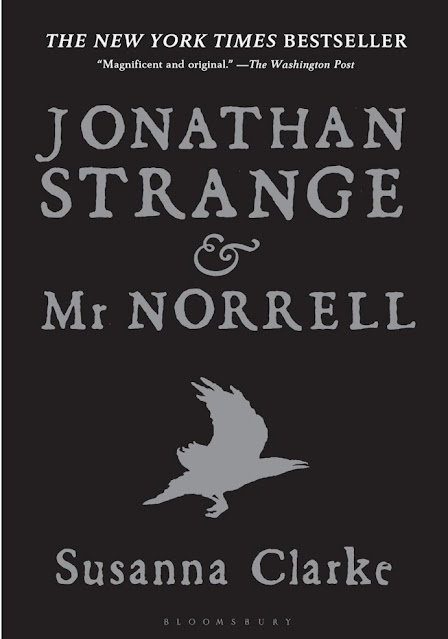
Jonathan Strange and Mr Norrell, by Susanna Clarke,
illustrated by Portia Rosenberg.

I could not tell you why I decided to reread Jonathan Strange and Mr Norrell, except that its uncanny magical universe has something to do with a short new book by the same author. It’s a very long book: 850 pages, and it took me around a week of reading and being rather engaged with the history of the Napoleonic wars as experienced — and altered — by two English magicians and their circles of friends, relatives, acquaintances, and enemies. The magicians’ main enemy is a Fairy, a malevolent and self-centered creature. The fairy appears to many characters in the novel, and never means any good to them.

 
The fairy was described at his first appearance in the novel:

“a tall, handsome person with pale, perfect skin and an immense amount of hair, as pale and shining as thistle-down. His cold, blue eyes glittered and he had long dark eye-brows, which terminated in an upward flourish. He was dressed exactly like any other gentleman, except that his coat was of the brightest green imaginable – the colour of leaves in early summer.” (p. 90)

In the illustration, you can see the fairy who is obviously up to no good. Specifically, the magician Mr. Norrell has summoned him from a fairy realm beyond England to bring a beautiful young girl back from the dead. The bargain that’s made between magician and fairy is at the heart of many of the events in the novel. If you’ve ever read a fairy tale you wouldn’t be surprised at the consequences of such a bargain.


Another of Portia Rosenberg’s illustrations.

Mr Strange and Mr Norrell Take Tea

There are many plots and subplots about the two magicians Strange and Norrell and the magic that they do for the government of England, for individual noblemen, for their own interests, and in the case of Strange, for his wife. A number of other Englishmen want to be magicians as well, and they also play a role in the elaborate plot of the novel. All is tied together by the personalities of the magicians.

Both magicians are fond of taking a cup of tea, which is viewed as part of their deeply rooted Englishness. Being both typical and loyal is important to them and to the atmosphere of the novel.  When Mr. Norrell tries to offer his services to a Captain Harcourt-Bruce, the captain expects magical drama, troops of enchanted soldiers and swashbuckling magical victories. Instead, Norrell is rather an ordinary Englishman, not the leader of ideal fairy knights imagined by the military man: “That was Captain Harcourt-Bruce’s idea of a magician. That was the sort of thing which he now expected to see reproduced on every battlefield on the Continent. So when he saw Mr Norrell in his drawing-room in Hanover-square, and after he had sat and watched Mr Norrell peevishly complain to his footman, first that the cream in his tea was too creamy, and next that it was too watery – well, I shall not surprize you when I say he was somewhat disappointed.” (p. 107)

There’s even a reference to the supposed civilizing virtues of tea, concerning a captain who was  “entertaining the American savages and teaching them to drink tea (presumably with the idea that once a man had learnt to drink tea, the other habits and qualities that make up a Briton would naturally follow).” (p. 477) 

Mr. Norrell loved the comforts of his well-appointed home, and didn’t go out if he could help it. He preferred to stay in and read one of the thousands of books of magic in his collection; for example: “On a day in late December when storm clouds made Alpine landscapes in the sky above London, when the wind played such havoc in the heavens that the city was one moment plunged in gloom and the next illuminated by sunlight, when rain rattled upon the windowpane, Mr Norrell was seated comfortably in his library before a cheerful fire. The tea table spread with a quantity of good things stood before him and in his hand was Thomas Lanchester’s The Language of Birds.” p. 127.

Strange also finds comfort in his tea when he has some difficult issues that he calls “a wretched business from start to finish.” As he considered them, “he sipped his tea and ate a piece of toast.” (p. 441) Later when Strange is on the battlefield in Spain, he finds some Scots military men, and gives them some hard-boiled eggs he was carrying: “The Highlanders gave him some sweet, milky tea in return and soon they were chatting very companionably together.” (p. 473)

All this is in deep contrast to the foods that the fairy with thistledown hair has to offer his captives: “Here is a haunch of roasted wyvern and a pie of honeyed hummingbirds. Here is roasted salamander with a relish of pomegranates; here a delicate fricassee of the combs of cockatrices spiced with saffron and powdered rainbows and ornamented with gold stars! Now sit you down and eat!” (p. 500)

The famous military leader Wellington interacts with both magicians, especially with Jonathan Strange. He too enjoys English comforts even in the battlefield areas of Spain where the war is going on. His servants make sure to feed him properly: “As Wellington and his companions rode up to the castle they had just begun to lay it with plates of bread rolls, slices of Spanish ham, bowls of apricots and dishes of fresh butter. Wellington’s cook went off to fry fish, devil kidneys and make coffee.” (p. 347)

The appreciation of a typical English meal is shared by other English magicians, for example a man called Secundus, whose landlady brings him “a breakfast of two freshly grilled herrings, tea and fresh milk, and white bread and butter on a blue-and-white china plate.” (p. 26)

A woman in a weakened state begins to recover: “It was soon learnt that Miss Wintertowne had left her bed and, leaning upon Mr Norrell’s arm, had gone to her own sitting-room where she was now established in a chair by her fire and that she had asked for a cup of tea.” (p. 96)

Aromas and Odors

Now I’ve indulged myself by describing the way the author uses food and tea to create an atmosphere around the characters and their unusual lives. I should get down to business and actually review the book, but that’s been done by lots of other people. So I’ll just keep telling you a few things I found amusing.

I also appreciated the use of aromas and odors in the novel, especially the unpleasant aroma associated with an elderly woman whose cats create a rather potent situation (but I can’t say too much because this is quite a big part of the plot). Or the aroma of land and sea: “Instantly the sea became more ethereal and dreamlike, and the wood became more solid. Soon the sea was scarcely more than a faint silver shimmer among the dark trees and a salty tang mingling with the usual scents of a night-time wood.” (p. 667)

Here is a passage that describes the relief felt when a very dark magic spell is lifted from a city:
“There was a sudden rush of scents upon the air – scents of frost, winter earth and the nearby river. The colours and shapes of the park seemed simplified, as if England had been made afresh during the night. To the poor servants, who had been in some doubt whether they would ever see any thing but Dark and stars again, the sight was an exceedingly welcome one.” (p. 782)

More Magic

1871 Edition of The Princess
and the Goblin
Evidently, I enjoy books about magic. I didn’t give this much thought, but my fellow blogger Deb at Readerbuzz listed some magical fiction she was reading and I realized how much I have always liked certain types of magic in books, such as the magic of Ursula LeGuin’s Earthsea. Erin Morgenstern’s Night Circus entertained me, as did Harry Potter. (Lev Grossman: not so much.)

In childhood, I enjoyed the Oz books (which Deb is reading this year). I was very fond of The Princess and the Goblin by George MacDonald. I also loved fairy tales such as those by Hans Christian Andersen. And who doesn’t love the fairies in A Midsummernight’s Dream?

Here are a few books from Deb’s list that I have enjoyed reading in the past.

  • Emily Wilde's Encyclopaedia of Faeries by Heather Fawcett 
  • Babel by R. F. Kuang
  • A Tale for the Time Being by Ruth Ozeki

For more of Deb’s choices, see her blog post: Magical Books I Loved that You Might Like to Read.

Review © 2024 mae sander
Shared with Deb’s Sunday Salon


Tuesday, October 05, 2021

“The Book of Form and Emptiness”

Ruth Ozeki's new novel, The Book of Form and Emptiness, is fascinating and hard to grasp. It's very fun to read and very hard to write about. Ozeki has wonderful powers of observation, and writes very beautifully. There are even birds in the novel: crows, to be specific, play an interesting role in some of the characters' lives.


The Book of Form and Emptiness can be viewed as a perfectly clear narrative about a fourteen-year-old boy, Benjamin Oh, his mother Annabelle, his late father Kenji Oh, and a few other people, many of them quite colorful. Or maybe can be viewed as something else, more ponderous. It's hard to explain, and it's hard to describe these characters, who are very complex and quite far outside of expected social norms.

Benny hears the voices of many things that don't talk to most people. These voices are not always speaking in English, but sometimes just making sounds. For example: 
"He opened the refrigerator door again, just a crack, but wide enough to allow the interior light to come on and the cold air to escape, bathing his face with a sour exhalation, and then he heard the sounds again. They were faint, but now he could tell them apart: the groans of moldy cheeses, the sighs of old lettuces, the half-eaten yogurts whining from the back shelf where they’d been shoved and forgotten. 
"'Stop it,' he whispered." (p. 48).

Things of many types don't stop making noise when Benny asks them to be quiet, and he soon clearly seems disturbed to his mother, his teachers, and the authorities at his school. So he's first assigned a shrink, and eventually put in the Pediatric Psychiatry Unit at the local hospital, which its inmates call "Pedipsy." While Benny has no relationships with the other kids in his school, who sometimes bully him, he meets another patient, a troubled older girl named Alice who becomes a friend and object of his love. Alice prefers to be called "The Aleph," because she identifies with a short story called “The Aleph,” by the Argentinian author Jorge Luis Borges.

Books and writers are a key to the whole novel, and in fact, much of the narrative is by a sort-of-character called "The Book," which is writing itself. The Book chronicles the lives and memories of the characters, especially Benny and Annabelle, as well as the memories of Kenji's life as a jazz musician and his tragic death. Yes, this is complicated to explain but not that hard to follow in Ozeki's novel. 

Consistent with the role of books and The Book, Benny's favorite place to be is a huge labyrinthine library which is a short bus ride from his home in Chinatown in an unnamed city in the Pacific Northwest (sort of Seattle-like but not named). After his stay in Pedipsy, Benny skips school and spends all his time there, and sometimes meets The Aleph and her friends there. For Benny, the library is full of strange finds such as a postcard with the following image:

On a postcard that Benny finds: this image, Angelus Novus, or
"The Angel of History" by Paul Klee, 1920
"It was the sort of postcard sold at museum gift shops, depicting great works of art, only this one just had a drawing of a stick figure, scrawled on paper that was stained and brown around the edges. The figure had a mop of curly hair and was wearing a skirt, but after studying the long face and square jaw, Benny decided that it was a man in spite of the skirt. His widely spaced, almond-shaped eyes were staring past Benny’s right shoulder, in the direction where the voices often came from. He turned and looked over his shoulder, but all he saw was a row of books." (pp. 170-171). 
Written on the back of the postcard that Benny found: 
"This is how one pictures the Angel of History. His face is turned toward the past. Where we see a chain of events, he sees one single catastrophe that keeps piling wreckage upon wreckage and hurling it at his feet. The Angel wants to stay, to awaken the dead, to make whole what has been smashed."  (p. 171). 

Although not so identified in the book, this quote is from Walter Benjamin's 1940 essay "Theses on the Philosophy of History." At that time Walter Benjamin (1892-1940) owned the print. Ozeki, by this point in the novel, has been introducing the novel's chapters with Walter Benjamin's aphorisms:

"(According to the capabilities of the reader) books have their own destinies. —Walter Benjamin, 'Unpacking My Library,'” (pp. ix-x). 

"Thus there is in the life of a collector a dialectical tension between the poles of disorder and order. —Walter Benjamin," (p. 133).

So you see: The Book of Form and Emptiness is full of references to rather obscure literature. But it's also full of details about another book titled Tidy Magic: The Ancient Zen Art of Clearing Your Clutter and Revolutionizing Your Life. This is Ozeki's fictitious version of the major best-selling book by Marie Kondo that was published with great success in the US in 2010. The fictional book and its author, a Buddhist monk and rather complex woman, also play a role, especially in the life of Annabelle, who is trying to deal with possessions that have essentially possessed her and taken over her house.

Naturally, as I read, I was mindful of the way that food in this novel indicated a variety of character traits. Benny and his mother particularly remembered eating Chinese take-out with Kenji before his death -- and they eat take-out often: "Tonight, she declared, they were having a banquet. In addition to the spare ribs, she’d bought egg rolls, steamed dumplings, pork buns, Chongqing chicken and house-special fried rice." (p. 62). 

Healthy food is what Annabelle, who has gained enormous amounts of weight after her husband died, is always thinking about. Here's an example that illustrates her very erratic way of thinking and getting things done (or not getting them done):  
"The chips and salsa failed to satisfy. What she really needed was a salad. A nice big salad with tomatoes and carrots and avocados and other healthy things. She could take the bus over to the Whole Foods Market and get a salad from the salad bar, but this would mean taking off a whole hour of work, ... and besides, Whole Foods was ridiculously expensive, and the people who shopped there always made her feel bad about herself. Unhealthy. No, just say it, Annabelle: fat. They make you feel fat. Fine, she thought, sitting up and emptying the chip bag, shaking it to get the last of the crumbs. Whatever. She headed back downstairs. She didn’t need the Whole Foods salad bar. She could buy perfectly good lettuce at the cheap, unhealthy, discount supermarket and make her own salads. She could go today after work. She would need a salad spinner, too. She used to have one around the house somewhere, but she hadn’t seen it for a while. Well, she could always buy another one online." (pp. 162-163). 
Annabelle was always trying to do the right thing, but she can't ever get the house cleaned up or the pantry properly stocked. After forgetting to buy a variety of things one day, she decides:
"She would take a little walk and buy trash bags, lettuce, and something nice and healthy for his dinner, and then while it was cooking, she would tidy up the kitchen so they could sit down and have a proper meal at the table." (p. 180). 

 Once, her intentions are even realized, and she actually cooked spaghetti: 

"Annabelle was standing at the counter, emptying a quart jar of tomato sauce into a saucepan. A large pot of water was boiling on the stove. 

"'Hi, honey,' she called. 'I hope you’re good and hungry. I’m making spaghetti for dinner!'” (p. 203). 
The Aleph has quite a different relationship to food. She lives on the streets when not in the mental hospital, and interacts with several other memorable characters, especially a poet who drinks a lot. The street people are adept at dumpster diving. Specifically, on a brief camping trip with the Aleph and another former patient named Mackson, Benny observes: 
"...she’d brought more food: more sandwich wraps, and chips, and a plastic bin of salsa. She told him the sandwich wraps were on account of Mackson scoring a whole unopened case of freezer-burned tortillas from a Mexican restaurant dumpster. Mackson’s an awesome gleaner, she said. The chips and salsa came from there, too. Benny didn’t know what a gleaner was, but he wanted to be one." (p. 371). 
Finally, you may wonder: what does the title mean? Well, one of the colorful characters, the street person who is also a poet, lectures Benny on history; on literature, especially Walter Benjamin; and on philosophy. And he says "Poetry is a problem of form and emptiness." (p. 276). 

A central question, Benny's philosophical question as well as that of the poet, echoes throughout the book: "What is real?" This is a major theme of the entire novel, and applies to much that Benny and the others experience. 

I hope I've conveyed some of my feelings about the appeal of this book. For completely different interpretations, see this New York Times review: "Ruth Ozeki’s Borgesian, Zen Buddhist Parable of Consumerism," or this Washington Post review: "If a book could talk, what would it say? Ruth Ozeki has some ideas."

Review © 2021 mae sander.

Sunday, September 05, 2021

Ruth Ozeki

Coming later this month!


Before reading Ruth Ozeki's new book The Book of Form and Emptiness, I decided to read an old one, from 2003 titled All Over Creation. I don't know why I didn't read it earlier, as I read and liked My Year of Meats, her first novel, and read and liked A Tale for the Time Being, her third novel as well.

All Over Creation is an ambitious but flawed book. Like My Year of Meats, it tells the story of farm families who are caught in the trap of choosing to grow genetically modified and other chemically altered crops or choosing less artificial ways to farm. The book is set on an Idaho potato farm in the late 1990s. At that time, many of these issues were really on people's minds, as they still are now.

As Ozeki's farmer-characters succeed and acquire more land, they are more and more pressured to purchase altered seeds and cuttings to fill their vast fields. In this book, the dilemma is: do they plant potatoes that have built-in insecticide? Or do they spray large amounts of commercial insecticides? Or can they find a better way entirely?

The characters tend to resemble the types of a morality play, with everyone designed to embody a message, even when they are individualized. A dying man, once a large-scale farmer, has been converted to the rightness of natural farming, and makes meaningful and poignant speeches about his belief. His wife, who came to Idaho as a Japanese war bride, grows and sells heirloom seeds, and talks to her plants with stereotyped Japanese insights. Their daughter, who ran away at age 14, has just returned to see them one more time, and is discovering her true identity. A group of protestors living in a trailer create theatrical events to call attention to the problems of pesticide and other evils in the food supply. Several articulate children play a role: I found the portrayal of these children especially annoying because they seemed to be too perfect in expressing the author’s message. Aging Flower Children, who had been idealist hippies during the sixties but have sold out their ideals, play a role in the many complications and dramas in the book.

I found it readable but contrived. Unfortunately, the issues raised in the book are worse than ever. I hope I like the new book better!

Blog post © 2021.
 

Thursday, February 11, 2021

Artists and Writers

This is not a cookbook.

Zone out. Open The Artists' and Writers' Cookbook. Open it to any page, or begin at the beginning. Read a brief food memory from the life of an author, a poet, a photographer, an installation artist, or another creative person. On the next page, you will read a few paragraphs from a completely different personality in a different world. Also, you will see a recipe from each one. Some of these memoir writers describe much-loved dishes and happy food moments. Some are passionate about particular dishes. Others don't actually love food, or they have mixed feelings about the dishes they have eaten or about childhood experiences. 

Zone out, read on to the next vignette, be in the moment. Don't worry if the foods are unfamiliar or the recipes very conventional or very weird. Don't worry about whether you have heard of a particular writer or seen the work of a particular artist: or even whether you have met them or heard them give a reading. Some of the obscure memoirists present more vivid food stories than the more famous ones. Just be in the moment.

When I first flipped through the pages of my new copy of The Artists' and Writers' Cookbook by Natalie Eve Garrett, I thought it looked overwhelming -- incoherent, diffuse, unfocused, unapproachable. (It was published 2016 and I've been meaning to read it every since, and I thank the blogger Eliot who jogged me into buying it!) At first, I felt jerked around by the change from one point of view to another. The points of view ranged from super-serious to totally satirical, and the recipes were the same way. Every writer had a different approach to giving a recipe. Some were enormously labor-intensive, some full of pre-made ingredients. The range included recipes that sounded delicious, disgusting, nostalgic, or even pathetic. 

The writers and the accomplishments that qualified them varied widely, including some that I had heard of, others completely unfamiliar. In the case of one author, I not only had met him, but even had dinner with him once; however, he certainly wasn't writing about the food we ate together! Another writer, whom I never heard of, wrote about Cafe Pasqual in Santa Fe --a place I ate once and loved, and then went back a few years later and was very disappointed. Author Ruth Ozeki wrote about the experience that she transformed into her wonderful first novel My Year of Meats. As I read through the vignettes, I enjoyed the constant changes in locale: rural Puerto Rico; Knoxville, Tennessee; Cape Cod, Massachusetts; various neighborhoods of New York City; Calcutta, India; urban Iran during wartime; Vietnam as experienced by a city child and by an American soldier; and many others.

I had to zone out. I had to empty my mind and just read one after another. Then I liked it.

Authenticity is of course a recurring theme of the many writers who come from such a variety of places. Peter Ho Davies writes "I like to think the dishes I'm eating are authentic" but then identifies one of his real food identities as "U.S.Chinese food... popular with and produced for a largely non-Chinese clientele of hungry white prospectors and their hangers-on" in the early days, and continues to evolve (p. 114). Another writer discusses the question of authenticity in the context of Ethiopian food, and quotes Ficre, an Eritrean chef:
"Tricky word, authentic.... Tricky idea. Food ideas move around the world very quickly today, and if you went to Eritrea today, you'd find American touches here and there. There are thousands of Eritreans living in the United States, and when they go home, they take new food ideas with them. For us, that's no more foreign than pasta once was." (p.112)

 Read The Artists' and Writers' Cookbook. You can get lost in its wild variety.

 
In 1961, a group of editors compiled the first Artists' and Writers' Cookbook, a volume I would love to see. Despite the somewhat high price tag, I've ordered a copy, and will report back when I have it in hand.  (A few less-than-astronomically priced copies have suddenly become available.)

Here's the publisher's description:

An illustrated cookbook with 19th-century engravings and original drawings by Marcel Duchamp, Robert Osborn, and Alexandre Istrati. It features 220 recipes and 30 courses by 55 painters, 61 novelists, 15 sculptors, and 19 poets, including such luminaries as Man Ray, John Keats, Marcel Duchamp, Lawrence Durrell, Robert Graves, Harper Lee, Irving Stone, William Styron, and Georges Simenon. The diverse contributors take the assignment with various degrees of seriousness, some sharing their recipes in earnest and others using the cookbook as a canvas for wit and creative deviation, but all having invariable and obvious fun with the project. 


Review © 2021 mae sander.