Saturday, May 23, 2020

Real Birds

EmburyRd5-21
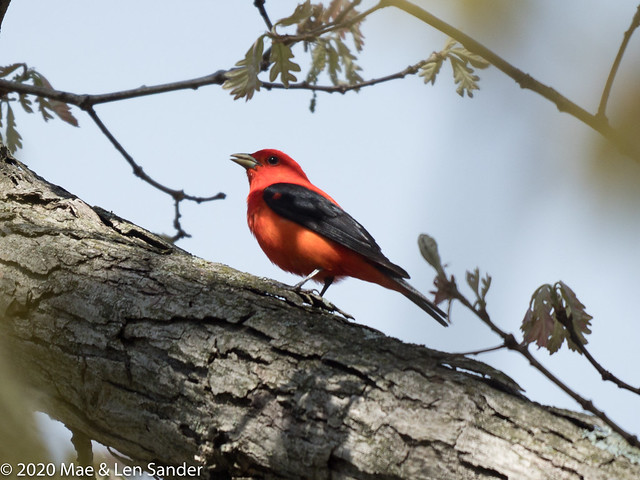
The Scarlet Tanager

The Bluebird
Furstenberg
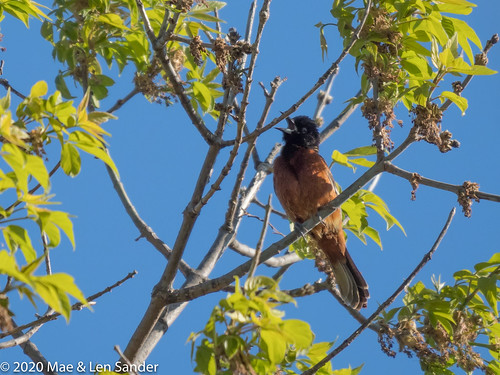
The Baltimore Oriole

When I was a small child, before I could read, my parents bought me a book with pictures of birds. I must have been very young, and just learning the names of many things. The birds made a big impression on me, especially the ones that I never saw at that time. Here are Len's recent photos of three of the birds I remember from the book


In the Arboretum where we have been birding often.
The marsh where we most recently went birding.
Blog post © 2020 mae sander for mae food dot blog spot dot com.

Friday, May 22, 2020

First Barbecue, 2020

Preparing chicken and cauliflower for the first barbecue of the season.
The cauliflower is cut into "steaks."
It's also the first time we have chosen to eat meat for 3 or 4 weeks.
In the afternoon, Len had baked kaiser rolls.
Cauliflower and chicken on the fire. Both are seasoned with salt
and Simon and Garfunkle Rub -- parsley, sage, rosemary, and thyme.
Just off the grill: chicken and cauliflower, ready to eat.
On the table: wine, chicken, lettuce salad, rolls... delicious!
Last year we were able to barbecue a few times in April, but this year to date it's sometimes been cold, it's sometimes been raining, and it has constantly been made weird by the ongoing pandemic. We are just lucky that the rain hasn't been worse -- around 100 miles from us, in Midland, Michigan, severe floods have created a disaster situation. Every day we realize how lucky we have been so far during all the bad times that are happening in the world today.

Blog post © 2020 mae sander for mae food dot blog spot dot com.
If you read this at another site, it's been pirated.

Thursday, May 21, 2020

End of the world?

"The old world is dying, and the new world struggles to be born: now is the time of monsters."

This quote, attributed to the Italian radical writer and activist Antonio Gramsci, sounds like a good fit for our crazy historic moment. Let's go all apocalyptical!

I wondered about the context where and when Gramsci wrote this, but it seems to be a free-floating quote that can't really be proven to come from anywhere. (If you have better source info, please tell me.)

You know the cliché be careful what you wish for? Around 100 years ago, Gramsci and others wished for extreme social change in Italy. What happened? Italy got Mussolini. Gramsci ended up in jail. Maybe we should wish carefully ourselves. I wonder what wish could have brought us to the reality of 2020.

Gramsci is viewed as kind of a saint by some mostly leftist political writers today. From the Encyclopedia Brittanica:
Antonio Gramsci, (born Jan. 23, 1891, Ales, Sardinia, Italy—died April 27, 1937, Rome), intellectual and politician, a founder of the Italian Communist Party whose ideas greatly influenced Italian communism. ... 
After his party was outlawed by Benito Mussolini’s fascists, Gramsci was arrested and imprisoned (1926). At his trial the fascist prosecutor argued, “We must stop his brain from working for 20 years.” In prison, despite rigorous censorship, Gramsci carried out an extraordinary and wide-ranging historical and theoretical study of Italian society and possible strategies for change. Plagued with poor health in the 1930s, he died not long after being released from prison for medical care.
Blog post © 2020 by mae sander for mae food dot blogs spot dot com. 

Tuesday, May 19, 2020

Humor from an earlier time


You can still find Nicole Hollander’s older books on amazon.com. The titles seem very appropriate for the current lock-down drag-out struggle, though I haven’t looked inside. I used to enjoy the cartoon when I read a newspaper with a comics page. Maybe you still do read one, but I don't. Online, Sylvia is still around at https://www.gocomics.com/sylvia/

And I’m tired of being serious. I hope you are staying sane and healthy and sometimes laughing.

.. best from mae at mae food dot blog spot dot com.

Monday, May 18, 2020

Tales Told by Native Americans

The Girl Who Married a Ghost 
(published 1978)
The Girl Who Married a Ghost and other tales from The North American Indian by Edward S. Curtis contains nine stories collected by the famous photographer. Curtis traveled throughout the western US around 100 years ago, and he is best known for his beautiful sepia images of Native Americans in traditional dress, posing in carefully chosen landscapes with many props. 

Curtis's photographs are incredible works of art, as well as being ethnographic documentation. Although most of his subjects no longer lived in the traditional style he depicted, the individuals in the photos seem to have been willing to cooperate with him. The result is a kind of fictional or subjective representation of their past.

While he was working with the Indian people, he and an assistant collaborated with the tellers of tales and with translators. They collected a large body of tales, and this small book contains a selection from them, representing a variety of tribes and locations.

Every story in the collection seemed very appealing to me, and I really enjoyed the accompanying photos. While Curtis for the most part did not create direct illustrations of the tales, the editor of the collection, John Bierhorst, included appropriate selections from Curtis's published photos.

Spirit monster mask.
"The Dance of the Spirit Monster" is a tale collected from the Kwakiutl of British Columbia. It begins: "One evening a hunter and his wife wen downstream to fish and landed at the mouth of the river, where they had a small hut. They spent the night. The next morning the man caught some salmon, and his wife cleaned them and laid them on a drying rack under the smoke hole."

During the following night, a spirit monster, "a strange creature with great, hanging breasts and a round, protruding mouth" tries to get at the drying salmon. The hunter kills the monster. After the couple return to their village, some of the other men see a female spirit monster, who is looking for her son. One ugly boy from the village helps the female monster to find the body of her dead son. She rewards him by giving him good things: "dressed skins and dried mountain-goat meat, and a mask that was just like the face of her son." 

She brings her dead son back to life, and also gives the now-handsome boy some "living water" which makes him handsome. She gives him a mask that looks like her son, and teaches him a dance. After dancing with the villagers, he uses the magic water to bring his dead parents back to life.

I especially enjoyed this story because a few years ago, I visited a village belonging to one of the tribes of this area, and I saw a collection of the tribal masks from the time when Curtis visited them (blogged here). I learned that in their tradition, a dance "belongs" to one person, and thus I understood what happened in the story when the hunter who had killed the spirit monster tried to claim the dance from the boy, and then had to leave for shame. ("The Dance of the Spirit Monster," pp 21-30)

Plains Indians.
"The Deserted Children" comes from the Gros Ventre tribe of Montana. It's a little like the European tale of Hansel and Gretel: two children are abandoned by their tribe, and their parents tell them that they don't want them any more: "Never mind, you are not my child." The big sister takes care of her little brother, finds roots and berries for them to eat, and makes them a shelter from brush, where they live for "many summers."

The boy, it turns out, has the ability that when he looks at herds of elk or buffalo, they all drop dead. The girl wishes for the meat to be dried and the hides to be tanned and made into tepee covers, and miraculously, they are so. Of course there's much more detail in the story, but eventually they rejoin their tribe -- though the girl still rejects the parents who had abandoned them. "After a while, however, she seemed to forgive them, and calling all the people around her, she divided among them a large quantity of boiled buffalo tongues." In the end, the brother's magic glance kills most of the tribe, but they come back to be "better than they were."

I enjoyed this story, because it so clearly highlights the material goods that were valuable to this tribe: food and shelter derived from the hunt of large animals. The "boiled buffalo tongues" are especially interesting because I've read that the tender meat of the tongue was the most valued meat on the very tough animals that roamed the plains. ("The Deserted Children," pp. 45-51)

This blog post documents a bit of escape reading in these rather depressing and isolated times! Review copyright © 2020 mae sander for mae food dot blog spot dot com.

Sunday, May 17, 2020

Baking!

This week Len has done a major number of bakes! Our new Poilâne cookbook offered this unusual recipe for pepper bread.
The French name for this bread is Pain de Mie, and it's found in most French bakeries. We thought it was delicious.
The addition of pepper is interesting, and very unusual. The bread in the Poilâne bakery doesn't have pepper.
Loaves of Pain de Mie in the window of Poilâne Bakery.
From our last Paris trip, November, 2018.

Swedish Rye Bread

I hinted that Len was planning to make Swedish Rye Bread.
He's not as funny as the Muppet Swedish Chef!
This very dense 100% rye bread is aged in parchment for 24 hours before you eat it.
In fact, it kept getting better as long as it lasted, which wasn't very long.
It slices up beautifully!
We made open-faced sandwiches with goat cheese,
roasted pepper, capers, and sardines.

And Other Baking

Another sourdough creation: pizza dough. Len topped it
with a goat cheese and scallion mixture, making it a white pizza. 
In the interest of not wasting anything, Len baked these all-rye crackers
using the sourdough discard. They were tasty and crisp with a good snap!
Blog post and photos © 2020 mae sander for mae food dot blog spot dot com.

Saturday, May 16, 2020

Responsible Choices in the Current Food Market

A worker at a coffee processing plant owned by a farmers' cooperative organization in Costa Rica.
We visited this plant last winter. Costa Rica supports very responsible agriculture and human welfare:
these issues are very important to me.
During my childhood and most of my adult life, the only motives driving our family's food choices were whether we liked the food, and whether it was good for us. Affordability was a distant third motive because in the United States, food has been kept very affordable for members of the middle class like our family. I'm aware that this is a privilege!

Recently, I've become aware of numerous additional reasons to choose or to avoid certain foods or classes of foods. These concerns lead me to ask myself many questions about my selection of food, and I take them seriously. Should I buy more locally grown produce and meat where available and in season? How can I make the most responsible choices for preserving the environment? Can my decisions be more humane? For quite a few years I've been attempting to buy climate-safe fish, following the recommendations of several watch-dog organizations, and I'm now avoiding meat from the packing plants where the workers are terribly abused and subject to infection from coronavirus. As I work through all this, my diet may continue to change. The current limitations on grocery shopping, as I stay out of stores to avoid contagious fellow-shoppers, are also affecting my ability to choose.

Beyond taste, quality, and nutritiousness, many other concerns have taken on critical importance. Here are the issues that seem important to me now:
  • Climate change has made us aware that some foods are very damaging to the long-term welfare of the earth. Clearing the rainforests of Brazil to graze more cattle can accelerate global warming. Clearing the mangrove swamps of southeast Asia to create shrimp farms is a disaster for the local and global environment (and these destroyed areas can only be used for a while but the environment is never restored). Raising cattle produces methane gas, some types of fertilizer poison the atmosphere, and so on. The term "carbon footprint" refers to the measurement of fossil fuel used to produce and deliver food products, and thus to estimate its impact on global warming.
  • Extinction due to over-fishing has threatened many important species of food fish. Shoals of cod once seemed inexhaustible, but now the cod is nearly absent from former fishing grounds; similar fates await other species. Several organizations rate seafood to help us avoid buying and eating the most threatened types of fish. Extinction of land-based wild animals is also a result of some of the actions that threaten to speed up global warming.
  • Cruelty to farmed animals motivates many people to avoid eating meat. The way this motive affects their choice of diet is varied, depending on whether they think all meat production is cruel or whether they think humane methods of cattle and poultry raising and slaughter are possible.
  • Welfare of American agricultural workers and food-processing workers, especially the workers in meat-packing plants, is another major challenge in our society. Should we buy meat when the workers are abused, exploited, and relentlessly subject to infection with coronavirus?
  • Welfare of workers in other countries presents a separate set of issues. Coffee, chocolate, sugar cane, bananas, shrimp on the Southeast Asian shrimp farms, and other imports are in many countries raised and processed with very troubling labor practices, including even slave labor.
  • Food safety is a multi-faceted issue. Is it a small bright-spot that coronavirus is not thought to cause contaminated food? We all know about warnings that romaine lettuce and other vegetables grown in Arizona or California may harbor pathogenic bacteria. Over-use of pesticide and other agricultural chemicals may result in contamination, which is hard to assess. We have to worry that oversight by US government agencies of both home-grown and imported food is becoming more lax. Some people worry about genetic engineering, but the impact on one's health of GMOs in food has been shown to be inconsequential, especially in comparison to other food safety issues.
  • Excessive processing of food has been a cause for concern for a long time. In my opinion, the healthfulness of highly processed foods seems somewhat less critical than other issues, because it only affects one's own personal health, not the welfare of the planet. That said, the corruption of US federal agencies by the current administration in Washington has more than ever favored the interests of big corporations over the interests of consumers and workers. So we may see the reintroduction of dangerous additives or careless food handling methods.
  • Religious requirements play a role in food choices in many worldwide communities, and deserve a mention here. In Muslim countries: no pork. In India, cows are sacred to Hindus and thus not acknowledged as a food source. In my own family, the generations who preceded my parents chose food with one main motive: it had to follow the religious laws of being kosher. Unlike the rest of the items on the list, this is not a personal concern for me.
I'll be coming back to some of these issues in future blog posts! And I will link up with Marg at 
Marg is the new host for Weekend Cooking, where bloggers share food-related posts from the previous week. This post and all posts on my blog are copyright © 2020 by Mae Sander for my blog, mae food dot blog spot dot com -- if you read this elsewhere it's been pirated! 

Friday, May 15, 2020

The Perfect Mexican Daughter

The novel I Am Not Your Perfect Mexican Daughter by Erika L. Sánchez was recommended a few months ago on a list of books by Mexican-Americans and other Latina women. These books bear witness to experiences by their authors, who did not receive enormous amounts of money and publicity for their work. In contrast, at that time, an unfortunate -- probably bad -- book by a non-Latina author became notorious for the outsized money and acclaim it accumulated.

This seemingly racist reaction on the part of publishers and reviewers made me sad, and I decided to read some fiction by women who really belonged to the Latinx communities they wrote about. Additionally, I decided that I would never read the book that was the target of the critique: a sensational novel that is still making huge amounts of money for its unworthy author and getting disproportionate attention. My earlier blog post on this topic is "Vulnerable and Sympathetic Characters," posted January 30.

But let me talk about the book I read: Sánchez has written a very nice coming of age story of a teenager named Julia who lives in a Mexican neighborhood in Chicago. Julia, the imperfect Mexican daughter of the title, narrates the novel. She suffers from many typical American teen problems, all made worse by her family situation. Her parents are undocumented residents, victimized in several ways, poor, over-protective, suspicious of relationships with anyone outside the family, unable to understand her love of studying or her aspiration to go away to college, and culturally different from their successfully assimilated daughter. While she can travel to her parents' village in Mexico and see her grandparents, her parents don't dare leave the US for fear of repeating their earlier horrendous trip across the desert to enter the country illegally.

The book begins with the death of the narrator's sister, who is run over by a semi-truck. Julia's parents, whom she calls Amá and Apá, are naturally devastated. As they talk about the perfect daughter they lost, she's sure they've always felt her sister was superior to her and that she was flawed. Although the novel is classified as "Young Adult" -- a category that most emphatically doesn't include me -- from the starting point where she describes her sister's death I found it perfectly readable. The accounts of the urban environment, the rural setting in Mexico where she visits her extended family, and the details of American high school life were very enjoyable.

Here's an example of the way the author tells the story. It appears early in the book when her grieving mother is not cooking any meals. Julia is always hungry, though she fears being fat and is criticized for her body type, except in Mexico where her grandmother and aunts see her as too thin! She wants independence -- and wants to eat out though her parents never take her out. She wants a lot of things:
"I want Amá to tell me that she loves me and that we’ll get through this together, but she doesn’t. I stand there like a dope, waiting and waiting for her to say something that will make me feel better. When I realize she’s not going to, I dig through her wallet on the dresser, take out a five-dollar bill, and slam the door.  
"After searching every crevice of my room, I manage to find $ 4.75 in change. I’ll be able to buy three tacos and a large horchata, which isn’t much, but it will do. If I have to eat one more plain tortilla or boiled potato, I swear I’ll cry. I slip out the back door to avoid Apá in the living room, not that he’d even ask or notice. Now I have a ghost father and ghost sister. 
"The taco place is bright with fluorescent lighting, and smells like grease and Pine-Sol. I’ve never eaten alone at a restaurant, and it makes me nervous. I can feel everyone watching me. They probably think I’m a loser for eating alone. The waitress gives me a funny look, too. I bet she thinks I’m not going to tip her, but I’ll prove her wrong. I may be young, but I’m not dumb. 
"I order two tacos de asada and one al pastor with extra limes. The smell of fried meat and grilled onion makes my mouth water. When the tacos arrive, I try to eat them slowly, but end up inhaling them with desperation. Not only am I bad at cooking, I’m bad at being hungry. I’m always convinced I’m going to faint when my stomach starts to grumble. Each bite of the taco shoots a rush of pleasure through my body. I guzzle the bucket-sized horchata until I feel sick."(p. 23).
Julia's curiosity about food mirrors her curiosity about books, culture, and other people. For example, later in the book she tries Indian food and loves the spices -- "it tastes like a foreign paradise." When visiting relatives in Mexico, she participates in a communal cooking event making menudo: tripe stew, and eating it: "The texture of the meat can be shocking to the average American tongue, but I like it."

The sequence of events in the book involves Julia's progress through high school and her effort to learn more about her sister's life, which involves a lot of surprises. She describes her experience with a teacher who says she's his best-ever student and helps her with the college application process. She talks about her friendship with a school friend, a girl from the same background, but not a relative, so not ok with her mother. In secret from her parents, she has a relationship with a boy from Evanston (read: rich and white) who calls himself "a typical American mutt— German, Irish, Italian.” (p 235).

There are some stereotyped and seemingly obligatory elements in this coming-of-age story, but they are balanced by the well-portrayed and individualized characters. Julia struggles in the same way as many characters in similar books, but the differences caused by her ethnic identity and her love of literature are critical to the novel's success. For example, when she first meets Connor, the boy from Evanston, he asks what's her favorite book and her answer is a combination of predictable and unpredictable reactions:
"I love so many…. The Awakening? One Hundred Years of Solitude? The Great Gatsby? Catcher in the Rye? The Heart Is a Lonely Hunter? The Bluest Eye? Poetry or prose? If poetry, then maybe Emily Dickinson… or wait, maybe… Fuck, I don’t know.” I’m not sure why the question fills me with panic." (p. 229). 
But also, Connor's reaction to her differences is interesting, especially when he asks her the question that mainstream Americans ask of so many ethnically different people they meet:
“But where are you from from?”
“I’m from from Chicago. I just told you.”
“No, what I mean is… Forget it.” Connor looks embarrassed.
“You mean you want to know my ethnicity. What kind of brown I am. ... I’m Mexican. You could’ve just asked, you know?”  (p. 234). 
As the novel progresses Julia learns much more about her sister, but also a great deal about her parents, for whom she develops more understanding. Details about this would be a spoiler so I won't discuss it more. The novel was published in 2017 and takes place in 2013-2015, so it doesn't reflect the recent official persecution of people like her friends and family. However, our government's ongoing policy of cruelty and abuse toward aspiring immigrants and undocumented residents makes reading parts of this book even more painful.

All in all I was pleased that I did read I Am Not Your Perfect Mexican Daughter.

This review © 2020 mae sander for mae food dot blog spot dot com.

Wednesday, May 13, 2020

Birds Aren't Real

Embellished stop sign with tag: "BIRDS AREN'T REAL."
Down the road from the embellished stop sign, we searched for pipits, but didn't find them. Maybe not real?
The usual occupants of this flooded field, geese and gulls, seemed pretty real.
Arb-5-09-4
Elsewhere, such as in the Arboretum, birds do seem real, 
like this orchard oriole singing its spring song.


Arb-5-12-2
The warblers that are migrating through Michigan also seem real.


Birding is a great way to enjoy the outdoors. We are glad to have so many beautiful birds not far from us, keeping up our spirits while we wait out the terrible pandemic along with the political firestorm that's happening every day. When humanity is faced with such unreality, nature can sometimes be an antidote.

Blog post and photos © 2020 mae and len sander.

Tuesday, May 12, 2020

Thank You, Heroes

We finally have a sign acknowledging the heroism of essential workers in our society.


Sign installed on our lawn.
Heroism is a concept that's very appropriate, in my mind, for many of the workers who are risking their own well-being for the sake of others in this terrible pandemic. The medical professionals who risk their own health in order to help sick people come to mind most readily, but many others are also working in dangerous conditions. Whether their prime motive is altruism or just making a living and providing for their families, I see an element of heroism in what they are doing.

Sadly, some of their sacrifice is needed as the result of poor leadership and greedy business practices that started long before the emergency. Our federal government could have decreased the high number of infected people by taking action earlier, making the work of governors like ours (Michigan) more effective. For years, American industrial practices, notably in meat packing plants, could have been regulated to be more humane to workers, but it's too late now. That doesn't diminish the heroic actions by workers!

Another of the many signs in our neighborhood
Heroism has fascinated writers throughout the ages, elevating self-sacrificing behavior through literary admiration. While wartime heroics are more often cited, many writers have seen a broader picture. Take for example this quote from Henry David Thoreau, upon seeing a "panorama" which would be a large painting shown in some sort of temporary exposition:
"I went to see a panorama of the Mississippi, and as I worked my way up the river in the light of to-day, and saw the steamboats wooding up, counted the rising cities, gazed on the fresh ruins of Nauvoo, beheld the Indians moving west across the stream, and, as before I had looked up the Moselle, now looked up the Ohio and the Missouri, and heard the legends of Dubuque and of Wenona's Cliff, - still thinking more of the future than of the past or present, - I saw that this was a Rhine stream of a different kind; that the foundations of castles were yet to be laid, and the famous bridges were yet to be thrown over the river; and I felt that this was the heroic age itself, though we know it not, for the hero is commonly the simplest and obscurest of men." -- Henry David Thoreau, "Walking," THE ATLANTIC MONTHLY. A MAGAZINE OF LITERATURE, ART, AND POLITICS. VOL. IX.-JUNE, 1862.-NO. LVI., p. 664-665. (https://www.walden.org/wp-content/uploads/2016/03/Walking-1.pdf)
Or consider these often-quoted lines from Bertolt Brecht's play The Life of Galileo:
Andrea: Unhappy the land that has no heroes!…
Galileo: No. Unhappy the land that needs heroes.
Finally, a quote that applies to the self-designated heroes (with or without guns) pressuring for reckless reopening of inessential businesses and recreations:
"The suicide bomber's imagination leads him to believe in a brilliant act of heroism, when in fact he is simply blowing himself up pointlessly and taking other people's lives." -- Salman Rushdie, quoted in Der Spiegel, Aug. 28, 2006
Or as Joe Biden says:
"President Trump's ... goal is as obvious as it is craven: He hopes to split the country into dueling camps, casting Democrats as doomsayers hoping to keep America grounded and Republicans as freedom fighters trying to liberate the economy." (Washington Post, May 11, 2020)


Blog post copyright  © 2020 mae sander for mae food dot blog spot dot com.

Monday, May 11, 2020

Strange Memories from a Strange Book

"I wonder where memories go. In fact a memory really can’t be lost. All it can do is wilt, gently wither, go bad, fade in tender agony, but never be lost. There is no land of lost memories. There is no cemetery of banished memories, not a single one, not even for the most porous, the most debilitated. There is no ossuary, no funeral home where their remains can be laid. Maybe because deep down a memory can never die. Not really." --Chloé Delaume. Not a Clue: A Novel, Kindle Locations 1108-1110).
"That’s all memory is, a row of awful cesspools, sluggish places of death, a picture tacked up behind every door, a door for every period, one picture per calendar, and memories in the middle, memories are dead moments..."  (Kindle Locations 914-916). 

Not a Clue by Chloé Delaume, which was published in 2004, is a very unusual work of fiction, very challenging to read. The chapters consist of a succession of monologues from mad people in the Hopital Sainte-Anne in Paris with occasional interleaved text by a self-identified "omnicient narratrix" and other odd bits.

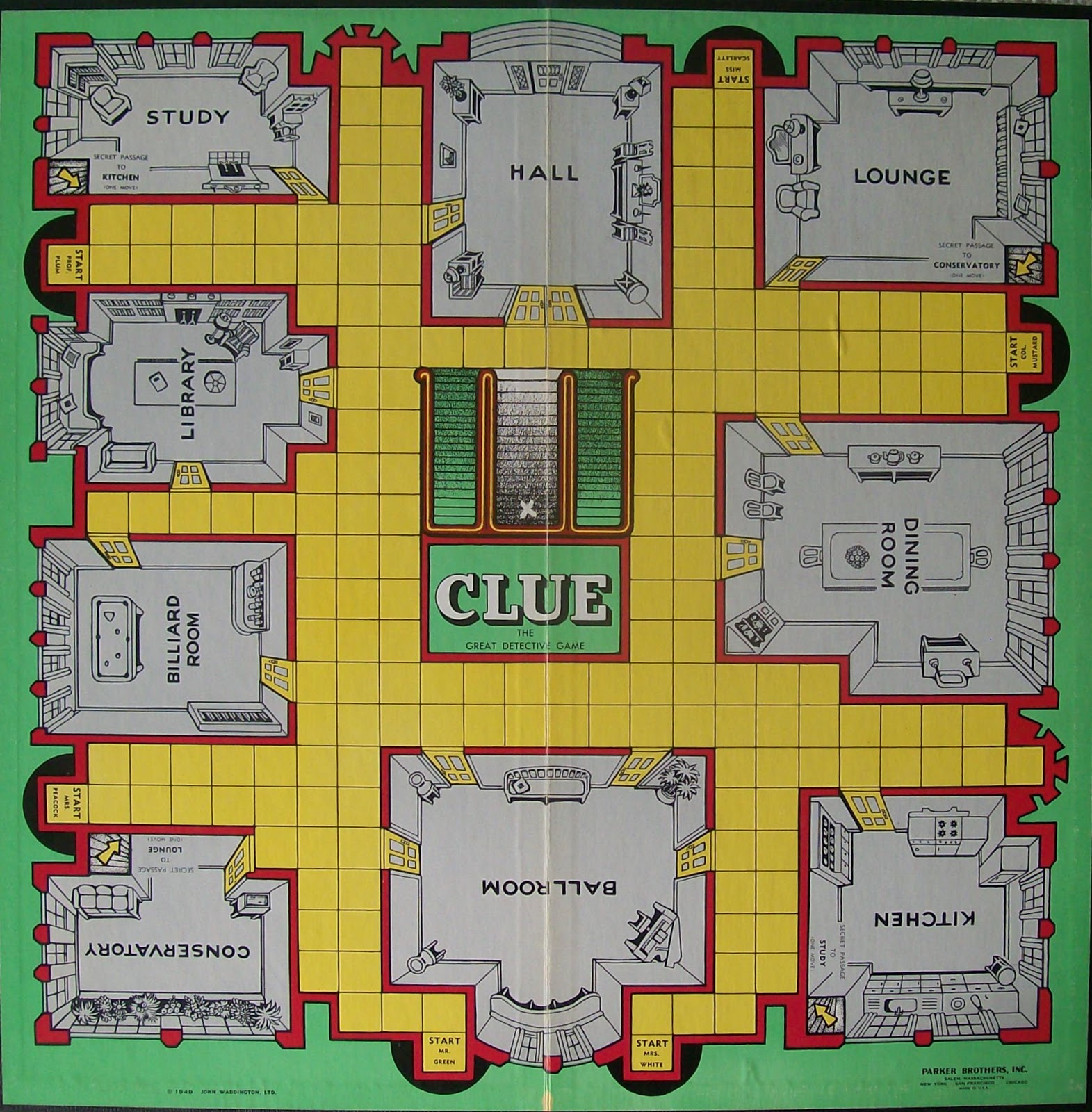
If you have ever played the board game "Clue" you will recognize the playing pieces on the book cover: the six tokens that represent the players and the six weapons: rope, knife, gun, wrench, candlestick, and lead pipe. The rooms of the hospital, where the patients tell their stories, correspond to rooms on the Clue game board, though the connections, I find, are a little baffling.

When I read about the author's unconventional approach to mystery writing, I thought it would be fun to read. When I learned that the author's literary predecessors were the group Oulipo I was even more interested, though I realized that it would undoubtedly be very difficult to read this book! Never would I dare to try reading it in French! I was challenged enough by translated works of "potential literature," overwhelmed by Life: A User's Manual, charmed by Zazie in the Métro, and so on with the works of the Oulipo writers, what would happen with this one?


Not a Clue -- a book about memory and its unreliable of ephemeral nature -- created all kinds of memories as I read. First, my childhood memories of playing games of Clue with the kids in my neighborhood. Memories of a variety of French experimental literary creations, read over the years. Memories of experiences described in the book, like changing from one Paris Metro line to another. Memories of my happen-stance visits to the Hôpital Sainte-Anne in Paris where the action takes place. At this moment in time, in the year 2020, memories of exotic locations or social interactions are all I or anyone else can have, being deprived by the coronavirus of direct experiences outside a very limited sphere. Weird, no?


The gate of the Saint Anne mental hospital in Paris. (Wikipedia) 
It's pretty funny that this book should be so full of memories for me, since so many of the characters who write little self-portraits are in the mental hospital because they have amnesia of some sort. During one of our long stays in Paris I had to go through the hospital gate shown in the photo once per month to pay our rent. The woman who owned our rental apartment required payment in cash to facilitate her tax evasion, but we never acknowledged this directly. She herself lived in a lovely apartment inside the hospital compound, where her husband worked as a psychiatrist and administrator.

Glacèire, the metro stop for the hospital
Whenever I entered the hospital grounds, I felt very uneasy because my French wasn't very good. I was frightened that my presence would be questioned by some authority, that I would answer inappropriately, and thus I would be taken for a mad person who belonged there.  Could I explain myself convincingly? My real purpose was making a business call, but I had to pretend it was a social call. Having our whole month's rent in cash in my pocket also made me edgy, especially during my trip on the metro. When I arrived, my landlady would put the cash in a sugar bowl and then offer me a cup of tea.
My own memory makes me feel kinship to the memory-monologues of the many mad people in the book -- "The post-withdrawal alcoholics living in the 14th arrondissement of Paris who’ve been in my presence in the smoking lounge of the Piera Aulagnier Wing at Sainte-Anne’s for the last eight and a half months," or "Amnesiacs, schizophrenics, psychotics, neurotics, manic-depressives, and so many more," says one character  (Kindle Location 1085-1099).

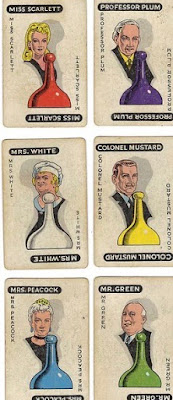
The mad people in the novel were identified with the six personages of the Clue game, and relevant chapters are labeled with the guesses that Clue players make about the murder that's being solved by playing. The Clue game cards for these personages appeared in an ad I found on e-Bay, offering a vintage Clue set like the one I remember playing. In Not a Clue, the author probably had in mind some later version of the game, but I’m making this review also about my own memories.

You can probably guess the problem with this book. Such an artificial structure in the end makes it seem incoherent — all these different mad people with oddball efforts to forget and to remember. The interspersed observations by their doctors, the digressions by the "narratrix," comments the characters make about being in a book and other "meta" things, and so on follow the lines of certain 20th century literary forms. "I have other plans than being part of this pathetic book, you know." says one character. (Kindle Location 3665).

In my judgement, the book is a curiosity, but not very readable. Liking it would require some real mental gymnastics, as far as I’m concerned.

Blog post copyright © 2020 mae sander for mae food dot blog spot dot com.


Saturday, May 09, 2020

Who's a Twitcher?


WaterworksPk-05-06-4

A Kirtland's warbler is a rare sighting in Washtenaw County where we live. They breed only in a very small territory in northern Michigan, and there are so few of them that they are rarely spotted during migration. When one shows up (like this), local birders flock to the spot to get a look at it. Those keeping a list of birds they have seen in the county are especially excited by the opportunity! Len took this photo earlier this week when the bird was flying through on its way to the nesting grounds.
Scarlett-Mitchell-3

This female (or maybe immature male) summer tanager was regularly visiting a bird feeder near us this week. The adult male of the species is the only completely red bird in North America, but he wasn't here, I guess. Their normal range ends quite far from here, so it's an unusual visitor.

SalineMills-4
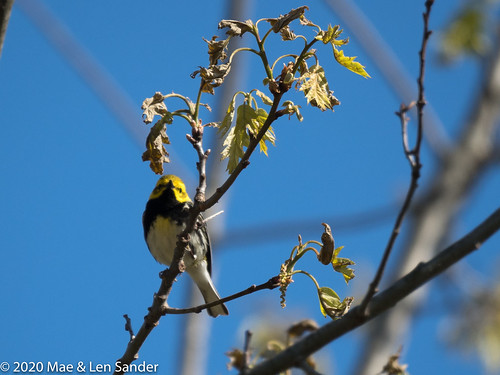
A nesting yellow-throated warbler, seldom seen here.
WaterworksPk-05-06-2

I love Len's photo of the northern parula, a type of warbler, that had just caught a dragon fly. This bird is not particularly rare in our area during spring migration.  Len has been going out to see what photos he can get -- for example the above photos from his Flickr page. He's not at all alone, as many people in our area, Washtenaw County, Michigan, are doing so too. Whether they watch birds just for the sake of enjoying their beauty, or whether they are keeping one or another type of list, they seem very dedicated to the pursuit of both common and rare sightings.

During the pandemic lock-down this month, solo birding is in fact one of the few permitted and safe activities. Organized bird walks have been cancelled, along with just about every organized activity, but individuals continue to go out to the places where bird migration brings many species that are seen here only at this time of year. Most birders seem to be very respectful of the social distancing and mask-wearing requirements that we all face at the moment.

Quite a few local birders share sighting information on a variety of internet lists and on eBird: "the world’s largest biodiversity-related citizen science project, with more than 100 million bird sightings contributed each year by eBirders around the world. A collaborative enterprise with hundreds of partner organizations, thousands of regional experts, and hundreds of thousands of users, eBird is managed by the Cornell Lab of Ornithology." (source)

Informally, Len sometimes refers to his quest for unusual sightings as "twitching," but the word twitching is usually reserved for a somewhat unsavory form of birding, by people who seem to care only about making the longest possible list of the birds they have seen, and to have little interest in politeness, environment, or other things that characterize more conventional birders. To quote a very disapproving description:
"A twitcher is a type of birder who seeks to add as many species as possible to their life list, often without detailed or long-term observation of individual birds. Instead, twitchers are often characterized as being satisfied only with achieving a confirmed identification as quickly as possible. These types of birders are regularly associated with poor birding ethics, though that generalization does not apply universally to every twitcher and only serves to promote controversy and discord about this type of birding." (source)
Clearly, no one would self-identify with this definition, though lots of birders call it twitching when they follow one of the leads to an exceptional bird sighting. The word "twitching" for this behavior dates to 1950s, and was first used to describe one Howard Medhurst, a British birdwatcher.

sciopond-3

In November 2018, a bird showed up in Washtenaw County that appealed to REAL twitchers! The spotted redshank is usually found only in northern Europe. However, the one shown in Len's photo had become lost and spent a few days at a pond near us. Len talked to people at the site who flew into Detroit Metro Airport, rented a car, drove the 45 minutes or so to the location, looked at the bird, and turned around and went home with one more tick on their bird lists. Needless to say, except for that one time, the bird has never been seen here before or since.

Blog post copyright © 2020 mae sander for mae food dot blog spot dot com.