Showing posts with label Vegetarian experiments. Show all posts

Thursday, September 14, 2023

“No Meat Required”

Do I mind reading about an obsession with tofu, tempeh, seitan, 
and soy products in general? Sometimes I do mind. 
Sometimes the soy-based mindset of this author does bug me...


No Meat Required: The Cultural History and Culinary Future of Plant-Based Eating

Alicia Kennedy's reasons for eating less meat (or in her case NO meat) started very much like my motivation: she agrees with the principles that gave me and my husband cause to reduce our meat consumption three years ago. Writing about her book, she said:

"To write about food means always occupying the realm of the ordinary. We can be reporting on deforestation for palm oil production, the destruction of mangroves for shrimp harvests, or the atrocious working and animal welfare conditions in industrial meat-processing, but, for the reader, it will all come back to the grocery store, the kitchen, and the menu they’re faced with at a restaurant. How do we navigate this thorny terrain—which includes labor rights, climate change, loss of biodiversity, corporate greed, colonialism—without overwhelming but instead empowering, entertaining, and encouraging that reader?" (source: Navigating the Thorny Terrain of Food Writing)

In reading the book, I wished that she had adhered more to these issues and less towards personality sketches of vegan advocates, owners of vegan restaurants, vegan revolutionaries who want to overthrow the government through diet, feminists who see meat as a tool of the patriarchy, and famous cookbook writers like Molly Katzen or Frances Moore LappĂ© from the second half of the 20th century. 

Sure, I remember those 1970s potlucks where the more hip-type people brought bland casseroles made of lumpy brown rice and greens, probably a recipe from Frances Moore LappĂ©'s Diet for a Small Planet (1971) or Molly Katzen's Moosewood Cookbook (1974). I remember bake sales with carob flavored "brownies" that had so much whole-grain that they took the skin off the roof of your mouth. I remember a health-food store where the bread was moldy and the clerk said that was good because it showed the bread contained no poisonous additives -- yes, I thought, I want to be sick now, not 40 years in the future when the additives might catch up with me. And I remember vegetarian restaurants through the years with a different philosophy every decade.

I did enjoy her descriptions of the way that many food trends and innovations begin small but are taken over by huge money-making corporations and big-money interests. Or of exploitation of desperate and poorly-treated workers who produce specialty foods. The author writes:

“What does it matter if the cashew cheese is vegan if the hands of a woman in India have been irreparably damaged by the nut shell’s toxin? What does it matter if Oatly is in every coffee shop if one of its stakeholders is Blackstone, a private equity firm also invested in a company deforesting the Amazon and led by a CEO who donated $3 million to a super PAC supporting Trump’s re-election? More vegan food doesn’t inevitably lead to a more just world, but it does let a lot of companies greenwash their money-making in its name.” (p. 144)

When I bought Kennedy's book, I signed on for a memory tour of all this "cultural history." Some of it is familiar to me, some is new, some is interesting, and some is boring. But I'm not that enthusiastic about such a long version of vegan history in American life. I just want to eat less meat, and I see it as a humanitarian decision that doesn't need overthinking. By the way — I don't want to eat tofu too often.

In sum: No Meat Required talks much more about people than about food. It's not about vegetables, it's about vegetarians/vegans. It's not about recipes, it's about recipe writers. It's not about cooking, it's about chefs. It's not about eating, it's about theories of eating. It's about the politics of choosing food, whether one shops in a supermarket or a farmers’ market. It’s not about the food itself (except the author’s disgust for eating flesh) but about other concerns like whether one is concerned about big agriculture or about the great profits to be made from artificial meat. 

Social issues predominate several chapters of the book. For example, the racism in selecting cookbooks for publication or the bigotry in promoting culinary personalities to media stardom. The author documents a systemic lack of recognition of non-mainstream cultures and cuisines. Mediocre white writers have a much easier time than outstanding minority writers. The various ways that Black groups embraced vegetarianism has been pretty much ignored by the culinary establishment: the author includes interesting discussions of Black writers and popularizers of vegetarian diets.

Food justice, food economics, food history, food as a cause of climate change, and food capitalism -- all are noteworthy topics in Kennedy's book. She describes the history and technology of manufacturing soy milk and cashew cheese, and the products of trendy bakeries and faddish restaurants. She also presents her own experiences and tastes and quirks about food — how she likes nut-based fake cheese but not real dairy cheese; adores tofu, tempeh, and seitan; doesn’t like fake meat and reviles real meat, but likes patties made from grain and beans. She favors mushrooms but completely ignores salad — it doesn’t play a role in her life or in the book. Her dislikes are expressed so much more vividly than her likes, that I wonder if she really enjoys eating at all.

Oddly, Kennedy says very little about basic vegan foods like bread, rice, pasta, fruit, or vegetables. This bothered me: these are the foods I most rely on. Specific example: the word “tomato” only occurs three times in the entire book. Similarly, she mentions potatoes, sweet potatoes, rice, apples, and oranges only a few times each. Her focus is just not on the food!

To summarize: I find  the book to be a polemic. Maybe I have written too much about what the author didn’t say — but in the end, it’s not really what I wanted to read.

My idea of a vegetarian meal. Even after reading the entire book, I’m not sure mine is the same as her idea.
Note: that’s homemade bread and local corn and tomatoes. ALL her mentions of corn are negative.


Review © 2023 mae sander


Thursday, May 04, 2023

Food News

Interesting trends and fads in food have been the subject of several recent articles. Restaurant news maybe should make me feel put down because I rarely go out to eat any more when I am at home, but a couple of bits of restaurant news have amused me with their exaggerated trendiness. Also, I’ve been reading a bit about environmental issues related to the food supply. Here are a few summaries (with links if you want to read the full articles).

Veggie Burgers

Thank God, Veggie Burgers With Actual Vegetables Are Making a Comeback by Bettina Makalintal in Eater is about fake meat and its rise and decline. This topic reminded me how three years ago, when our household decided to reduce the amount of meat we were buying, we often purchased imitation meat -- specifically, Beyond Burgers -- and quickly got tired of them. Later, we experimented with the Impossible brand of artificial meat. Our use of Impossible meat lasted longer, but we've also become tired of this product. I think we have learned how to create more vegetable-based meals without meat substitutes. The article points out a general decrease in demand for these artificial products and the corresponding corporate losses. It seems that a lot of people had parallel experiences to ours. 

This article notes the decline of fake meat on fast food menus:

"Its many problems aside, corporate fast food is a good indicator of consumer interest. What it puts on the menu is what it assumes to be appealing to a broad swath of American consumers. (It’s clearly not always right, as is the case with its unsuccessful fake meat experiments.) But this big reappearance of the definitely-vegetables burger suggests that people are interested in a return to form after trying out tech burgers. ... Finally, fast food brands are recognizing what vegetarians have long known: There is so much potential in making real, recognizable vegetables and legumes taste good, in patty form, without the need to approximate beef."

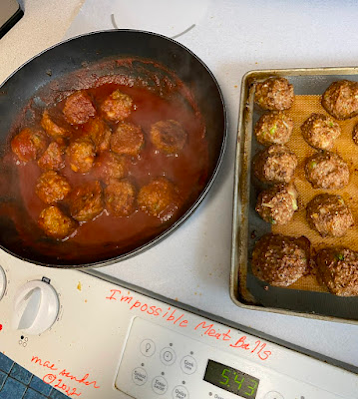
In photo: Impossible Meatballs that I made last year. I guess I'm not doing that any more! If I have to have meat, it will be real meat, and mostly I'll try to eat vegetables.


Luxury Bread

Goodbye to the Bread Basket. Hello to the Bread Course by Rachel Sugar in the New York Times is subtitled: "Chasing a pandemic-era interest in lovingly made loaves, restaurants are charging a premium for bread that’s anything but filler." Baskets of house-made bread priced in the $20 range are now on the menu in fancy New York restaurants where I will never eat. However, it's always interesting to see what these self-satisfied and self-declared leaders in food trends are pushing this week. 

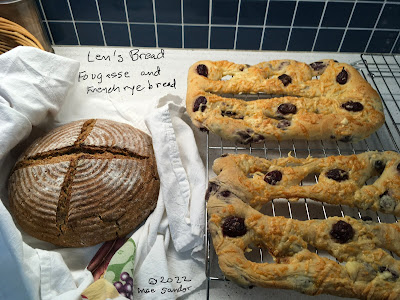
In the photo you can see one of Len's many bread baskets from last year. He made a French rye bread called Meteil, traditional in Auvergne, and a loaf of fougasse, a ladder-shaped olive bread from Provence. We love bread, and can see how this trend could emerge.

Beans!

Are Beans Good for You? by Sally Wadyka, published in Consumer Reports in August, 2020, and updated this April, declares: "Lentils, kidney beans, black beans, and more offer unique health benefits." 

Specifically, as most of us know, beans provide protein, antioxidants, vitamins, and minerals, such as calcium, iron, potassium, and magnesium. Beans contain fiber, and also a carbohydrate called "resistant starch," which doesn't go right into your blood stream like other starch. (That's a good thing.) And besides having measurable health benefits, beans are cheap! It's always interesting to review the detailed facts about a familiar issue.

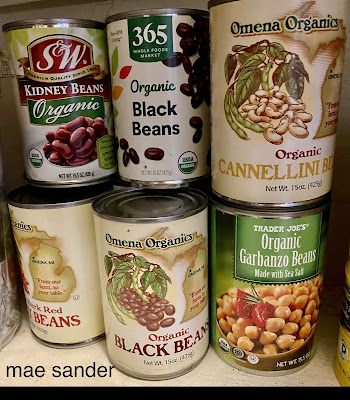
In the photo you can see my pantry shelf of various types of beans: black beans, cannellini beans, garbanzo beans, and red kidney beans, destined for a variety of recipes. I try to rotate various bean dishes in our attempted vegetarian diet.

How bad is plastic wrap?

To Wrap Or to Not Wrap Cucumbers? by Chandrima Shrivastava and four other authors, published by Frontiers in Sustainable Food Systems, is a scientific research article about the environmental effects of plastic containers and wrappers for food packaging. It is very interesting and the conclusion is counter-intuitive: "using plastic wrapping for cucumbers clearly reduces the overall climate change impact." The research was very detailed, but here's the bottom line showing this reduction in climate change impact and how it can be measured:

"This is primarily because the benefit of a reduction in food waste is much more than the additional impact caused by the plastic wrapping. ... The benefit of using plastic packaging in reducing food waste is almost 4.9 times higher than the negative environmental impact due to the packaging itself. This impact will likely be larger, as we did not account for the reduced food waste at the consumer level due to wrapping. ... It was found that every single cucumber thrown away equals the impacts of the plastic packaging needed to wrap 93 cucumbers."

Another Threat to the Food Supply

Fungal attacks threaten global food supply, say experts by Damian Carrington, published in The Guardian, warns: “The impact of fungal disease is expected to worsen, the researchers say, as the climate crisis results in temperatures rising and fungal infections moving steadily polewards. Since the 1990s, fungal pathogens have been moving to higher latitudes at a rate of about 7 km a year.” So many threats, so little time!

Too many good things to read! I can't keep up.


Blog post © 2022, 2023 mae sander.

Tuesday, February 28, 2023

Kitchen Wrap-Up for February

Our Kitchen Witch has a new spot in the kitchen.

In my kitchen in February: simple food. Not much new. 

We were traveling for around half the days in February, and thus not in our kitchen. When we come back, in around a week, we expect to see some changes which I’ll write about. We missed the 3-day power failure which would have meant no stove! Here are some of the not-at-all ambitious things I did in the kitchen when we were at home. I’ll be sharing with the In My Kitchen blog party at Sherry’s blog.


Toasted sandwiches: an easy dinner.

Salad with leftover lamb roast on a Valentine platter.

Lightly-cooked snap peas with a few other vegetables.

Tofu with bok choi.

Broccolini with shiitake mushrooms and hot-sweet chicken legs.

Things we got done in the kitchen: preparing for the installation of a new cabinet. Moving a bookcase and reorganizing the cookbooks. Getting a new garbage disposal because the old one was making more and more painful noise. Not cooking much! Not worth a photo!

In other kitchens

Visiting our friends Phyllis and Ed in Del Mar, California, after the Birding Festival.


Chicken mole served at a ranch near La Paz, Baja California.


You can see the Mexican Diet Coke. Some of our fellow passengers were enthusiastic about the Mexican
regular Coke because it’s sugar sweetened, but I am into Diet Coke, which I show for Elizabeth!

We were surprised by a very good meal at an airport hotel
on the way to our trip in Baja California.


Fresh local seabass at The Fish Market in Solano Beach near San Diego where we visited later in February.

Cheesecake at the Artifact Cafe in the Mingei Museum, San Diego.

Finally: A Note on Ethics and Choosing Food

Eating meat: a habit I find very desirable because I like the taste and find it satisfying, and also because it’s easy to prepare. A few years ago the news stories on horrific cruelty to meat-packing and slaughter-house workers caused me to greatly reduce my meat consumption. I am also aware of the issues of cruelty to animals and of damage to the environment caused by raising cattle and many other species, as well as the wastefulness of growing cattle feed, and many other negative consequences of meat production and consumption. 

Recently, I’ve been backsliding on my determination to eat a more plant-based diet. But here’s the latest news:

More than 100 children have been discovered to be illegally employed by a slaughterhouse cleaning firm across the country, federal authorities said. …[For example] a 14-year-old child who worked at a Nebraska facility from 11pm to 5am five to six days a week from December 2021 to April 2022, cleaned machines ‘used to cut meat’” (from the Guardian)

Time to think about all this again! But on our trips, I wasn’t very restrained.

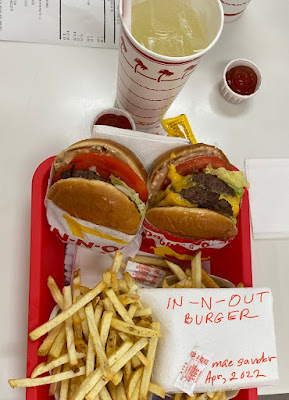
In N Out Burger: wrong for so many reasons.
But so much fun on the rare visit to California!

Blog post and photos © 2023 mae sander

Monday, May 23, 2022

What is Impossible Meat?

From Burger King's Menu, May 2022: Impossible Whoppers.
I have tried them and they are fine.
 
"Beyond and Impossible meats are two different brands of plant-based meats that taste exactly like real meat—or close enough. The Impossible Burger even "bleeds" like meat, and is made mostly from soy, coconut oil, sunflower oil and natural flavors. Beyond Meat's key ingredients include water, pea protein, expeller-pressed canola oil, refined coconut oil and rice protein." (Source: Is Impossible Meat Bad for You?)


Home-made Impossible Meatballs.
Some comments last week asked about what they are.

Last week I wrote about preparing and eating Impossible meatballs. I had found the key ingredient, Impossible Beef, at Trader Joe's -- it's popular so they do not always have it in stock. We've also tried Beyond Burgers; however, after using them for a while, I no longer enjoyed them. So far, I do like Impossible Meat, which I find a very convincing meat substitute, and better than vegetarian patties. While some people find just the idea of such products repellant, I am open to experiments!

A less-meat-like meat substitute: veggie burgers.
Not bad, just not like meat.
I’ve written before about our decision to buy less meat, and how we have switched our diet to a combination of plant-based foods, dairy products, some fish, and occasionally chicken. I’ve described how our reasons originally involved concern for human rights violations and inhumane treatment of workers in slaughter houses and meat-packing plants, which were especially abusive during the first months of the coronavirus pandemic. We also considered other reasons to eat less meat, including the negative impact of cattle and hog raising on the global environment, the effect of eating meat on our health, and issues of cruelty to animals throughout the industrial meat-farming and slaughtering process. Switching to imitation meat addresses most of these problems.

One thing we try to give up: Fast Food like In-N-Out Burgers.
Shown here with lemonade to share with Elizabeth's blog party.

There are no perfect decisions! Only compromises. But here are some thoughts about the new very-meat-like meat substitutes, Impossible Meat and Beyond Meat.

Impossible Meat or Beyond Meat and Health

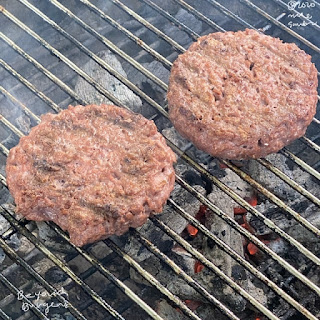
Beyond Burgers on our grill, May, 2020.
We decided to reduce our meat consumption two years ago.


The indisputable fact: Impossible Meat is ultra-processed. I've written about industrial food processing dozens of times, and generally explain why I avoid such products -- ultra-processing implies the use of numerous unfamiliar additives, and such foods couldn't be made in a home kitchen. This is all the more true of the lab-grown meat substitute, though the imitations are slightly lower in calories and much lower in fat content. I choose to eat Impossible meat occasionally, though, because the risk isn't high, and our avoidance of meat for ethical reasons is strong. I would especially be pleased if it was more commonly available at the fast-food places where I go when driving cross country! 

I'm not eating this product often enough to worry about whether it supplies the same nutrients as meat, though it has some of them:  

"Impossible Meats have been fortified with vitamins and minerals and do contain some micronutrients, but the reality is that processed foods are not as nutritious as unprocessed foods." (Source: Is Impossible Meat Bad for You?)

A bit more on the question of eating ultra-processed meat substitutes: 

"Critics of plant-based meat have also pointed out that it tends to be highly processed. No doubt, most plant-based meats are not health foods, due to their high saturated fat and salt (though beef and pork, too, are high in saturated fat). But “processed foods” is a vague and often ill-defined term that encompasses everything from high-fructose corn syrup to whole-grain pasta to yogurt, and has little bearing on foods’ environmental impact. As Vox’s Kelsey Piper has written, the term 'processed food' 'can obscure more than it clarifies' when it comes to the debate over plant-based meat." (Source: Yes, Plant-based meat is better for the planet)

I agree with the following statement from an article in Gizmodo: 

"If you’re wanting a nutritious, heart-healthy meal, you can and should eat vegetables and whole grains and fruits and all the other stuff that everyone knows they should be eating.... The nutritional status of the Impossible Burger doesn’t matter, because, like a regular hamburger, it’s a treat. You shouldn’t eat an Impossible Burger every day, just like you shouldn’t eat a hamburger every day." (source: "Impossible Burgers Aren’t Healthy")

What these products are NOT: a more controversial type of imitation meat is not yet available: this extreme method employs cell cultures to grow meat and seafood in a lab (also to grow dairy products). These products are in development, but none of them is yet on the market, and the USDA is in process of considering how to regulate them to protect consumers and avoid misrepresentation of the product. (Cell-based meat and milk: wonders of modern food technology?)

The Health of the Planet

First, the claims for ecological responsibility: "Impossible Foods claims its soy-based burger uses 87 percent less water, takes 96 percent less land, and has 89 percent lower greenhouse gas emissions than a beef burger. Beyond Meat makes similar claims about its pea-based burgers." 

Then some analysis: "But years of research on the environmental impact of food make one thing clear: Plant proteins, even if processed into imitation burgers, have smaller climate, water, and land impacts than conventional meats. Apart from environmental impact, reducing meat production would also reduce animal suffering and the risk of both animal-borne disease and antibiotic resistance. The criticisms against the new wave of meatless meat appear to be more rooted in broad opposition to food technology rather than a true environmental accounting — and they muddy the waters in the search for climate solutions at a time when clarity is sorely needed." 

And a few statistics about meat growing: "Even the lowest-emitting beef from dedicated beef herds (34 kg carbon dioxide equivalent, or CO2e) and lower-emitting beef from dairy cow herds (15 kg CO2e) came in far above the highest-emitting tofu (4 kg CO2e) and plant-based meat (7 kg)." 

Will highly processed meat substitutes become more common and more acceptable while remaining ecologically responsible? At the moment, Impossible Meat and Beyond Beef are more expensive than ground beef: will the price difference decrease? Can the successes of these small start-up companies be scaled up to feed many more people and actually lead to a reduction in demand for beef? These are ongoing questions and I have not seen credible answers.

Source of quotes for this section: Yes, Plant-based meat is better for the planet.

Ethics: The Welfare of Meat-Packing Workers

Concern about meatpacking workers, especially about the risks that they were forced to take during the pandemic, was our original reason for greatly reducing our meat consumption. The abuses in industrial meat plants, which produce 99% of the country's meat supply, were already outrageous prior to the pandemic. High incidence of injuries and long hours without breaks were consistent, and many of the workers were immigrants (legal or not) or otherwise vulnerable to exploitation. My belief that mistreatment of workers is a central feature of American meat production gives me an incentive to continue avoiding meat. Substitutes like Impossible meat make it easier for me to do so. 

We read in the spring of 2020, as the coronavirus was raging, about how the meatpacking industry giants (virtually the only source of retail meat available) forced workers to stay on the job and risk illness and death for themselves and their families. Abuse of workers is unchanged now, after two years of public awareness of the vast cruelty of the meat industry. A newly published report offers many facts about this:

"How the Trump Administration Helped the Meatpacking
Industry Block Pandemic Worker Protections," May 2020.
An official report on recent Congressional hearings by the
Select Subcommittee on the Coronavirus Crisis. (Online version here)

The major finding of this report:

"Last year, the Select Subcommittee found that during the first year of the pandemic, infections and deaths among workers for five of the largest meatpacking companies—Tyson Foods, Inc. (Tyson), JBS USA Holdings, Inc. (JBS), Smithfield Foods (Smithfield), Cargill, Inc. (Cargill), and National Beef Packing Company LLC (National Beef)—were significantly higher than previously estimated, with over 59,000 workers for these companies being infected with the coronavirus and at least 269 dying. Internal meatpacking industry documents reviewed by the Select Subcommittee now illustrate that despite awareness of the high risks of coronavirus spread in their plants, meatpacking companies engaged in a concerted effort with Trump Administration political officials to insulate themselves from coronavirus-related oversight, to force workers to continue working in dangerous conditions, and to shield themselves from legal liability for any resulting worker illness or death."

The vile behavior of meatpacking corporations, and the vile corruption of the Trump administration in abetting them, is no surprise, but the facts are still shocking. The report details the existing  abuses of the major suppliers of meat to the country, and how they continue to mistreat workers. And I'm convinced that I want to continue avoiding their products whenever I can.

Blog post © mae sander 2022. 

Saturday, October 31, 2020

In my new skillet

In my kitchen in October, my only new item is a skillet. It was on special sale during Amazon Prime Days, and I was also using up a $10 credit that was only good during the 2-day promotion. 

New stuff is small consolation for the current status of the world and the dread with which we wait for next Tuesday and its possible long aftermath. Will we re-elect an incompetent, corrupt, and self-serving President and Senate? Will we perpetuate an administration whose policies have caused large numbers of people to become sick and impoverished? Will more and more members of our society become jobless, homeless, bereaved, isolated, without hope? Will another 4 years enable these demagogues to deprive several million Americans of health care insurance? To destroy the environment? To intensify inequality and racism? To encourage and abet domestic terrorists more than it already has done? 

Let me keep my mind away from the immediate future and the long-term future. Let me cook. Here is my new toy, with some pictures of how I am using it. Maybe it's becoming my favorite pan.

New 10" non-stick skillet, replacing one that got sticky.

First in the skillet: I made black beans to go in a tortilla casserole.
The casserole -- beans, tortillas, cheese, & salsa -- baked in the oven.

Leftover tortilla casserole becomes skillet beans & eggs for lunch.

Toasting quinoa for pilaf in the new skillet. (Recipe here.)

Steaming the quinoa while making sweet potato and red lentil curry
in one of my other skillets.

Curry, quinoa, and yogurt with cucumber.

Heating the new skillet for some sourdough pancakes.

A good surface for a nice big pancake!

Salmon croquettes: another job for the skillet. (Recipe here.)

The croquettes with yogurt sauce and baked potatoes.

Omelet with vegetables and cheese.

Frying delicata squash for pasta casserole.
In the other pan is a Béchamel sauce.

Browning onions for pumpkin-tomato soup.

Toasting oats for a breakfast bowl.

Breakfast bowl: yogurt, dried apples, oats, maple syrup.

Finally: even bread can use the new skillet. For a Japanese Milk Bread,
the first step is cooking a starter mixture of flour, milk, and water.

Len's loaves, ready to bake.

The bread was delicious! (Recipe from NYT)

A few skillet fry-ups that didn't get into the photos were brown flour for brown gravy (I don't think I could make brown flour except in a working no-stick skillet) and croutons for a panzanella salad of my own devising. I’m  having lots of fun with this new kitchen item. And I'm sharing this post with Sherry's once-a-month kitchen event, "In My Kitchen" where bloggers share new items and ideas from their kitchens. 

This post and all photos © 2020 mae sander. To see what Sherry has in her kitchen along with links to many other bloggers' posts go to: 


Thursday, October 22, 2020

Trying Turkish Recipes

İmam bayıldı: Stuffed Eggplant cooked in Oil

"The Imam Fainted" or Ä°mam bayıldı is one of the more famous dishes of classic Turkish cuisine. The ingredients are olive oil, small eggplants, onions, garlic, parsley, tomatoes, and more olive oil. I tried a recipe today from one of my Turkish cookbooks, to go with Turkish pide, a type of flat bread, that Len made. First, some photos of how I cooked the eggplant:


After trimming the eggplants, you brown them in olive oil.

The filling cooks while the eggplants cool.


After baking: more parsley is added to the dish.

The Turkish cookbook we used today.

Making Turkish Pide


Shaping the flatbread.

It bakes on the baking stone in the oven.

A really delicious bread!

Our dinner: eggplant, flatbread, and a garnish of tomatoes, basil, and cheese.

Oh, and what about the Imam? Why did he faint? Some stories say the dish was so delicious it made him faint. Some say he was shocked because his olive oil supply was depleted by the lavish amounts used in the recipe. It's all a myth. We may have tried this dish on one of our two visits to Istanbul, but I'm not sure. We certainly ate a number of stuffed vegetables, which are all characteristic of Turkish cooking.

Blog post and photos © 2020 mae sander.