|
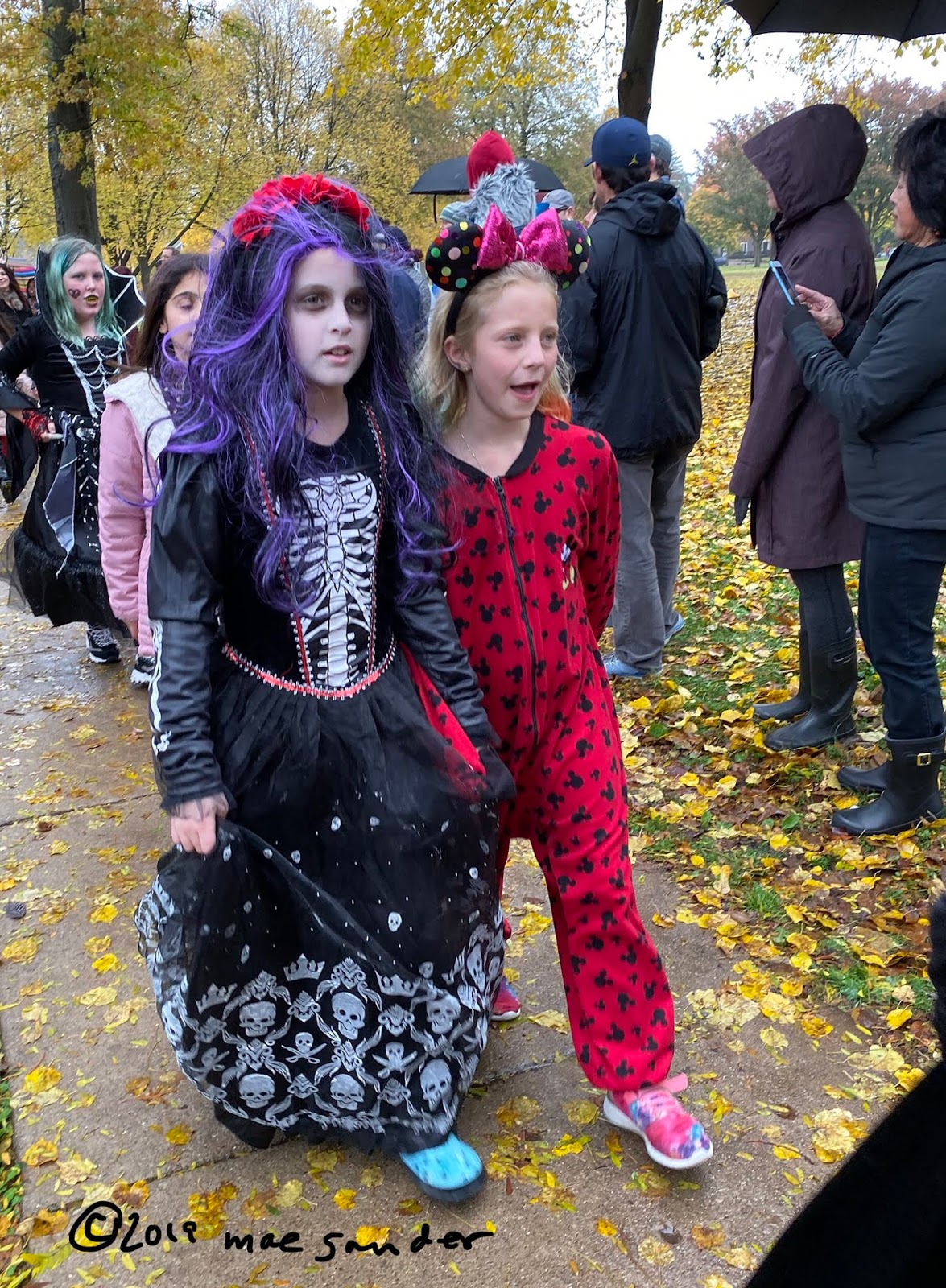
| Thanksgiving decorations are rare in our neighborhood, though Halloween decor was everywhere! |
 |
| Displays of pumpkins very well might have a Thanksgiving theme, but mostly they are a feast for the squirrels, like these well-chewed specimens on one front porch. |
One of our recent Japanese visitors (in all innocence) asked me if the "thanks" in Thanksgiving were directed at the Indians who gave us this country. This gave me quite a jolt, because it so clearly highlighted the discrepancy between the celebration and the historical reality. For this and other reasons, besides enjoying the cooking and consuming of a traditional turkey dinner with family next week, I will think about the real history of the "Pilgrims" and their relationship to the natives of Massachusetts.
The book 1491: New Revelations of the Americas Before Columbus by Charles C. Mann, which I read a few years ago opened my eyes to some of the actual history of the original inhabitants of New England -- especially the fact that the area had been heavily populated with farming villages, but that European contagious disease had wiped out most of the population before the settlers arrived -- a fact that was only recognized very recently.
This week, The New Yorker published an article by Philip Deloria titled "The Invention of Thanksgiving." The article offers some very stark information about the relationship of the white settlers and the native people. Even the motives of the Indians and the content of the feast isn't really what we learned in school:
"The Indians were Wampanoags, led by Ousamequin (often called Massasoit, which was a leadership title rather than a name). An experienced diplomat, he was engaged in a challenging game of regional geopolitics, of which the Pilgrims were only a part. While the celebrants might well have feasted on wild turkey, the local diet also included fish, eels, shellfish, and a Wampanoag dish called nasaump, which the Pilgrims had adopted: boiled cornmeal mixed with vegetables and meats. There were no potatoes (an indigenous South American food not yet introduced into the global food system) and no pies (because there was no butter, wheat flour, or sugar).
"Nor did the Pilgrims extend a warm invitation to their Indian neighbors. Rather, the Wampanoags showed up unbidden. And it was not simply four or five of them at the table, as we often imagine. Ousamequin, the Massasoit, arrived with perhaps ninety men—more than the entire population of Plymouth. Wampanoag tradition suggests that the group was in fact an army, honoring a mutual-defense pact negotiated the previous spring. They came not to enjoy a multicultural feast but to aid the Pilgrims: hearing repeated gunfire, they assumed that the settlers were under attack. After a long moment of suspicion (the Pilgrims misread almost everything that Indians did as potential aggression), the two peoples recognized one another, in some uneasy way, and spent the next three days together."After this more-or-less peaceful event in 1621, the story becomes sadder and sadder, as the Pilgrim settlers repeatedly fought with the Indians. Ousamequin’s son was killed in one of these wars, in 1676. The Pilgrims mounted his head "above their town on a pike, where it remained for two decades, while his dismembered and unburied body decomposed." They also gave thanks for the victory.
By the time Abraham Lincoln declared Thanksgiving a national holiday in 1863, the real history had been successfully unlearned, and the modern myths that we commemorated in school pageants had been invented. A few years ago, also, I wrote about Sarah Josepha Hale, the proponent of Thanksgiving who influenced Lincoln, and her 1828 novel where there's a Thanksgiving feast with turkey, cranberry sauce, and pie -- see this blog post: Northwood by Sarah Josepha Hale.
As we cook our turkey I'll try to keep both the ideal and the real stories in mind.
This post and photos © 2019 by mae sander for maefood dot blogspot dot com.
If you read it elsewhere, it's been pirated.